The Design Museum details our age of waste and showcases what design can do help
The Waste Age exhibition features contributions from Formafantasma, Stella McCartney, The Ellen MacArthur Foundation, Bethany Williams, Snøhetta, the Sony Design Centre Europe and others.
Share
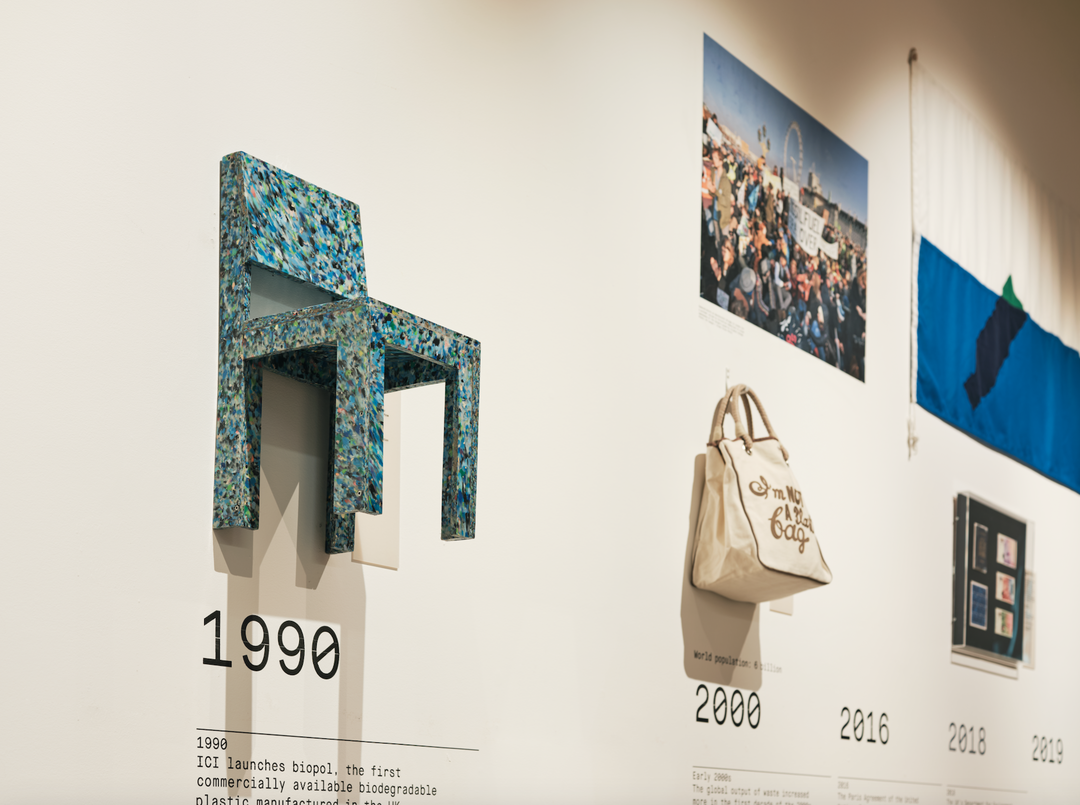
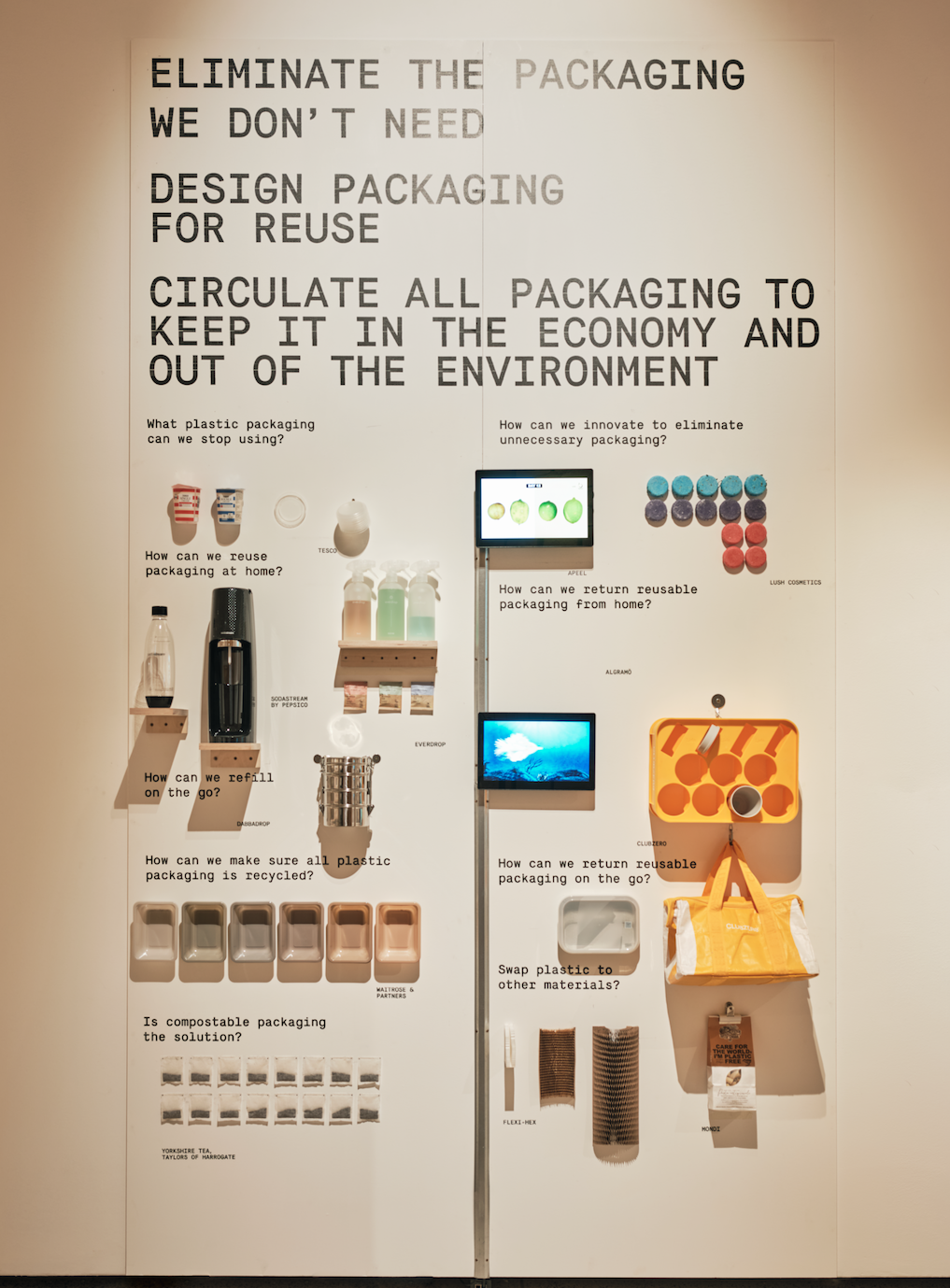
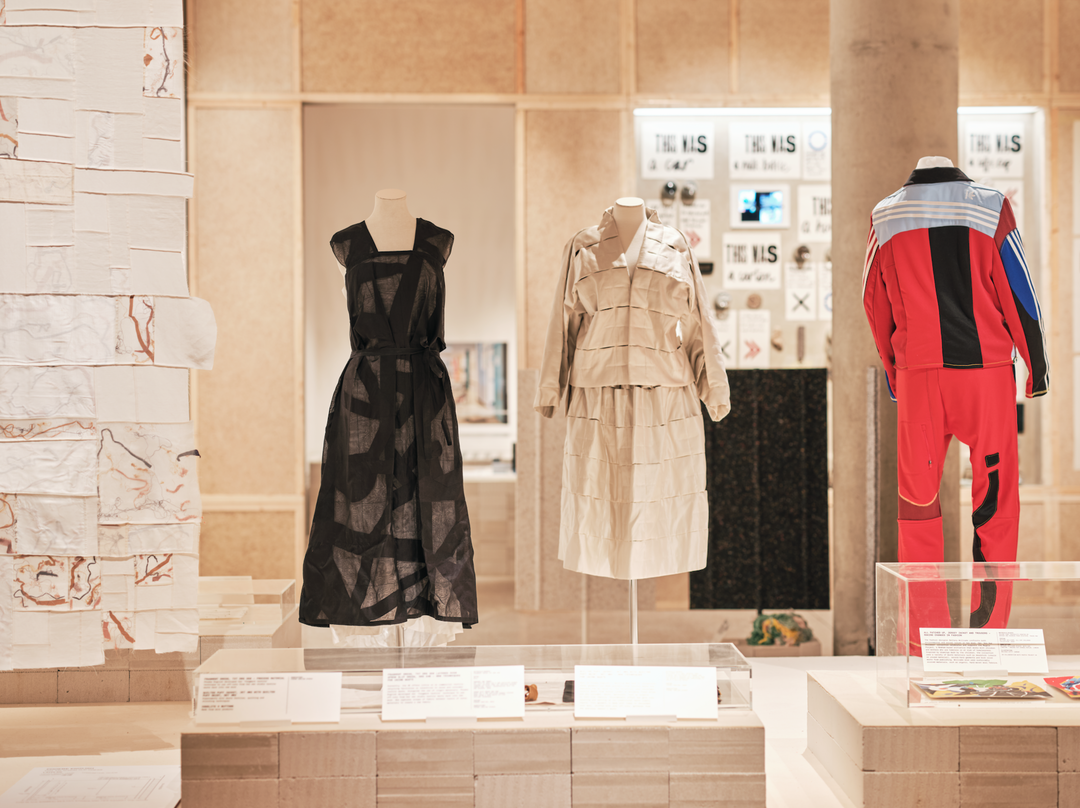
In 2018, it was reported that without urgent action, global waste would increase by 70 per cent by 2050 if current levels remained, meaning we would generate 3.40 billion tonnes of waste annually. Can design help address these pressing concerns? That’s the question The Design Museum is asking with its new exhibition Waste Age: What Can Design Do? opening tomorrow in London. The museum hopes to invite visitors to find out how designers are redefining fashion, construction, food, electronics, packaging and other industries through over 300 objects, by designing out waste and creating a more circular economy.
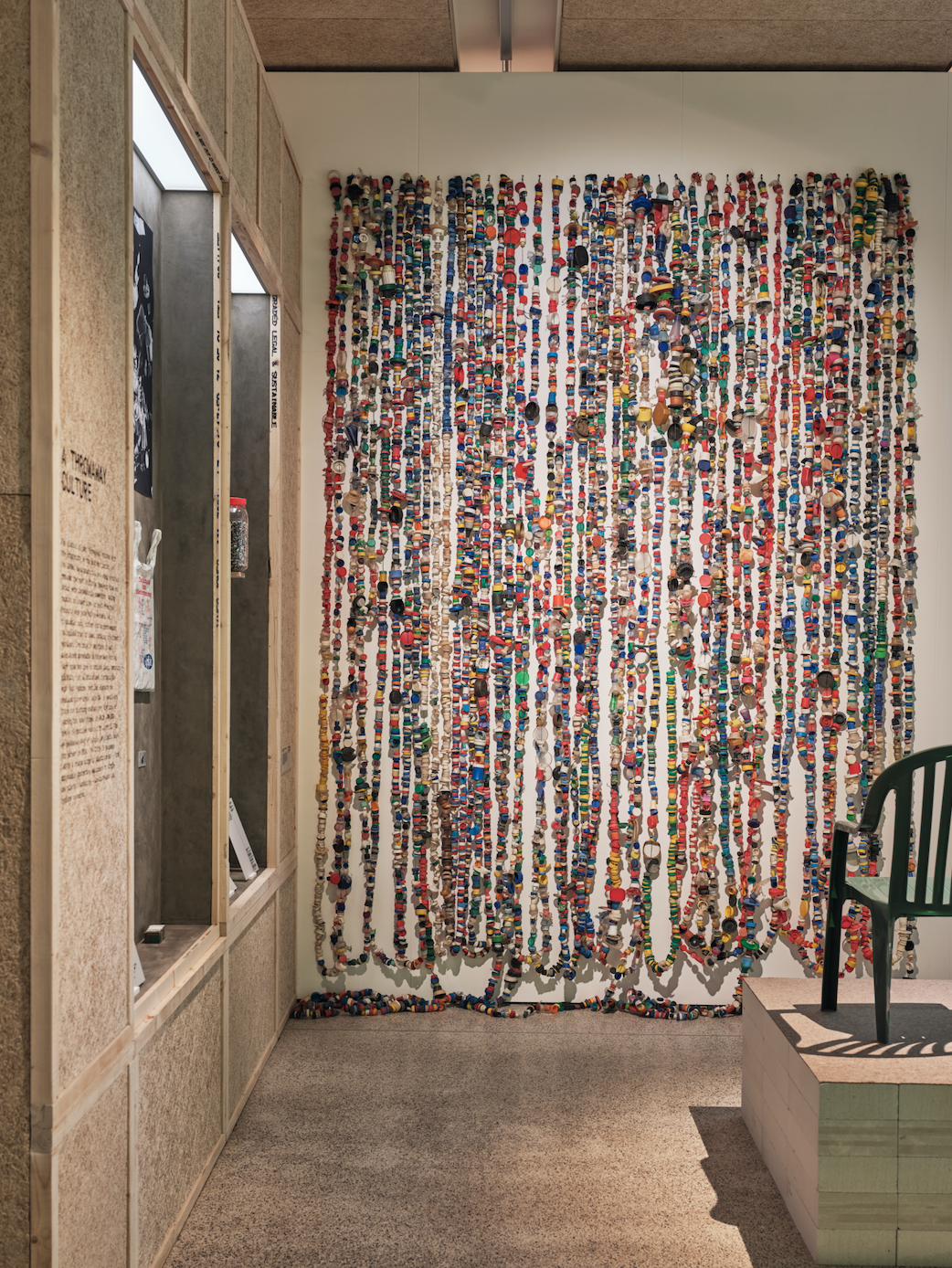
“Peak Waste,” the first section, aims to confront visitors with the gargantuan scale of our global waste and hopes to make the case for urgent change. Visitors will be able to follow their rubbish across the globe through a large-scale waste tracker. This section has been created with the goal of examining how we arrived at today’s throwaway culture, where 80 per cent of products are thrown away in their first six months of life, according to The Design Museum.
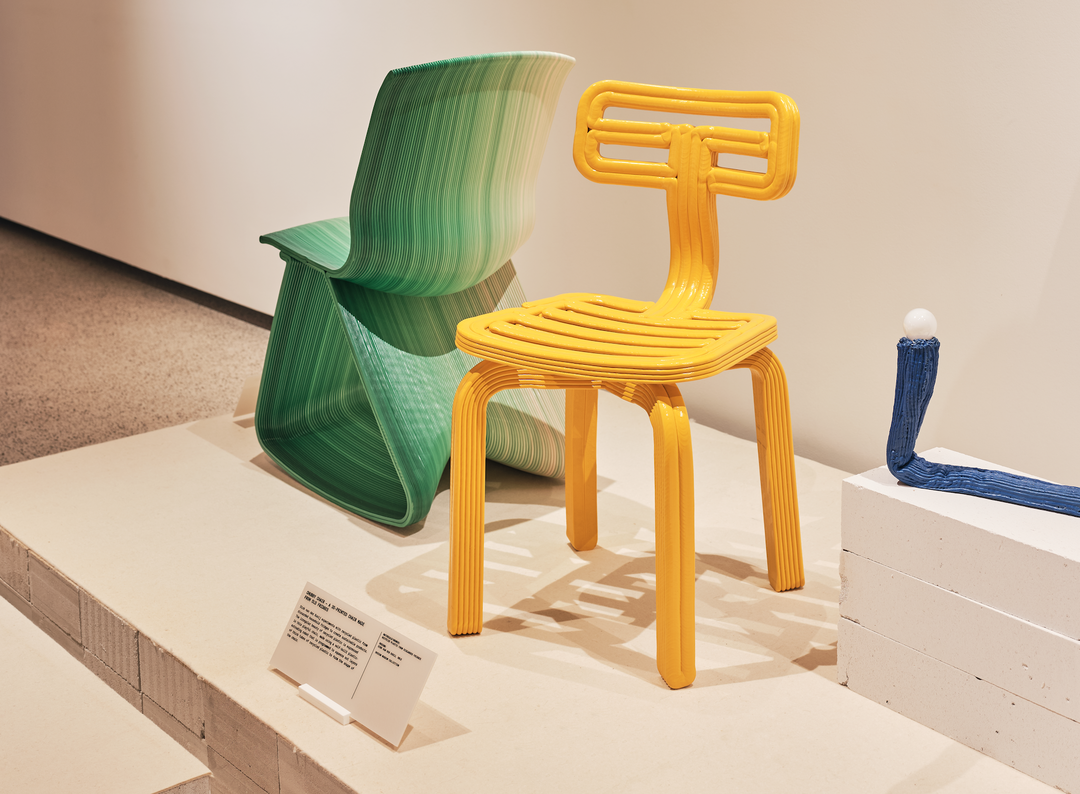
After that, the show draws our attention to solutions and innovative thinking. The “Precious Waste” section of the exhibition hopes to see visitors learning about the raw materials used in everyday products by way of object deconstructions, created by Studio Drift, as well as designers known for their work of recycling waste into new resources. For example, sustainable materials in fashion by Stella McCartney, Adidas and Bethany Williams will feature. And construction materials such as the K Briq by Kenoteq, which uses almost 90 per cent less carbon than regular brick, or reusable plastic like the S-1500 chair by Snøhetta made from discarded fishing nets, will be on show.
The third and final section, “Post Waste” proposes new circular methods of production and a focus on grown materials instead of ones extracted. Clothes, products and packaging made from materials like coconut, algae and corn husks will be showcased. Fernando Laposse’s The Dogs bench uses, for example, raw fibres from the leaves of the Agave plant, whilst The Blast Studio’s 3D-printed column, made with waste and the fungus mycelium, is a reference for a future of no-waste architecture.
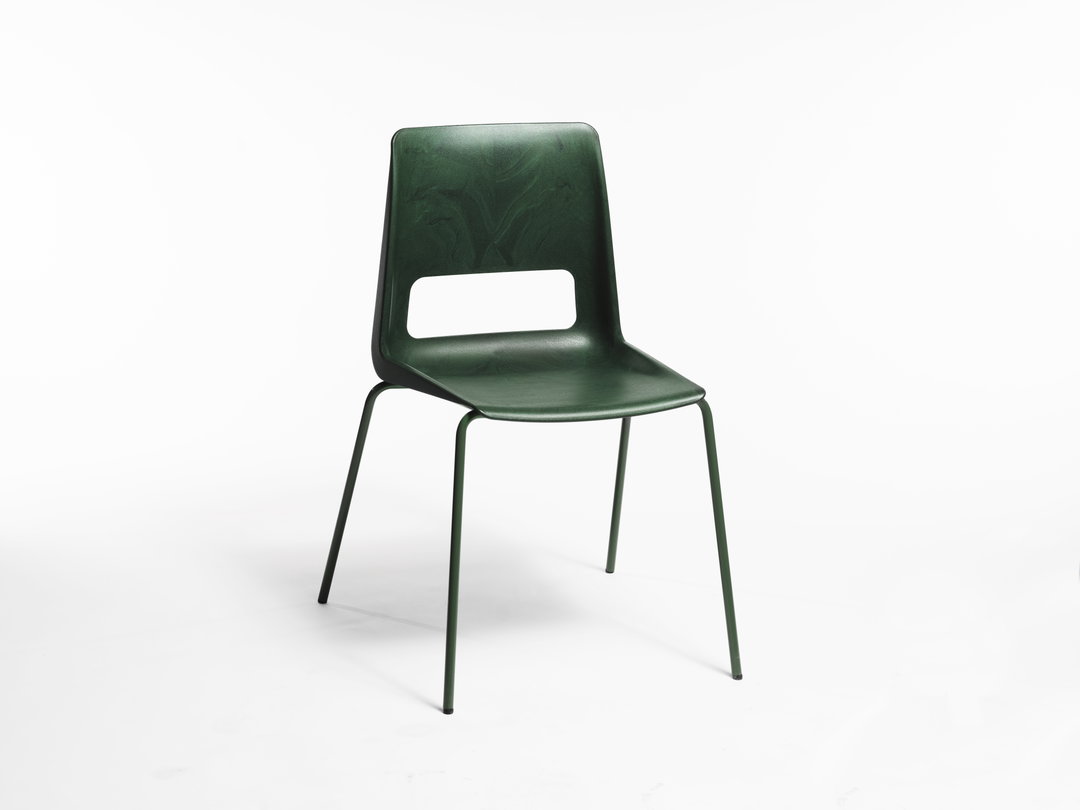
Bjørnar Ovrebo: S-1500 chair, designed by Snøhetta for Nordic Comfort Products made from discarded fishing nets. Courtesy of The Design Museum.
Felix Speller: S-1500 chair, designed by Snøhetta for Nordic Comfort Products made from discarded fishing nets. Courtesy of The Design Museum.
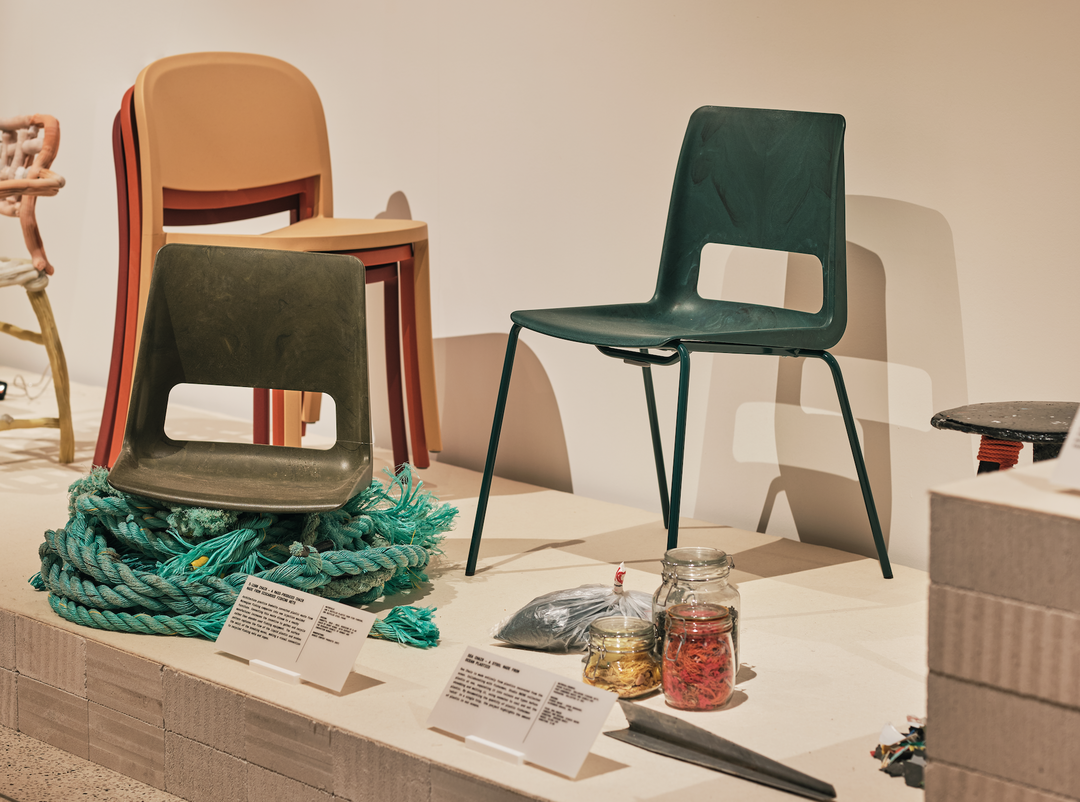
Felix Speller: S-1500 chair, designed by Snøhetta for Nordic Comfort Products made from discarded fishing nets. Courtesy of The Design Museum.
This is the section where viewers can also come to learn how they can change their behaviours, how we as a society can affect our consumption. Local solutions like Kamikatsu, a Zero Waste Town in Japan are presented alongside a display of tool sharing libraries across the world. The exhibition hopes thus to promote living without waste and tries to imagine a more resourceful world for generations to come.
The curator of Waste Age Gemma Curtin says: “We must face the problem of waste – we can no longer ignore what happens to things when we get rid of them. Instead of thinking of objects as things that have an end life,” she continues, “this exhibition proposes that they can have many lives. This is not just an exhibition, it is a campaign #EndTheWasteAge, and we all have an active part in our future. The exhibition will show design is at the forefront of sustainable solutions.”
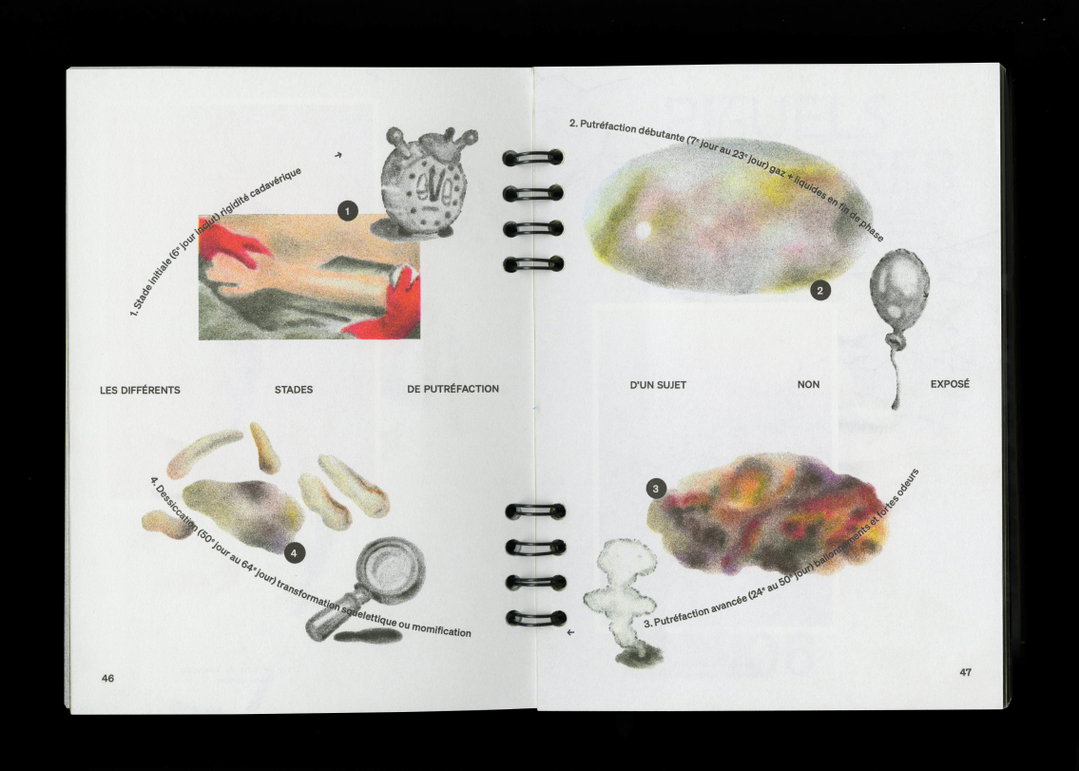
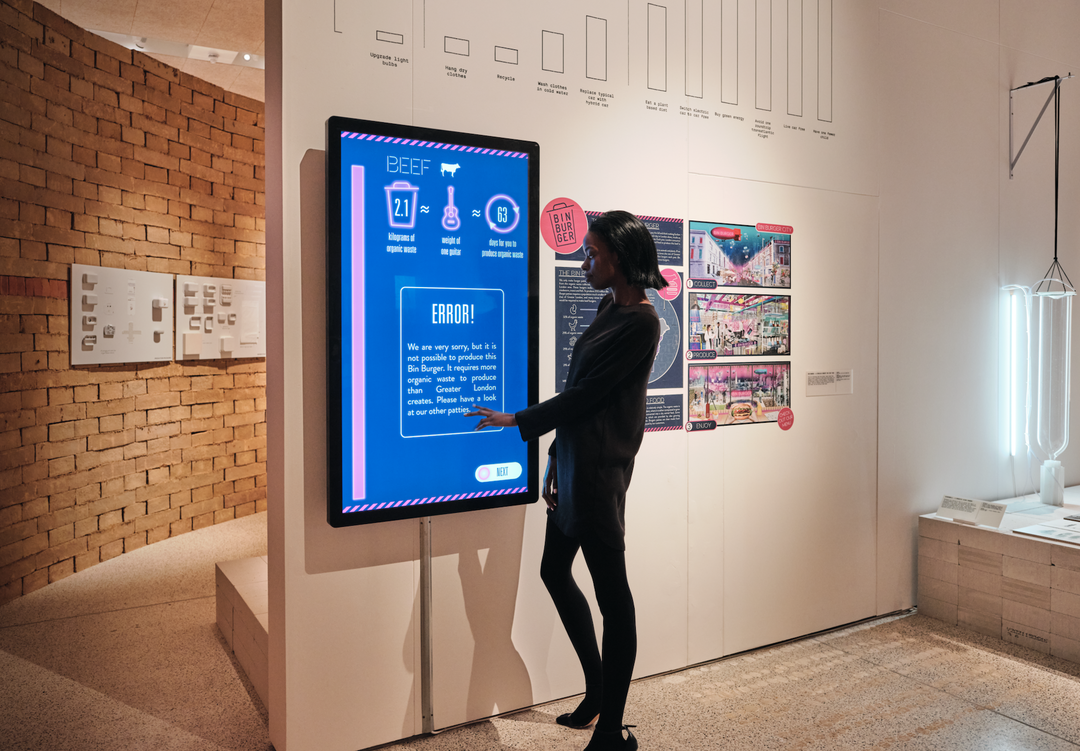
Whilst Waste Age’s co-curator Justin McGuirk argues: “Design has helped create our wasteful society, and it will be crucial in building a cleaner future.” That means rethinking the lifestyles and materials which damage our planet, as he explains, and he hopes this “optimistic exhibition” will demonstrate the energy and ingenuity being applied to the challenge by designers. “There is so much we can do, but it begins with understanding our waste.” The end of the exhibition is marked by an interactive installation focused on connecting visitors with the hidden life of a forest by the Sony Design Centre Europe. As a person moves across the screen, organic life lights up in sync with their movement, accompanied by a responsive soundtrack by sound artist Mergrim. The museum worked with Spin on the identity and graphic design to communicate “many complex issues, and to present the many layers of data required to understand these issues,” Curtin tells It’s Nice That.
Waste Age: What Can Design Do? opens on Saturday 23 October 2021 at the Design Museum. Tickets are available on the Design Museum website.
GalleryFelix Speller: Waste Age: What Can Design Do? Courtesy of The Design Museum.
Hero Header
Spin Studio: Waste Age: What Can Design Do? Courtesy of The Design Museum.
Share Article
Further Info
About the Author
—
Dalia is a freelance writer, producer and editor based in London. She’s currently the digital editor of Azeema, and the editor-in-chief of The Road to Nowhere Magazine. Previously, she was news writer at It’s Nice That, after graduating in English Literature from The University of Edinburgh.