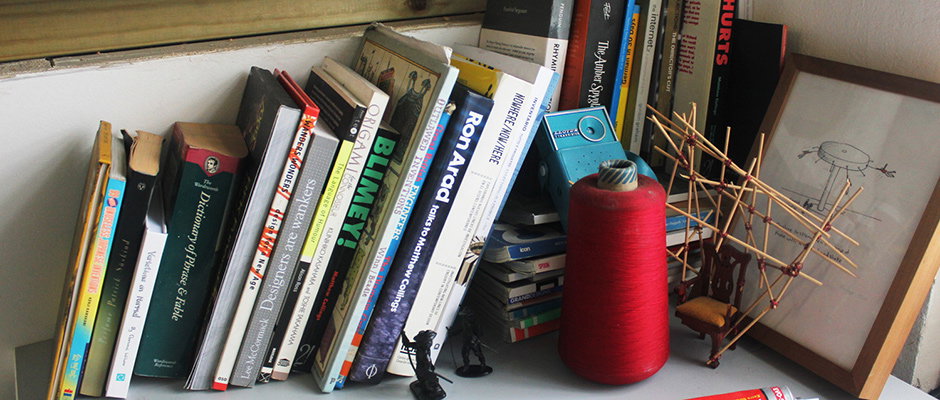
We speak to inventor Dominic Wilcox about his most inspiring books
There aren’t many designers out there who can count a pair of shoes with GPS tracking, a race against a 3D printer and a stained glass driverless car among their recent projects, but Dominic Wilcox isn’t just any old designer. In fact, the job title “inventor” seems to be more appropriate, given that he spends his days identifying gaps in the objects we use, and experimenting with materials to develop new and intriguing ways to fill them.
This week Dominic is speaking at South Africa’s annual conference Design Indaba, which we thought was more than enough of an excuse to have him raid his Bookshelf for his most inspiring and influential tomes, and share some gems of knowledge with us. Here he is!
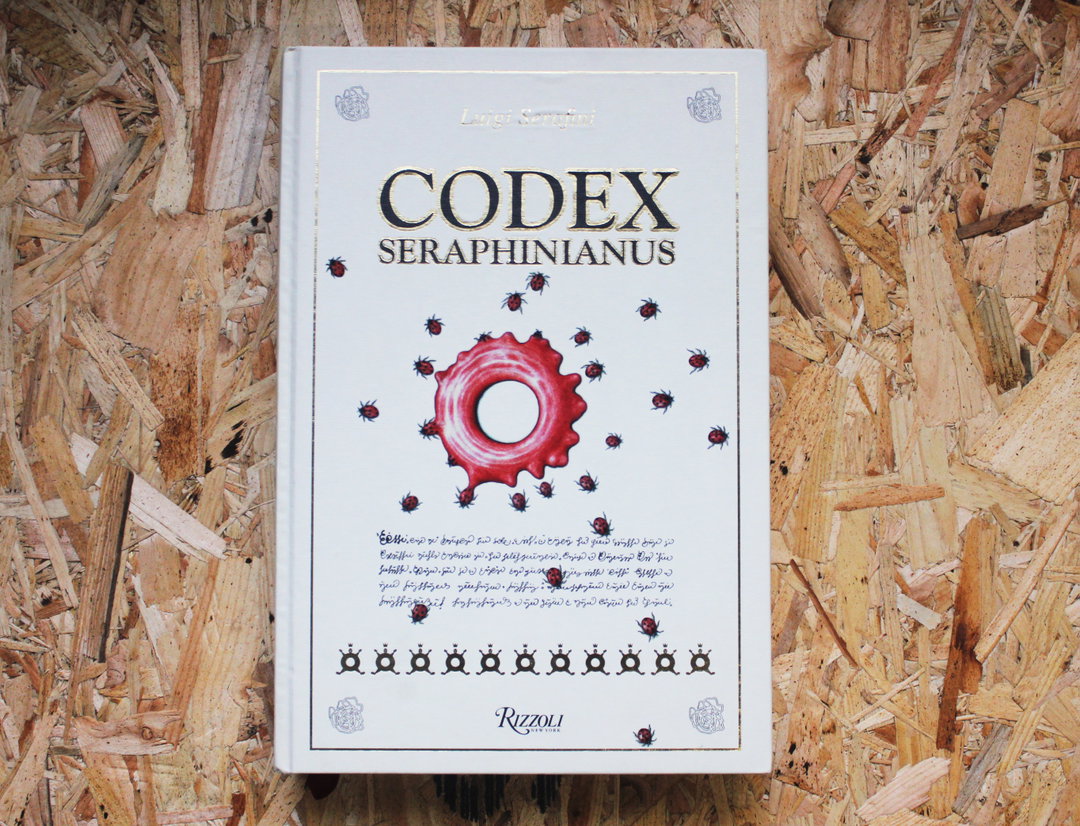
Luigi Serafini: Codex Seraphinianus
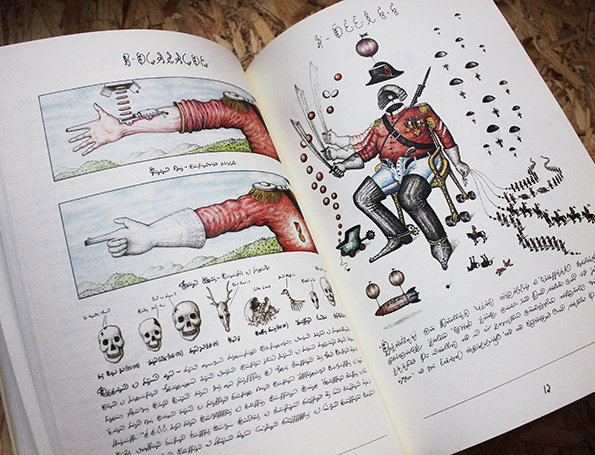
Luigi Serafini: Codex Seraphinianus
Luigi Serafini: Codex Seraphinianus
This is actually a new edition of a legendary 1981 book by an Italian architect called Luigi Serafini. It’s a beautiful and ambitious work that sends my imagination whizzing.
I imagined this book was unearthed by an archaeologist in a lost Inca temple. I would tell you how many pages are in it but the numbering system is in a form I can’t work out – all the words are written in a strange language unknown to man. It appears to be an illustrated encyclopedia of a genius inventor. The pages are filled with pencil drawings of bizarre contraptions and organic oddities. Perhaps this book holds the answers to the universe, I can’t tell.
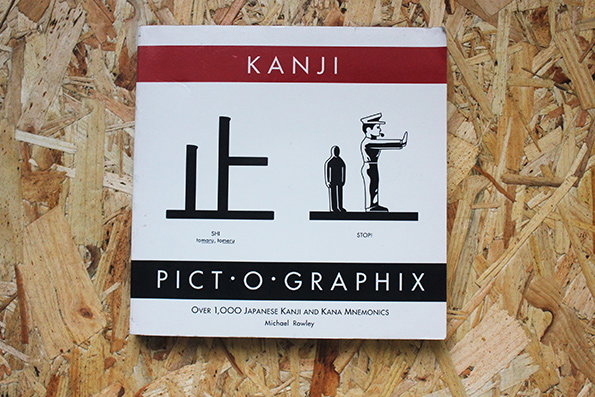
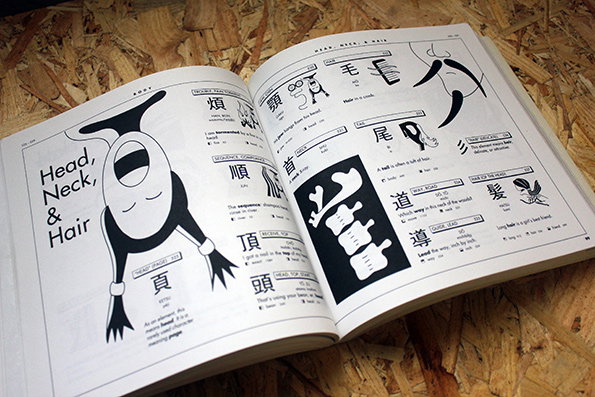
Michael Rowley: Kanji Pict-o-Graphix
Michael Rowley: Kanji Pict-o-Graphix
I once lived in Japan for a year and wanted to learn the language. As a visually-minded person I loved this book as it shows Japanese Kanji in pictorial mnemonic form. It was fun learning the symbols then riding on the train and trying to decipher the Kanji in the adverts while sitting next to a sleeping businessman. I can’t say I really grasped Japanese in the end but I regularly tell stories of my heroic attempts to learn it when I am asked “so did you learn Japanese?”
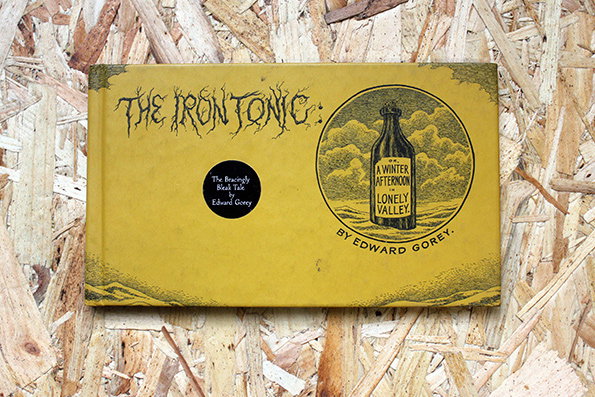
Edward Gorey: The Iron Tonic
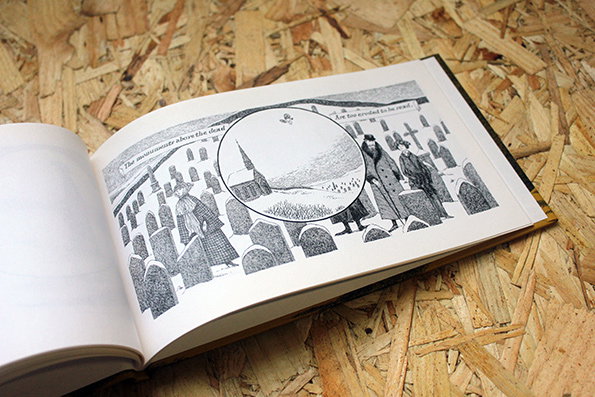
Edward Gorey: The Iron Tonic
Edward Gorey: The Iron Tonic
There’s a bleakness to Edward Gorey’s books that I think is wonderful. I always believe that making a reader cry is just as good as making them feel uplifted. Gorey’s simple rhymes contrast perfectly with the darkness of the stories and drawings.
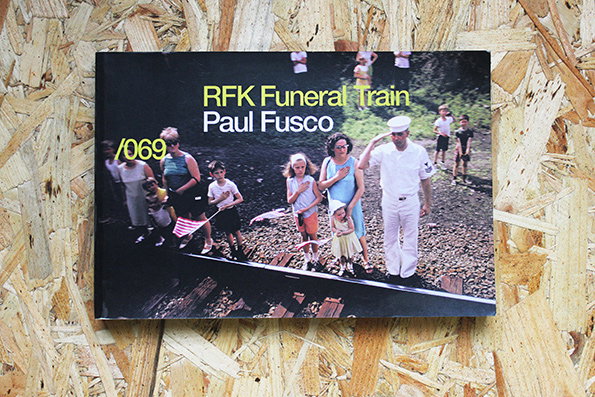
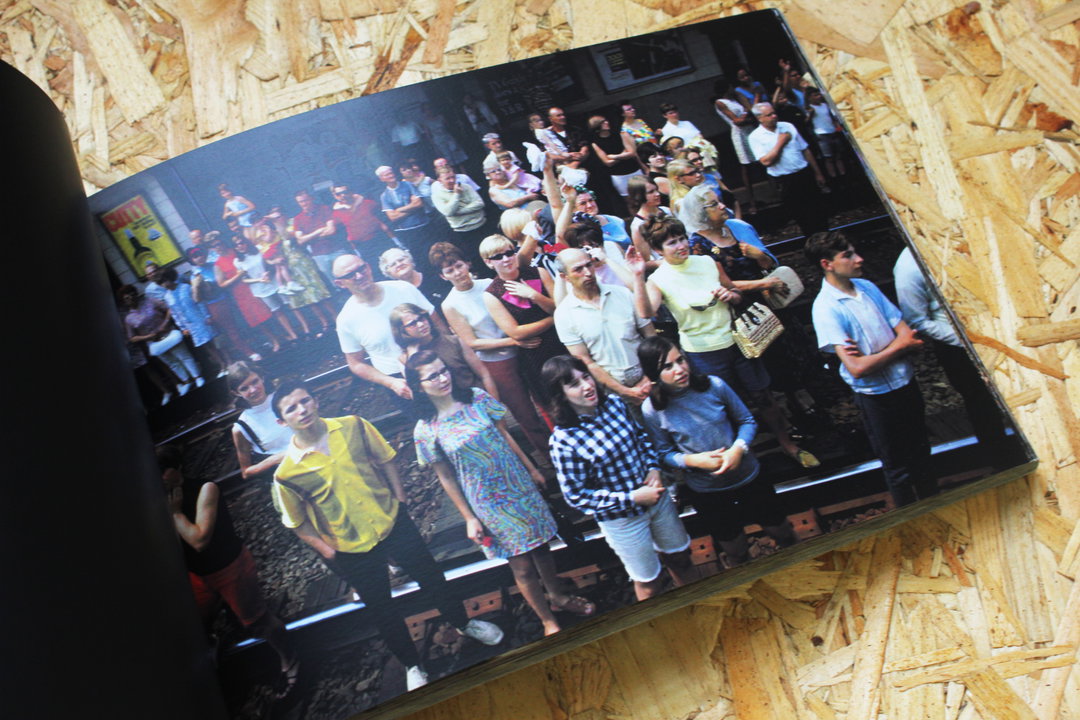
Paul Fusco: RFK Funeral Train
This book shows the photographs taken by Paul Fusco on the funeral train of Robert F. Kennedy in 1968. The train travelled from New York to Washington DC and on board photographer Fusco, commissioned by Look Magazine, took over 2000 photos documenting a crucial part of US history. The book captures a snapshot of America and the outpouring of grief that people felt at the time. Kennedy was assassinated less than three months after Martin Luther King so there was a sense of all hope lost in the US. The magazine decided not to use the photos and instead showed pictures of RFK’s life, but in 1998 they were rediscovered.
Kenji Kawakami: 99 More Useless Japanese inventions
I’ve had both the Chindogu books for many years. As a student, they really tickled me and seemed to fit in with my way of thinking. It was encouraging to see other people doing inventions based on everyday things, in a completely absurd way. I think there’s a similarity between stereotypical British and Japanese culture in terms of our polite, understated, self-controlled nature. Japan and Britain are both islands so maybe we need a sense of humour to keep ourselves sane. It’s the deadpan style that makes the photos great, acting like nothing strange is happening at all.
Share Article
Further Info
About the Author
—
Maisie joined It’s Nice That fresh out of university in the summer of 2013 as an intern before joining full time as an Assistant Editor. Maisie left It’s Nice That in July 2015.