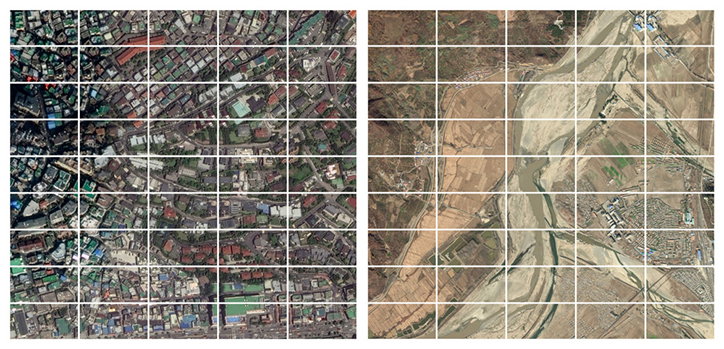
Chow and Lin documents the world’s inequality of wealth using Google Earth
Chow and Lin – AKA Stefen Chow and Lin Huiyi – is a married couple whose collaborative practice lies in the “methodology of statistical, mathematical and computational techniques to address global issues”. The duo’s work involves probing into “big data” such as satellite imagery that reduces individuals and societies into data points. Stefen and Huiyi’s aim is to draw attention to social issues through problematising multiple issues in society. Speaking to It’s Nice That about their latest project Homeless, the artists explore the inequality of the most privileged sociopolitical environments, and the least, through a large-scale photographic installation.
The project presents “visual indicators of private and transnational economies alongside forced mobilities of communities under siege”. For instance, satellite images of Mark Zuckerberg’s, residential Californian surroundings are contrasted with refugee routes from Myanmar to Bangladesh. The aerial views comment on the “abstract notions of geopolitics” on a global scale. Geographical surroundings are downsized immensely which creates a totally different viewing perspective on our external landscapes and our impact on the world. Essentially, the series unpacks “the complexity of scaling first-generation wealth vis-à-vis with the refugee crises.” With visual references to Google Earth, Homeless inquires into our understanding of an ephemeral moment captured in time, while simultaneously questioning the tools that open-access knowledge can offer.
“As political boundaries shift concurrently to daily life, Homeless suggests the vagaries of social security, and the platforms that monitor and dictate them”, assert the married couple. Homeless is just one project from the creative duo’s large repertoire of work that concerns itself with “tipping point issues on a global level.” Their work revolves around everyday topics that consciously and subconsciously affect all of us. This includes topics of inequality, consumption, pollution and power dynamics; which all play into the couple’s politically-engaged work.
Stefen and Huiyi capture these themes with the use of Google Earth which has acted as a social catalyst for political change in the world. Although the programme was developed for the use of majority country civilians as an advancement to the human experience, in 2010, the technology was alternatively used in Bahrain as a reactionary tool for social change. The people of Bahrain started distributing documents amongst each other showing satellite imagery of the homes of the country’s elite. The images “compared how their swimming pools could potentially house thousands, when people within the country can hardly afford housing”. Resultantly, anger in Bahrain helped spark the Arab Spring movement that eventually toppled four governments with civilian unrest breaking out across nine countries in the Arab world. Along with the death of approximately half a million people, this case study evidently “shows how access to information, or the lack of, is often the line between people with power and without.”
In a similar spirit, Homeless records this polar opposition of wealth in the highly disparate world we live in today. While thoroughly researching the project and speaking to big data experts along with economists and human rights experts, Stefen and Huiyi came across a statistic published by Oxfam that reveals that the top 38 richest people today, are worth the same as the bottom half of the world’s population – 3.73 billion people.
Consequently, Stefen and Huiyi deduced the top 38 richest people’s whereabouts using information gained from the Forbes’ Fortune list and mapped out their homes and neighbourhoods using Google Earth. To highlight the contrast, the creative pair then mapped out the least fortunate. “Not only do [these people] have little monetary worth to their name, they are also forced out of their homes, only to enter foreign countries that refuse to recognise their status and are kept in limbo.” Refugees make up 75 million people today, an all-time high figure. Their routes are made on foot, whether that be across desserts or the sea. The artists document such routes where, on average, 14 refugees died per day trying to cross the Mediterranean in 2016.
The satellite images of the natural terrains are deceivingly beautiful. The mountainous ridges and ripples in the ocean show the enormity of the vast landscapes that refugees cross on foot. Contrasted against the tidy, urban topography of the Western elect, Homeless accentuates the disparity of wealth and the vast inequalities that are often enforced by human limitation. Chow and Lin’s solo exhibition is currently showing at Singapore’s NUS Museum until late April 2019.
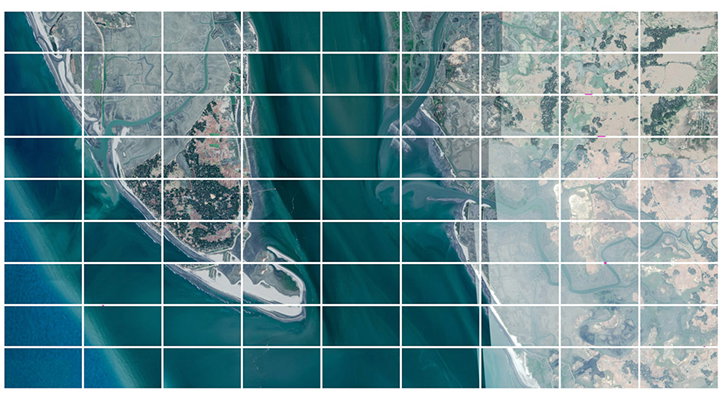
Chow and Lin: Homeless, Route from Myanmar to Bangladesh
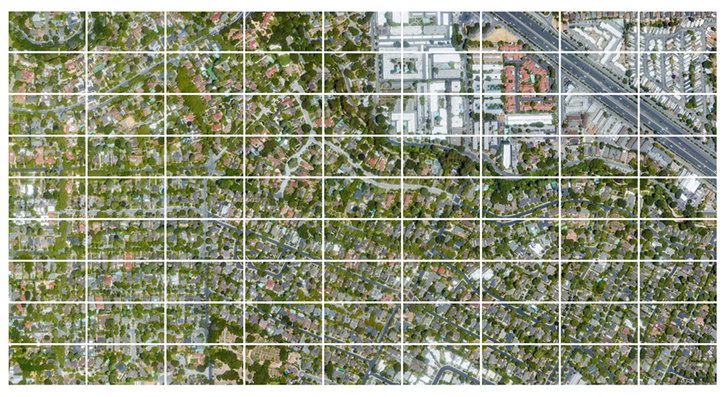
Chow and Lin: Homeless, Home of Mark Zuckerberg. California, USA
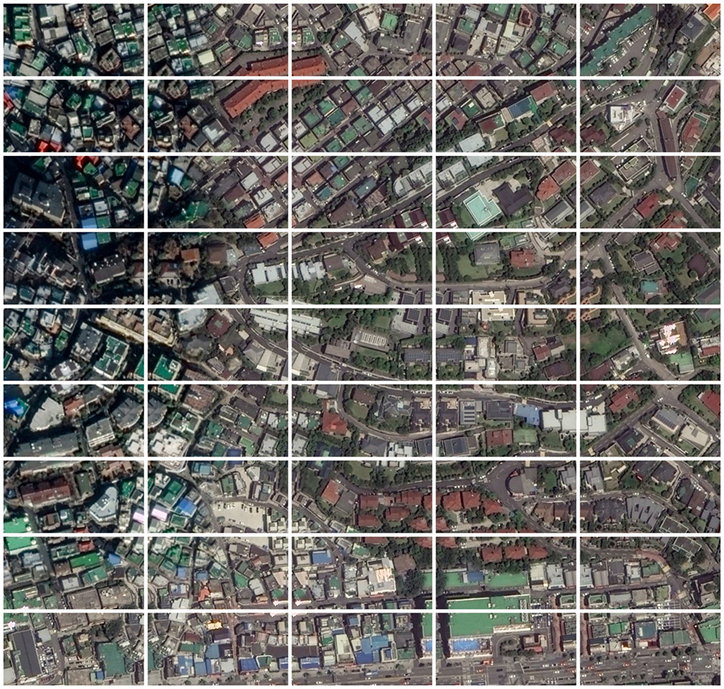
Chow and Lin: Homeless, Home of Lee Kun Hee. Seoul, South Korea
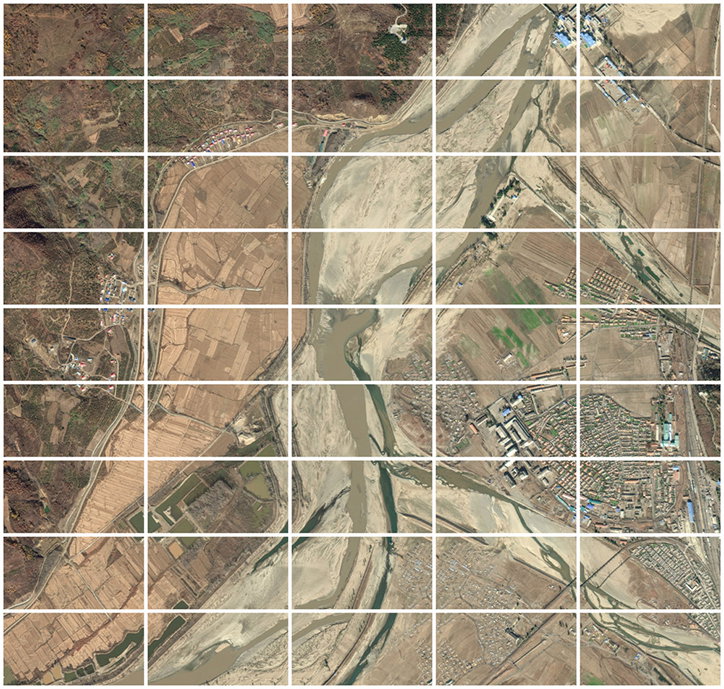
Chow and Lin: Homeless, Route from North Korea to China
Chow and Lin: Homeless, (left) Home of Lee Kun Hee, (right) Route from North Korea to China
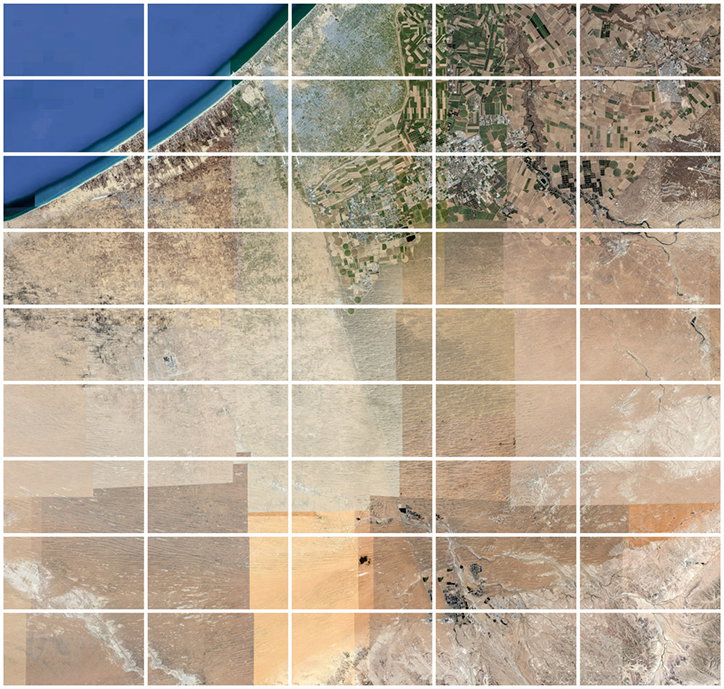
Chow and Lin: Homeless, Route from Egypt to Israel
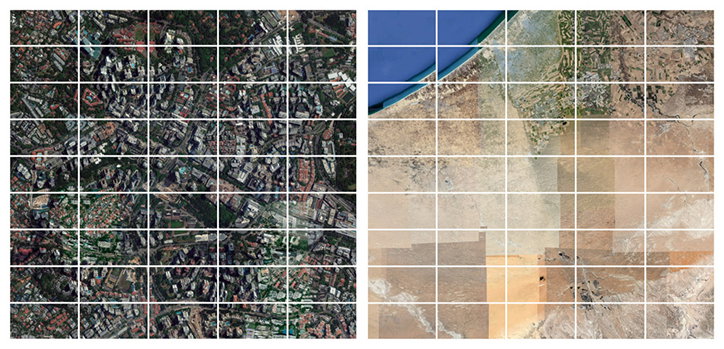
Chow and Lin: Homeless, (left) Home of Eduardo Saverin, (right) Route from Egypt to Israel
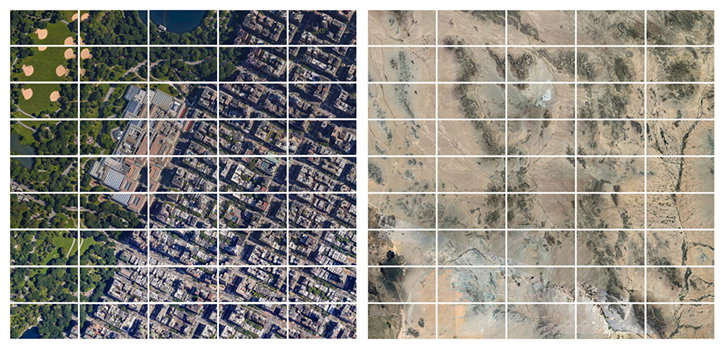
Chow and Lin: Homeless, (left) Home of Carlos Slim Helu, (right) Route from Mexico to USA
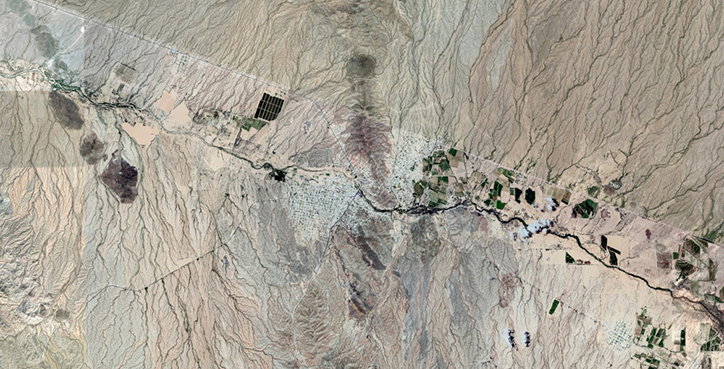
Chow and Lin: Homeless, Route from Mexico to USA
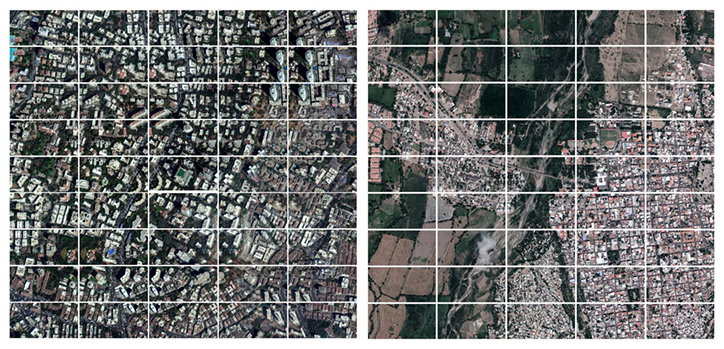
Chow and Lin: Homeless, (left) Home of Mukesh Ambani, (right) Route from Venezuela to Colombia
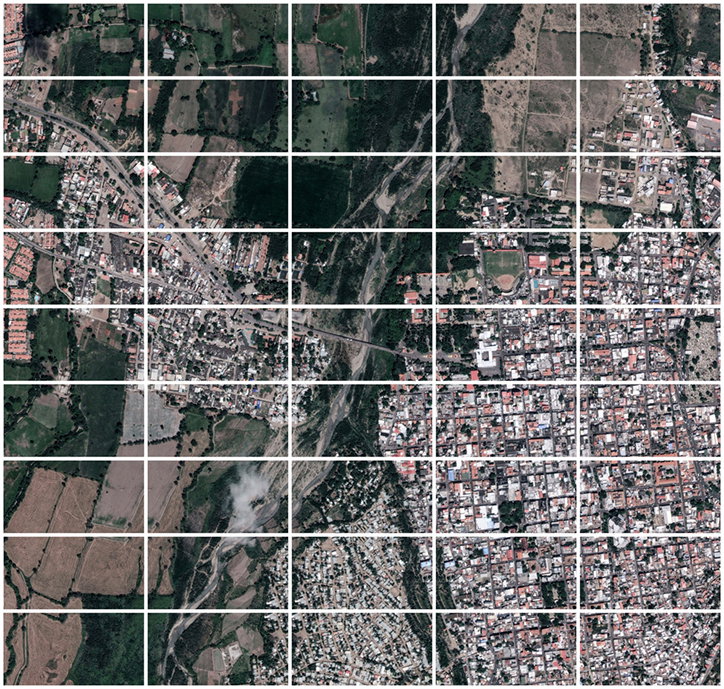
Chow and Lin: Homeless, Route from Venezuela to Colombia
Share Article
Further Info
About the Author
—
Jynann joined It’s Nice That as an editorial assistant in August 2018 after graduating from The Glasgow School of Art’s Communication Design degree. In March 2019 she became a staff writer and in June 2021, she was made associate editor. She went freelance in 2022.