


Elizabeth Goodspeed on Szilveszter Makó and the commercial appeal of the auteur
Szilveszter Makó’s surreal portraits have become nearly as recognisable as the celebrities he photographs. Our US editor-at-large considers what subjects bring to a signature style – and what happens when a point of view can be commissioned on demand.
Share
It’s not hard to spot a Szilveszter Makó. Who else but the 34-year-old Hungarian photographer would treat his human subjects like a lepidopterist would a butterfly? His colours recall the muted ochres of a cubist painting or a hand-tinted daguerreotype, and his models – nearly swallowed up by over-the-top, sculptural garments – are posed, pinned, and arranged for display within the box-like sets that have become one of his most recognisable devices. It’s hard to confuse these craft-forward, anti-AI images with anything else in fashion photography right now. But lately, there’s another reason Makó’s photographs have become so easy to spot: they’re just about everywhere. While he’s been a fashion-world darling for at least half a decade (versions of his now-signature style of surrealist portraiture can be found in editorials for Numéro and HERO as early as 2018), in recent years, his subjects – and commissions – have become increasingly high-profile: Bad Bunny for Vanity Fair in 2023; Michelle Yeoh for W China in 2024; Solange for Harper’s Bazaar Italia in 2025. Three separate Vogue editions (British Vogue, Vogue Arabia, and Vogue Philippines) have put a Makó-shot celebrity on their cover since August 2026.
Sudden ubiquity tends to invite backlash, however. By the time Makó’s portraits of Sandra Bullock for Interview appeared last week, promoting the forthcoming Practical Magic sequel, the recognisability that had made his work so appealing had begun to grate on people instead. “This was cool the first time I saw it and now I’m just like, ‘Oh, it’s this guy again,’” wrote one online commenter; elsewhere, others complained that “three cover stories in this style in three weeks is not very novel” or that “visual language became his biggest limitation... repetition is starting to overpower the surprise.” I get the fatigue, to some extent. Oversaturation runs the risk of making a style less impactful. Ultimately, that’s just capitalism doing what it always does (sucks to suck): the more desirable a recognisable style becomes, the more that clients will pay to reproduce it, up until the market is flooded with the very thing it found so desirable in the first place. Artists who become successful for a signature style are then accused of monotony for being hired to reproduce it. Of course, Makó is being commissioned precisely because his photographs look the way they do; expecting each new job to suddenly look different is like commissioning Yayoi Kusama to paint stripes. It’s fine to let Makó be Makó!
“Expecting each new job to suddenly look different is like commissioning Yayoi Kusama to paint stripes.”
Elizabeth Goodspeed
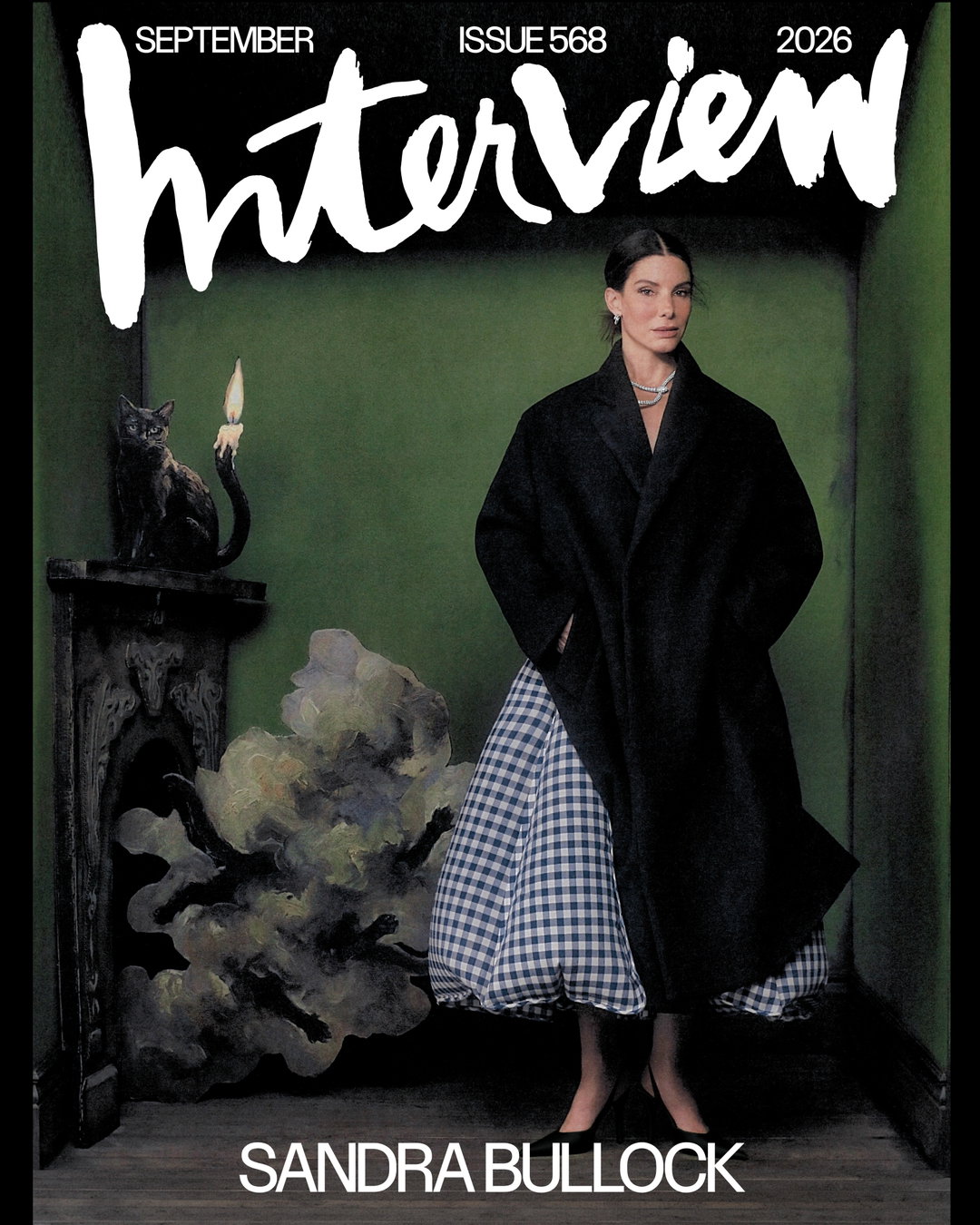
Szilveszter Makó for Interview, 2026
Szilveszter Makó for Vanity Fair, 2023
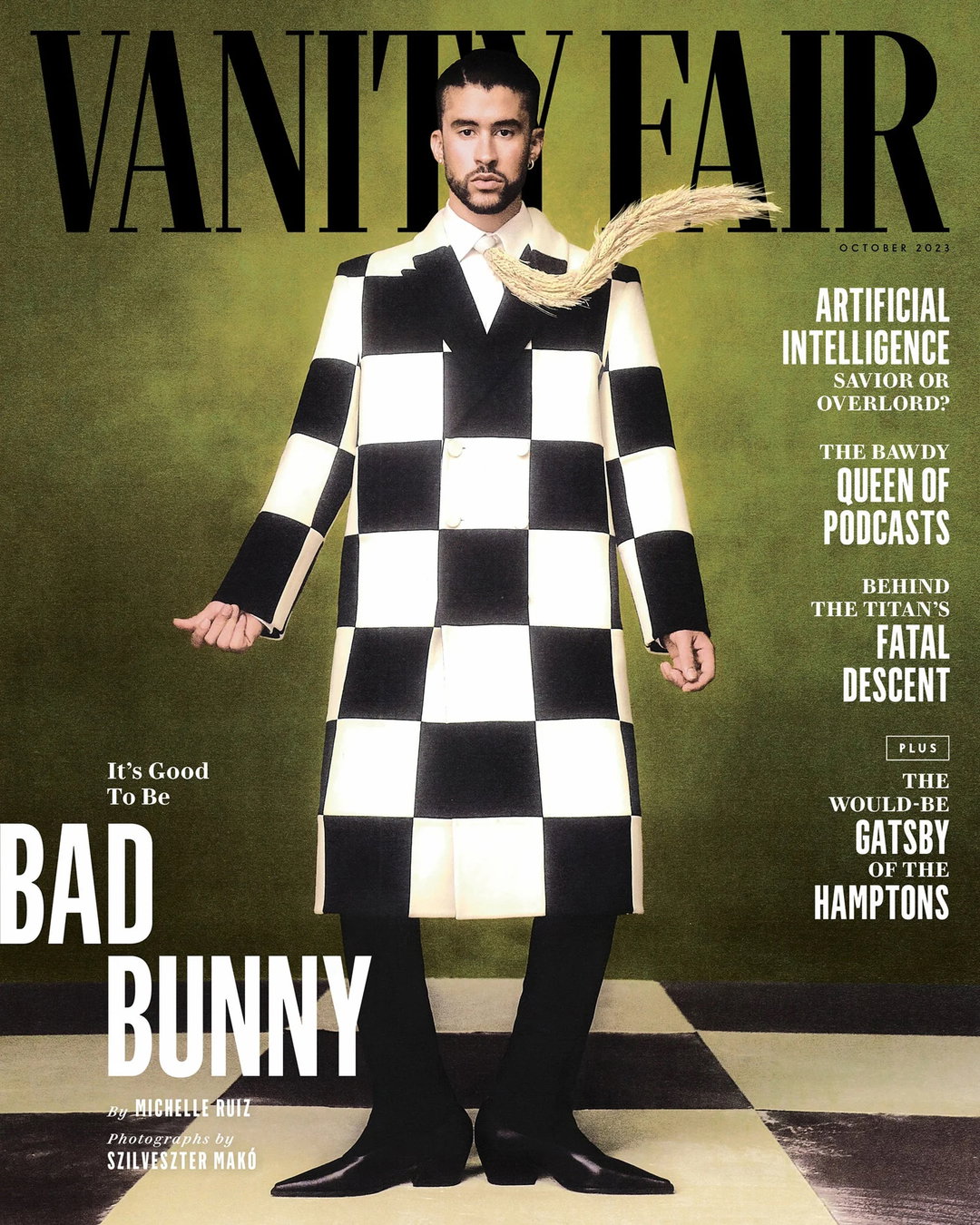
Szilveszter Makó for Vanity Fair, 2023
A different strain of criticism, though, was aimed not at the repetition of Makó’s style, but at his choice of subject. “In what universe should he be shooting Sandra Bullock?” one commenter asked, “It’s ok to say no to things that aren’t cool.” And, well – they’re not wrong! Bullock is something of a goose among the ducks of Makó’s portfolio, which until recently skewed toward either up-and-coming figures with burgeoning clout like Rama Duwaji and Paloma Elsesser, or major stars like Rihanna and Solange whose mainstream status never came at the expense of an iconic creative identity. Bullock, by comparison, represents a more conventional branch of Hollywood celebrity. Lest we forget, one of the most memorable scenes in The Proposal involves her rapping Lil Jon’s “Get Low” in the woods next to a native-garbed Betty White. Cool is subjective, of course, but... come on.
More interesting than whether Bullock is cool – and more relevant to my remit as an art and design columnist – is why her coolness should matter at all. The answer sounds almost inanely tautological: a portrait is always a portrait of a specific someone. Who you photograph matters! As Angelica Jade Bastién wrote in her recent essay about Miss Piggy, “a star affects the reading of a film as much as the cinematography, direction, and costume design.” In the case of celebrities, any new image is accompanied by the accumulated baggage of their existing public identity, built through years of paparazzi images, magazine editorials, theatrical performances, red carpet appearances, and publicised personal lives. In Sandra Bullock’s case, her mainstream-ness is as much a part of the portrait as her face is.
“The question isn’t simply what Makó can do for a subject, but what the subject might do for Makó.”
Elizabeth Goodspeed
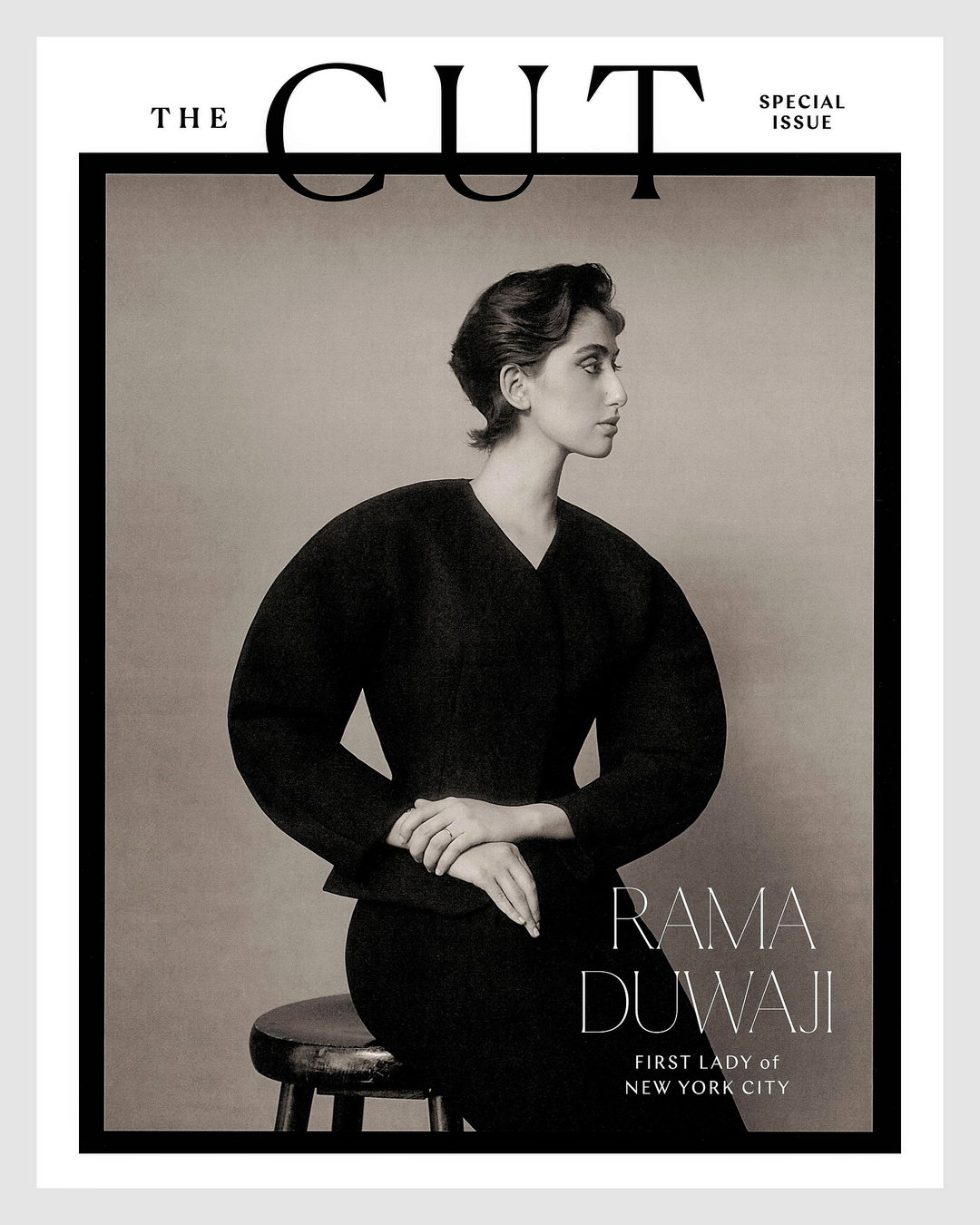
Szilveszter Makó for The Cut, 2026
Szilveszter Makó for Vogue Philippines, 2026
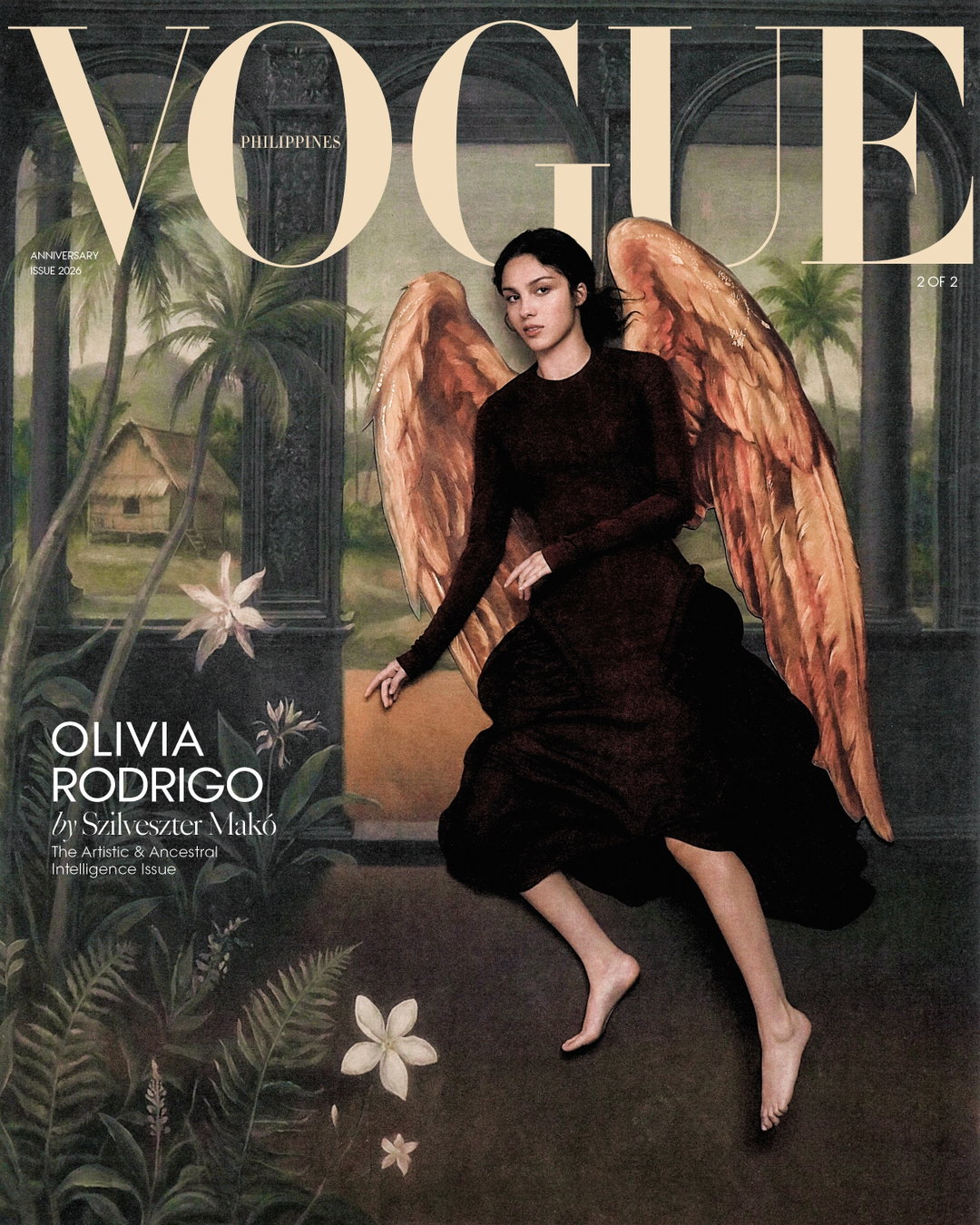
Szilveszter Makó for Vogue Philippines, 2026
Subjects also exert pressure upstream, on the person making the image. There’s an older word for a subject capable of exerting this kind of influence on an artist: a muse. Writing recently about his longtime model and arguable muse Guinevere Van Seenus, photographer Tim Walker explained that working with her gave him the confidence to approach portraiture as art: “Guinevere allows me to be an artist by being an artist herself.” The question, then, isn’t simply what Makó can do for a subject, but what the subject might do for Makó.
Makó’s portraits of Olivia Rodrigo offer a particularly clear answer. His images of her for Vogue Philippines are unmistakably Makó – Rodrigo flattened like a paper doll by tropical prosceniums – but just as unmistakably Rodrigo. In a TikTok analysis of the shoot, Kathy Pham points out how much of the imagery connects to the singer’s Filipino heritage, beginning with her wardrobe (a terno, a contemporary baro’t saya, and a Maria Clara gown) and extending into the sets themselves. Pham identifies one image, showing Rodrigo with wings, as an allusion to the Annunciation. She sees this as a reference both to Christianity’s enormous influence on Filipino culture and to Rodrigo herself: Gabriel is a messenger, and Rodrigo has increasingly used her platform to advocate for women’s autonomy and reproductive rights. Her personhood gives Makó’s existing vocabulary somewhere new and specific to go.
This brings us back to our aforementioned Sandra Bullock. Compared with Rodrigo, there’s something unpleasantly circular about Makó’s Interview portraits of her. While the images have all the beauty and layering we’ve come to expect from his work, the talisman-like symbols that usually tell us something about the sitter instead tell us more about the movie she’s there to promote. Practical Magic is about witchcraft, ergo, here’s a black cat. Bullock is just another cardboard prop inside the concept. This is neither an indictment of Bullock – who never tried to make herself out as anything other than a mainstream celebrity – nor Makó, who simply did what he was hired to do. The failure is that someone decided that putting Sandra Bullock inside a Makó was interesting enough in itself.
“I do wonder if we lost a useful concept when we replaced ‘selling out’ with the frictionless corp-speak of ‘partnerships’ and ‘collaborations’.”
Elizabeth Goodspeed
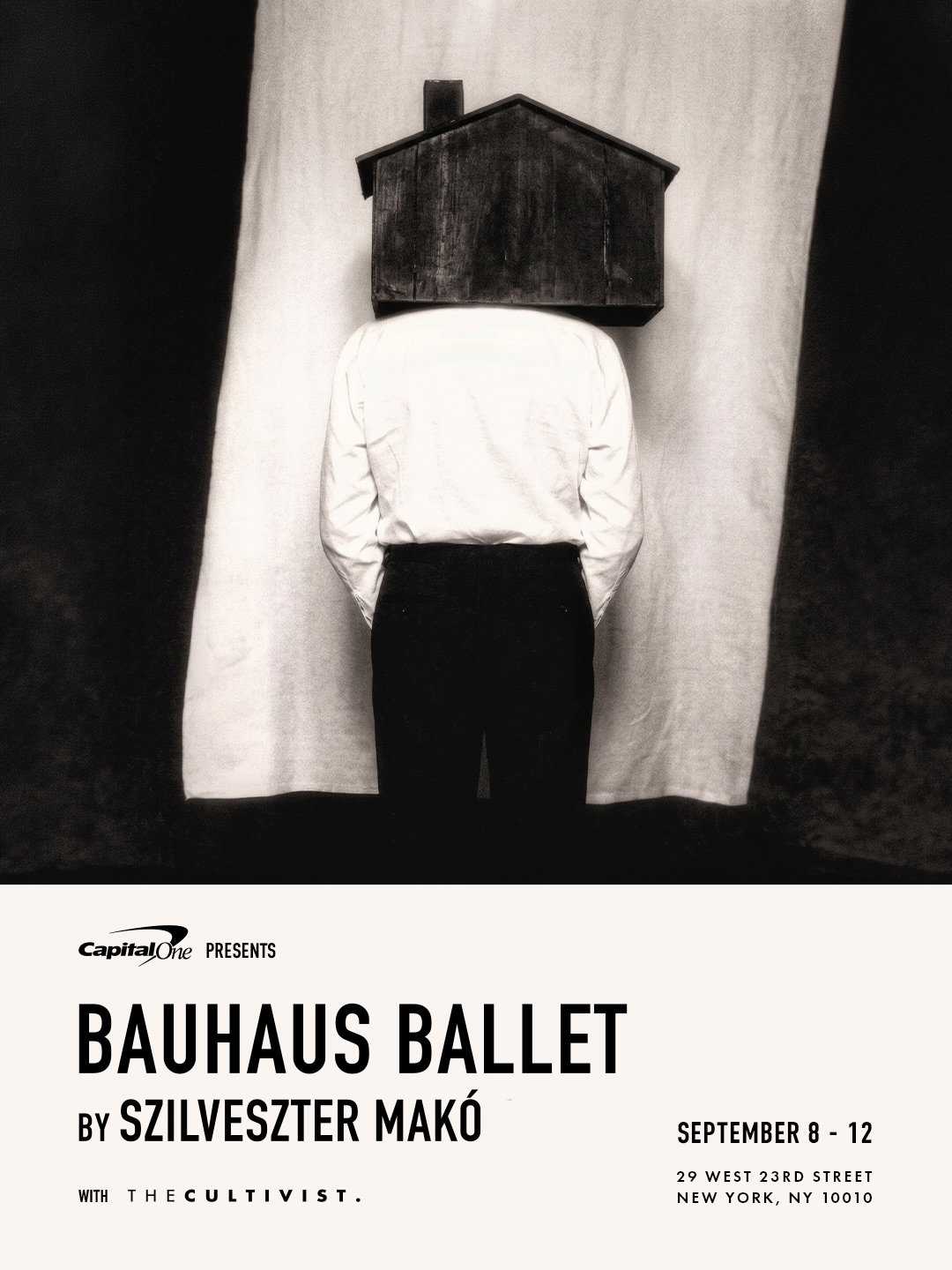
Szilveszter Makó: Bauhaus Ballet, with The Cultivist and Capital One
Szilveszter Makó: Bauhaus Ballet, with The Cultivist and Capital One
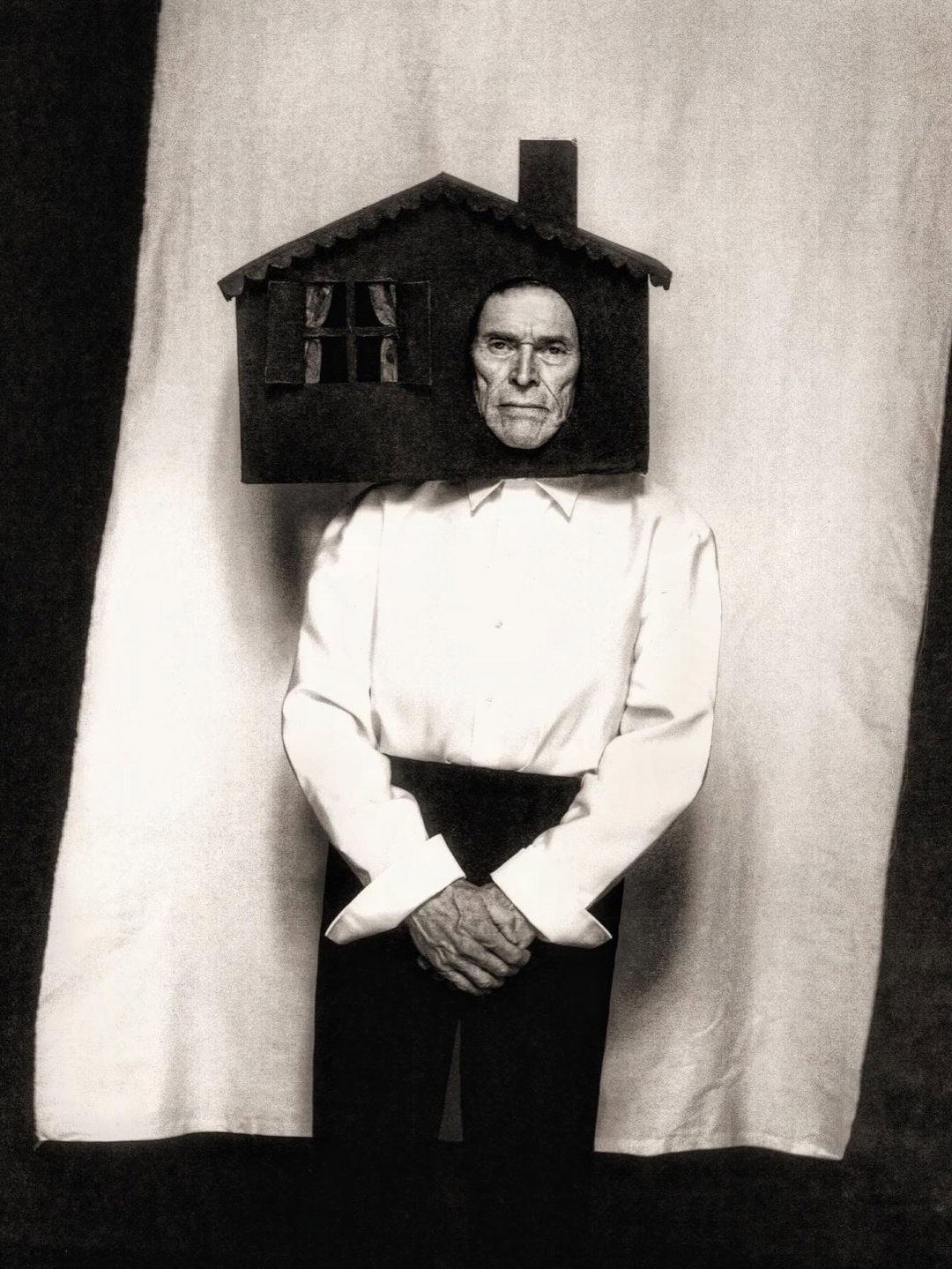
Szilveszter Makó: Bauhaus Ballet, with The Cultivist and Capital One
It turns out, “inside a Makó” is somewhere you too can quite literally go. This month, as part of NY Fashion Week, Makó teamed up with The Cultivist and Capital One to produce Bauhaus Ballet, an immersive six-room installation that turned his photographic universe into an Instagrammable playground. Visitors could, like Elle Fanning, pose on a massive porcelain plate or grope an oversized sardine. The timing makes sense: Makó is looming large in the current zeitgeist, and cultural cachet rarely goes long without finding increasingly commercial outlets. And who can resist an activation? The installation is another notch in the belt of a decade-long lineage of immersive, highly photographable environments, from Refinery29’s 29Rooms to the “Museum” of Ice Cream. In these spaces, the environment is complete except for a body to put in it. Haloscope founder Savannah Eden Bradley recently complained that while the muse isn’t dead, she has been flattened into the “content partner” – something Bradley describes as “a crime against glamour”. If a muse exerts pressure on an artist’s world, a content partner gets dropped into one that already exists. For Makó, that reversal feels particularly ill-matched: his best portraits are the ones in which the world has been built around the sitter. Here, anyone can step into that world without leaving a footprint.
As much as I’m loath to say it, there’s another slightly unfashionable term lurking around all this: selling out. The idea of selling out has always been a little puritanical (artists have to make money!), but I do wonder if we lost a useful concept when we replaced “selling out” with the frictionless corp-speak of “partnerships” and “collaborations”. “Selling out” at least acknowledged that commercial transactions came with potential consequences – the risk of diluting an artist’s work, or changing how we perceive them and their larger body of work. Instead, we pretend that an auteur can auction off their authorship while still emerging with it perfectly intact: Makó supplies his Makó-ness, the sitter supplies a face, the brand sponsor supplies a check, and everyone goes home as cool as ever. Yorgos Lanthimos can make a Squarespace ad whose primary creative proposition is that it looks like a Yorgos Lanthimos movie; Makó can make a Capital One activation whose primary proposition is that you get to be inside a Makó. In both cases, the artist’s value has gone from shaping a creative concept to being the concept.
This isn’t to say that serious artists shouldn’t make commercials! David Lynch made plenty of them. But there’s a big difference between giving artists money because you like their work and are excited to see what they come up with, and giving them money just because you want the pedigree of their name attached to yours.
I still love Makó’s work. I just hope that even if everyone wants a Makó, they leave Makó himself some room to surprise us with what that can mean.
Share Article
Further Info
About the Author
—
Elizabeth Goodspeed is It’s Nice That’s US editor-at-large, as well as an independent designer, art director, educator and writer. Working between New York and Providence, she’s a devoted generalist, but specialises in idea-driven and historically inspired projects. She’s passionate about lesser-known design history, and regularly researches and writes about various archive and trend-oriented topics. She also publishes Casual Archivist, a design history focused newsletter.