Continuous revolutions abound in Mark Wallinger’s new show
Exploring the position of the self within society, Mark Wallinger’s new show ID is framed around Sigmund Freud’s terms of “id”, “ego” and “superego,” showing work in painting, photography, video and sculpture at London’s Hauser & Wirth.
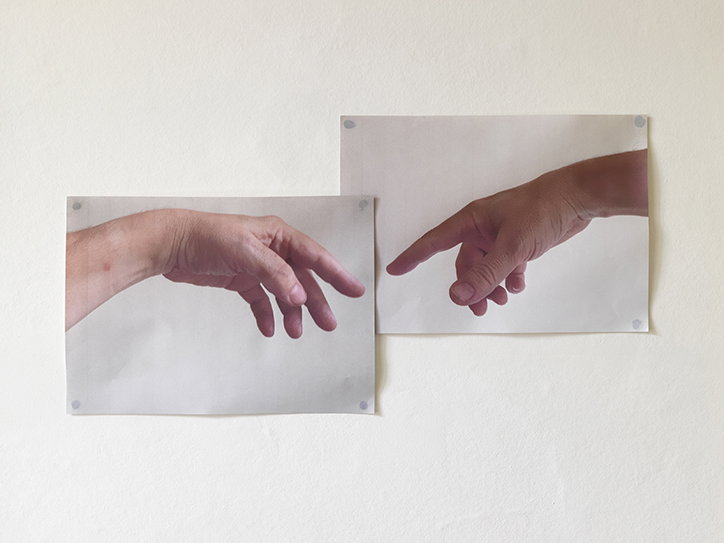
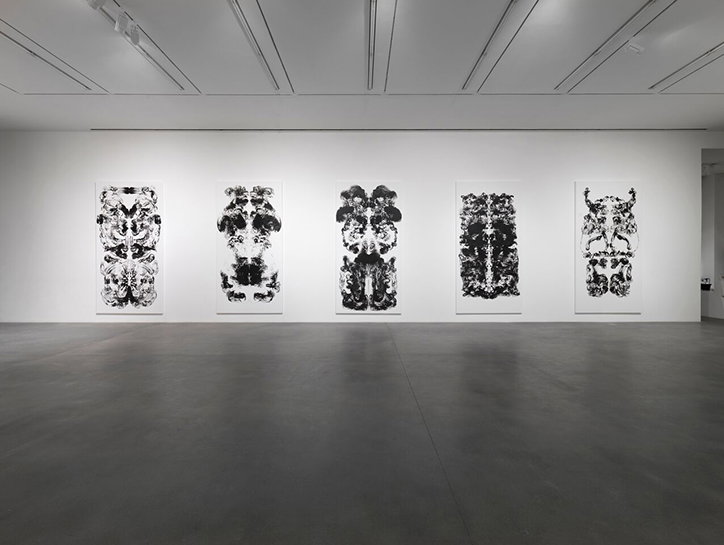
The first piece, Ego, is a playful recreation of Michelangelo’s Creation of Adam that started life as two coincidental photographs of Wallinger’s hands that he tacked together on his kitchen wall. As well as being an ode to the Sistine Chapel, the piece highlights the hands as being the tools of the artist’s trade. This is proved further by the id Paintings, a series of works that grew out of Wallinger’s self portraits and are made up of symmetrical, freeform marks painted in black with his hands. The canvases are double his height which, along with the symmetry of the mark-making, gives the work an air of authority and affirms the performative nature of the process.
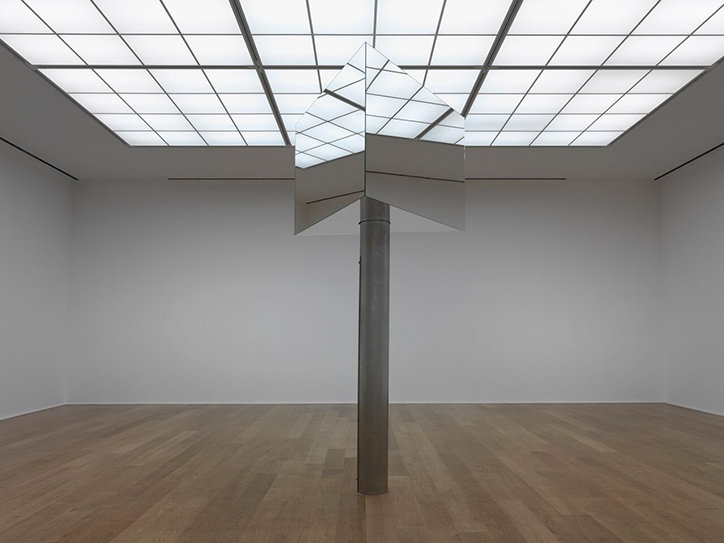
In Hauser & Wirth’s South Gallery, a few doors down Saville Row, Wallinger shows a series of multimedia works. The first is a mirrored replica of the New Scotland Yard sign, or Superego (the part that is said to suppress or control our behaviour) which revolves just above head-height at the exact speed of the NSY sign, dominating the space through its scale and projection of a sense of displacement.
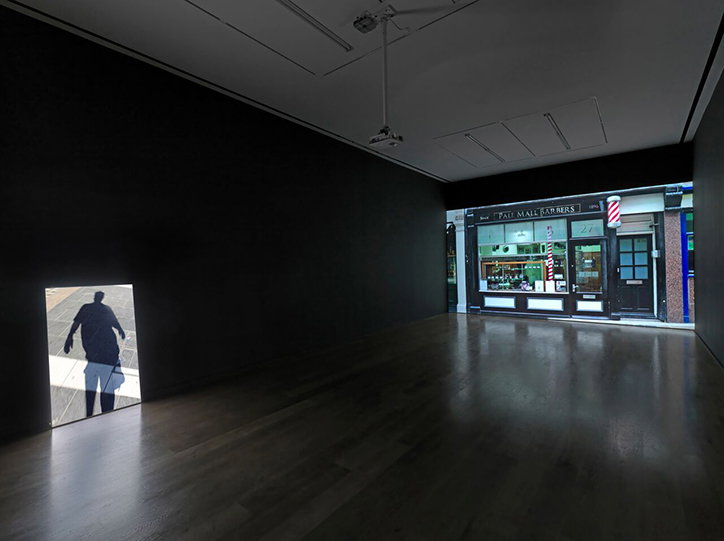
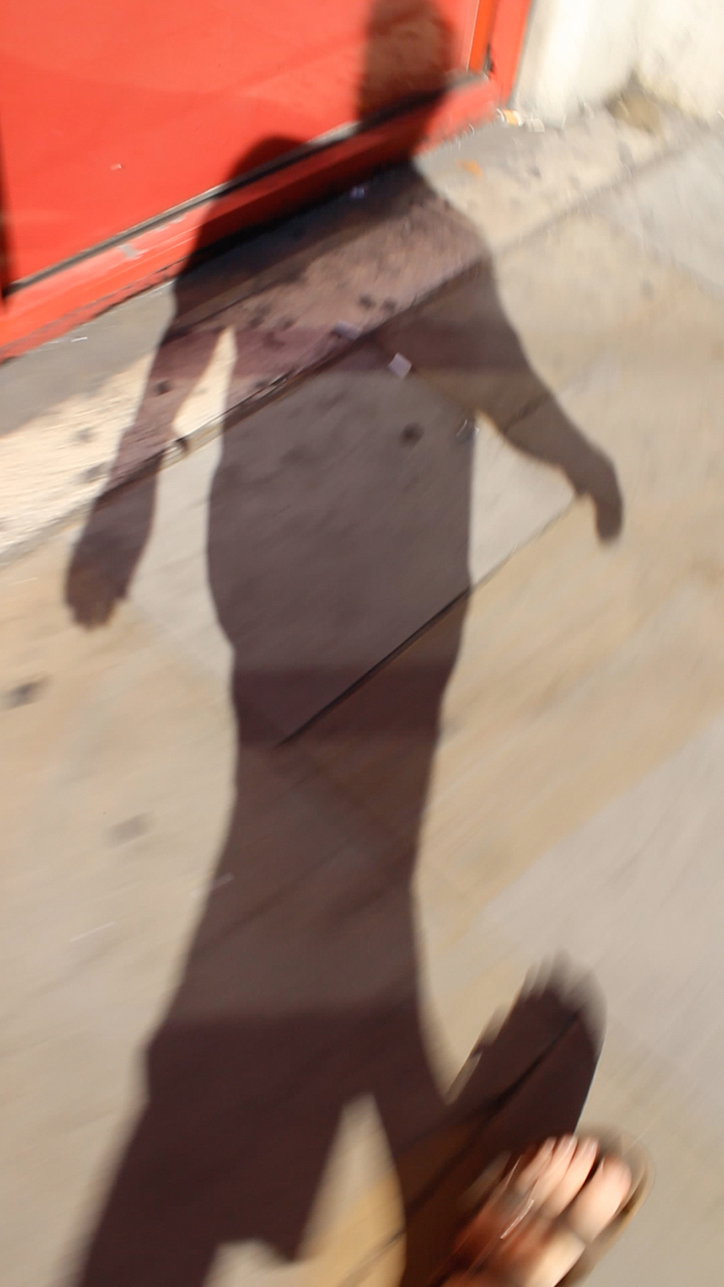
The exhibition also features Ever Since, a to-scale projection of a barber’s shop front. Filmed on a two-second loop, the ever rising red and white spiral above the shop door creates the false impression of time passing, while the clock on the inside wall is stuck at the same minute. In the same space is Shadow Walker, a 2011 film that Wallinger made by stringing a camera round his neck and holding it in position with further string between his teeth, capturing his shadow as he walked along London’s Shaftesbury Avenue. The film considers the notion of the flaneur (someone who wanders around observing society) and Peter Pan’s lost shadow, and its position in the gallery – leaning on the floor against the wall – reiterates these central concerns.
The final work is Orrery, a film of a roundabout in Barkingside. By tacking his iPhone to the driver’s side window, Wallinger filmed the Oak tree at the centre of the roundabout and the surrounding area throughout the year. The film is presented on four screens mounted on stands that encourage you to view the work with the same motion as a car has going round and round a roundabout. The Oak tree was planted as part of the Festival of Britain in 1951 and commemorates the Fairlop Oak that had stood for centuries in Hainault Forest. Like much of Wallinger’s practice it makes a comment on our personal and national identity, history and society by emphasising and exaggerating every day moments that can otherwise pass us by.
Installation view, ‘Mark Wallinger: ID’, Hauser & Wirth London, 2016 © Mark Wallinger
Courtesy the artist and Hauser & Wirth, Photo: Ken Adlard
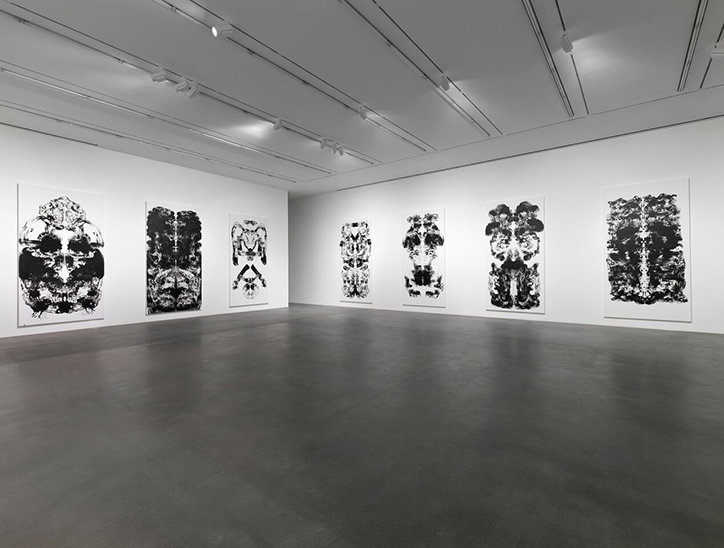
Installation view, ‘Mark Wallinger: ID’, Hauser & Wirth London, 2016 © Mark Wallinger
Courtesy the artist and Hauser & Wirth, Photo: Ken Adlard
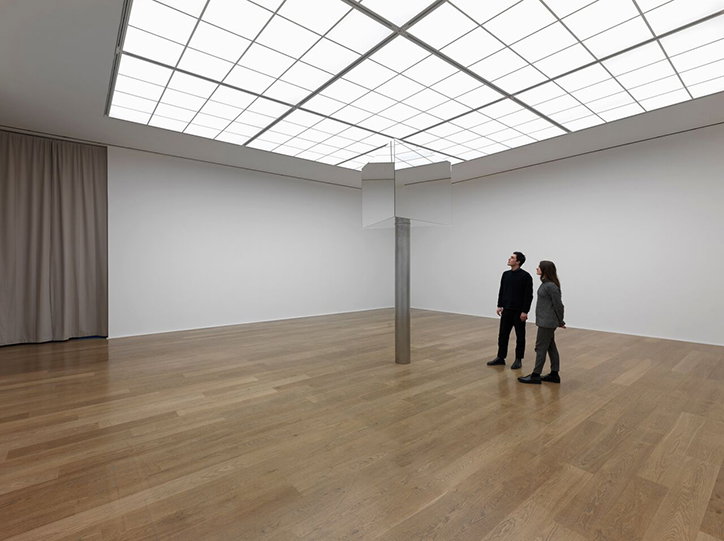
Installation view, ‘Mark Wallinger: ID’, Hauser & Wirth London, 2016 © Mark Wallinger
Courtesy the artist and Hauser & Wirth, Photo: Ken Adlard
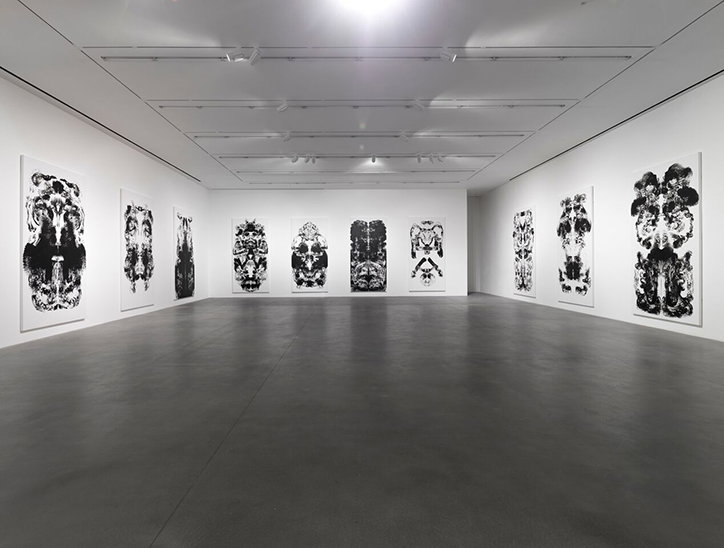
Installation view, ‘Mark Wallinger: ID’, Hauser & Wirth London, 2016 © Mark Wallinger
Courtesy the artist and Hauser & Wirth, Photo: Ken Adlard
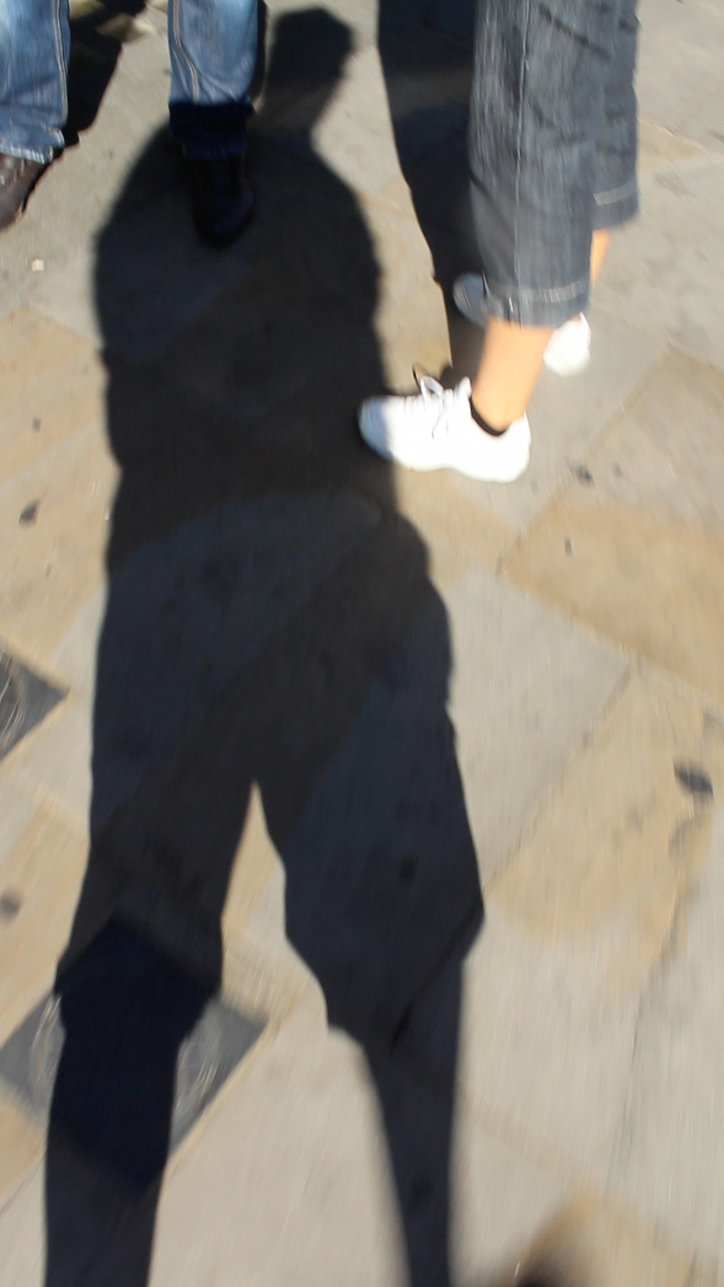
Installation view, ‘Mark Wallinger: ID’, Hauser & Wirth London, 2016 © Mark Wallinger
Courtesy the artist and Hauser & Wirth, Photo: Ken Adlard
Installation view, ‘Mark Wallinger: ID’, Hauser & Wirth London, 2016 © Mark Wallinger
Courtesy the artist and Hauser & Wirth, Photo: Ken Adlard
Installation view, ‘Mark Wallinger: ID’, Hauser & Wirth London, 2016 © Mark Wallinger
Courtesy the artist and Hauser & Wirth, Photo: Ken Adlard
Share Article
Further Info
About the Author
—
Billie studied illustration at Camberwell College of Art before completing an MA in Visual Communication at the Royal College of Art. She joined It’s Nice That as a Freelance Editorial Assistant back in January 2015 and continues to work with us on a freelance basis.