We speak to Michael Schoner about the mini-architecture of his Z Steps
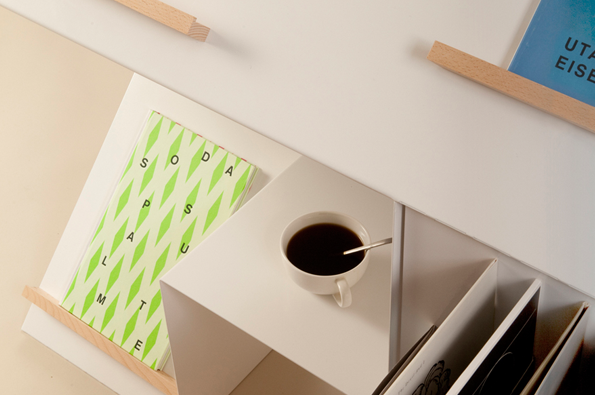
Amsterdam-based architect and designer Michael Schoner is responsible for these pieces, and yep, they’re pretty damn great. They can store and display objects in all sorts of different configurations, and the furniture itself can be swapped and changed around – a bit like life-size lego blocks.
It’s the kind of item you imagine might, some day, be in your super-awesome penthouse apartment where you’ve so much extra storage space that you can have this little exhibition area for all the amazing stuff you’ve somehow acquired. But for now, we’re in the real world and very happy to sit back and appreciate Michael’s Z Steps, and discuss the work with the great man himself.
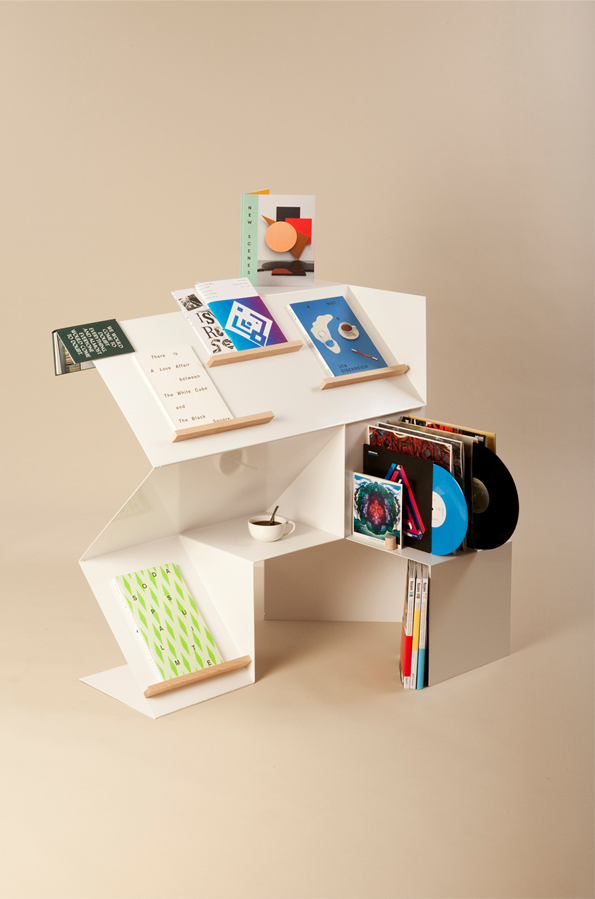
Michael Schoner: Z Step. Sheet metal
Hi Michael, firstly, are these works designed with retail or home-living in mind, or both?
I designed the Z Steps more with retail in mind, however I have gotten some feedback from people, stating that they could also imagine it in their house. To me they are better for highlighting a selection of objects rather then storing a lot of them. Furthermore, they are best to be seen from all sides, so it is better if they are central in the room and to be walked around. If you have the space to put a 1 × 1 × 1 meter shelf-across in your house, then great! Ok, you can also put them in one line, and then they are 33cm wide and up to 132cm long…
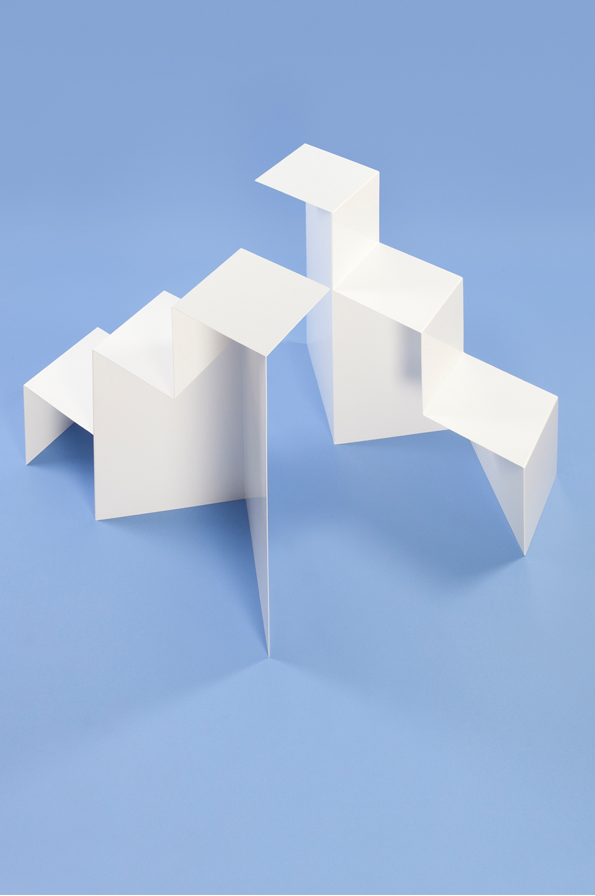
Michael Schoner: Z Step. Sheet metal
How did they develop?
I have only (fully) started my office a year-and-a-half ago with the focus on furniture and objects. Before that, I worked as an architect. When I went solo, I started to hear from a lot of friends that most industrial designers earn a living by making interiors or exhibitions, while only investing into their products. So I thought, why not do both and come up with something that one can buy as object, but could also lead to furnishings for an ideal store. It would be nice to think of the rest of the shop.
The easiest way to start designing is to fold some paper. Folds make something strong, but also introduce a rhythm. One fold supports the other. It is just turned perpendicular to it; this is how you get one step.
In CAD programs you have isometric views. If you look at the Z Step from those views, the lines that would previously be zig-zagging become rectangular, while the “straight” steps start to zig-zag. It unsettles your habits of perception. I’m also very curious about things that from one point of view form a body only to reveal that they are just a two-dimensional surface as the perspective changes. Sometimes they are a thing, sometimes they are a plane. It’s mini-architecture.
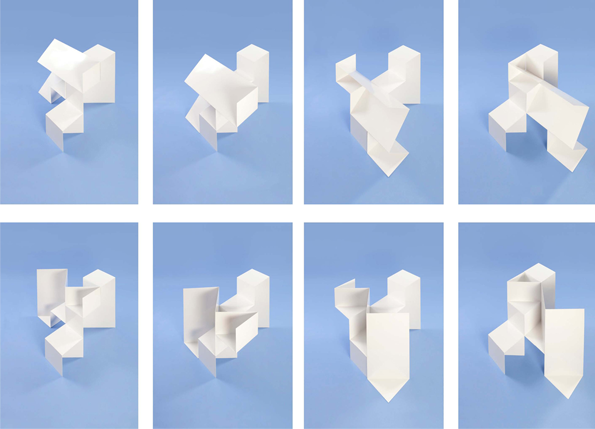
Michael Schoner: Z Step. Sheet metal (different configurations)
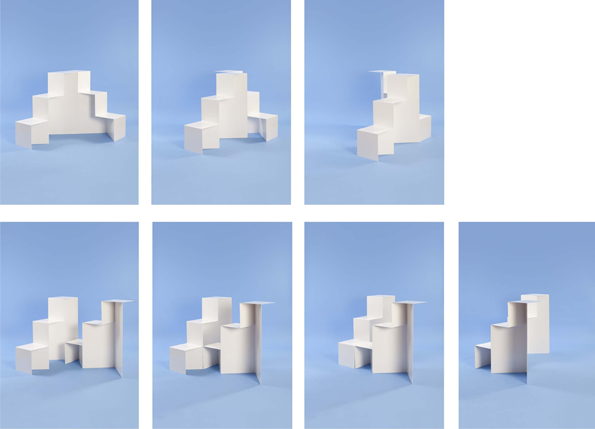
Michael Schoner: Z Step. Sheet metal (different configurations)
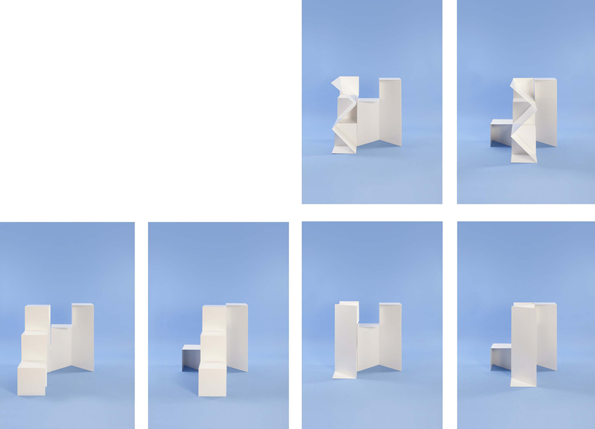
Michael Schoner: Z Step. Sheet metal (different configurations)
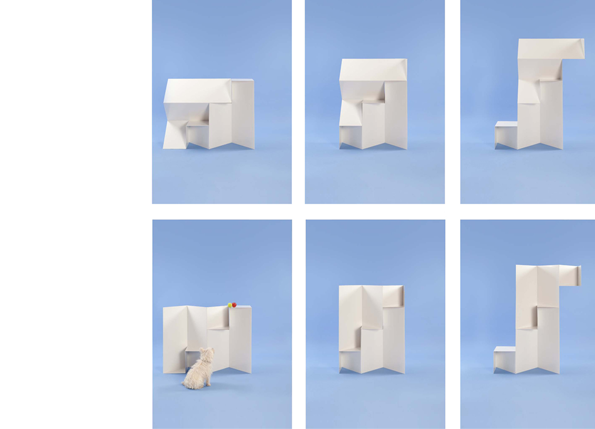
Michael Schoner: Z Step. Sheet metal (different configurations)
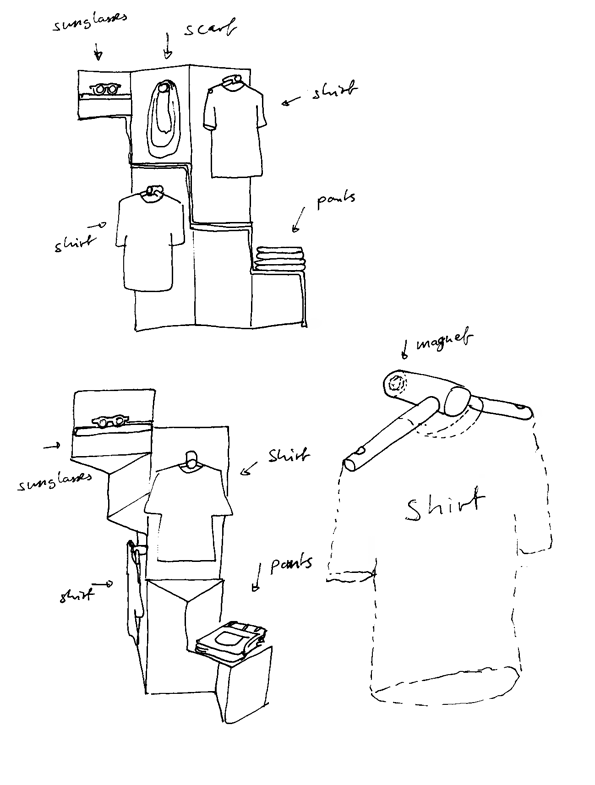
Michael Schoner: Z Step (sketches)
We notice that the pieces emphasise display; did you wish to create a system for both storage and mini-exhibition?
Well, it’s almost going in the other direction: I’m even happy with them without them storing or displaying anything. This is why I also shot so many images without magnetic helpers. To me it is more like a usable sculpture. But I also like to keep it open to the user to experiment and find out for themselves what to do with them.
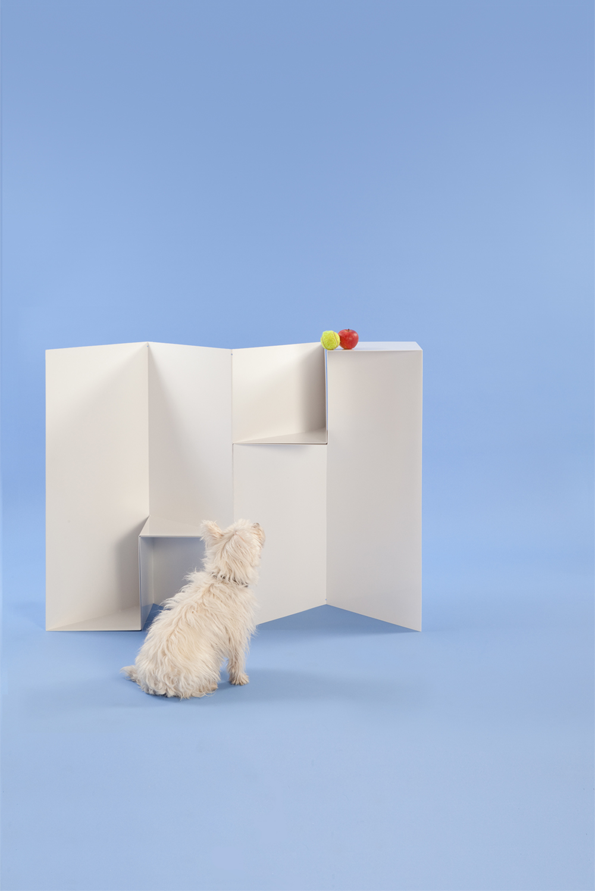
Michael Schoner: Z Step. Sheet metal
Can the work be configured and arranged in a variety of combinations, and was this important while you were developing it?
The Z Step really is a system. It is two times exactly the same shape, but since all the steps are the same dimensions one can flip and turn them how you want. There are 14 combinations of how to stack them and even more how to set them next to each other. Each hold different display chances from different sides.
I like systems! They give you a little hold of why things should be the way they are and it’s nice to mess up those systems, or if the twist your perception.
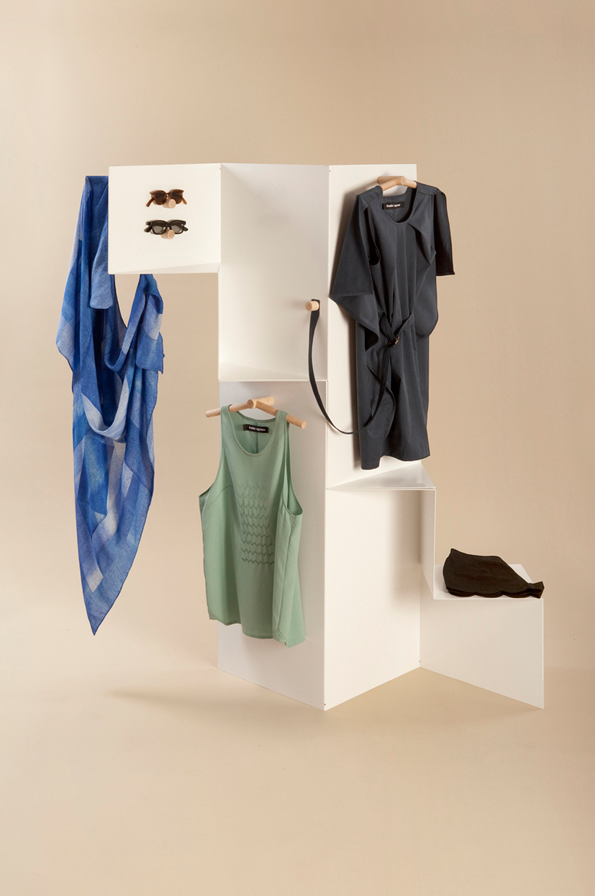
Michael Schoner: Z Step. Sheet metal.
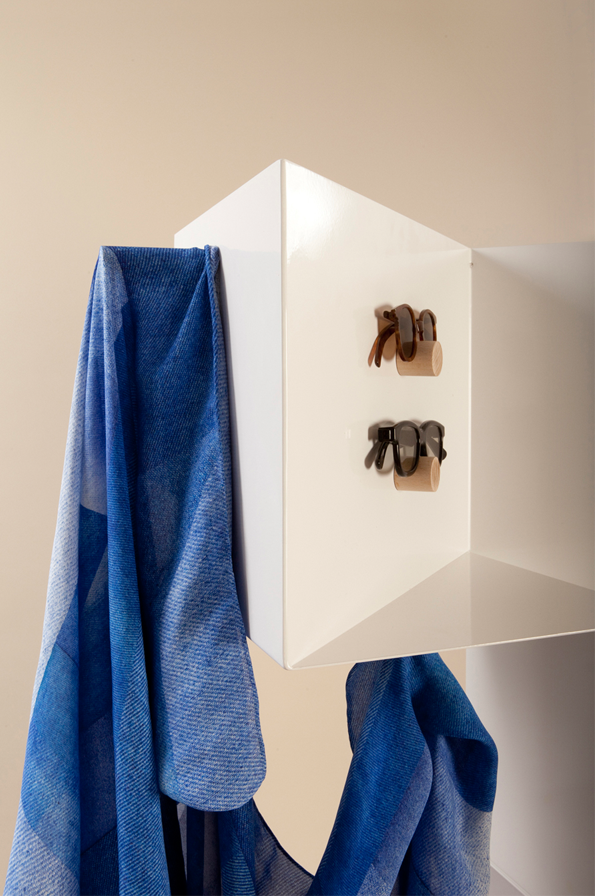
Michael Schoner: Z Step. Sheet metal.
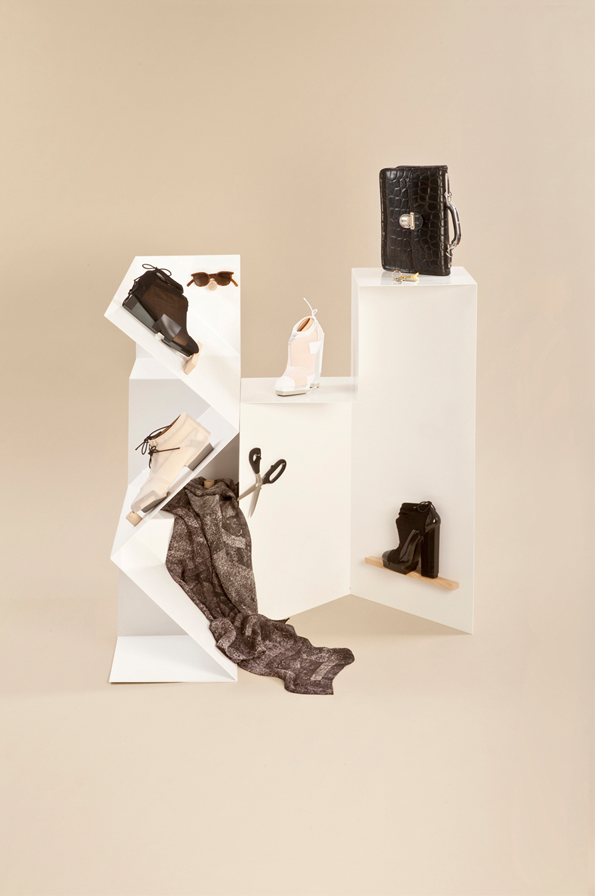
Michael Schoner: Z Step. Sheet metal.