Launch Recite Me assistive technology
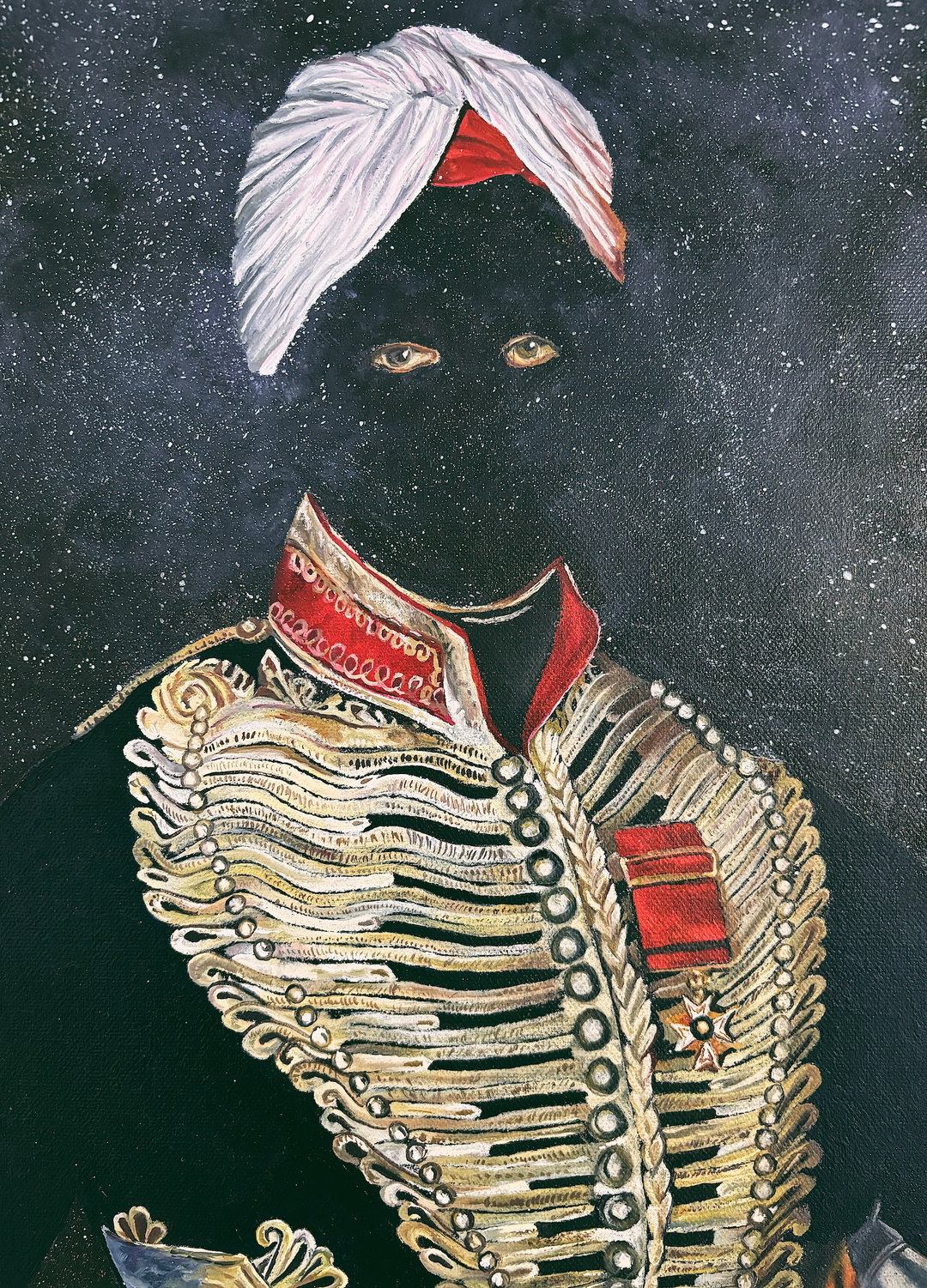
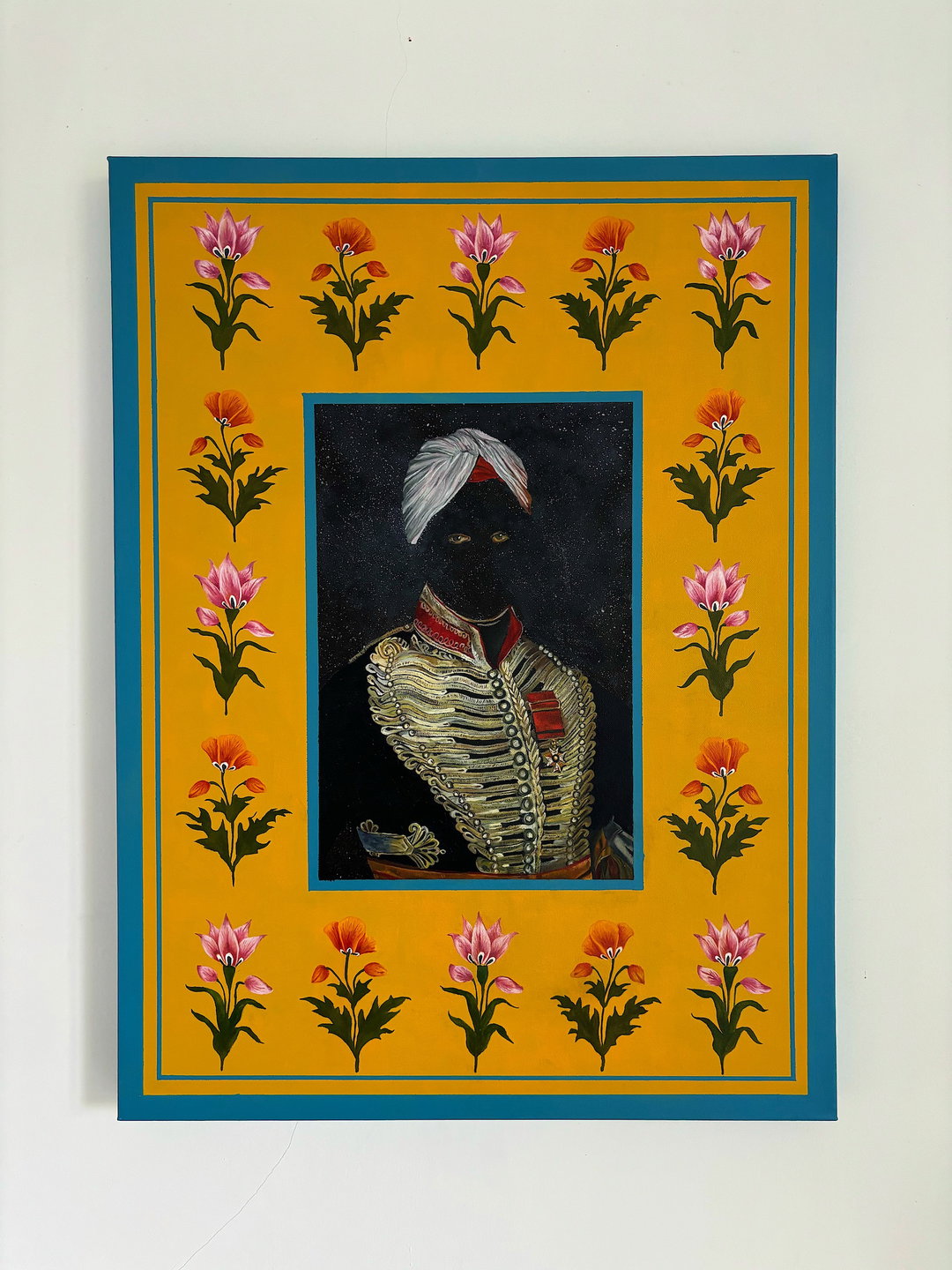
A painting of a figure in an ornate, gold-braided military jacket and a white turban. Their face is a void of solid black, set against a dark, starry background. The portrait is framed by a wide yellow border decorated with pink and orange flowers.

Sid Pattni’s portraits unpack the internalised colonial gaze

The Melbourne-based artist explores his own identity as a first-generation Indian migrant and how that intersects with broader colonial histories.

—
Date
8 May 2025

The above portrait depicts James Skinner (1778-1841), a British officer of Scottish-Indian heritage. It’s part of Sid Pattni’s series of paintings: A Knot in the Thread. “Skinner felt a genuine connection towards India, but he maintained loyalty to the British and saw himself as part of the colonial project,” explains the Melbourne-based artist. The officer was one of the leading patrons of Delhi artists, and commissioned a large collection of paintings. “By commissioning art that upheld Orientalist views, he contributed to a visual narrative that simplified and exoticised India – a place his own mother came from,” Sid comments.

In his own painting, the artist erases James Skinner’s face to signal this paradox of the internalised colonial gaze: “The struggle of belonging to two worlds but ultimately being complicit in the colonial project.” In doing so, the painting questions identity when a person is both complicit in, and shaped by, an oppressive system. “This distortion not only shaped how India was perceived externally, but also how generations of Indians, like me, came to internalise and inhabit Western projections of ‘Indian-ness’,” he says.
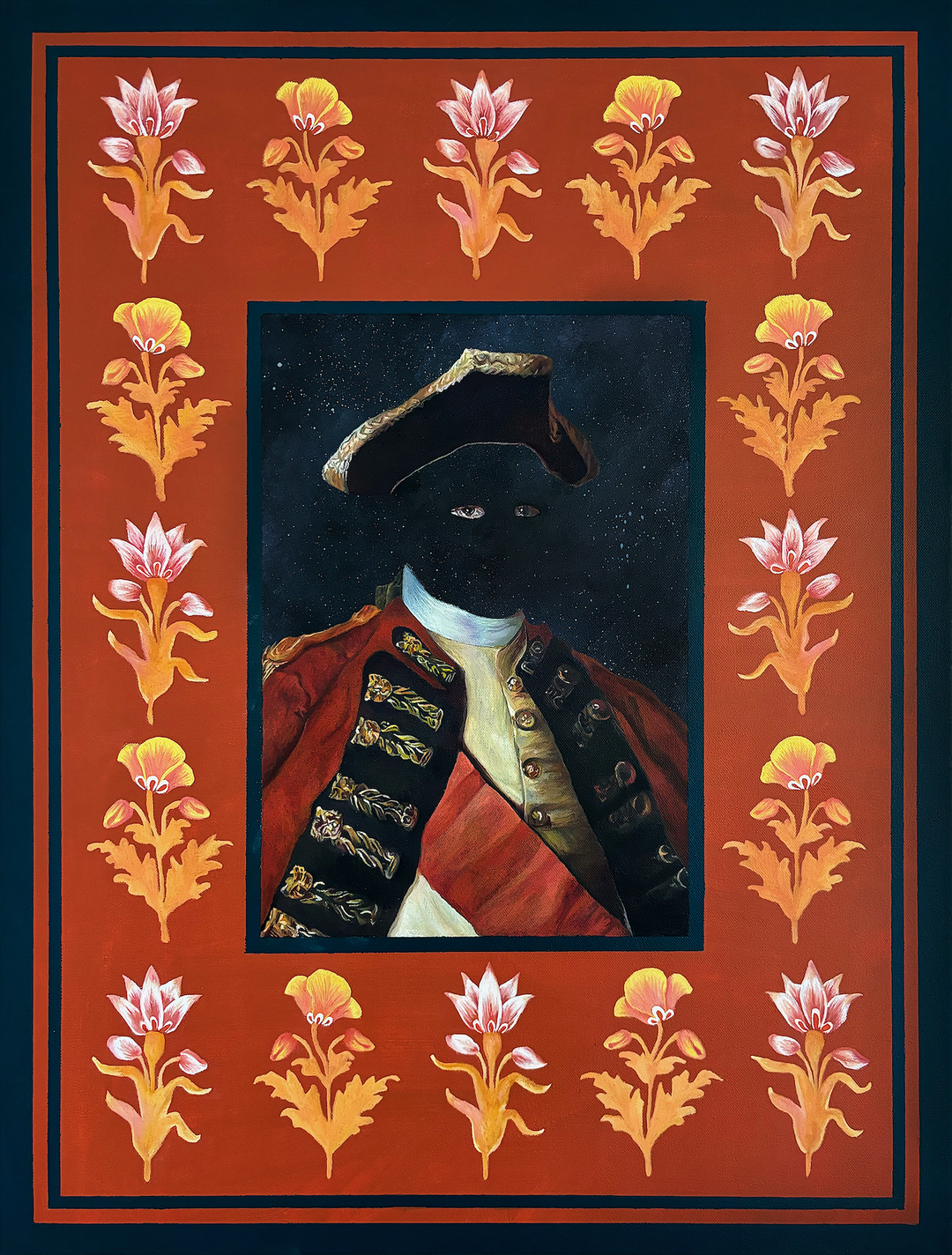
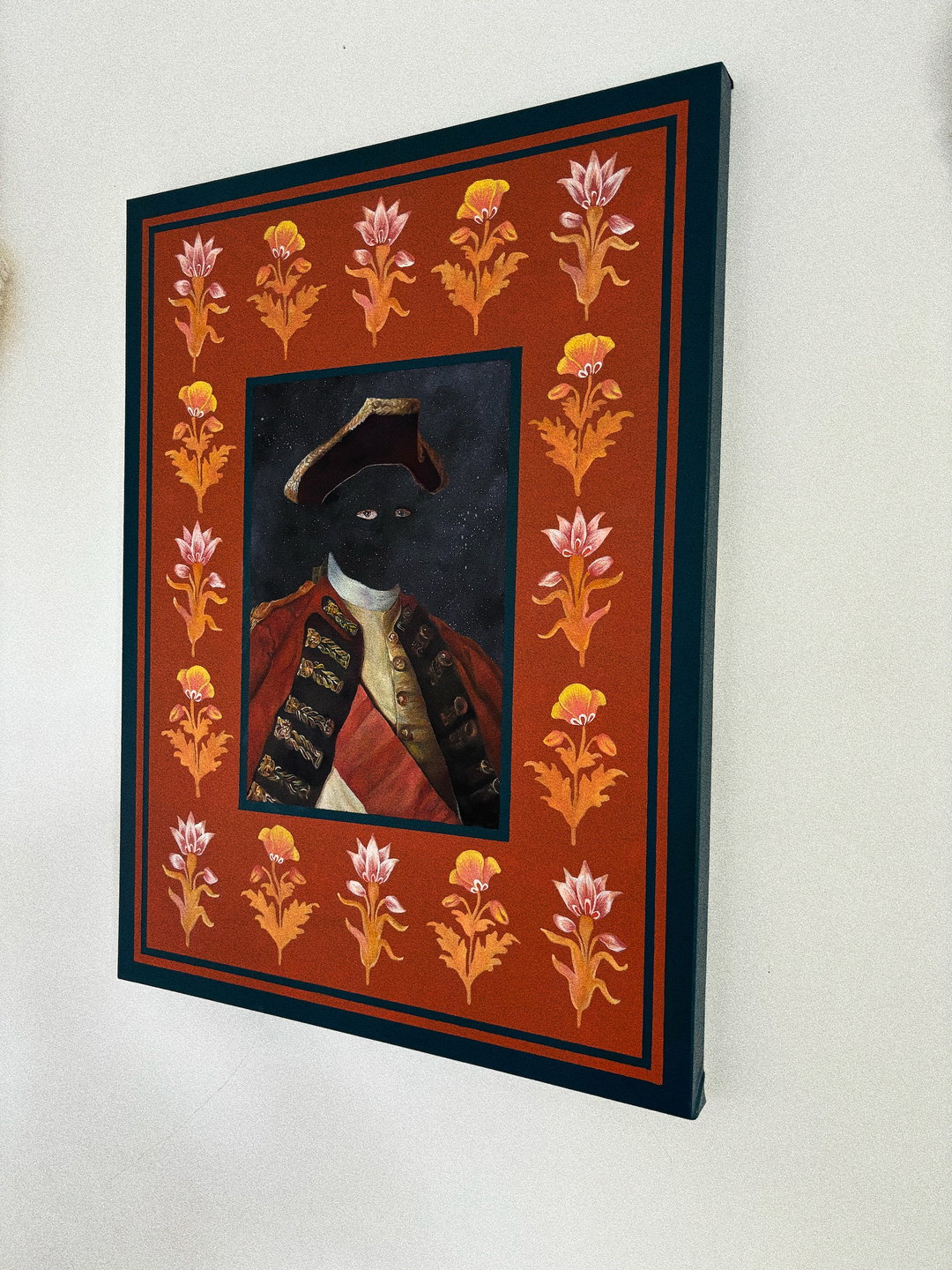
A painting of a figure in a red and gold military uniform and a tricorne hat. Their face is a void of solid black, set against a dark, starry background. The portrait is framed by a red border decorated with a repeating pattern of yellow and pink flowers.
Above

Sid Pattni: A knot in the thread I – A knot in the thread series (Copyright © Sid Pattni, 2025)

Born in London, Sid grew up in Kenya and moved to Australia when he was 13. “Art was always a constant presence,” he says. “I was raised in an environment that encouraged exploration and play, which naturally led me to various forms of storytelling – whether through music or painting.” It wasn’t until later that he understood art as more than an expressive medium. “It became a means of navigating and reconciling the complexities of identity and history. This realisation marked a shift in my practice and prompted a deeper interrogation of my experiences as a first-generation Indian migrant and how that intersected with broader colonial histories.”

His work now explores how diasporic communities understand themselves through visual languages shaped by colonial histories. Many colonial paintings were used as tools of power. “They weren’t just paintings; they were declarations of dominance, reinforcing hierarchies of race, class and power,” says Sid. “By taking that visual language and repurposing it, I’m questioning what those images meant then and what they mean now.”

For Sid, these artworks aren’t about historical accuracy, but about embracing “getting it wrong” to better reflect the present moment. Through this process of reinterpreting visual narratives, he is reclaiming space, shifting the story from one of imposition to self-definition. Ultimately, he hopes the work encourages viewers to see how history and identity are not fixed truths. “For those who see themselves in these works – who understand the experience of being between cultures – I hope it offers a sense of recognition, of seeing something that speaks to the complexity of that in-between space,” he ends.
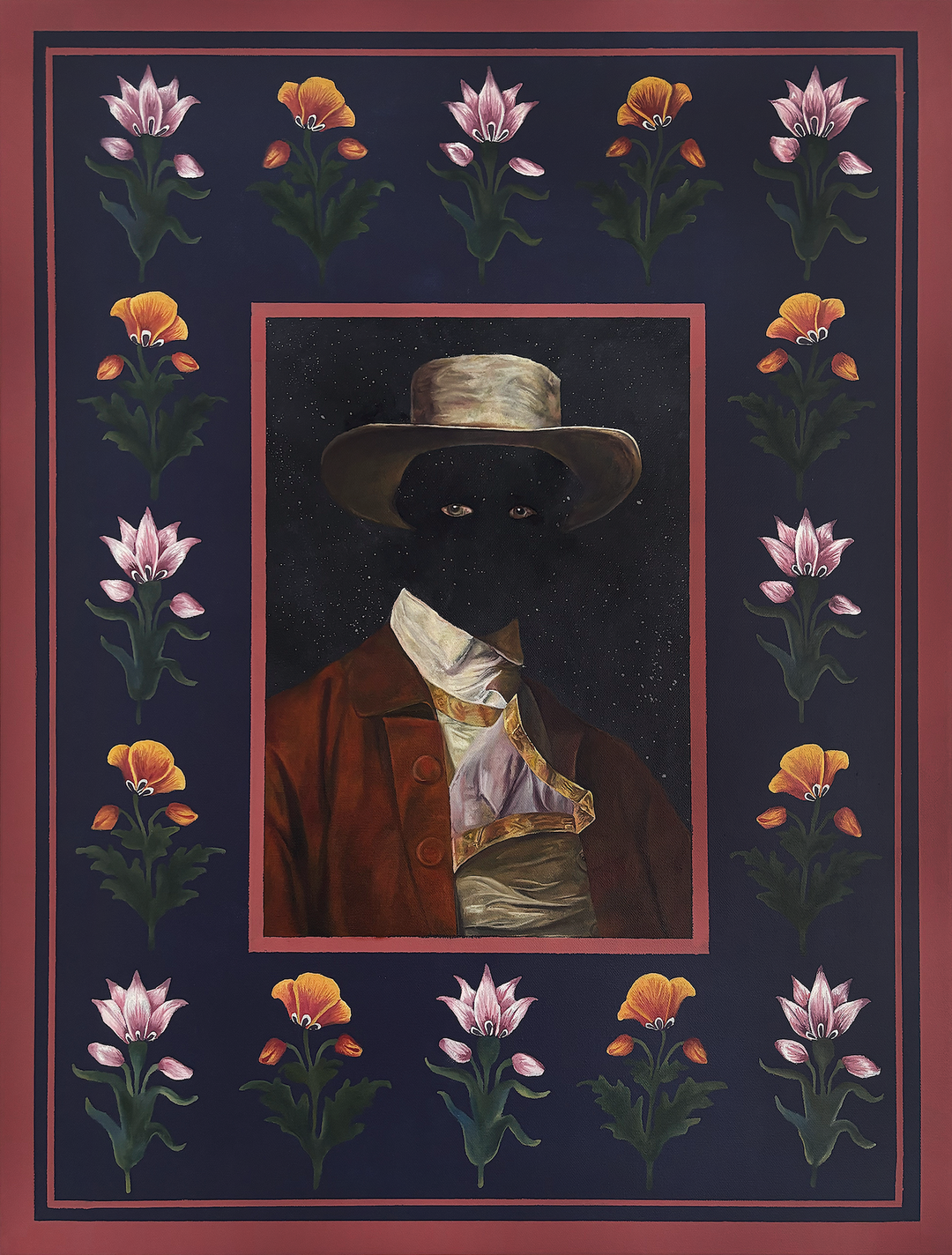
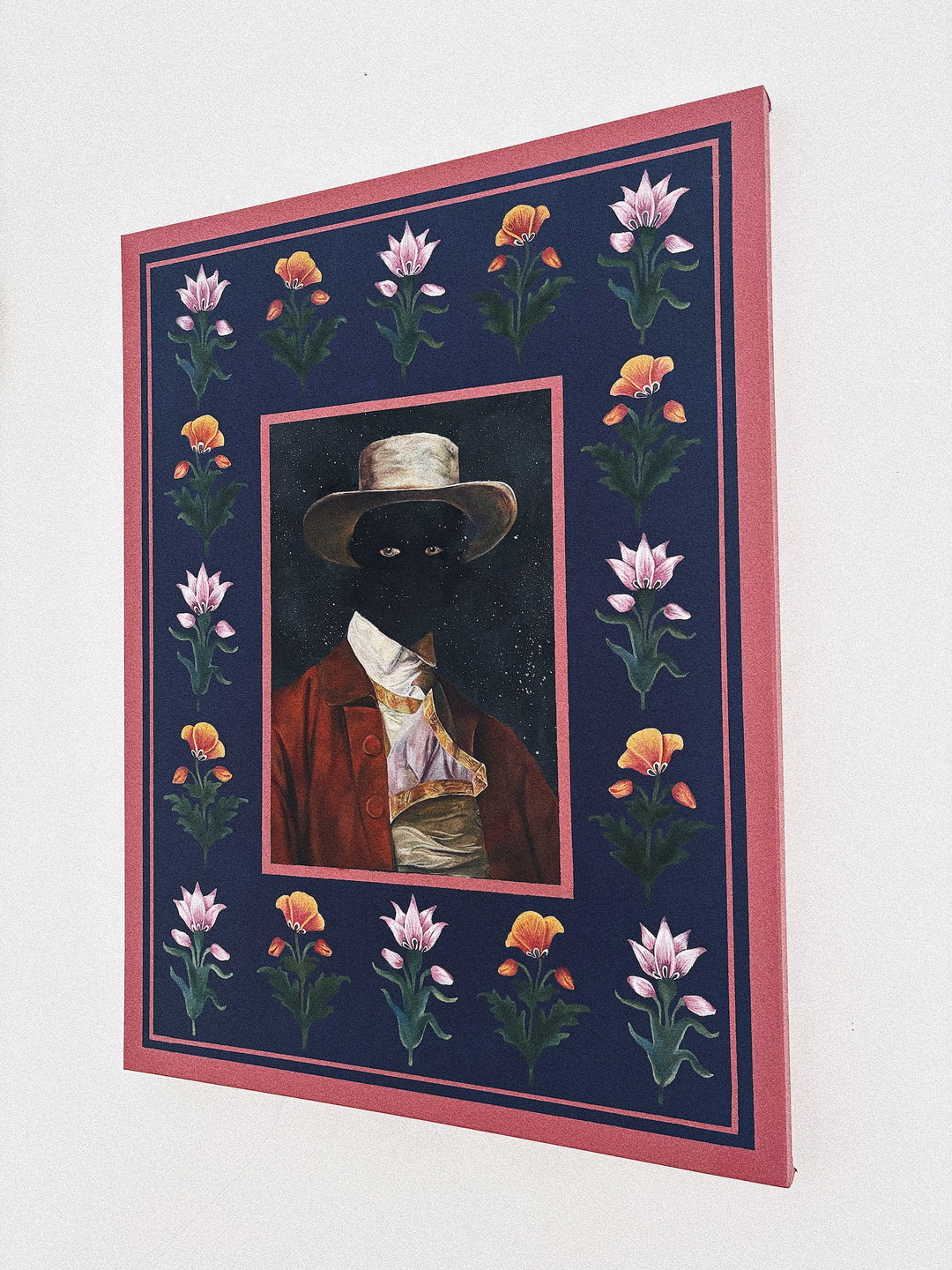
A painting of a figure in a wide-brimmed hat and red coat, their face a dark, featureless void with two small glowing eyes. The portrait is set within a dark blue border decorated with a repeating pattern of pink and orange lilies.
Above

Sid Pattni: A knot in the thread III – A knot in the thread series (Copyright © Sid Pattni, 2025)

GalleryA knot in the thread series (Copyright © Sid Pattni, 2025)
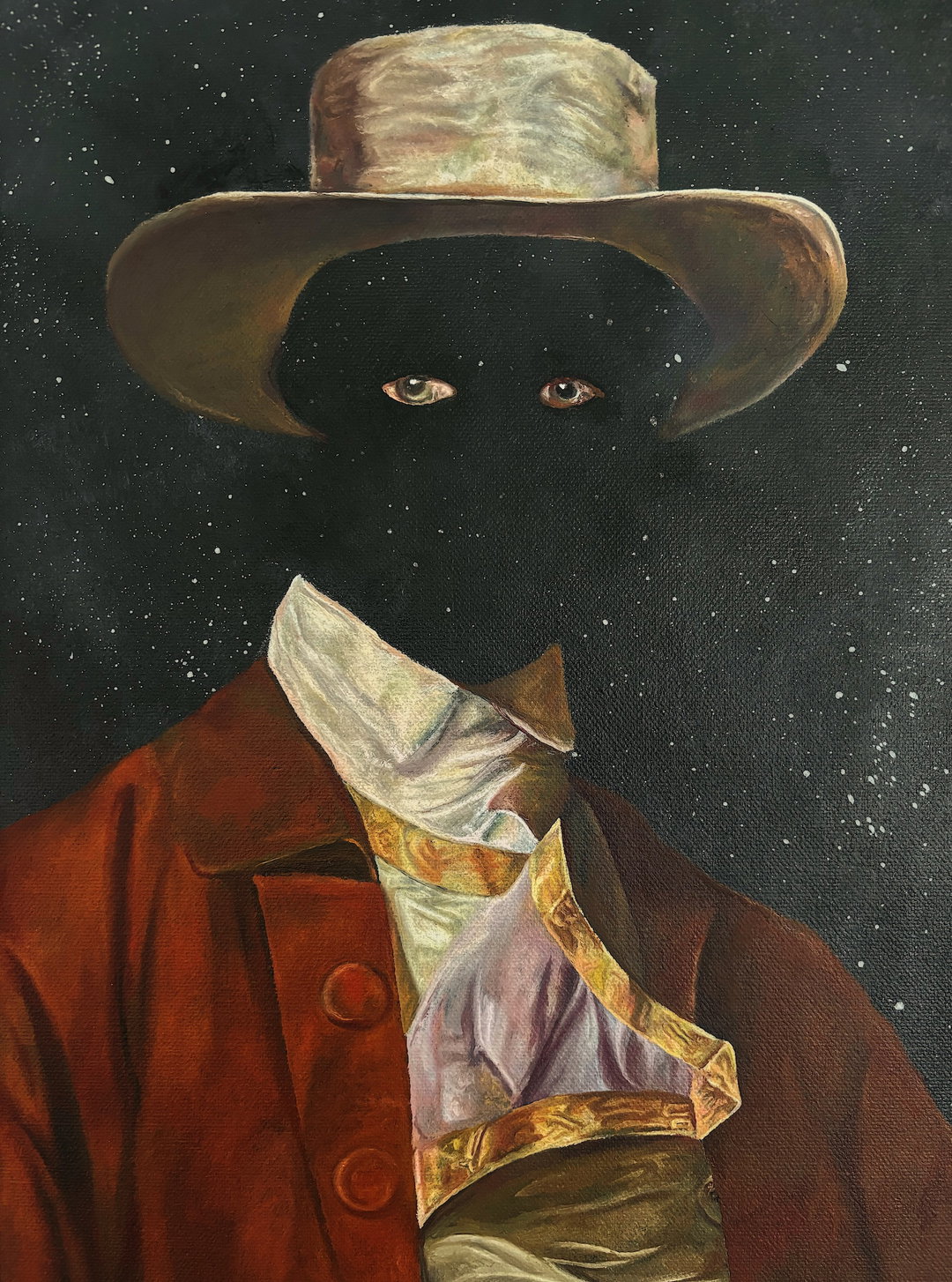
A painting of a figure wearing a wide-brimmed hat and a red coat with gold trim. Their face is a void of black space filled with stars, with only two eyes visible.
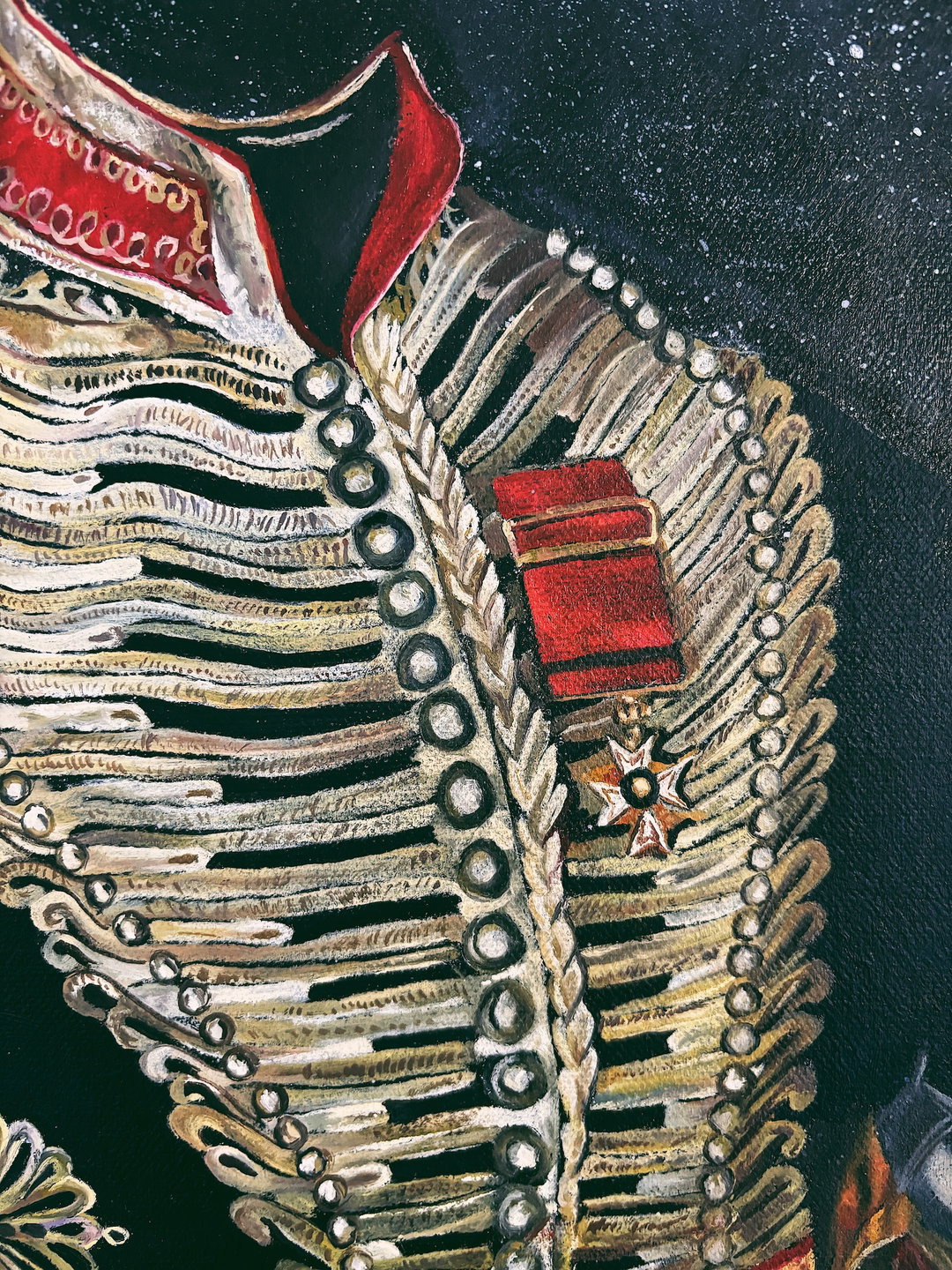
A close-up painting of a military uniform with a high red collar and ornate gold braiding. A red ribbon and a gold cross medal are pinned to the chest.
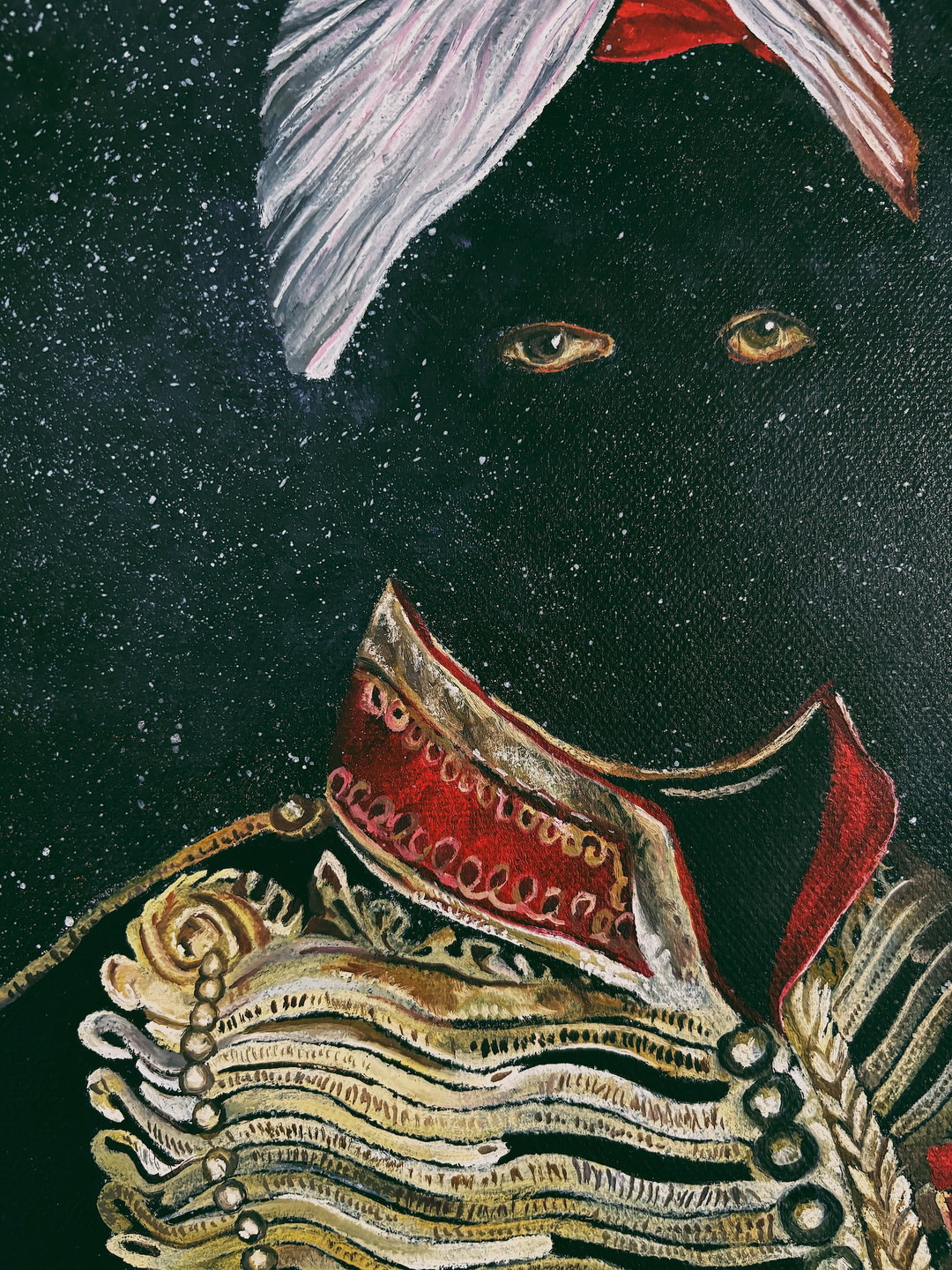
A painting of a figure in an ornate military uniform with a high red collar and gold braided detailing. Their face is a void of black, speckled with white dots like a starry sky, with two realistic eyes peering through.
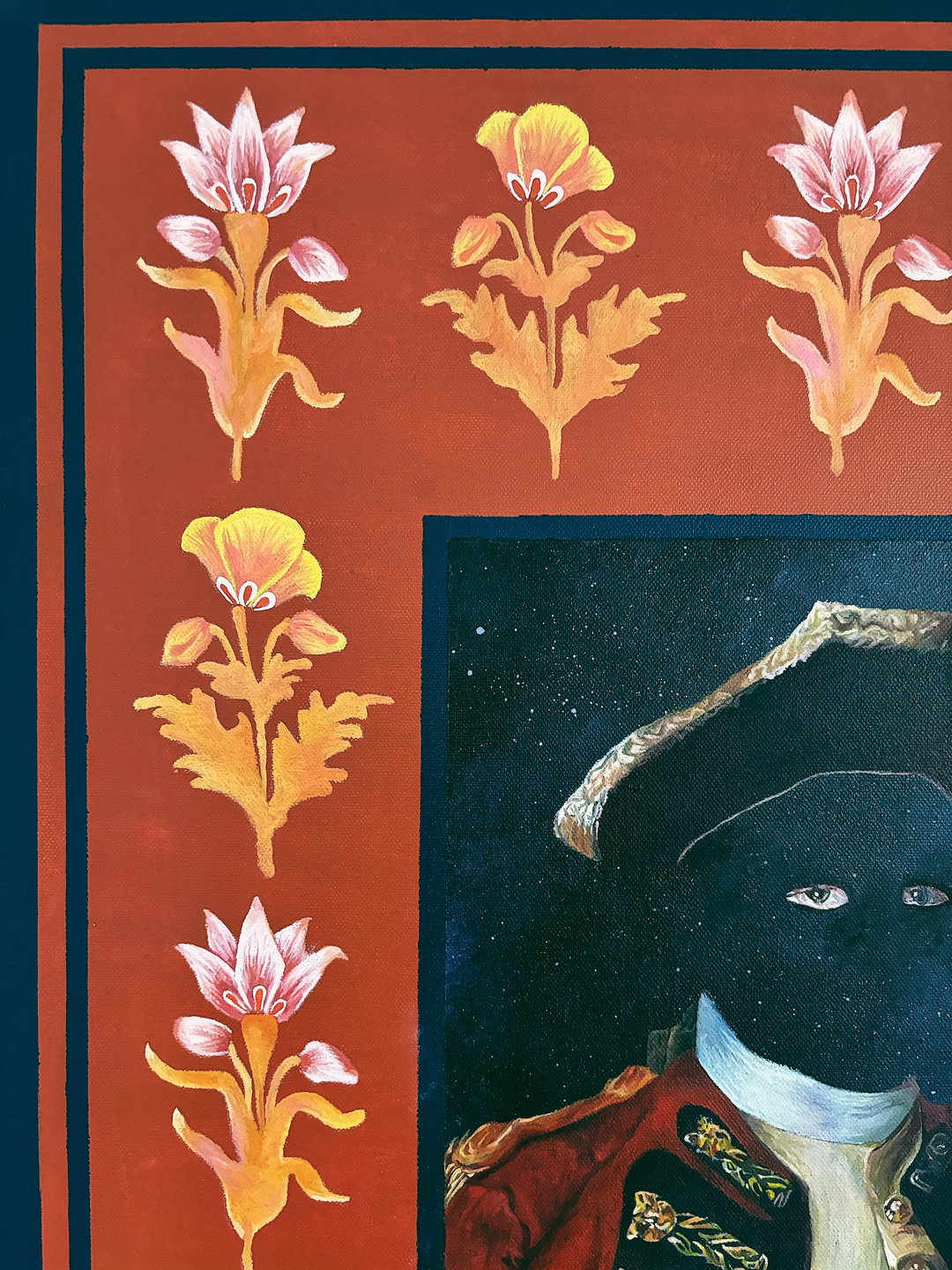
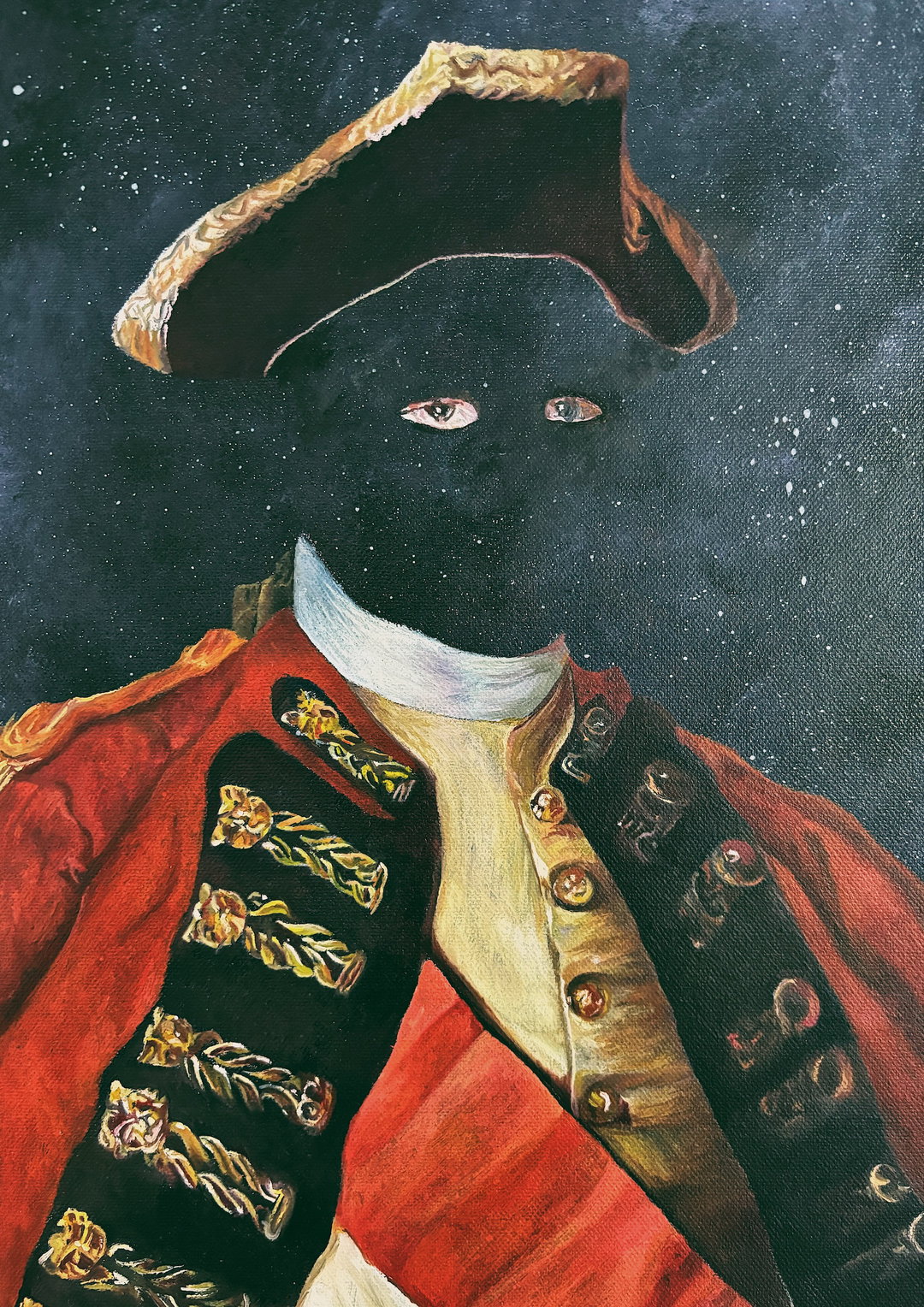
A painting of a figure in a red military jacket and a gold-trimmed hat. Their face is a void of black stars, with only two pale eyes visible. The portrait is framed by a red border decorated with stylised yellow and pink flowers.
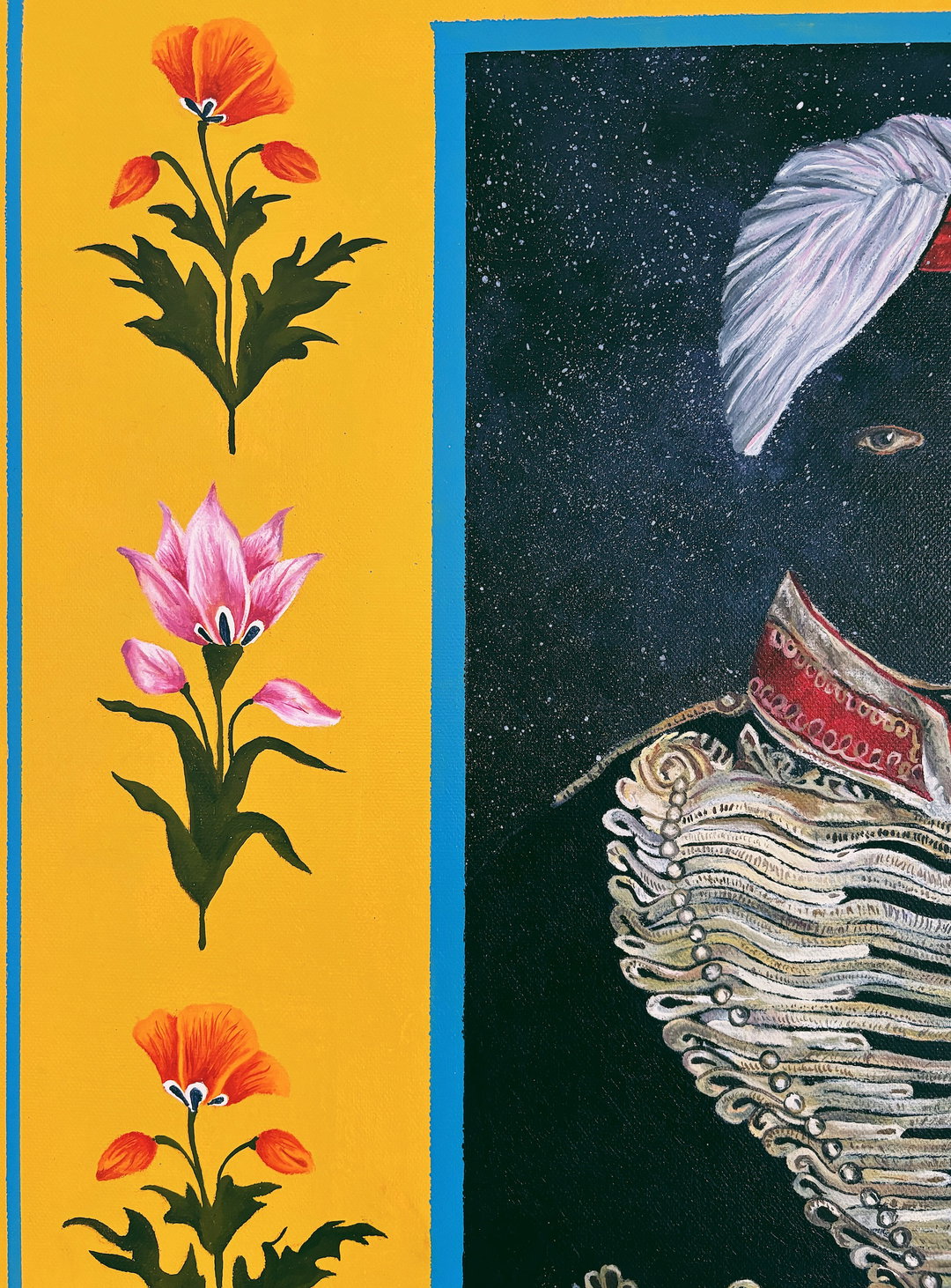
A painting of a figure wearing a white turban and ornate, layered jewellery against a dark, starry background. To the left, a yellow border features a vertical row of stylised orange and pink flowers.
A painting of a figure wearing a wide-brimmed hat and a red jacket, their face obscured by deep shadow. The portrait is set within a dark blue border decorated with a repeating pattern of pink and orange lilies.
A painting of a figure in an 18th-century red military jacket and tricorne hat. The figure’s face is a void of solid black, set against a dark background. This central portrait is framed by a wide red border decorated with a repeating pattern of orange and pink flowers.
A painting of a figure in an 18th-century red military coat and a gold-trimmed tricorne hat. Their face is a dark, starry void of space, with two human eyes peering through.
A painting of a figure in an ornate, gold-braided military jacket and a white turban. Their face is obscured by a dark, starry void, with only two eyes visible.
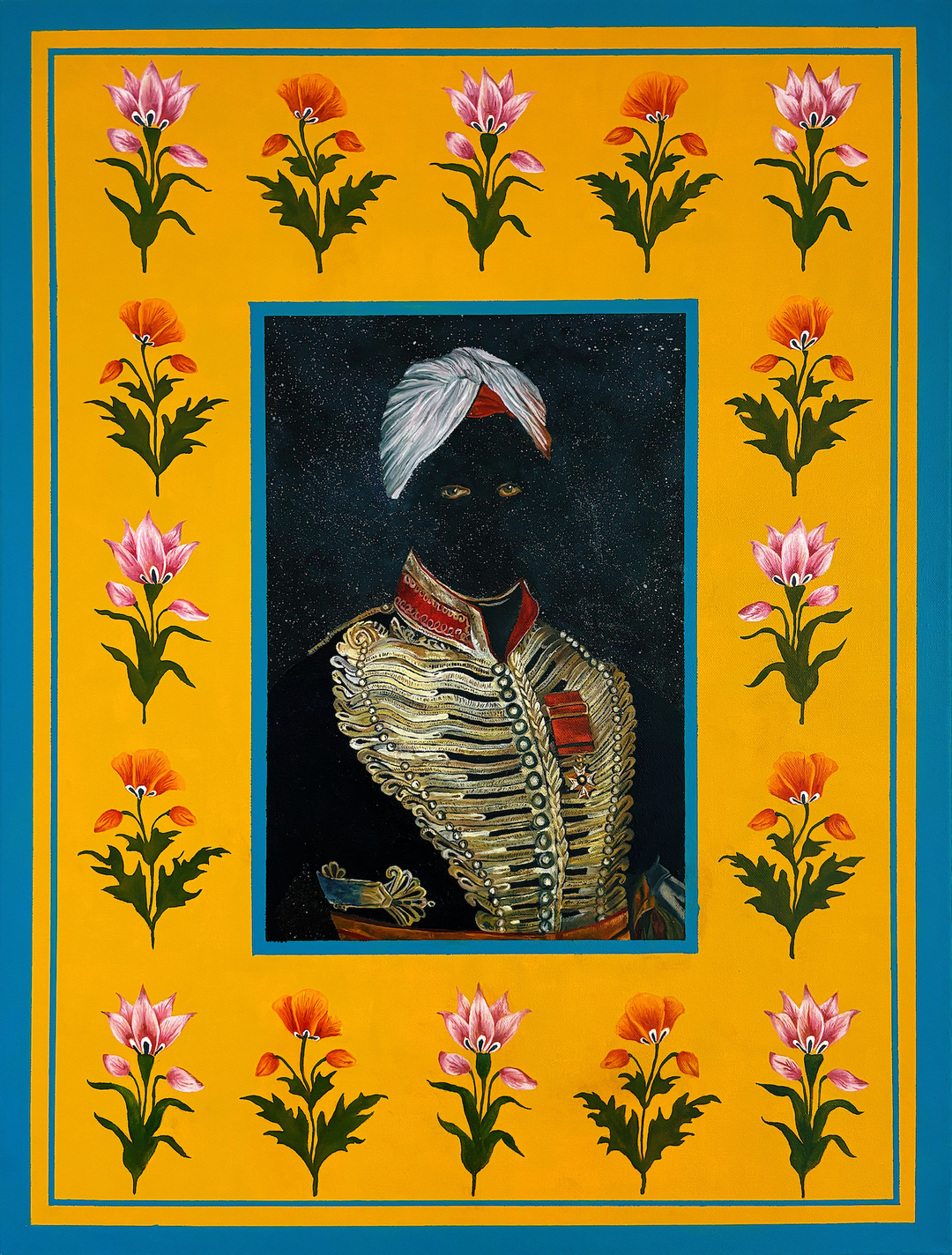
A painting of a figure in a white turban and an ornate, silver-detailed military jacket. The figure’s face is a void of solid black, set against a dark background. This central portrait is framed by a bright yellow border decorated with pink and orange flowers.

Share Article

Further Info

About the Author

Marigold Warner

—

Marigold Warner is a British-Japanese writer and editor based in Tokyo. She covers art and culture, and is particularly interested in Japanese photography and design.

It's Nice That Newsletters

Fancy a bit of It's Nice That in your inbox? Sign up to our newsletters and we'll keep you in the loop with everything good going on in the creative world.