Talia Ramkilawan’s tapestries are vessels for celebrating her identity and for dealing with trauma
In her work, Talia Ramkilawan attempts to unpack her lived experiences as a queer Indian wxman growing up in South Africa.
“Talia is building a house. She has been since 2018. This house has been for herself – a meeting place, a waiting room, a place where thoughts settle on sofas and close doors behind them, much like the people who birthed them would,” writes Githan Coopoo in his introduction to textile artist Talia Ramkilawan’s first solo exhibition. Titled Aren’t We Always Having Indian Dreams?, this series of tapestries is also Talia’s first official body of work and it serves as a jumping-off point for several ideas that thematically underlie her practice – namely: friends, family, trauma and healing.
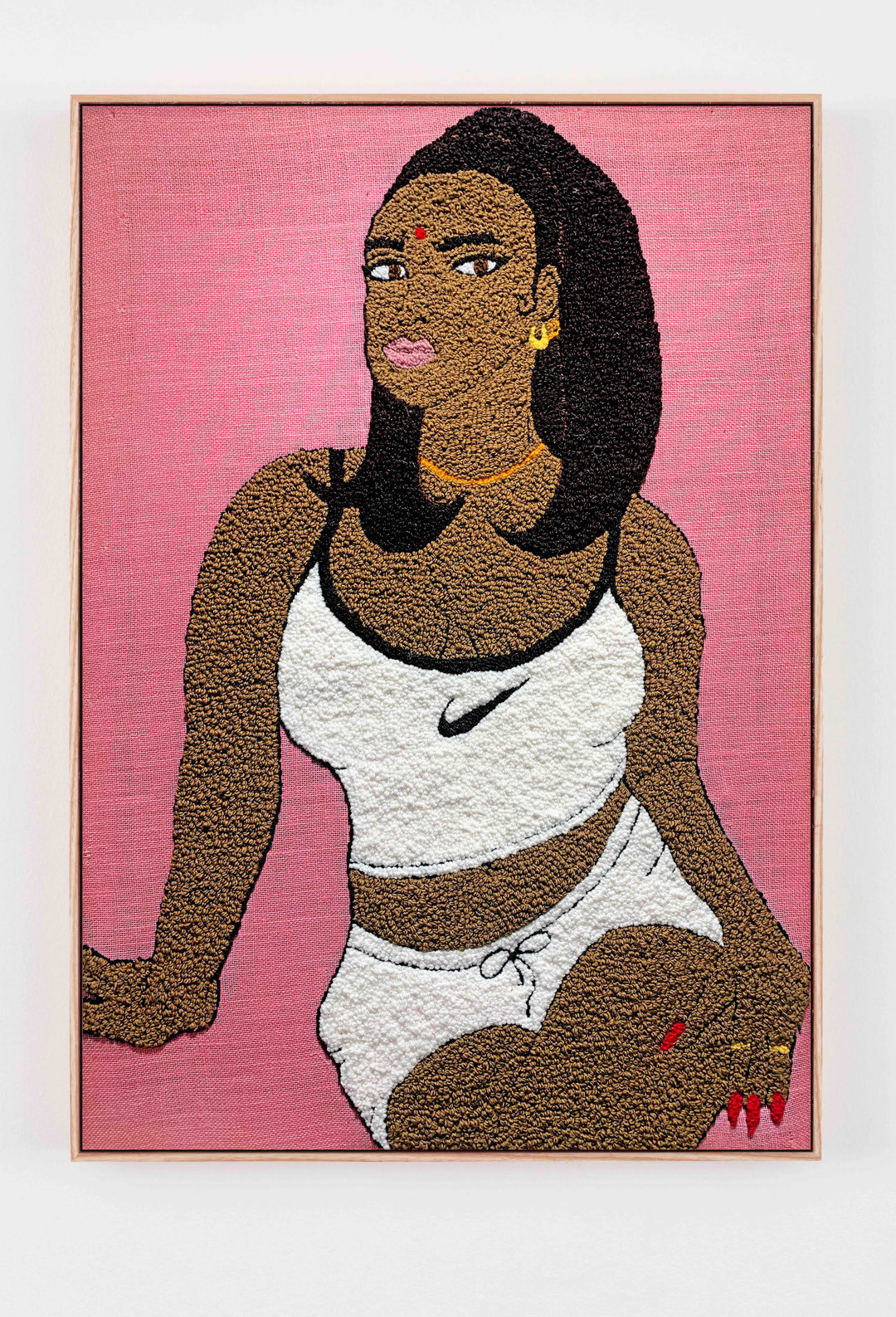
Born in Cape Town and raised in Nelspruit and later Pretoria, Talia’s path to art was first opened to her by an English teacher who encouraged her to be creative, and was then supported by her single mother, who pushed her in this direction against the wishes of her wider family. During her fourth year at Michaelis School of Fine Art in Cape Town, where she studied sculpture, she discovered rug-hooking, a process in which rugs are made by pushing loops of yarn through a stiff woven base using a punch needle. Talia was immediately fascinated by the craft and wasted no time in immersing herself in it. She adapted the tutorials she followed on YouTube to the materials she had at hand – a crochet needle, wool, and a wooden frame with stretched hessian over it.
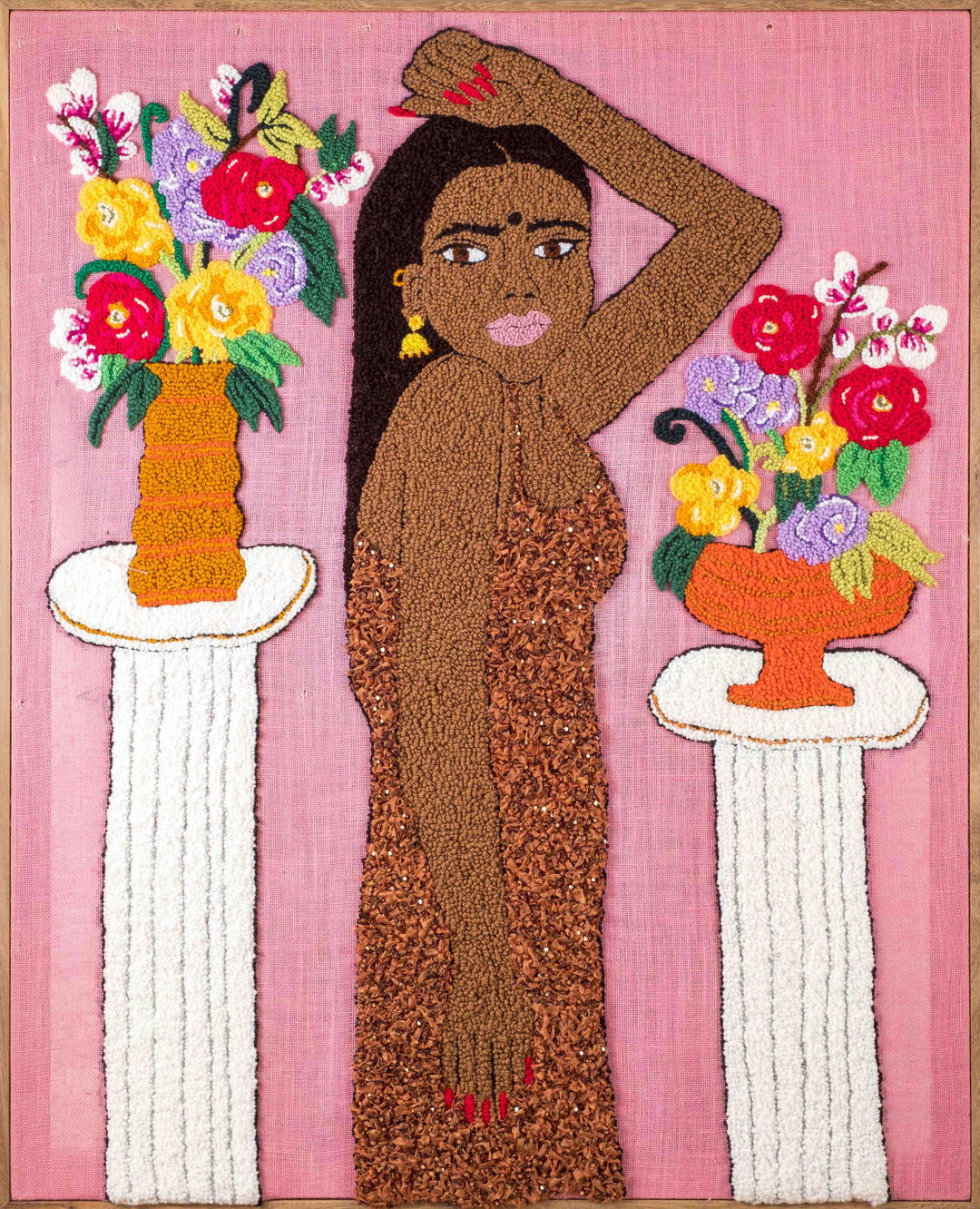
Talia Ramkilawan: Thinking about her thinking about me (Copyright © Talia Ramkilawan, 2021)
Talia found this process to be cathartic, transferring her thoughts and musings onto her artworks, where they could find a home away from her mind. The images themselves were the products of her imagination, “womxn” that she would just conjure into existence. “As my work developed I looked for inspiration from photographs of when I was growing up or [of] friends,” explains Talia. “Recently I have been moving more towards depicting contemporary scenes and people – I like the idea of immortalising these memories in tapestries.”
But more than just preserving the past, Talia’s work helps her to confront it. Through her creative process she deals with subjects that are a part of her lived experience – subjects such as South Asian identity, family dynamics, culture, and trauma. “My work deals with subverting the image of family trauma in relation to my own family and me by healing through making and by creating a presence,” she says. “I [place] an emphasis on community and the ‘Indian experience’, which is so important in cultural and art production, [helping to] disrupt the linear narrative and expose how trauma of the past resonates in the present.”
The tapestries also explore the intersections of Talia’s identity as a queer Indian womxn; the nuances of living a life made up of many different roles, communities, and places to belong. “Indian, yet not Indian enough, a daughter, a friend, queer, brown, tired yet so much more to give.” Making this work helps Talia to understand where she fits into all of this – “I have to make things to fully comprehend them”. Needless to say, her pieces are imbued with a sense of gentle curiosity of longing for answers. But there’s also a celebratory aspect to these works. Talia’s tapestries are works of self affirmation and they position the trauma within them not just as experiences to be worked through, but as fundamental chapters in a life story. And this story, through being shared, can help others to heal: “By putting my own face and my own life on the tapestries, the intimacy of dealing with those traumas is a lot more real and there for everyone to see.”
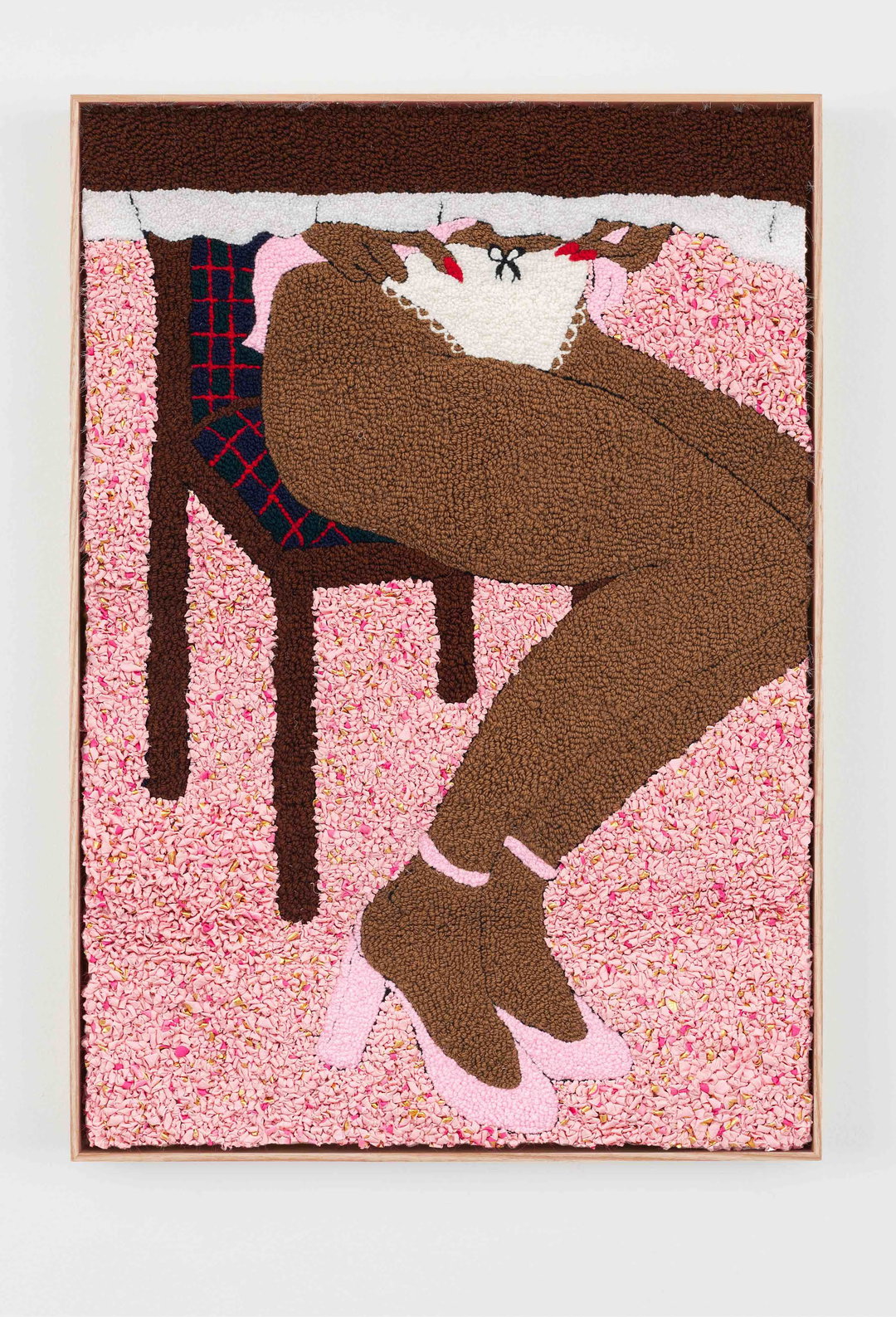
Talia Ramkilawan: Oh I'm definitely a dessert person (Copyright © Talia Ramkilawan, 2021)
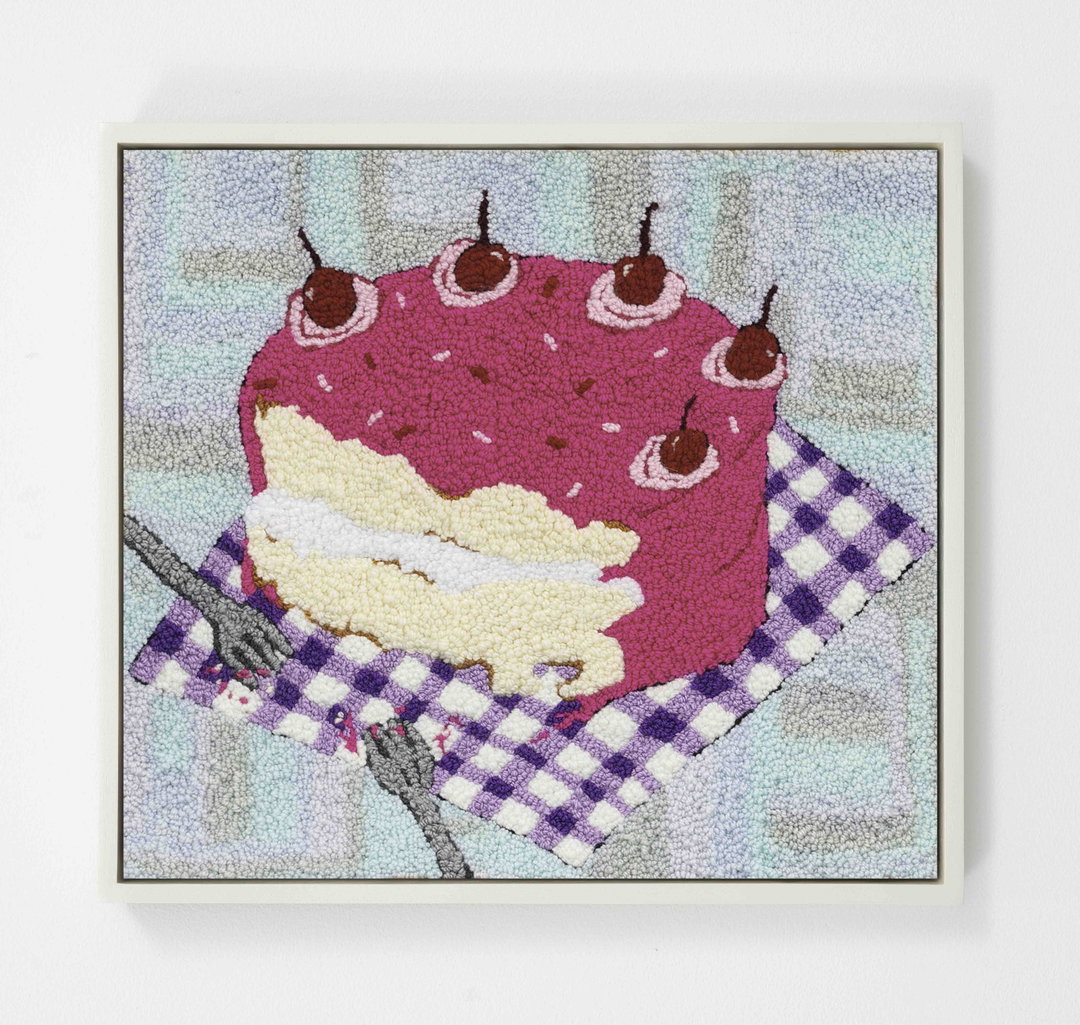
Talia Ramkilawan: Tender and Sloppy (Copyright © Talia Ramkilawan, 2021)
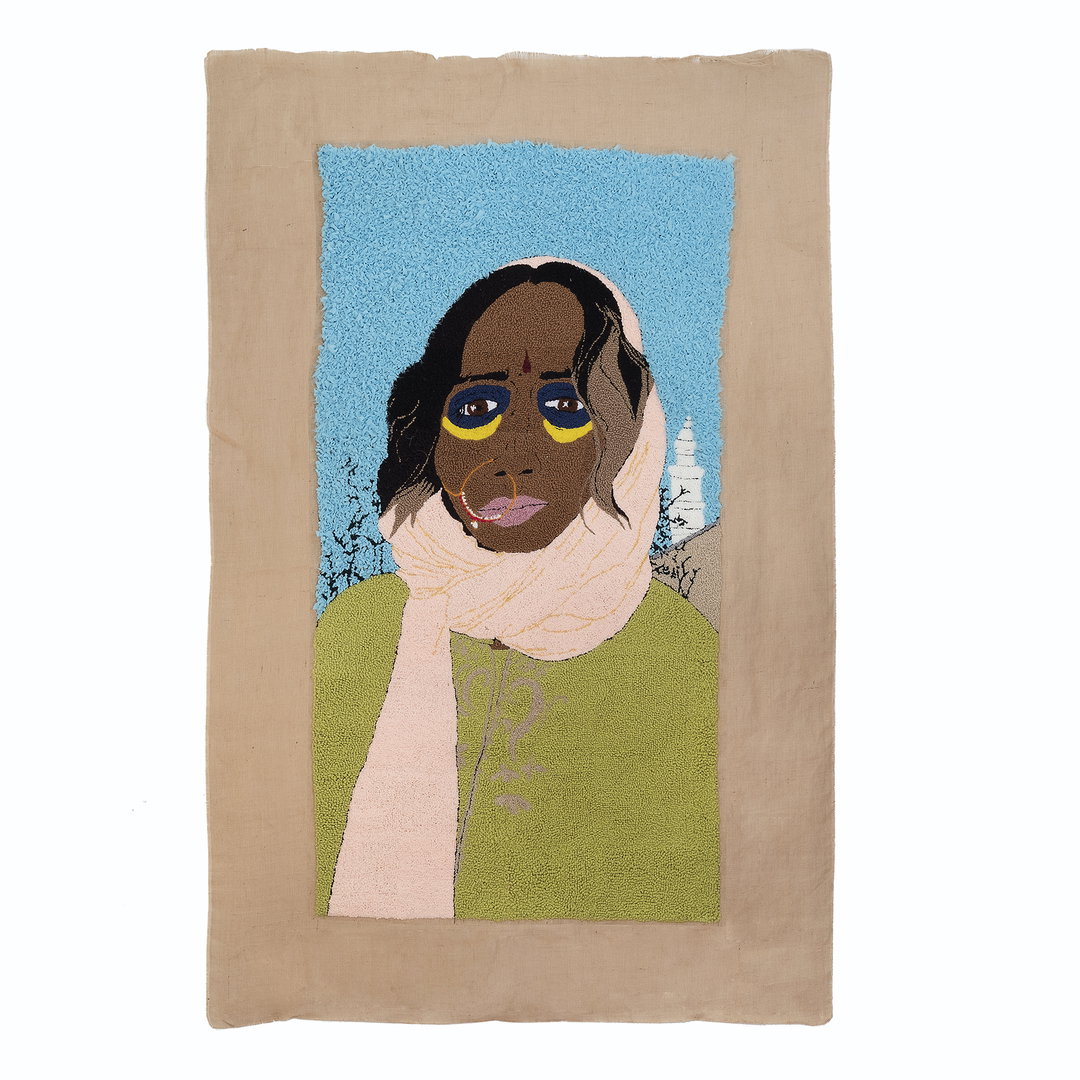
Talia Ramkilawan: Truly madly deeply in love with you (Copyright © Talia Ramkilawan, 2020)
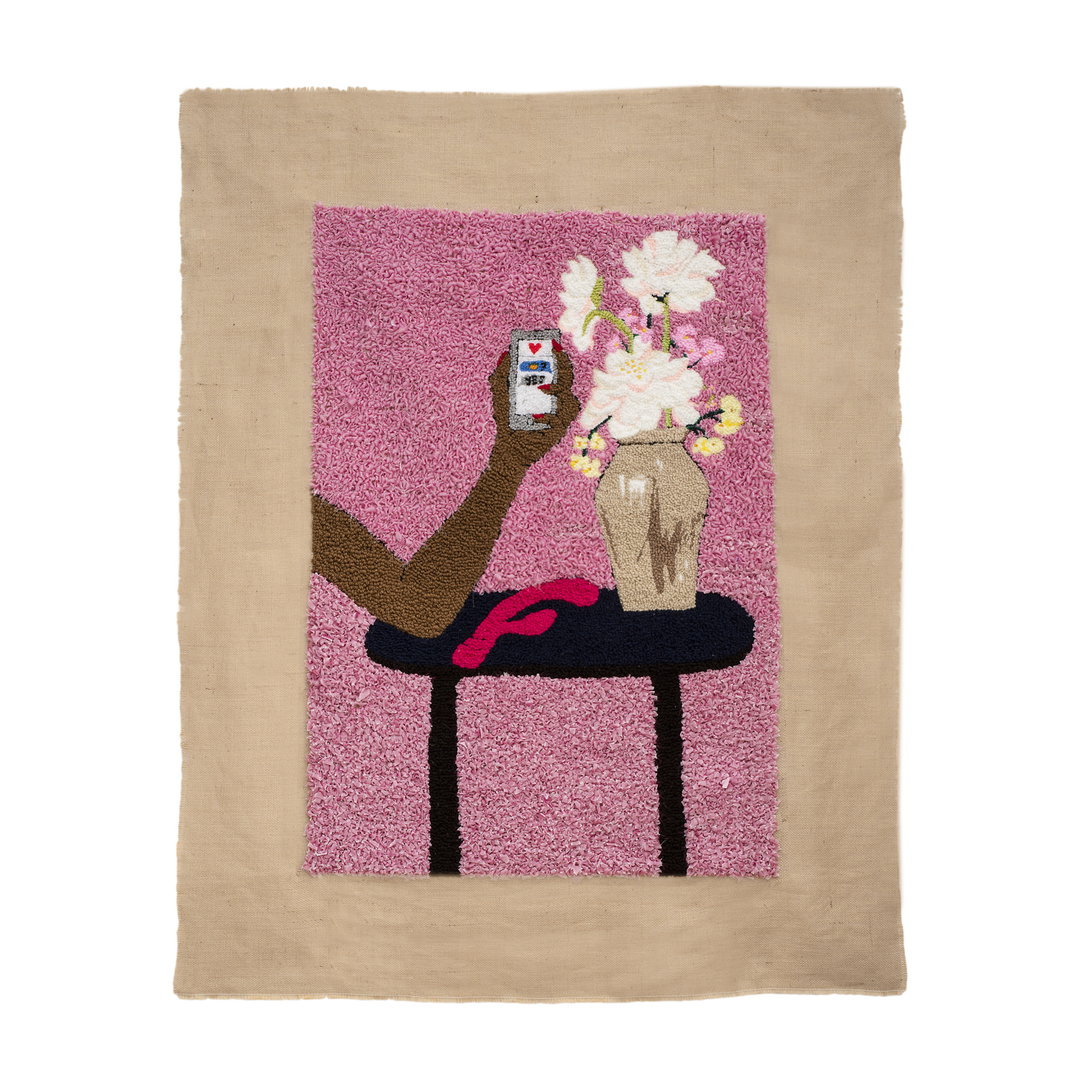
Talia Ramkilawan: The thought of you fills me with bliss (Copyright © Talia Ramkilawan, 2020)
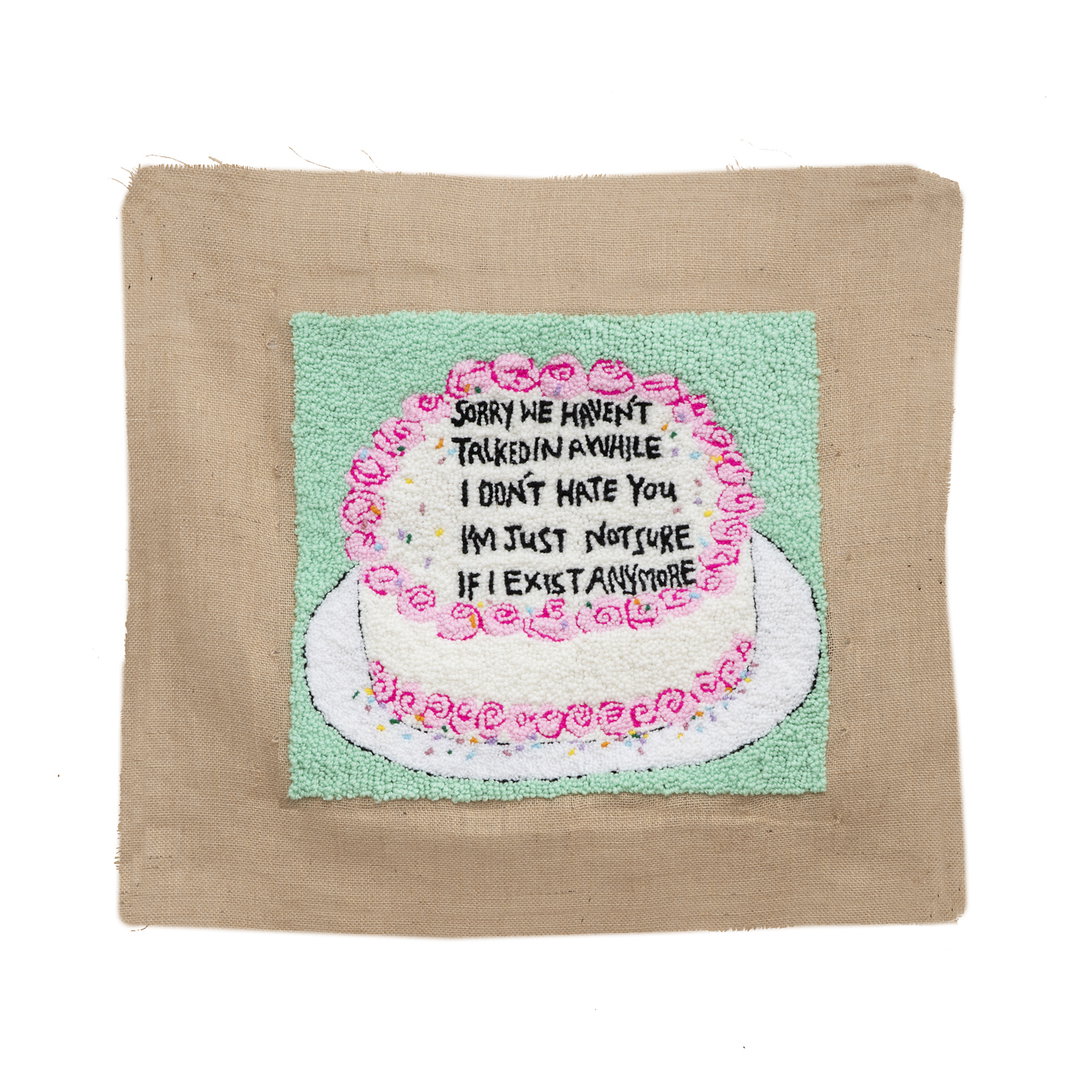
Talia Ramkilawan: Sorry we haven't talked in a while. I don't hate you. I'm just not sure I exist anymore (Copyright © Talia Ramkilawan, 2020)
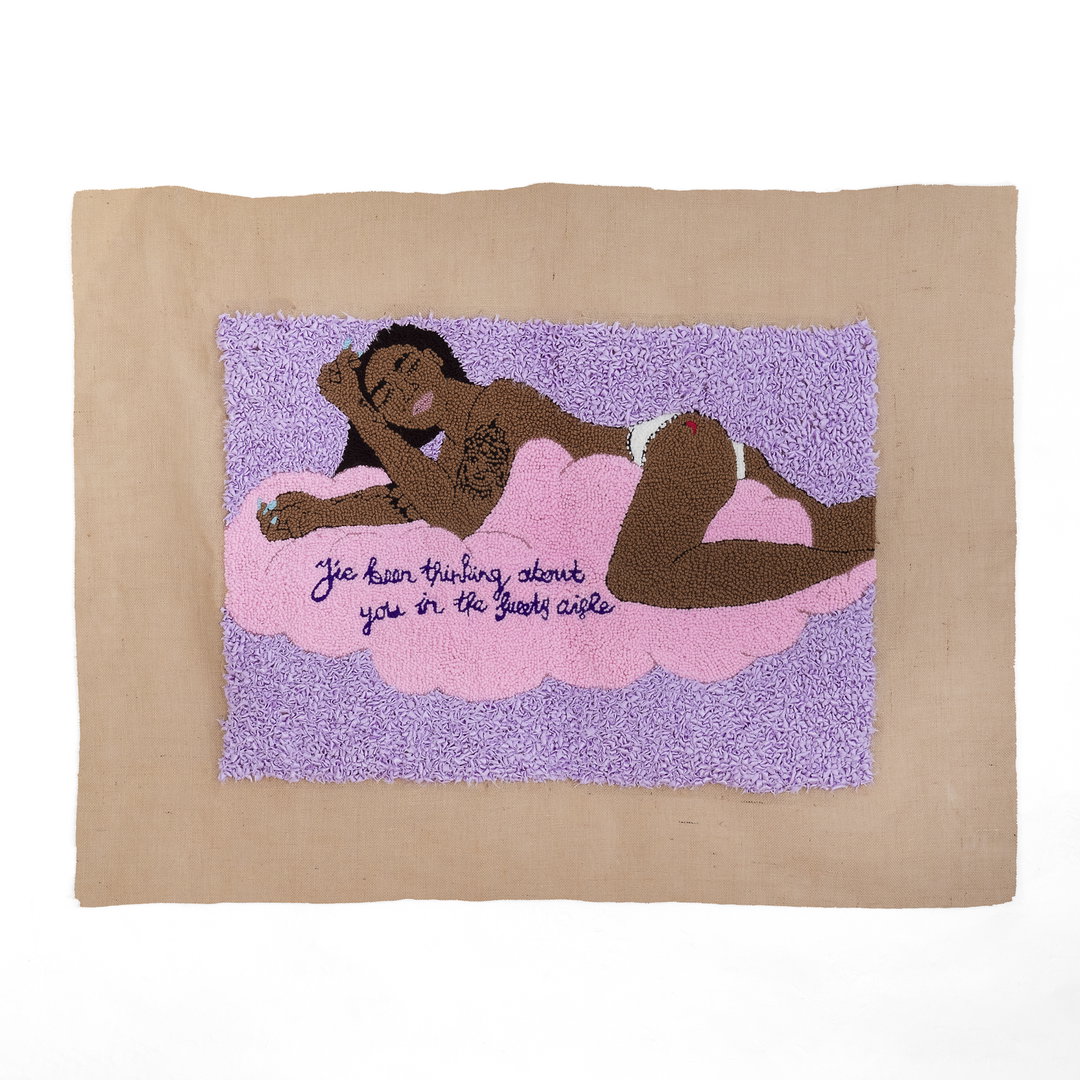
Talia Ramkilawan: I've been thinking about you in the sweets aisle (Copyright © Talia Ramkilawan, 2020)
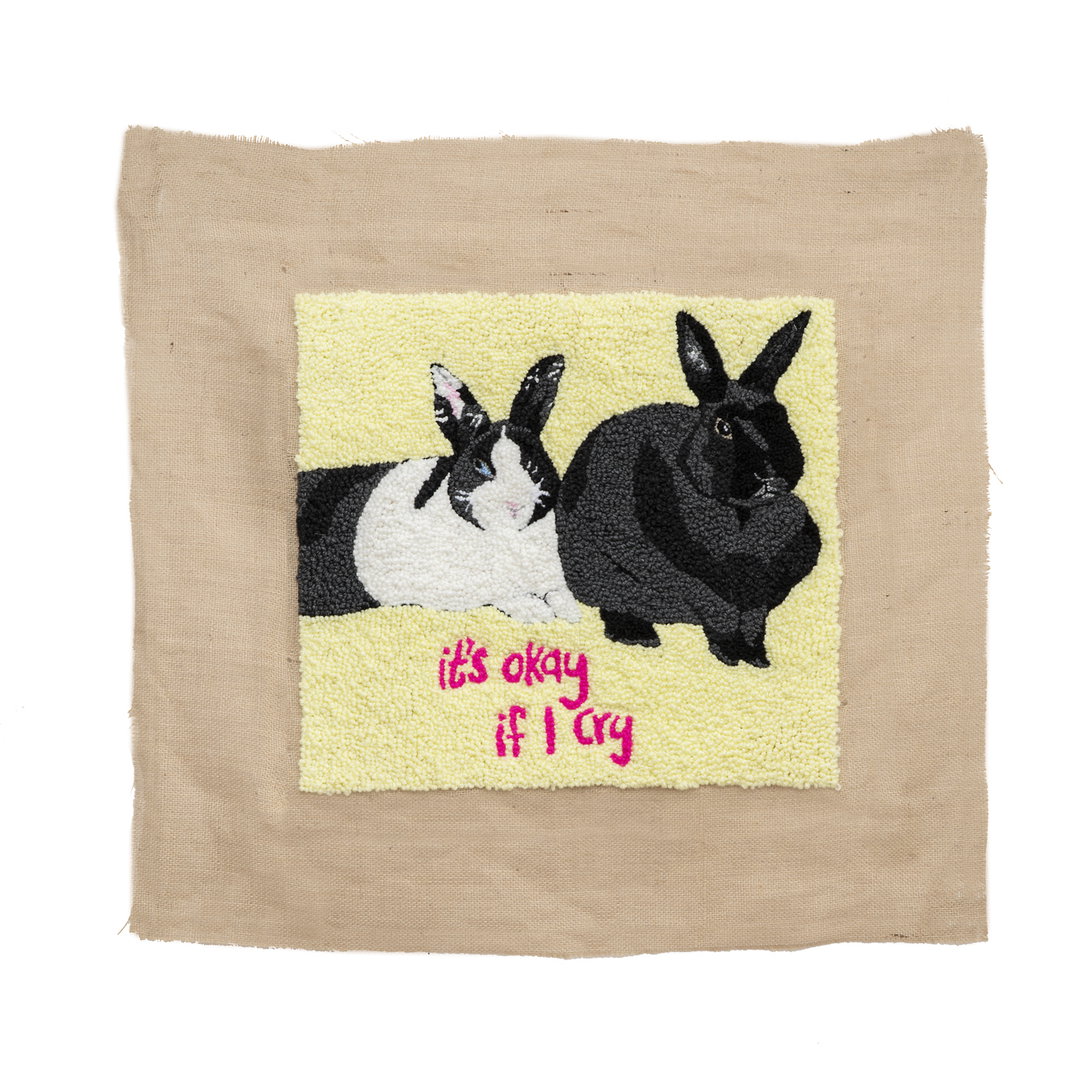
Talia Ramkilawan: It's okay if I cry (Copyright © Talia Ramkilawan, 2020)
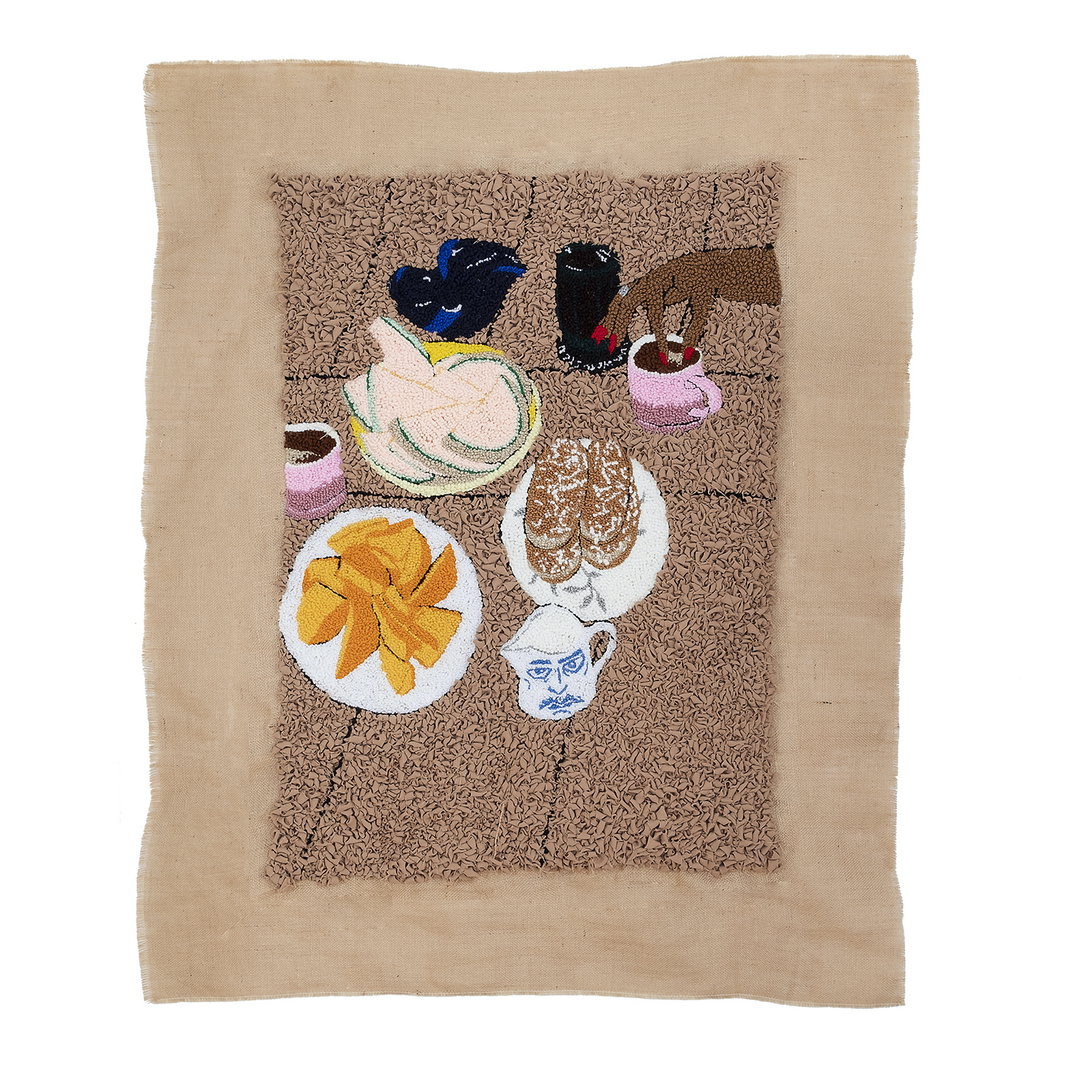
Talia Ramkilawan: I'd spend every day eating with you / It's enough to make me happy (Copyright © Talia Ramkilawan, 2020)
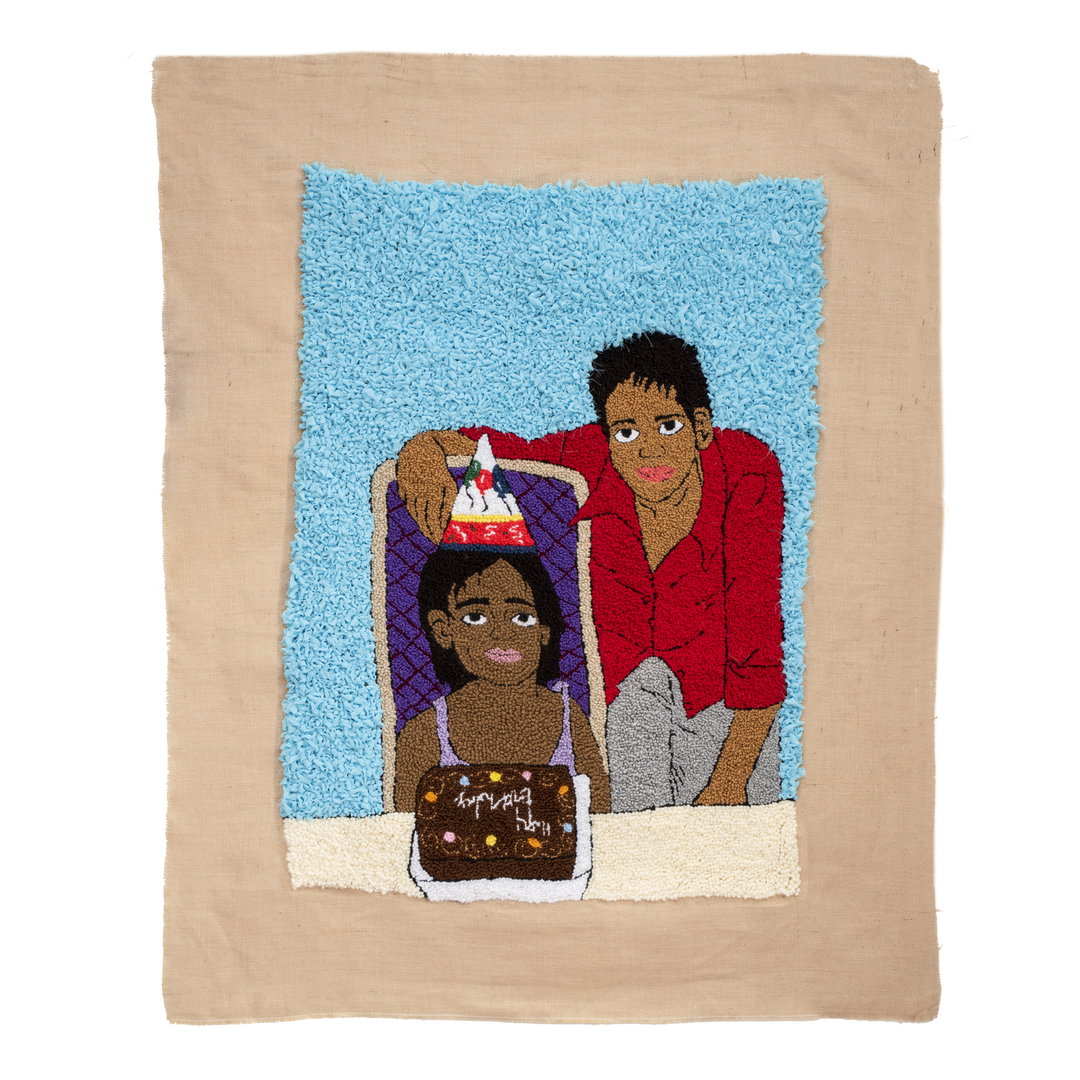
Talia Ramkilawan: An ode not to her, but to me (Copyright © Talia Ramkilawan, 2020)
Hero Header
Talia Ramkilawan: I don't want to share my dessert (Copyright © Talia Ramkilawan, 2021)
Share Article
Further Info
About the Author
—
Daniel joined It’s Nice That as an editorial assistant in February 2019 and continues to work with us on a freelance basis. He graduated from Kingston University with a degree in Journalism in 2015. He is also co-founder and editor of SWIM, an annual art and photography publication.