- Words
- Emily Gosling
- —
- Date
- 18 September 2015
- Tags
Some very big ideas and absolutely no bullshit: we go behind-the-scenes with Alex Chinneck
Share
Share
When I meet Alex Chinneck, he of the floating houses, melting houses and various other theatrical takes on sculpture – he’s nervous. He’s also possibly the nicest, most eloquent interviewee you could imagine, especially considering he’s yet to erect the visible part of a 35 metre high, 15 tonne pylon that appears to defy gravity by balancing on its tip.
The pylon will be this year’s London Design Festival landmark project, and like much of Alex’s other work takes on a name far more poetic than its industrial exterior might suggest – Bullet from a Shooting Star. It’ll be visible in its Greenwich Peninsula home from as far away as Canary Wharf or the mouth of the Blackwall Tunnel, Alex tells me. “It’s a very nerve-wracking time in every way, I’m very nervous,” he says, not really sounding very nervous at all. “It’s very complicated and I’m worried we won’t pull it off. I always worry, but not to this level. It’s very exposed and I’m worried about how people will respond. Doing the landmark project for LDF makes me feel like I’m in the spotlight more than ever.”
Joshua Osborne: Alex Chinneck’s A Bullet from a Shooting Star, during assembly
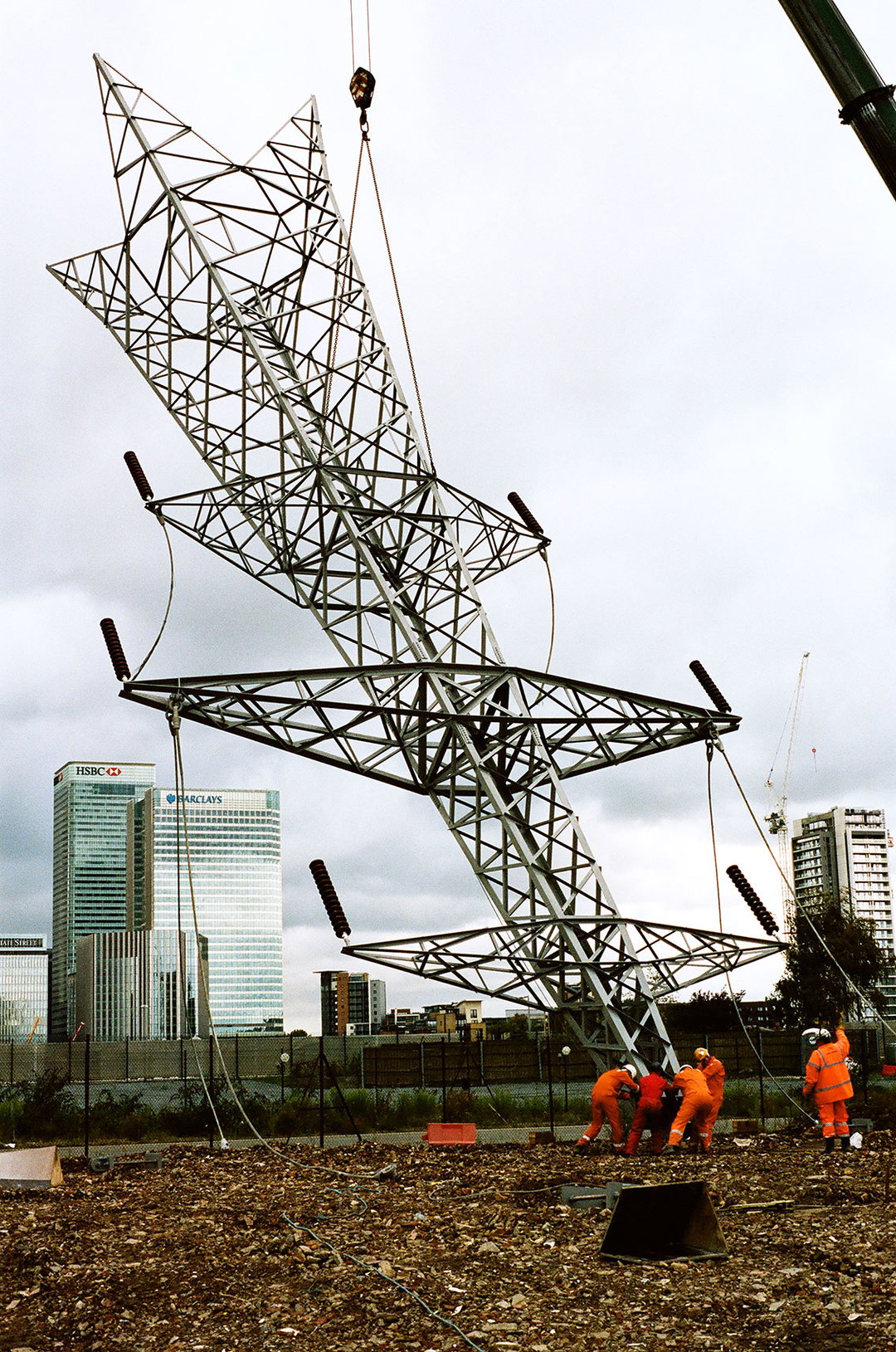
Joshua Osborne: Alex Chinneck’s A Bullet from a Shooting Star, during assembly

His demeanour is at odds with his words though, as we stroll about the site – a scrubby patch of land near the river in Greenwich, gazing across the river to Canary Wharf on one side and the strange, dystopian curves of the Millennium Dome on the other. It looks more Mad Max than masterpiece at the moment, but months of work and hundreds of tonnes of materials are quietly buried underground in this strange, almost eerie part of London that feels remarkably unlike the rest of the capital. “I was excited by the freedom sculpturally, technically and spatially somewhere likes this offers: it’s just vast open plots of land, which are becoming extinct in London,” says Alex. “I was also offered Trafalgar Square as an option for LDF, but you can’t create 25 metre foundations in Trafalgar Square or Covent Garden.”
It feels almost defiant to site his latest work out here, far from not only the rest of the design festival, but from areas with a naturally large footfall. However, the artist is confident that its distance from central London won’t deter visitors. “We did the sliding house in Margate and footfall to that was huge and continues to be high. If you make it exciting enough people will travel,” says Alex. “The piece is enormous and as it’s a very open plot of land it could easily be consumed by the space, so it made sense to create a visual beacon. That’s why it’s so tall and it’s illuminated at night. Hopefully that acts as the billboard almost, and the greatest advertisement to itself.”
"I just don’t serve my work with a large portion of bullshit, and I made a point of that. Maybe it was a bad strategy."
Alex Chinneck
But while he’s clearly excited about this prospect of having orchestrated something vast and awesome, his plans for the future are to scale back, and to even turn his back on the unpredictable, skin-chapping outdoors and return to the white walls of the gallery. There are tentative steps towards this already in the prints and editions being made for the festival.
But Alex, for better or for worse, has become known for making art with a capital “ahhhh”: pieces that are spectacles – instantly impressive and easily summed up in pithy, Time Out-friendly soundbites. While this has surely been instrumental in ensuring his name is out there (the works are, after all, an Instagramer’s dream), it’s also meant he’s often viewed by the art world with suspicion at best, derision at its worst.
“I think I’m developing a very very strange relationship with the art world. I think at times accessibility and popularity don’t go hand-in-hand in the art world, and I think art critics even if they like my work won’t want to say it,” says Alex. “Theres a lot to be said about all types of art, whether it’s conceptual or highly visual or theoretical there’s no wrong or right. I just think the art world needs to learn to embrace things that aren’t too conceptual. Things can be simple and simultaneously intelligent.
“I would argue that our projects are simple on the surface but extraordinarily complex. I just don’t serve my work with a large portion of bullshit, and I made a point of that. Maybe it was a bad strategy; when my work’s been put in front of certain curators or institutions it’s met the same reaction, which is one of lacking a kind of metaphysical depth. It’s a frustrating response, as while my work might not be incredibly conceptual, it’s incredibly complex and contextual.”
Joshua Osborne: Alex Chinneck’s A Bullet from a Shooting Star, during assembly
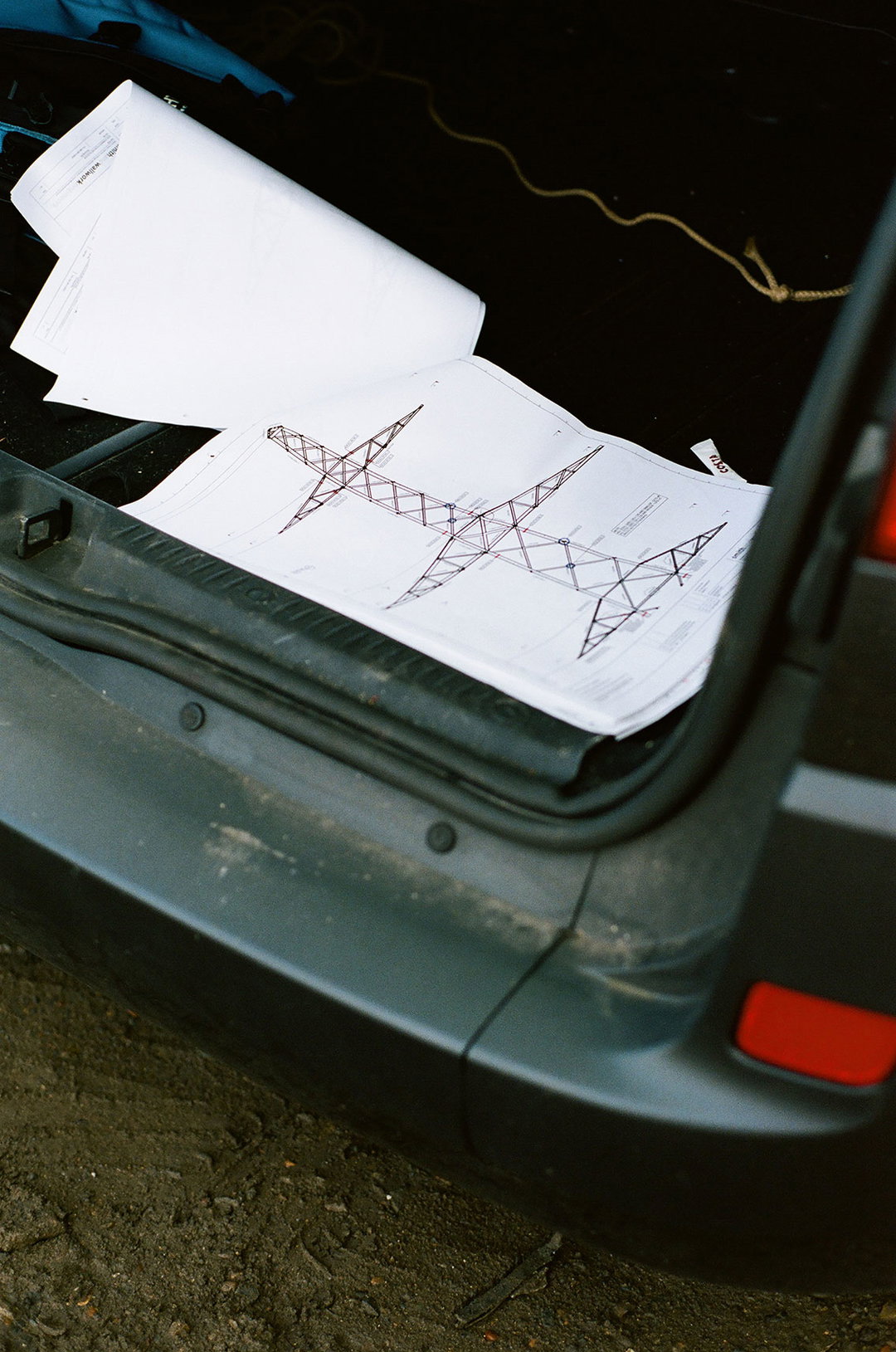
Joshua Osborne: Alex Chinneck’s A Bullet from a Shooting Star, during assembly
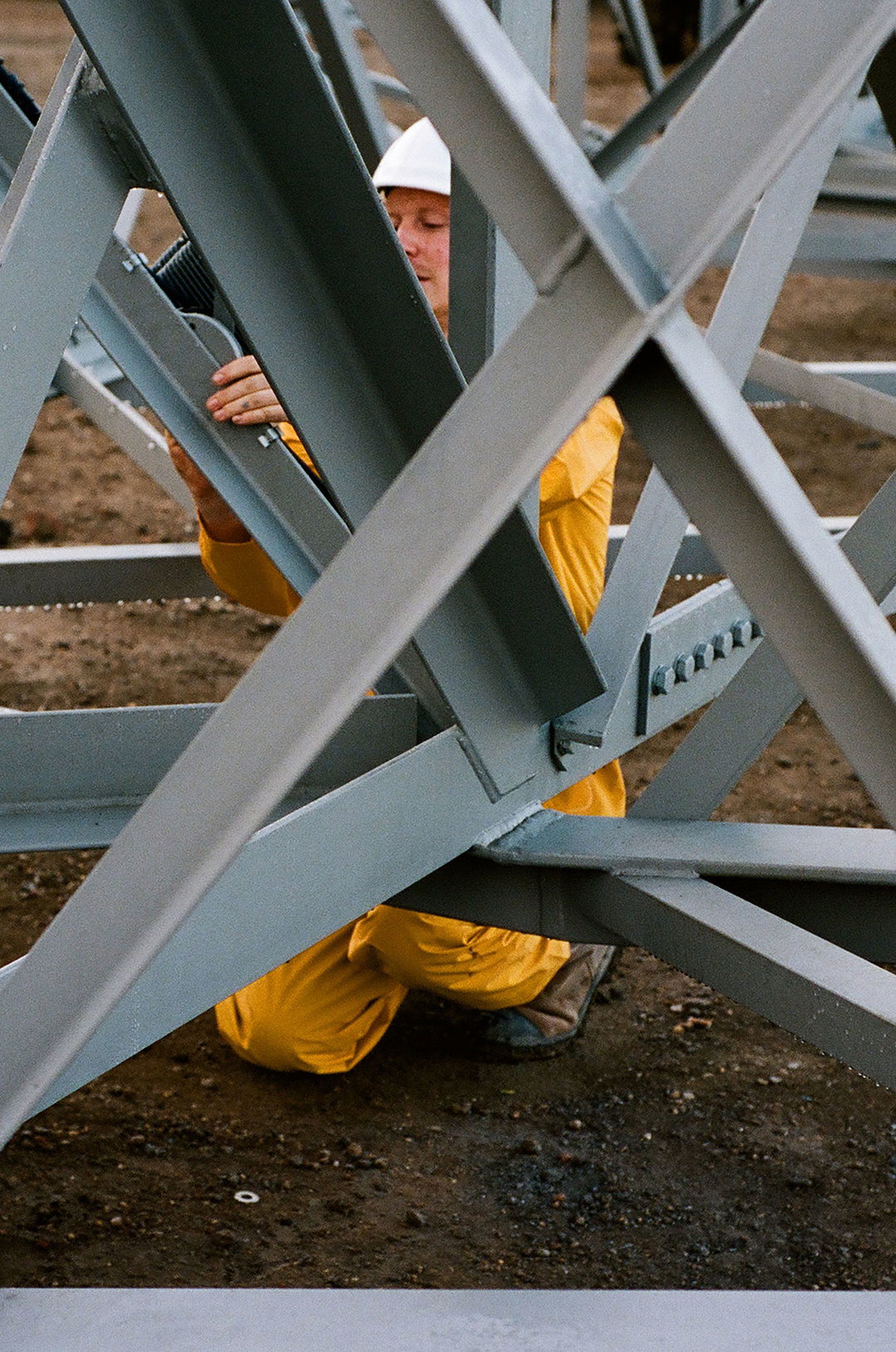
In Bullet from a Shooting Star, this focus on context is in plain sight. The area that plays home to the piece was once the largest gasworks in Europe, and this background in industry is alluded to in the forms and the metal, as well as the scale of the work. But once again, Alex is creating a work where that background needn’t be spelled out. To understand the value of a work that appears to defy engineering capabilities and, indeed, gravity you don’t need to have any knowledge of local, let alone art history.
“I think certain curators and institutions need to recognise there’s been a shift in the way art is seen, visited and enjoyed,” says Alex. “The internet has changed the platform and it’s inevitable that the work will change in response. Just because a work might be seen ten million times on the internet doesn’t make it bad. Art responds to its time: if it’s not responding to its time then it’s not communicating with the people who live in that period.”
“I don’t think I’m necessarily going to change the world or make it a better place, I just think I’m going to momentarily uplift someone, and there’s nothing wrong with that. What else is culture for"
Alex Chinneck
It’s interesting to hear Alex suggest that with the internet’s advent of a highly visual, information-heavy culture, his work has responded by being huge in scale and amplifying its impact. It’s theatrical, it’s spectacular; and seeing it in the flesh cuts through the fast-paced assault of words and pictures the digital world throws at us. It’s obvious that a jpeg is no substitute to seeing its vastness and grandeur in the flesh – particularly when his work takes transitory guises, like the melting wax house of A pound of flesh for 50p.
And the artist is well aware that unlike his more conceptual contemporaries, his work is there to induce a smile or a gasp rather than a furrowed brow and a critical essay. “I think in creating a public artwork you have to think about the public. You have to design work with people in mind, it’s a social consideration.
“I don’t think I’m necessarily going to change the world or make it a better place, I just think I’m going to momentarily uplift someone, and there’s nothing wrong with that. What else is culture for – it represents the world around us in a new way or make us think about it differently. That’s the crux of what I do with the objects I do it with; it presents the world around us in a new way. That’s art.”
Alex spoke at our Public Art-themed Nicer Tuesdays back in June, click here to see the video.

Joshua Osborne: Alex Chinneck’s A Bullet from a Shooting Star, during assembly
Joshua Osborne: Alex Chinneck’s A Bullet from a Shooting Star, during assembly
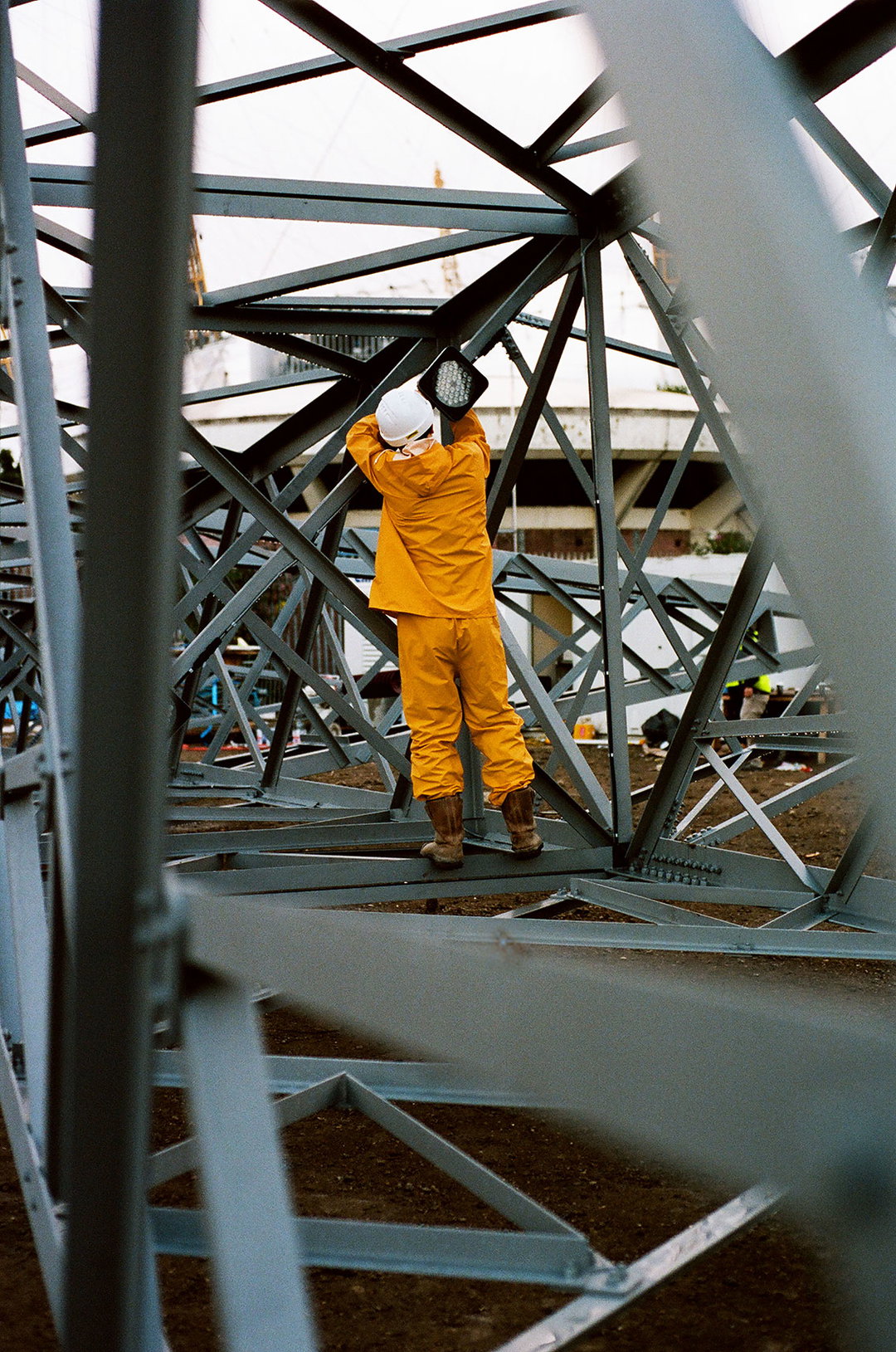
Joshua Osborne: Alex Chinneck’s A Bullet from a Shooting Star, during assembly
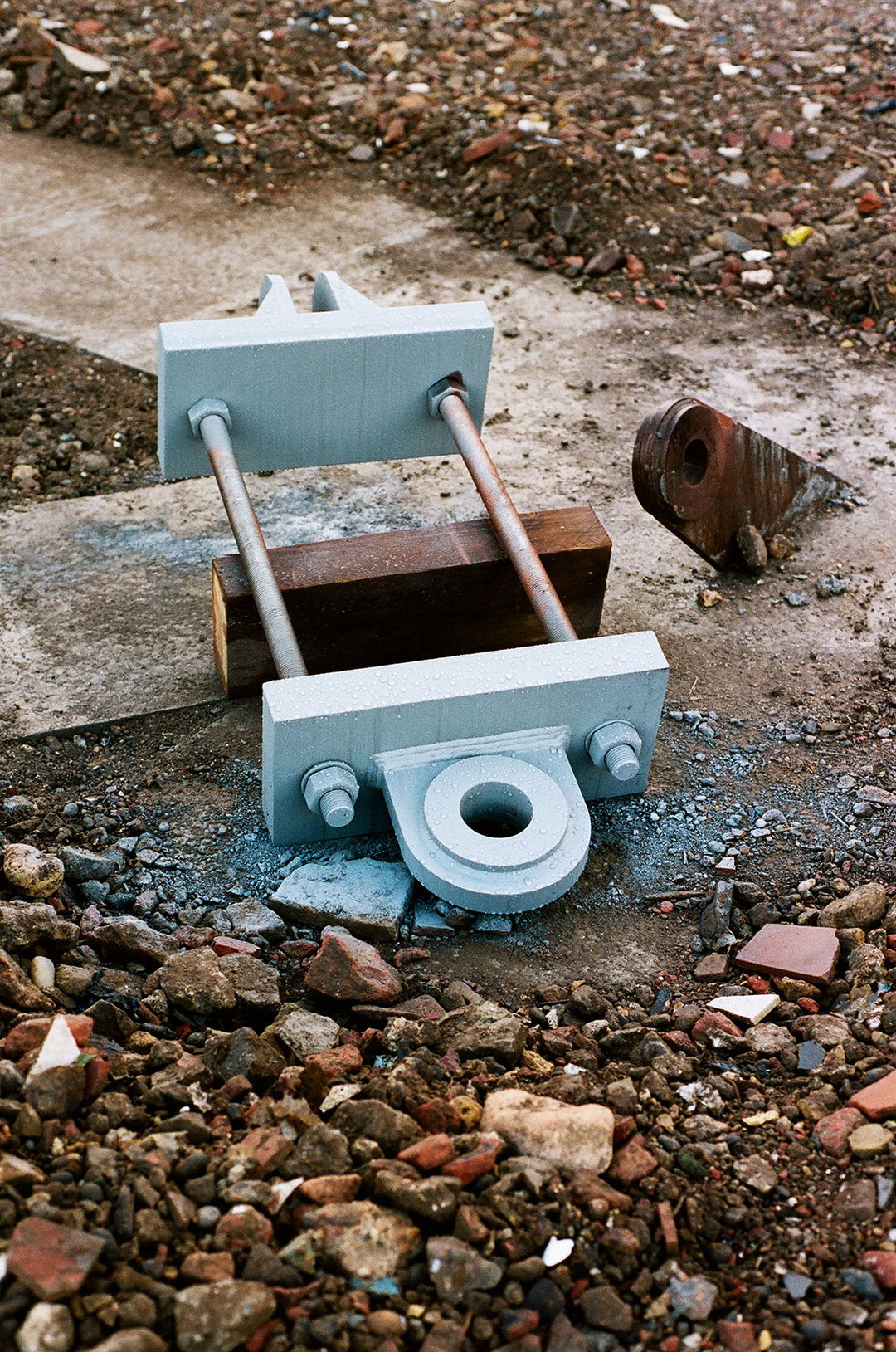
Joshua Osborne: Alex Chinneck’s A Bullet from a Shooting Star, during assembly

Joshua Osborne: Alex Chinneck’s A Bullet from a Shooting Star, during assembly
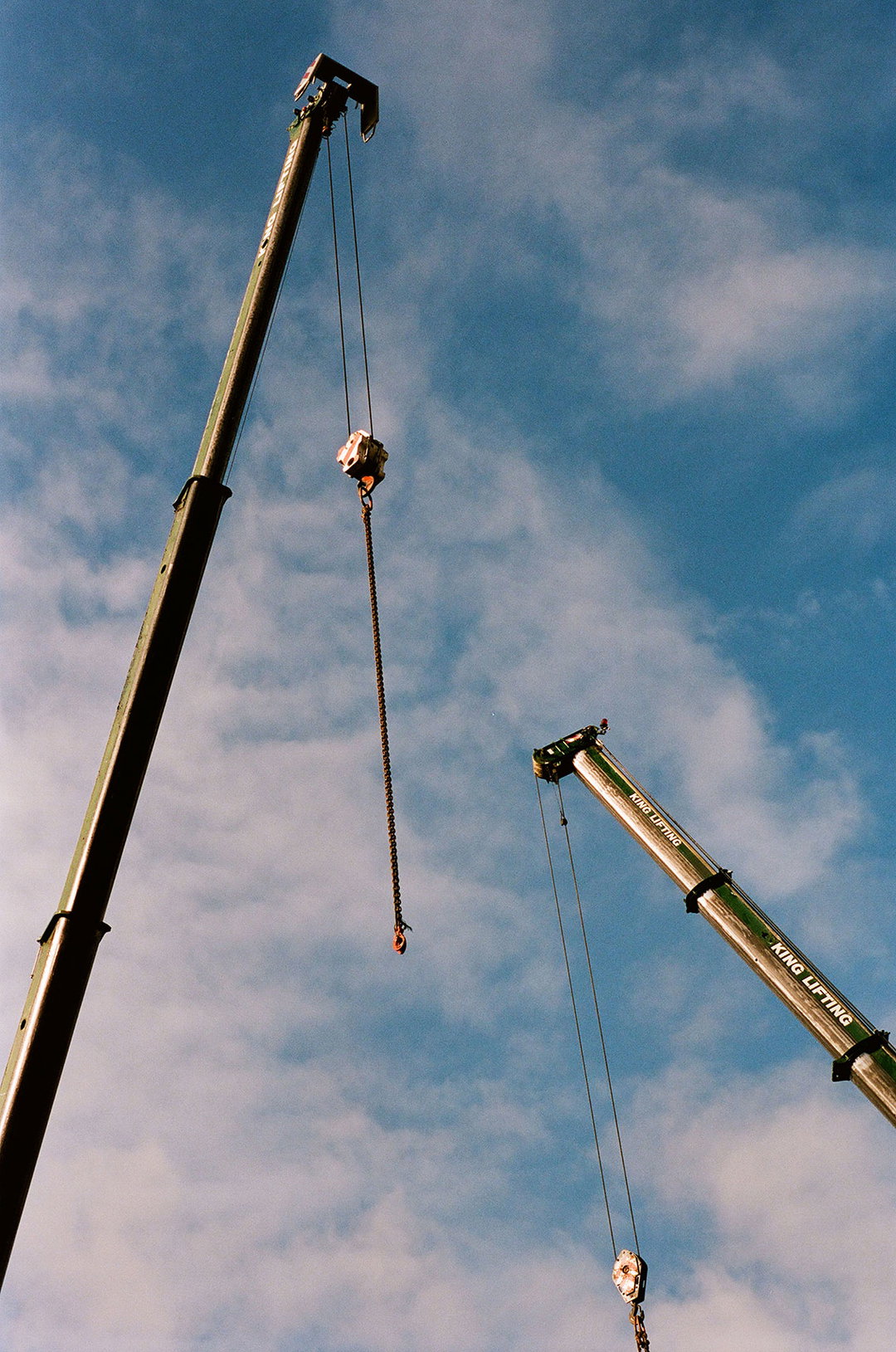

Joshua Osborne: Alex Chinneck’s A Bullet from a Shooting Star, during assembly
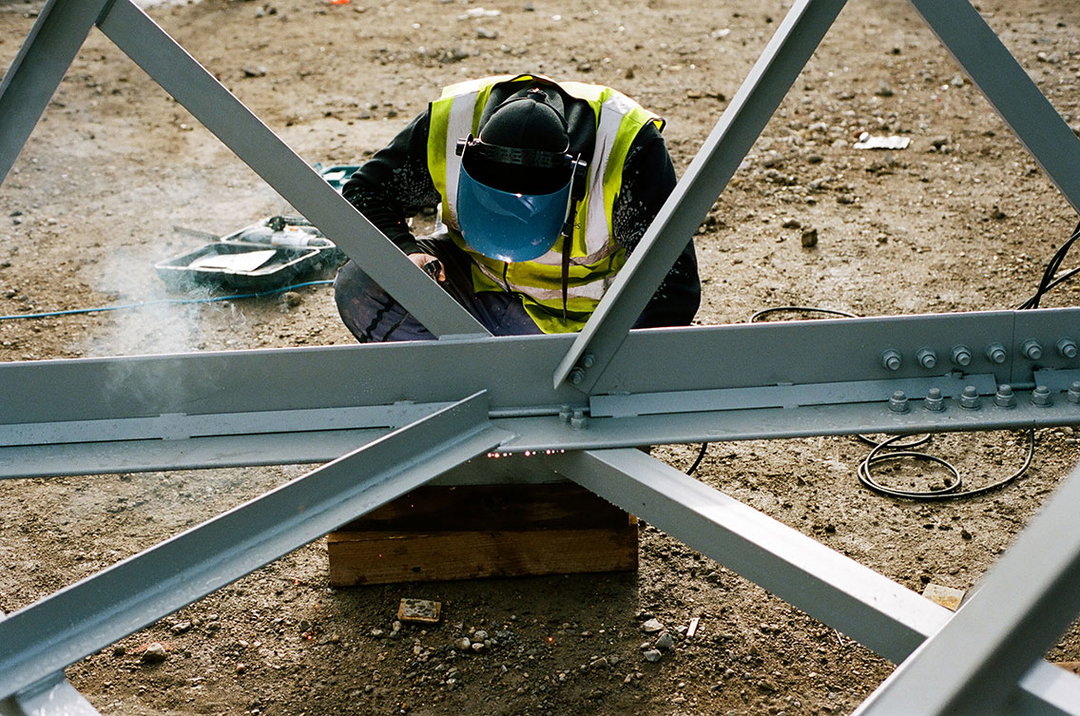
Joshua Osborne: Alex Chinneck’s A Bullet from a Shooting Star, during assembly

Joshua Osborne: Alex Chinneck’s A Bullet from a Shooting Star, during assembly
Share Article
Further Info
About the Author
—
Emily joined It’s Nice That as Online Editor in the summer of 2014 after four years at Design Week. She is particularly interested in graphic design, branding and music. After working It's Nice That as both Online Editor and Deputy Editor, Emily left the company in 2016.