

Murugiah reimagines George Orwell’s 1984 with psychedelic illustration and dripping paint
This illustrator recreates “something new through my own prism” for the Faber Illustrated Classics edition of the groundbreaking dystopian novel.
Murugiah, a south east London-based artist, illustrator and designer was recently approached by Faber to lend his talents to it’s illustrated classics series. The creative had long been keen to work on a book, so the project was an easy yes, and he collaborated with the publisher and Faber art director Emma Eldridge on the illustrated release of George Orwell’s dystopian novel 1984. Filled with themes of surveillance and oppression, the novel comes with a strong sense of visuality, but one Murugiah managed to make his own.
The artist isn’t new to reimagining works with a long visual history. In the past Murugiah’s worked on posters for Stanley Kubrick’s 2001, The Shining, and A Clockwork Orange, developed the knack for creating “alternative versions of intellectual properties”, he says. The project was a long time coming for the designer, particularly gifted in transforming narratives into vivid illustrative works.
Murugiah describes his style as “brightly coloured”, often featuring surreal elements containing “busy, architectural driven compositions that telling a story across a single image”. This architectural backing comes from his previous study. When Murugiah was 18, his parents encouraged him into architecture in the hopes it would satiate his creativity whilst being a stable career option. “I could get into the weeds of South Asian parentage and the decisions they make and pressure they exert on their kids but I will save that for my therapist,” Murugiah says.
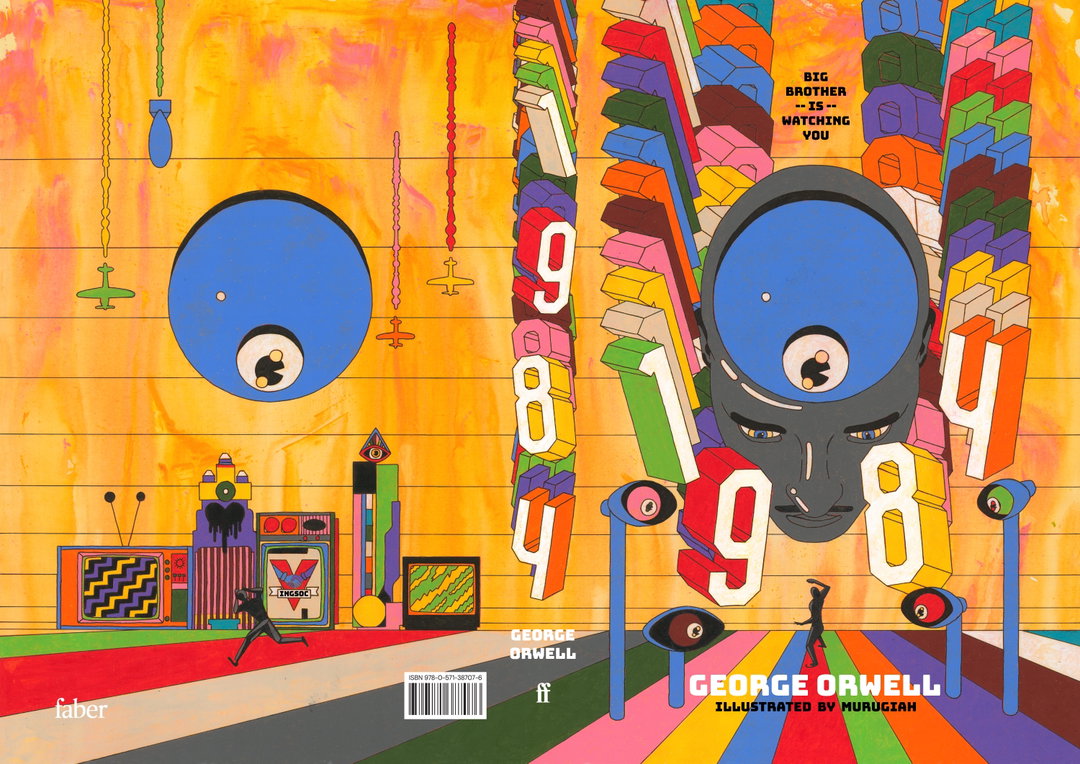
Murugiah, 1984: final colour painting wrap around cover (Copyright © Murugiah, 2025)
After seven years of training and a year in industry during the notoriously tumultuous economic crash of the last 2000s, Murugiah decided architecture wasn’t his calling, despite it being his “first love”, he says. So, in 2013, Murugiah dove into the uncharted waters of freelancing life. He started at greeting card company Scribbler before moving in-house to the food chain Leon. After meandering in search of his creative voice, Murugiah settled on experimentations within both the commercial and personal realms.
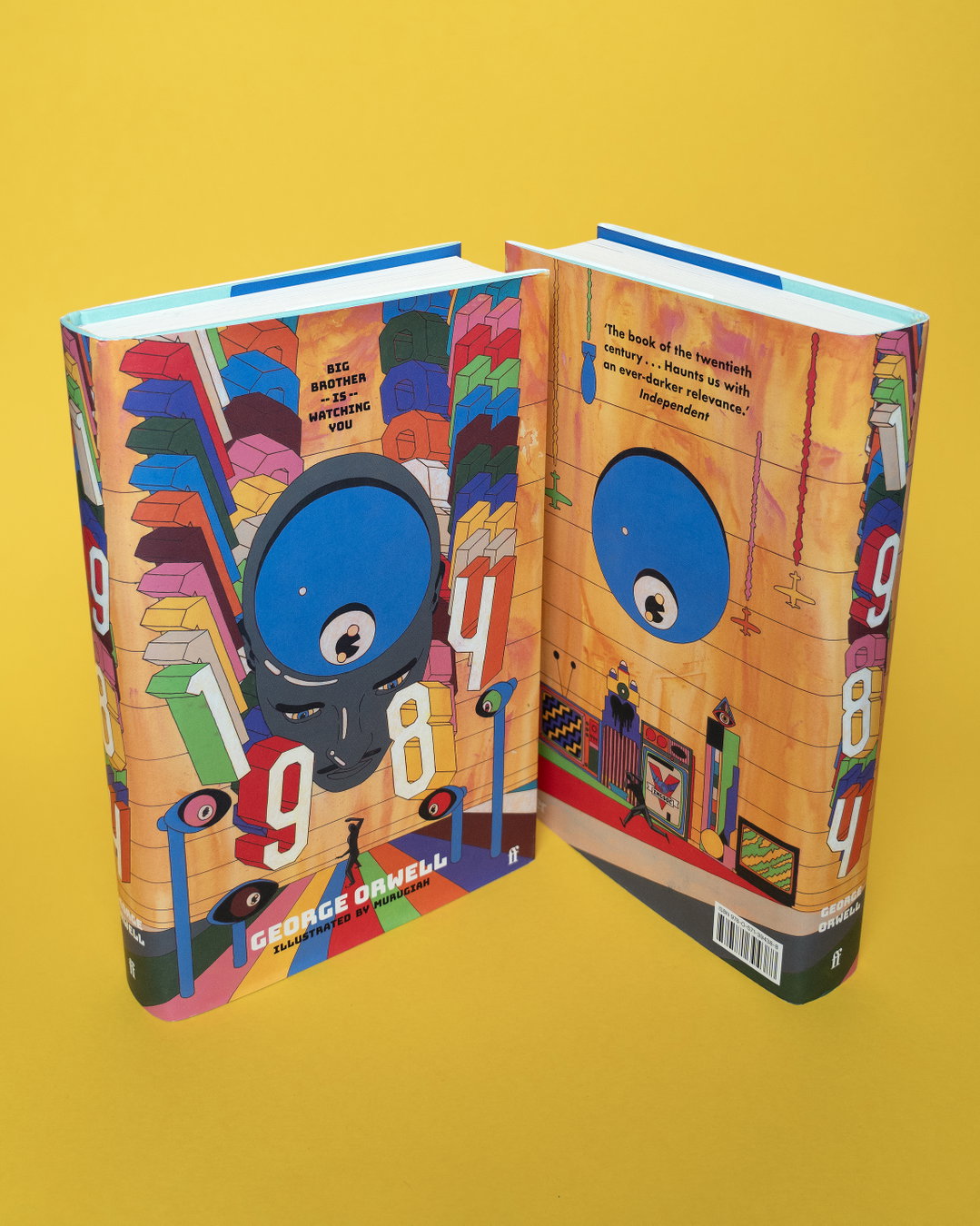
Murugiah’s architectural flair and penchant for colourful, surreal compositions came to the forefront in his collaboration with Faber. The cover carries the visual language of The Polish School of Posters – bold with symbolism, fantasy and geometricism. On how the book’s narrative fed into the illustration, Murugiah says he was inspired by “mainly the world we live in today; the constant surveillance and subversive techniques used by the powers that be to try to control us”. The cover shows bold colour replacing any shadow, and is anchored by an eye in the centre paired above by the most famous line of the novel, ‘Big Brother is watching’.
The illustrator incorporated these themes of propaganda and oppression in two different wrap around cover designs – made using his iPad, mirrored to Photoshop on his desktop using Astropad – for Faber to feedback on. At the time, Murugiah was also bringing acrylic painting into his personal creative practice and pitched its use in the final design to Faber. You can see visible evidence of his paintbrush in the background of the cover. Murugiah says: “I felt this very human, creative approach provided a nice juxtaposition to the themes of the novel (and highlights Orwell’s hint of optimism in the novel’s appendix) by reflecting the individuality Big Brother seeks to oppress.”
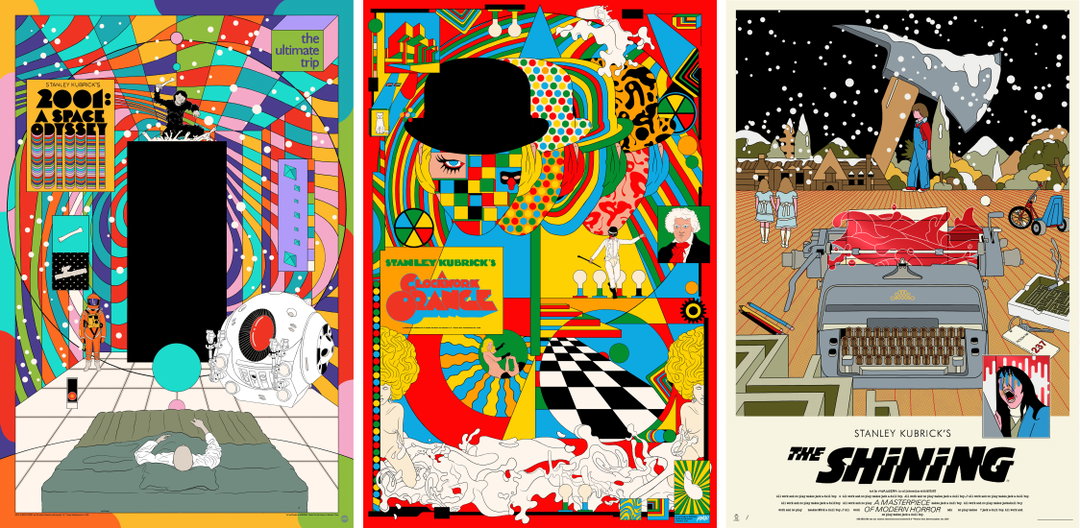
Murugiah, Mondo/Stanley Kubrick Estate: alternative film posters (Copyright © Murugiah, 2020)
For the hand-painted cover, Murugiah recreated his digital mock up drawings onto heavy stock watercolour paper with red ink. After the ink drawings were done, they were then taped to the drawing board where Murugiah dripped paint and moved the paper around, applying randomised brush strokes onto the paper. The result is a richly textured background wash, made in reaction to the natural dripping of the paint. “Working in this intuitive way is an incredibly rewarding process that only a human being working by hand can do,” says Murugiah. The cover was then finished off with black line work. He scanned the painting, and applied it digitally to a template Faber provided, a proccess then repeated with the endpapers.
Faber asked for the illustrations within the book’s pages to be in black-and-white, in continuation with other books within the series, which include re-imaginings of The Bell Jar and The Great Gatsby. Working without colour gave Murugiah a chance to work outside of his comfort zone, leaving his typically brightly coloured style behind. Picking choice moments from the novel and translating them visually, Murugiah considered the illustrations cohesion with the endpapers using textures and mark-making to tie them together.
Following the reader’s natural journey – exploring the front and back of the book – Murugiah’s illustrations serve as a visual guide into the book’s core themes. The back cover sees protagonist Winston running in terror under the watchful eye of Big Brother, and this last internal illustration was important to Murugiah to get right. “It’s haunting and fucked up!” he says. 1984 is a special book for the artist, and his participation in this illustrated series for Faber that re-introduces it to new audiences is one he’s proud of. Now, there’s more to come in the literary space for Murugiah; his first solo show is taking place at the Quentin Blake Centre for Illustration in May 2026.
Nineteen Eighty-Four: The Illustrated Edition, illustrated by Murugiah, is available for purchase at Faber's online shop.
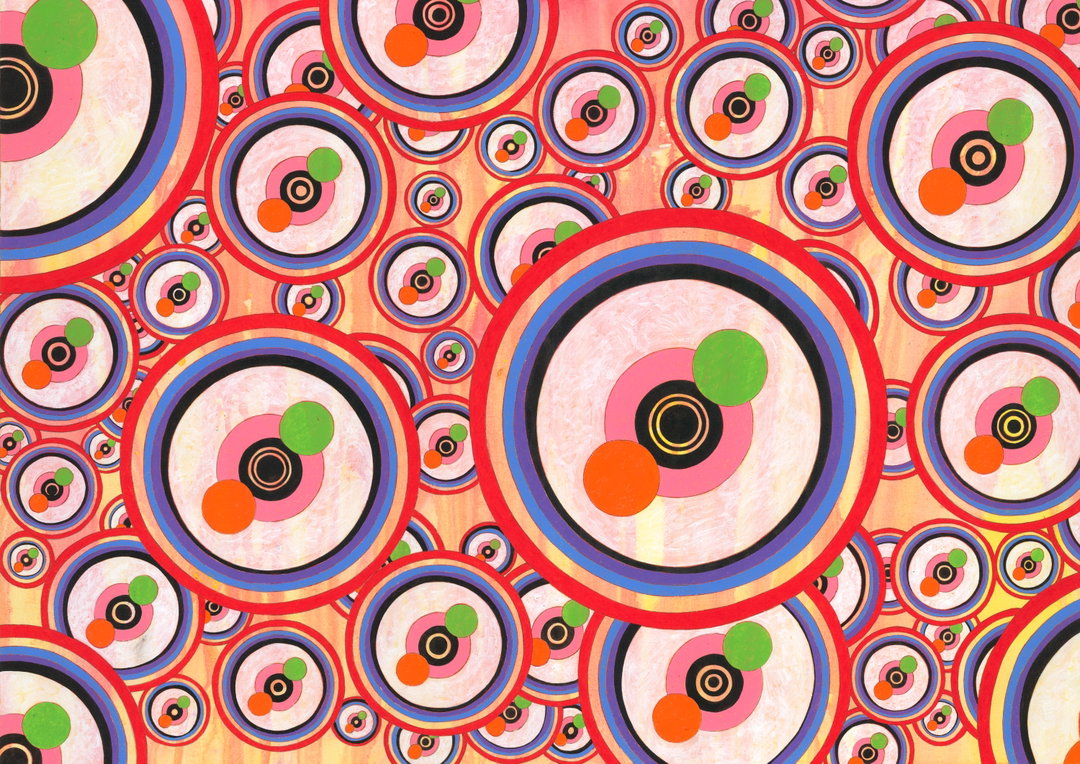
Murugiah, 1984: final colour painting endpapers (Copyright © Murugiah, 2025)
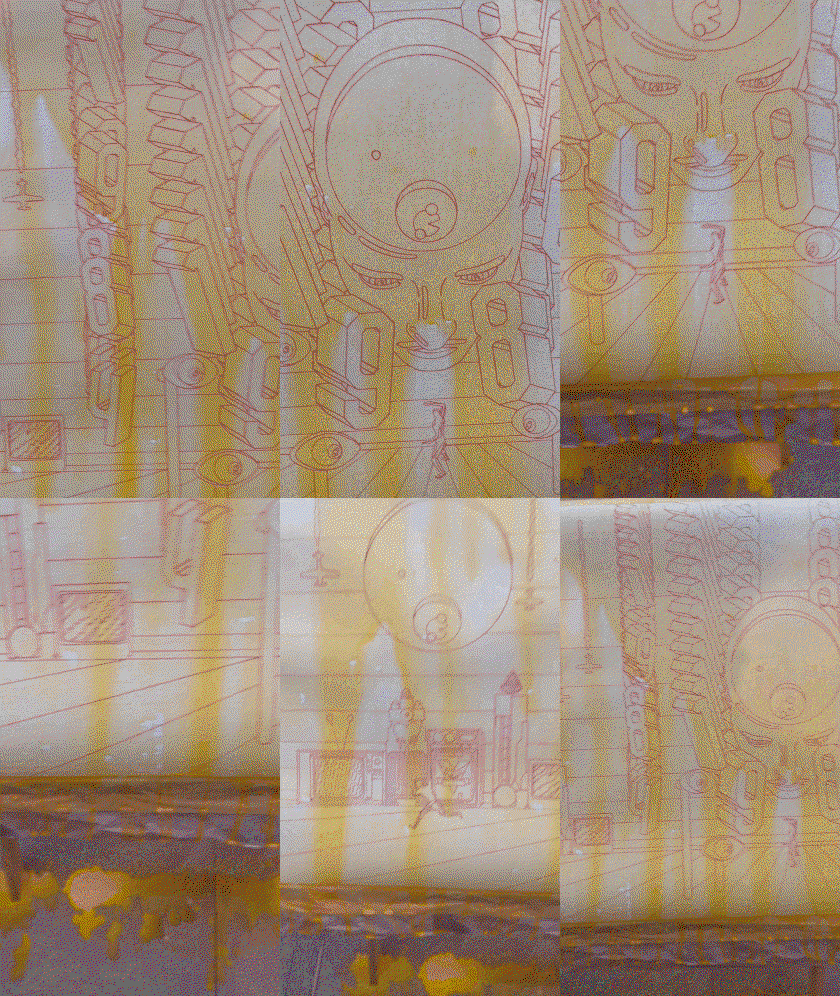
Murugiah, 1984: process (Copyright © Murugiah, 2025)
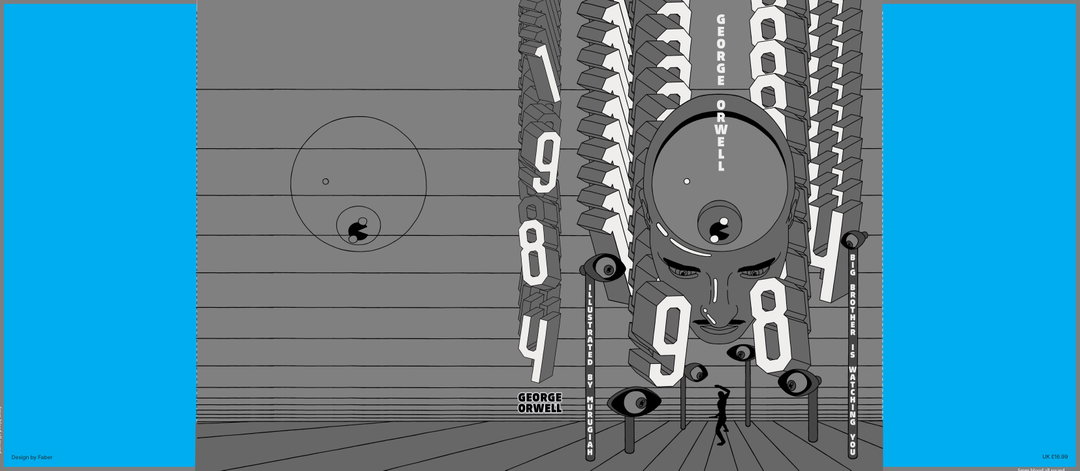
Murugiah, 1984: early concept (Copyright © Murugiah, 2025)
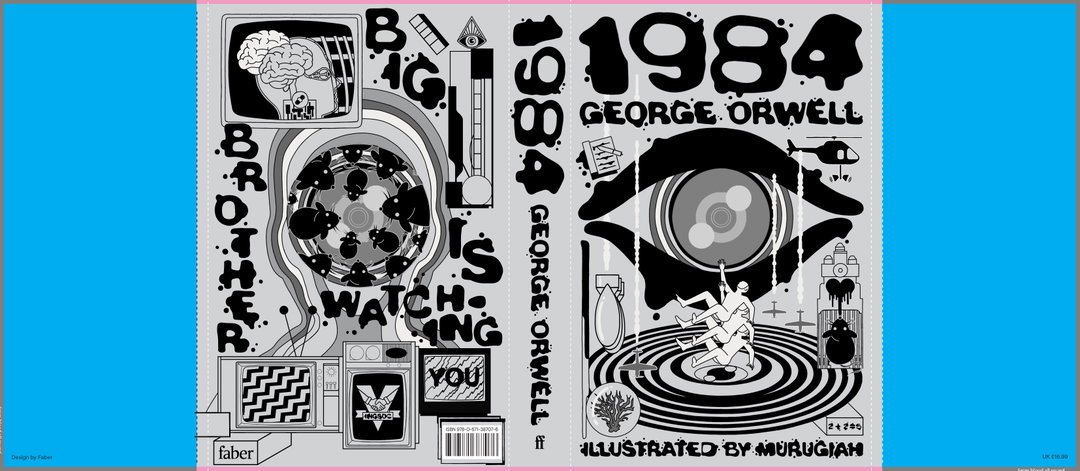
Murugiah, 1984: early concept (Copyright © Murugiah, 2025)
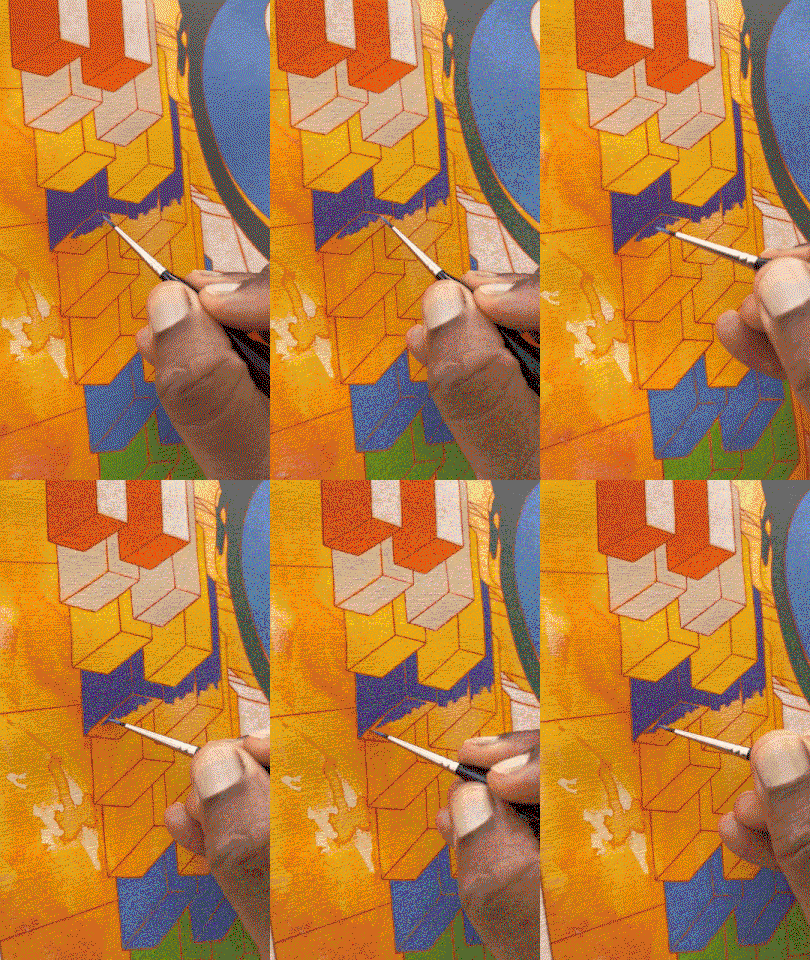
Murugiah, 1984: process (Copyright © Murugiah, 2025)
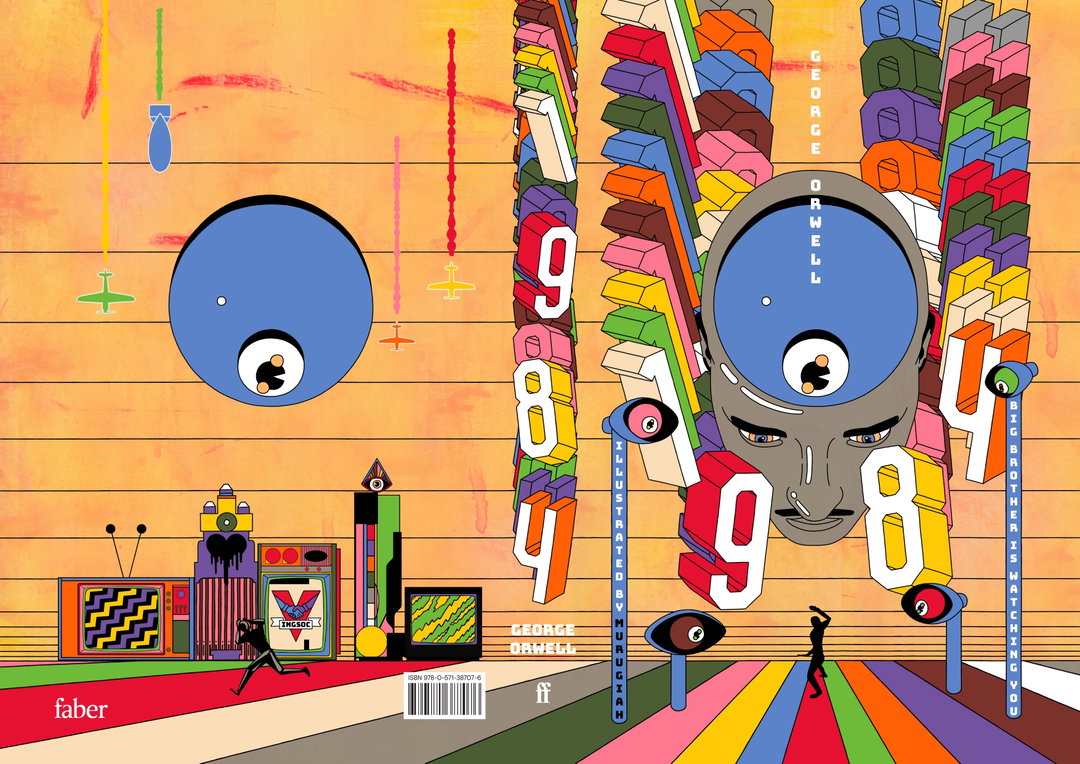
Murugiah, 1984: digital colour draft wrap around cover (Copyright © Murugiah, 2025)
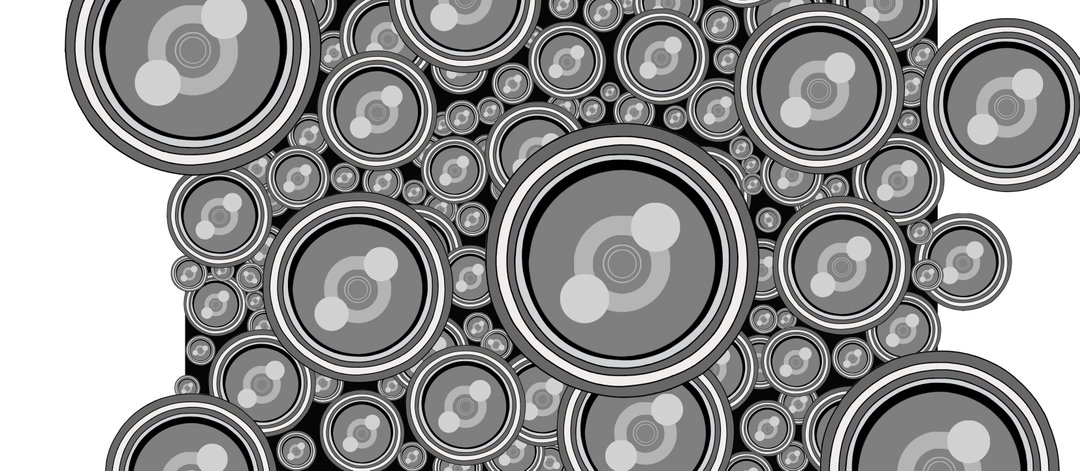
Murugiah, 1984: digital colour draft endpapers (Copyright © Murugiah, 2025)
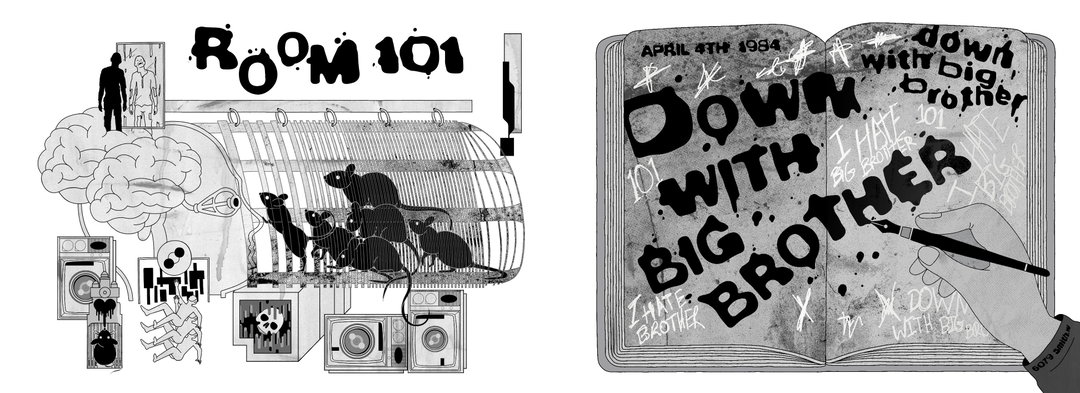
Murugiah, 1984: digital interior (Copyright © Murugiah, 2025)
Hero Header
Murugiah, 1984 (Copyright © Jack Woodhams, 2025)
Share Article
About the Author
—
Sudi Jama (any pronouns) was a staff writer at It’s Nice That from April 2025–January 2026, and is now a freelance writer. They have a keen interest and research-driven approach to design and visual cultures in contextualising the realms of film, TV, and music.