


- Words
- Olivia Hingley
- —
- Date
- 3 December 2025
- Tags
The visual world of Jerkcurb’s new album is made with inherited paint and a touch of magical realism
In conversation with It’s Nice That, the artist musician sheds light on the six years between his first and second album, touching on the use of art as a means to grieve, switching from pens to paint, and why restriction is more creative than infinite choice.
Share
Share
When murmurings first began that the London-based musician Jerkcurb (aka Jacob Read) was releasing new music, there was plenty of excitement; six years after his debut LP Air Con Eden, fans would finally be getting a whole new album to feast on. For those who were long-time appreciators of Jerkcurb, perhaps equally as exciting was the knowledge that (if his previous work was anything to go by) the new album would be accompanied by an all-encompassing visual universe to immerse themselves in even further: covers, posters, music videos, merch and more, all hand-crafted by Jacob, who’s a visual artist as much as he is a musician. The album, Night Fishing on a Calm Lake, put out into the world 28 November, is an enchanting sonic experience, informed by loss and uncertainty, but also joy and experimentation, and it feels inseparable from the beautifully eerie and surrealist world Jacob and his collaborators have created for the music to live within.
One thing Jacob finds funny (and maybe a little frustrating) is the idea that he’s been on ‘hiatus’, or in some form of hibernation. While he may not have released music under the Jerkcurb name for a while, he’s actually been pretty busy; he’s released an album with the band Horsey; worked on two EPs with the punky outfit Findom; released a clothing line with Wood Wood; and worked as a trade painter in an artist studio. “In my head I didn’t really stop,” the artist says. “I just kept going with different obstacles.” It’s true, the years between the two albums haven’t been the easiest for the artist. At first, post Air Con Eden, the musician had no trouble writing and began almost straight after the album’s release – then Covid hit, and Jacob’s father passed away.
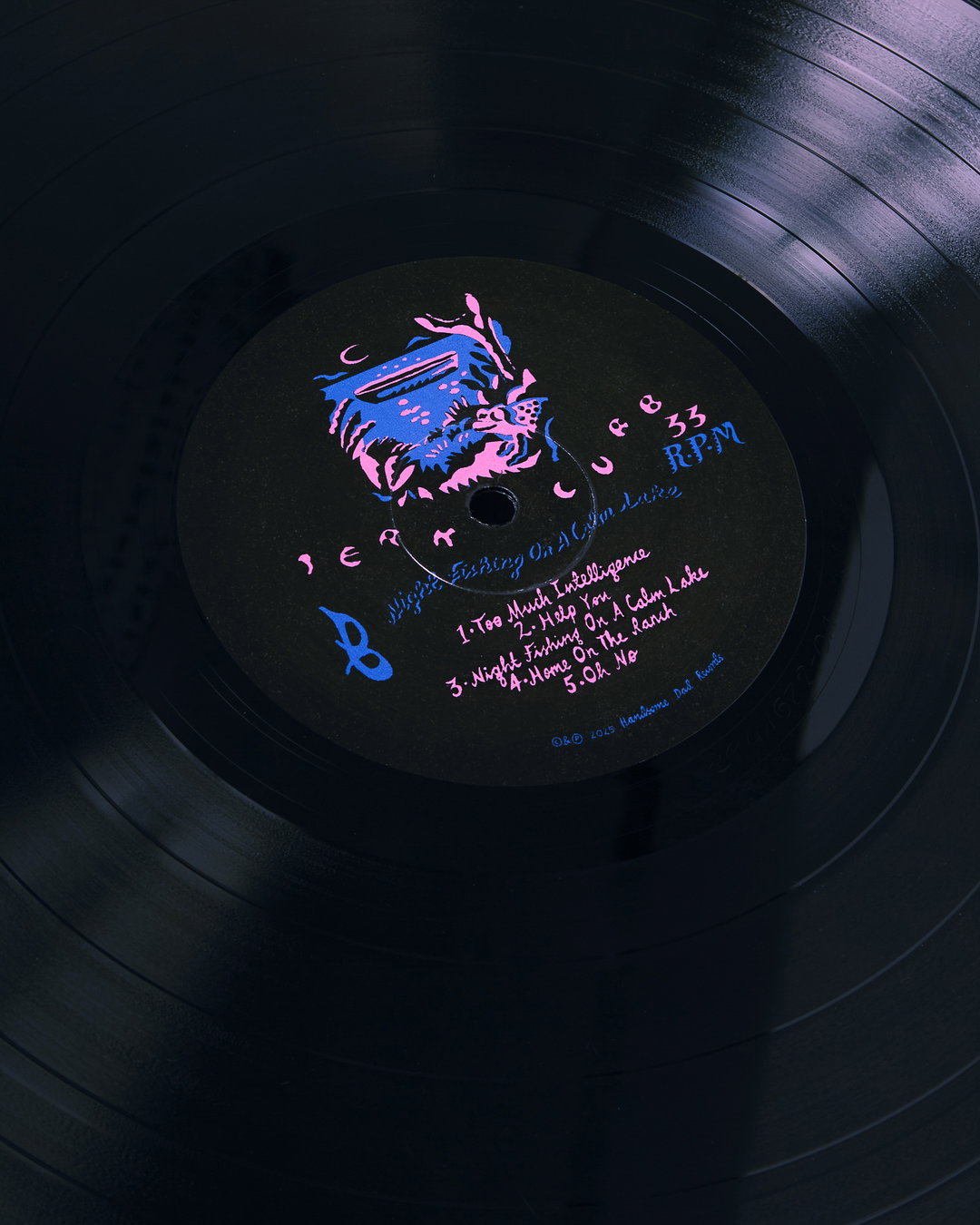
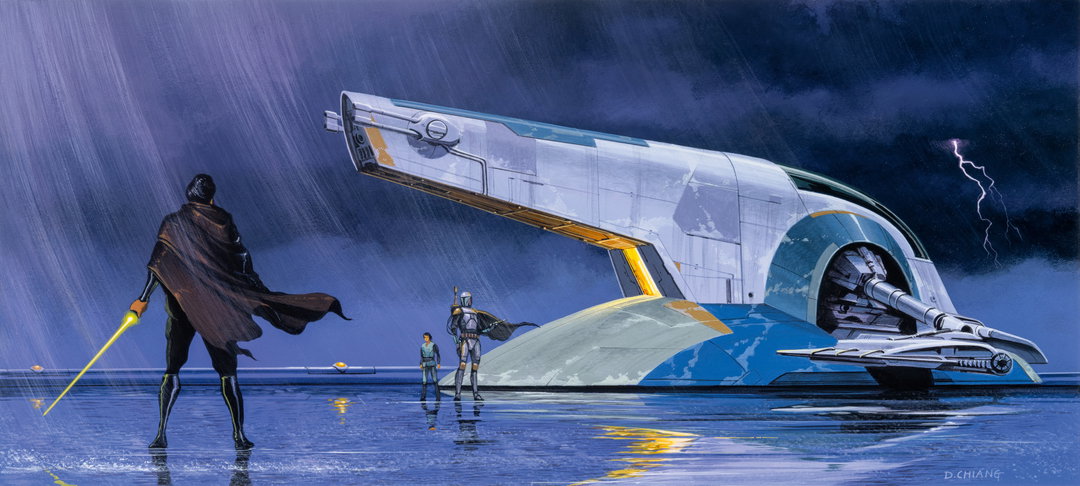
Jerkcurb: Night Fishing on a Calm Lake (Copyright © Jerkcurb, 2025)
Jerkcurb: Night Fishing on a Calm Lake (Copyright © Jerkcurb, 2025)

Jerkcurb: Night Fishing on a Calm Lake (Copyright © Jerkcurb, 2025)
“This time around it was paint, murky paint, so I got rid of the guitar and played synth and piano music.”
Jacob Read
Jacob, an only child, was born to two artists. His London-born father met his mother, an American studying illustration, while he was studying painting in New York. After spending a number of years living in the US together, the pair moved back to London, where Jacob was later born, as his father’s chronic condition would be better treated with the support of free healthcare. Naturally, as two creatives, Jacob’s parents were always supportive of Jacob becoming an artist, giving him a wide ranging cultural exposure. But it’s not only references and a passion for the arts that Jacob was given by his father; after his death, Jacob inherited his studio, and everything that lay within it.
The studio, a space he now shares with fellow artist and friend Jack Marshall, is where we meet to talk about the new album. Nestled in the back of an old church, it’s packed with paintings, tools, pieces of sets from music videos, mugs repurposed as paint pots, sketchbooks piled high and the odd threadbare chair. It has a comforting, lived-in way about it that makes it feel like the perfect place to hole yourself away and make art. Before he took over the space, Jacob says he’d always been a straightforward illustrator, but being faced with his father’s old tools (he points to a tray brimming with half-used oil paints) he decided to try them out for himself. “I was very fortunate to have them,” Jacob says. “It’s been a very nice way to reconnect.”
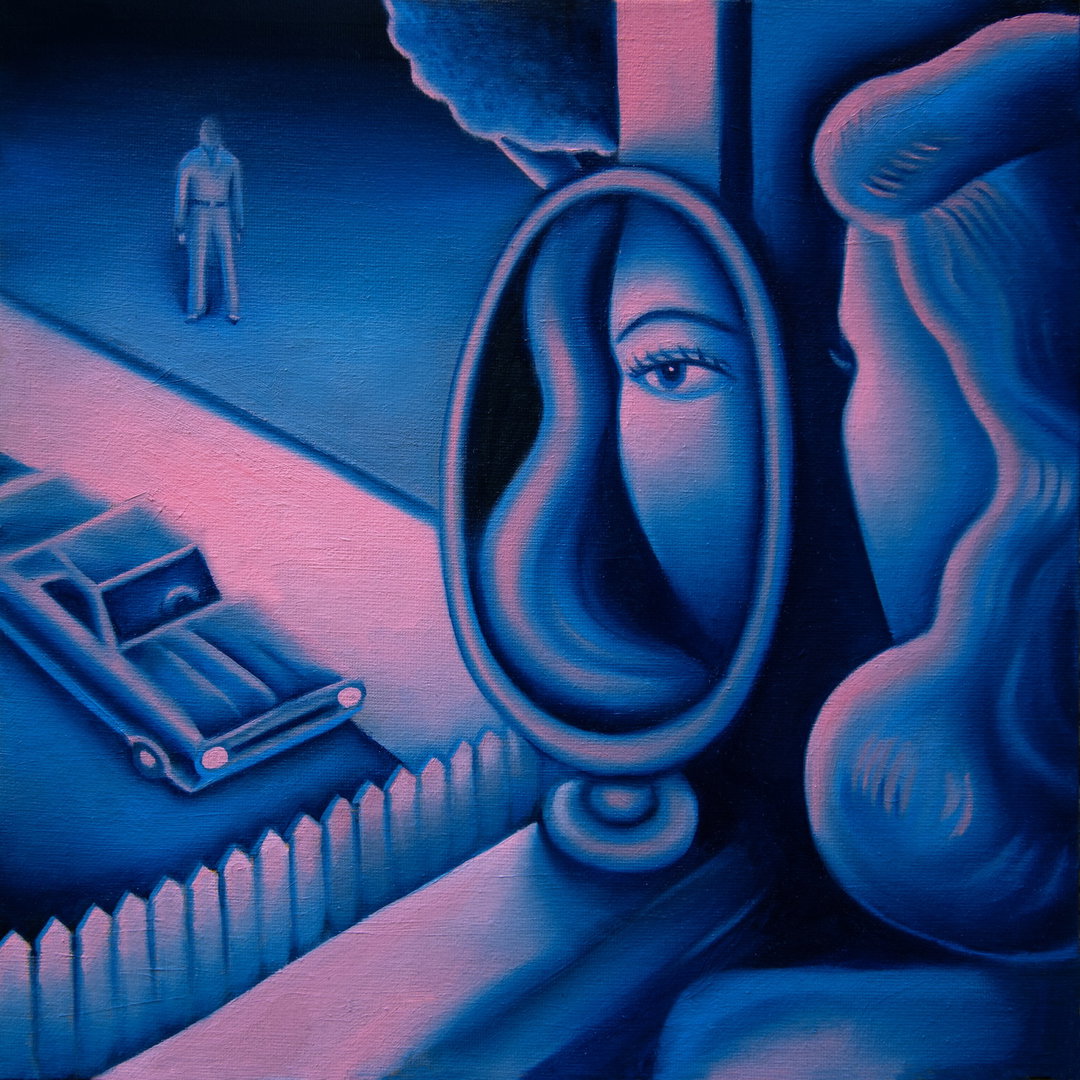
Jerkcurb: Night Fishing on a Calm Lake (Copyright © Jerkcurb, 2025)
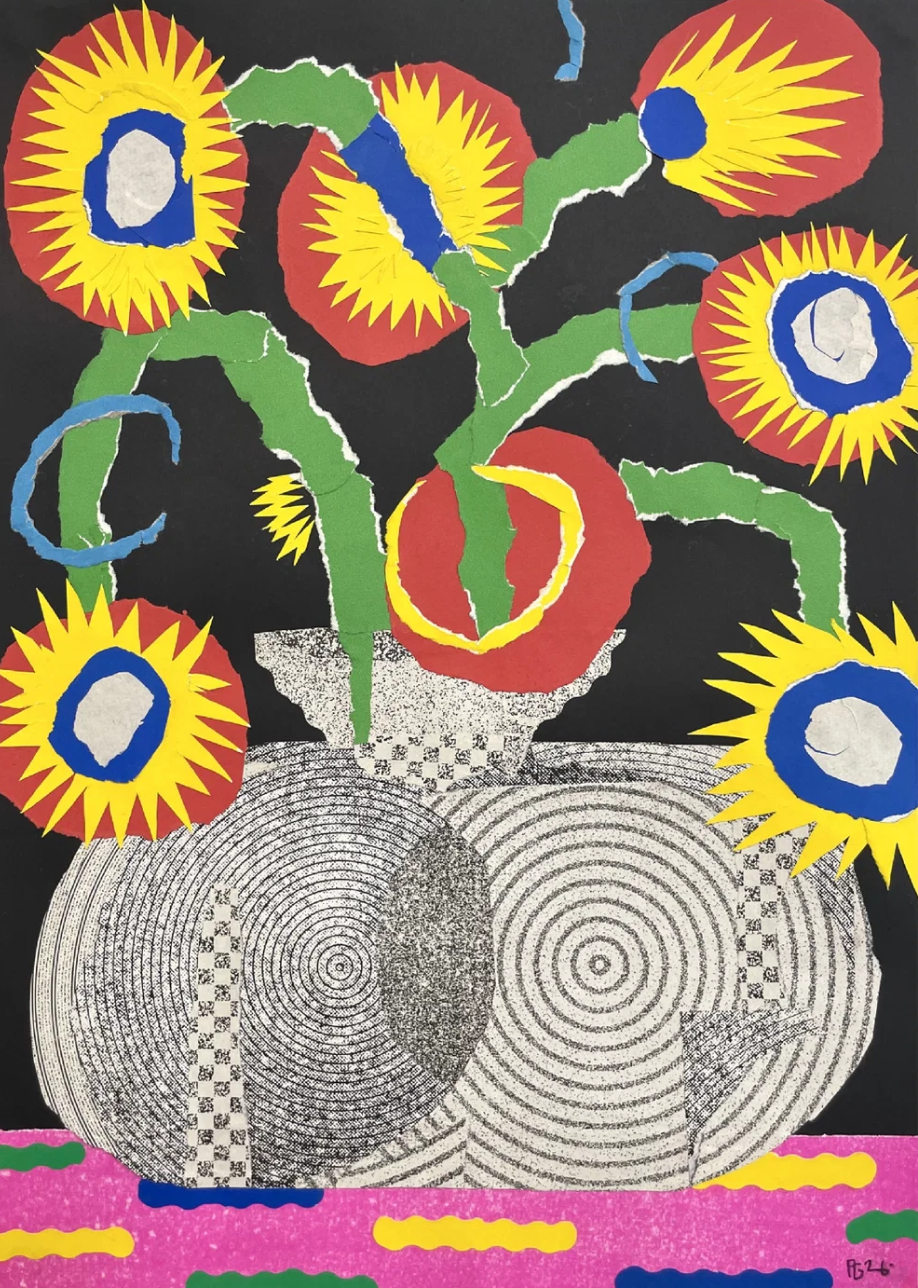
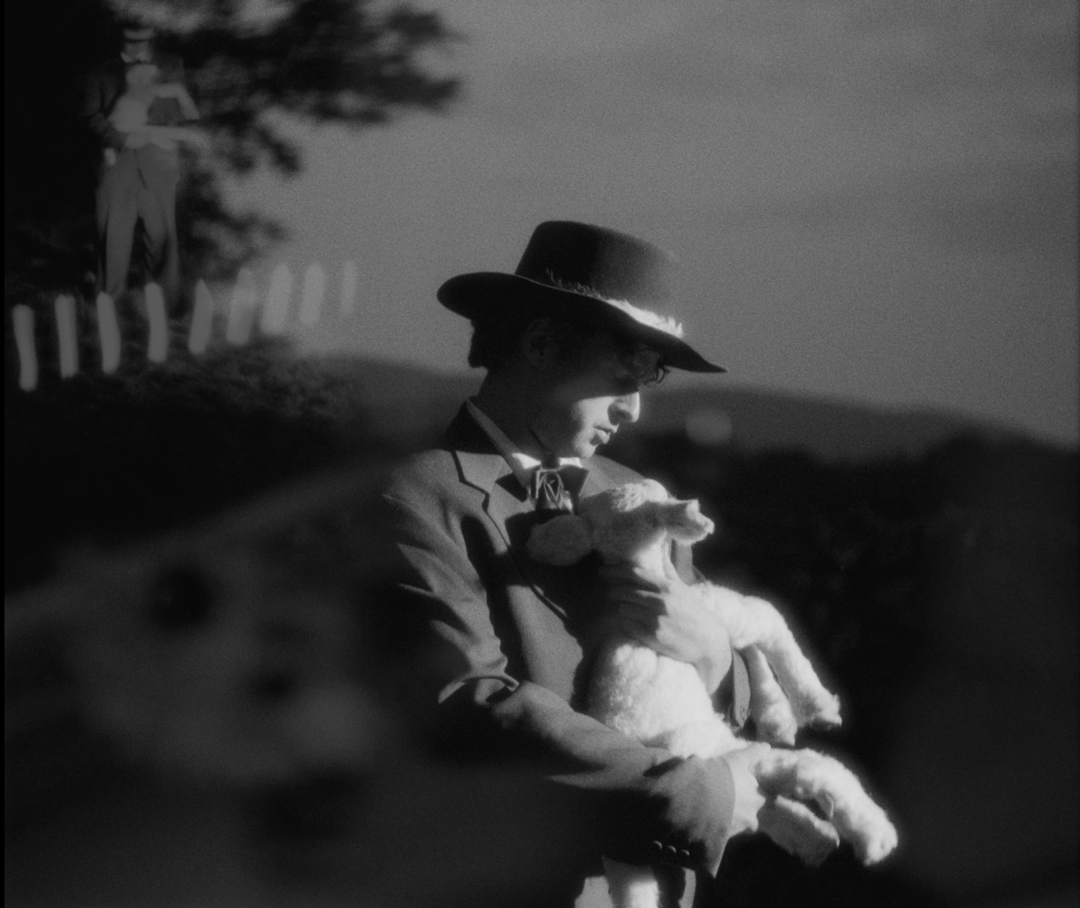
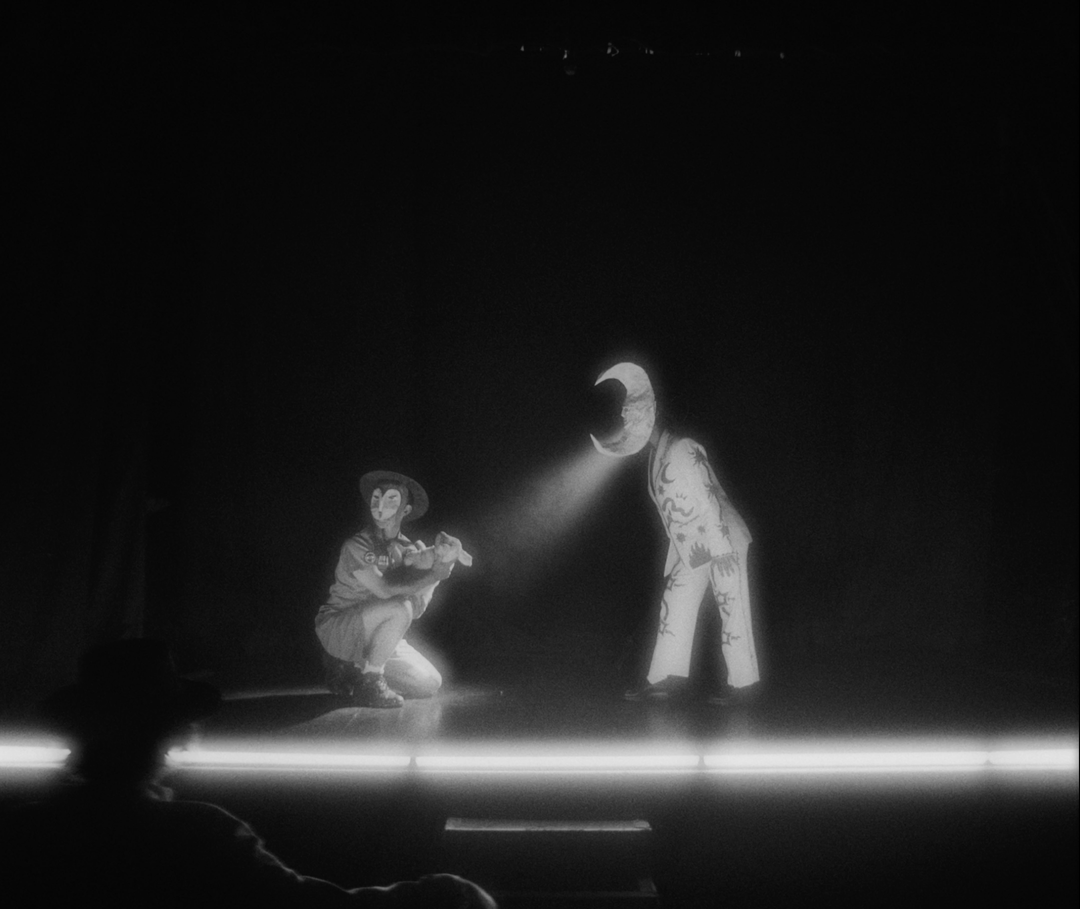
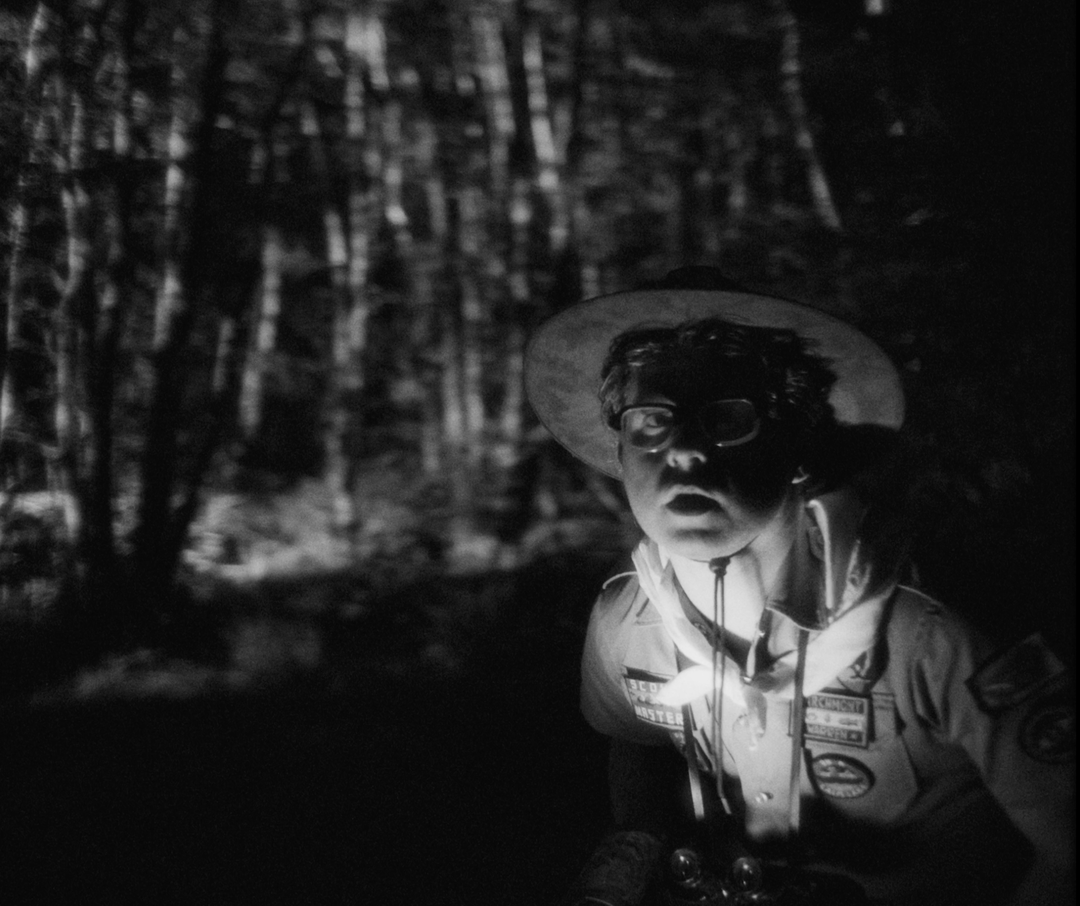
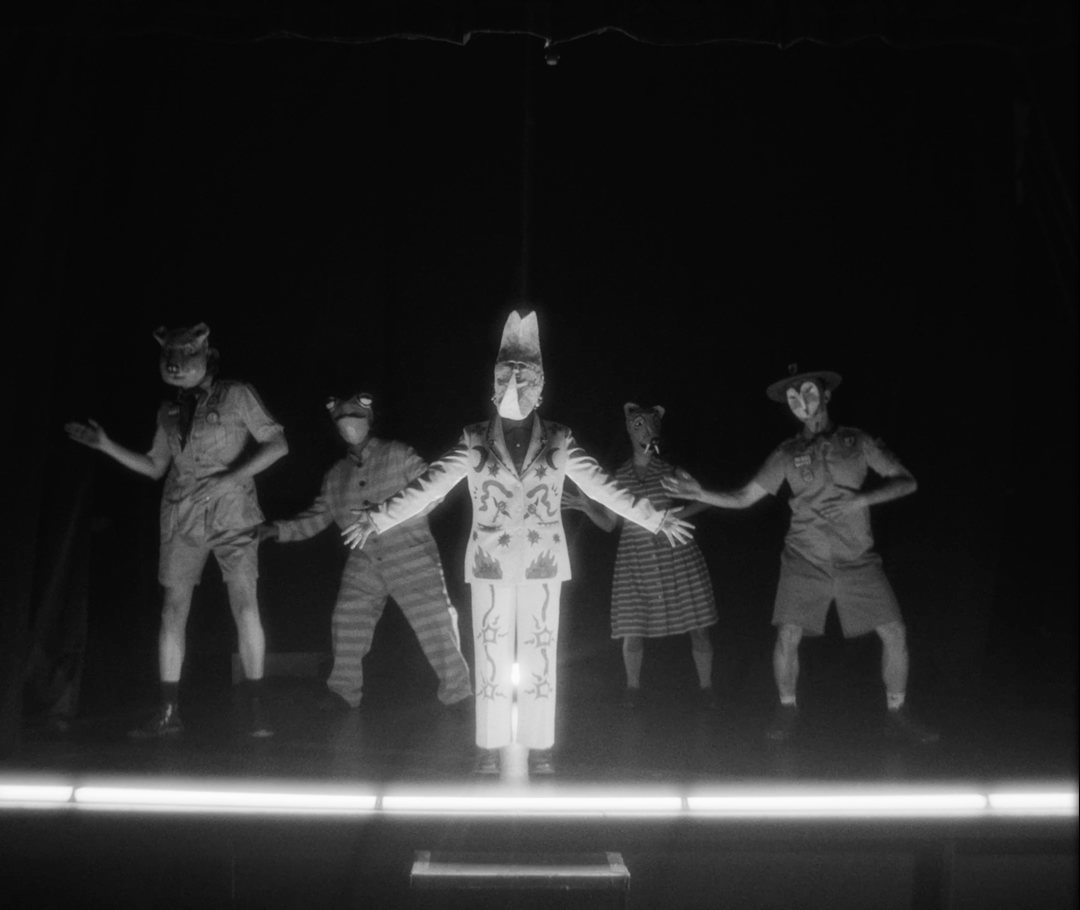
When Jacob talks about his music and his art, he refers to them interchangeably – for him, they’re not two separate creative aspects, but one interwoven whole, and when creating the album his experimentations with the oil paints ended up informing the music he was creating. “The previous album was a lot of electric guitar and whammy bar, equalling very flat drawing and printed two-tone colours,” says the artist. “Whereas this time around it was paint, murky paint, so I got rid of the guitar and played synth and piano music.” The colourway that exists throughout the album’s covers, a pastel pink and a deep blue, were mixed from his father’s big tray of paints and paired, at first, simply because they went well together. But they later gained meaning. The narrative behind the first single off the album, Larchmont, is a couple who are “kind of scared of each other”, Jacob says, “but there’s also this deep love too”. The pink came to represent the lost glow of the “candy floss dream”, while the blue represents a feeling of “cold empty sadness”.
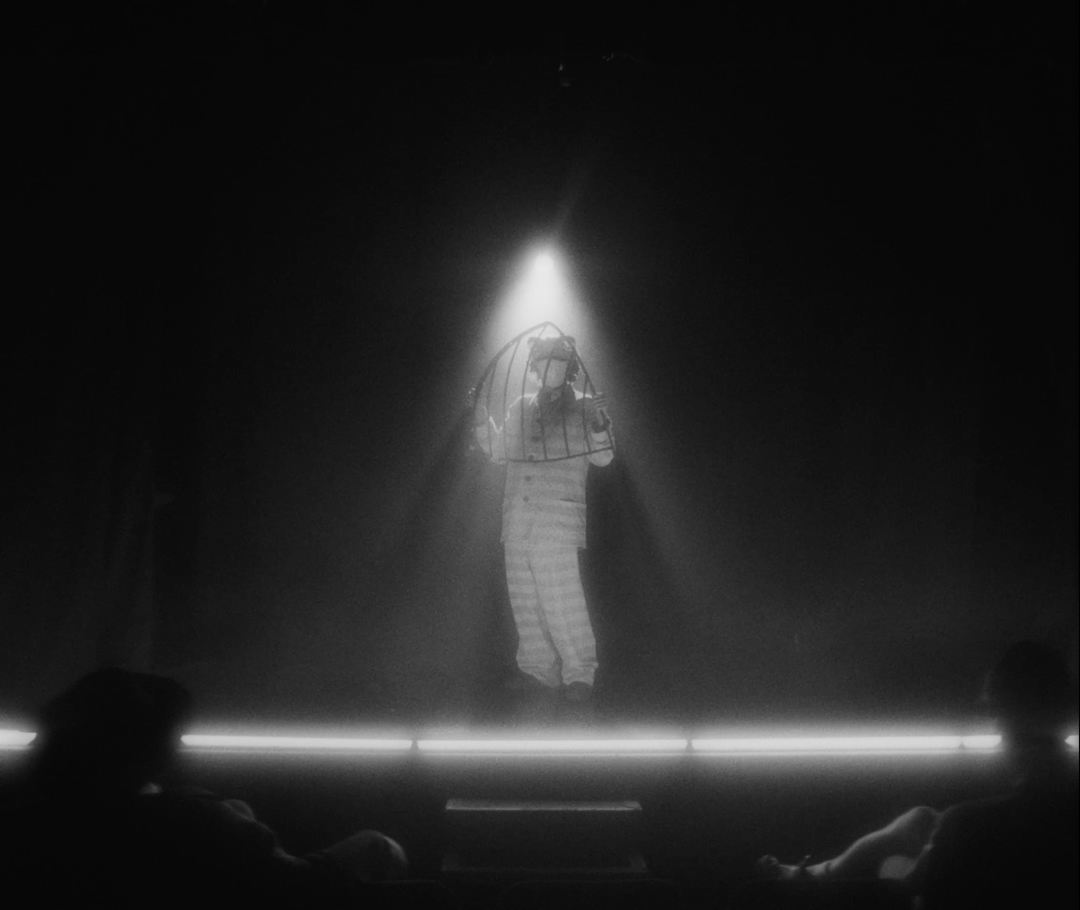
1 of 5
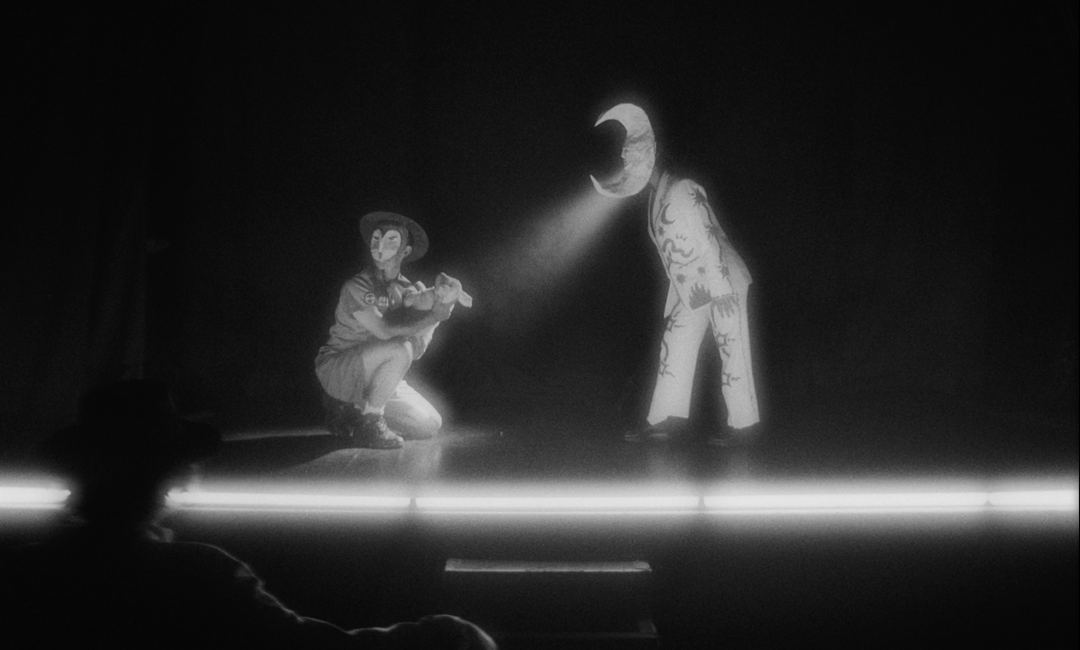
Jerkcurb / Billy Howard Price: Larchmont Video (Copyright © Jerkcurb / Billie Howard Price, 2025)
1 of 5
Jerkcurb / Billy Howard Price: Larchmont Video (Copyright © Jerkcurb / Billie Howard Price, 2025)
Tonal restraint is nothing new for Jacob; his work has always been defined by bold, uncompromising and carefully selected colour palettes. In fact, on whether he’s seen any massive changes to his style from one album to the next, Jacob simply summarises: “I used to be defined by one set of restrictions, and now I just think I’ve got a new set.” Restriction is, for the artist, one of the most important facets of his creative process. “The freedom from choice is almost more creative,” he muses. “We think, what with the internet, that infinite possibilities are super creative, but you just end up in decision paralysis. I get more inspired going to a library and looking at books than looking at the web, which is an infinite abyss.”
Day to day, Jacob practices this offline restriction by taking out a few pens and sketchbook (he never leaves the house without one on his person), and fitting whatever comes to his mind within their A6 pages. Taking me through them, Jacob shows pages of grimacing faces, figures peeing down a drain, as well as an early sketch of a woman staring into a mirror, which later became the Larchmont single cover. “I suppose that’s the main difference,” Jacob says, surveying the sketchbooks in front of him, “my art is quite goofy but my music is quite serious.”
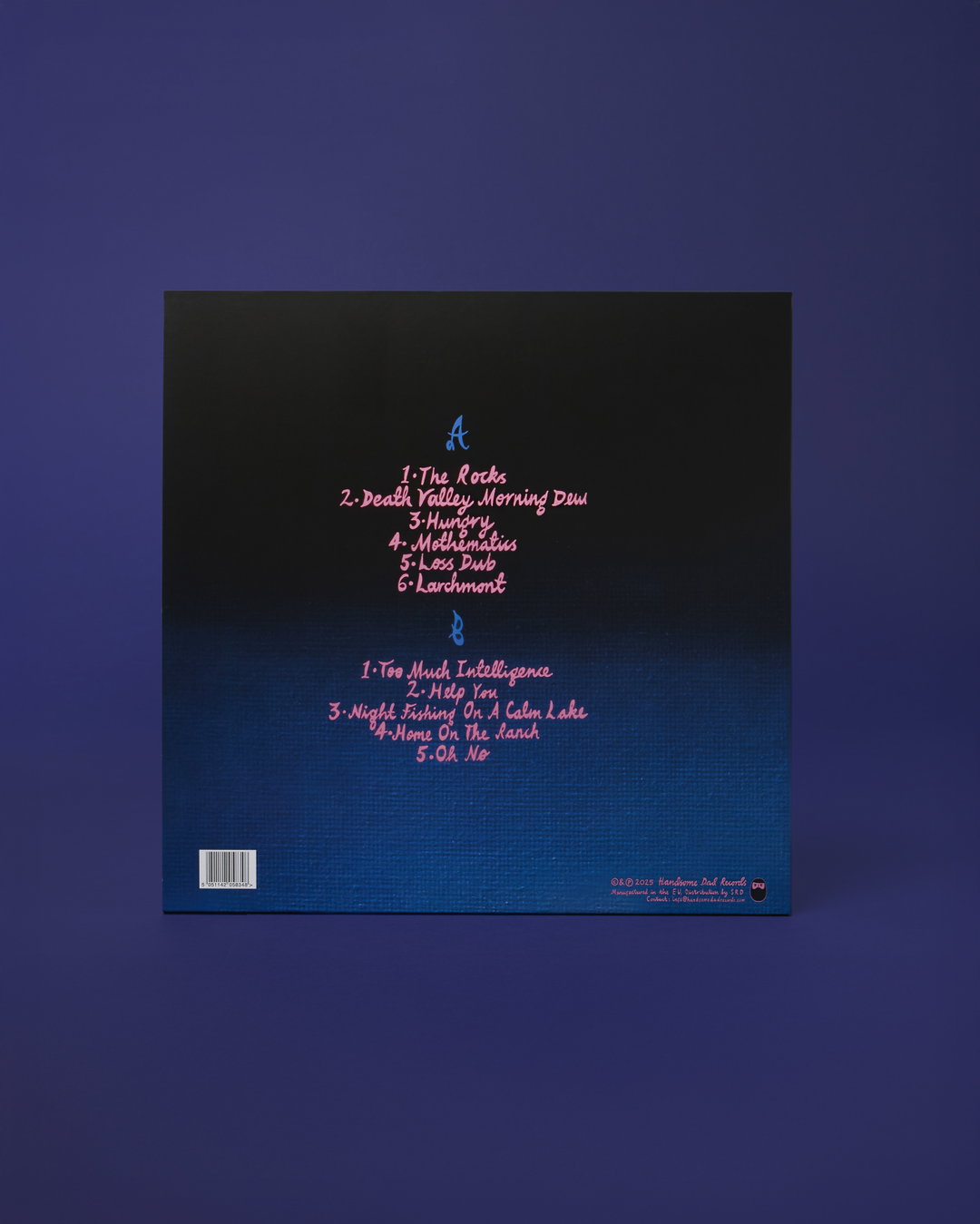
Jerkcurb: Night Fishing on a Calm Lake (Copyright © Jerkcurb, 2025)
“I love escapism through media and through art – I like to be taken away as far as possible.”
Jacob Read
It would be easy to assume that on top of covers, merch, posters, and Jacob being most easily categorised as an illustrator-painter of ‘static’ works, that music videos would be a whole other mountain to cross. But Jacob studied animation at university, and, growing up, he was fascinated by film and had big dreams of being a film director – he could often be found recording video clips from his favourite films and making his own custom soundtrack for them. It’s also an area that lets him practice something else he loves: collaboration. The three videos released so far have been directed by Billy Howard Price (Larchmont), Peter Eason Daniels (Death Valley Morning Dew) and Elena Isolini (Hungry). “If it was all just me I would never get anything done,” the artist says. “I love to work with other people’s vision of how they interpret my stuff.”
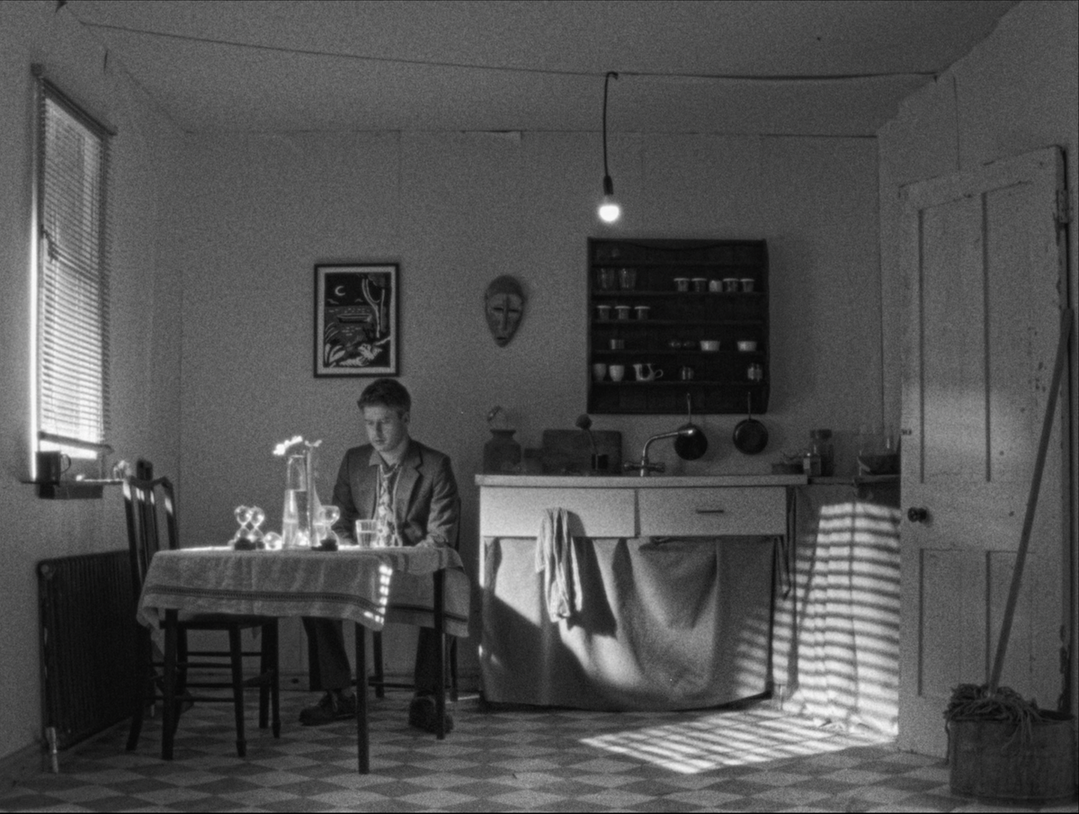
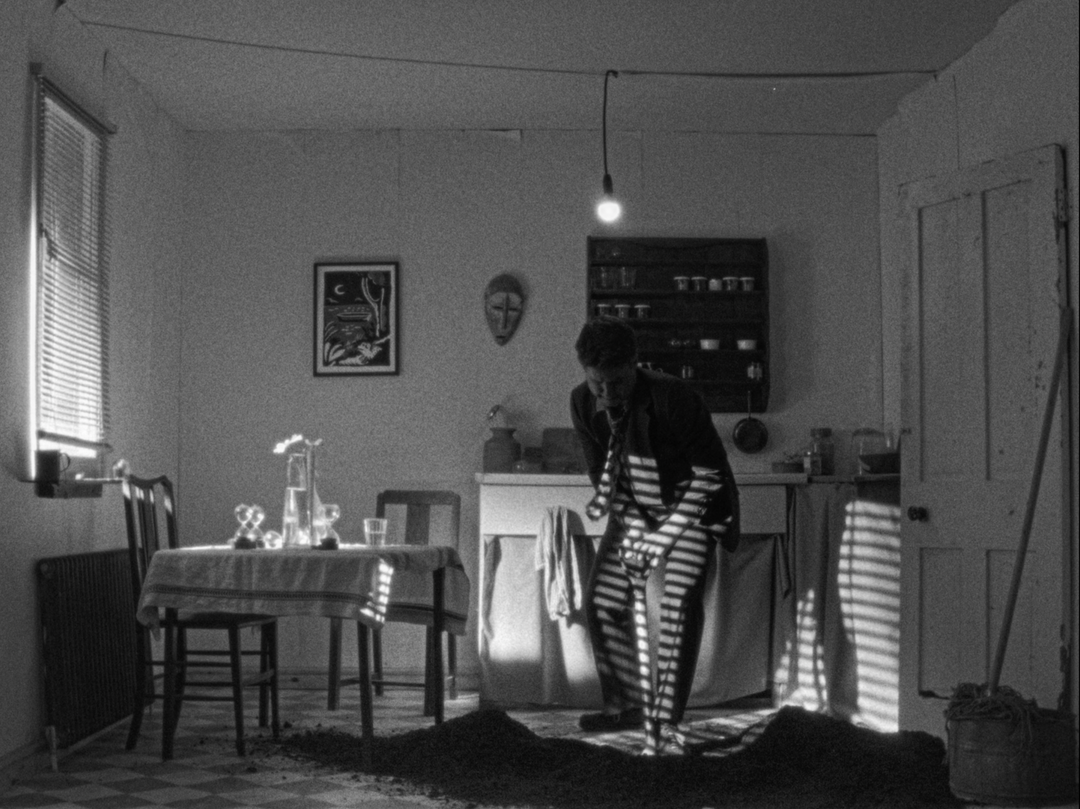
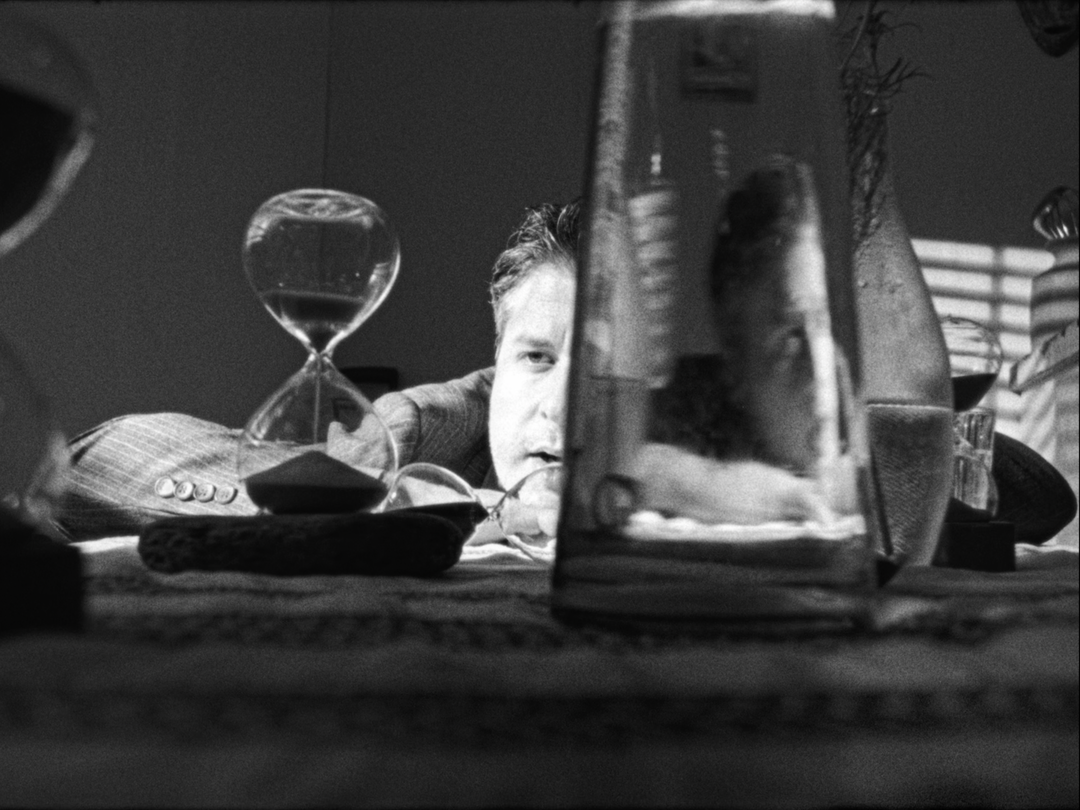
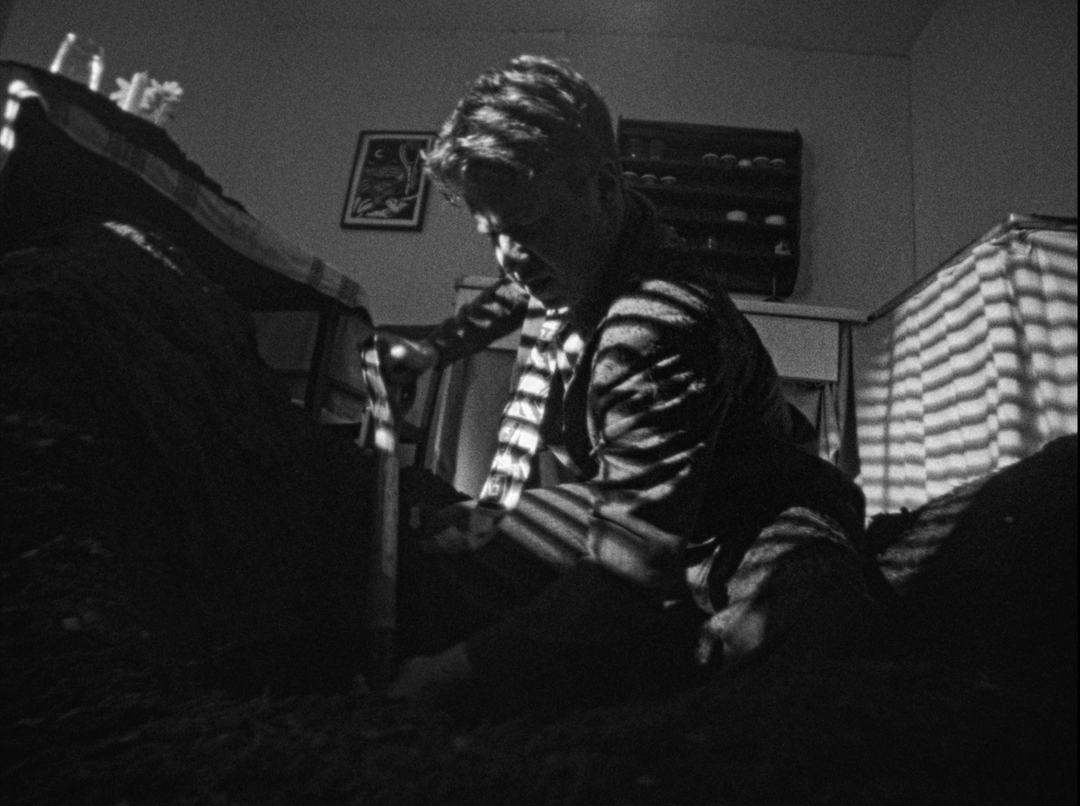
While Larchmont and Death Valley Morning Dew feel united by black-and-white tones and an otherworldly, distinctly 1950s cinematic edge, Hungry, the most recent video released is filmed in colour and feels much more ‘2025’, with a day-in-the-life POV of Jacob going about his day: hopping on a Lime bike, heading to the British Library, before ending with a hallucinating trip fairground – dodgems and all. This visual division – between the older more “big band” tracks written before Jacob’s father passing, and the later, synth-based tracks written after – wasn’t intentional, but it ended up working well. “That process of the black-and-white turning to colour is actually quite important, because that’s what I was going through,” Jacob says. The period after his father’s death, when he bought the 1990s JD 800 synthesiser “that sounded like [his] childhood” and features heavily in the album, was first and foremost, a period of grieving, but it also turned into a period of creative experimentation, one where Jacob worked hard to “try and find the positivity in the world”, he says.
1 of 4
Jerkcurb / Peter Eason Daniels: Death Valley Morning Dew (Copyright © Jerkcurb / Peter Eason Daniels, 2025)
1 of 4
Jerkcurb / Peter Eason Daniels: Death Valley Morning Dew (Copyright © Jerkcurb / Peter Eason Daniels, 2025)
If there’s one thing that’s persisted from one Jerkcurb album to the next, it’s the niggling sense that his creative work is a portal to a world distinct to the ones we spend our lives living in; from the Lynchian sensibilities of the Air Con Eden and Night on Earth videos, to today’s Night of the Hunter inspirations. On his gravitation toward surrealism and magical realism, Jacob seems to put it down to his nature, and the fact he’s lived and worked in south London for his whole life. “I’m not very adventurous, I don’t really like heights, I don’t really travel much,” he lists. “I’m actually just quite a homebody. But I love escapism through media and through art – I like to be taken away as far as possible.” This idea of satisfying a sense of wanderlust through art is echoed in another figure Jacob cites as an influence – the Bolton-born Denis McLoughlin, a pulp artist practising in the 1940s, whose heavily American-inspired comics of cowboys and gauche-heavy book covers belie the fact he never once stepped foot in the country, despite his career-long fascination. A monograph of his work sits in Jacob’s studio, and flicking through the pages, you can see how elements of his style – flat, bold colour combined with deep shadow, and sweeping, hand painted lettering – have been borrowed from and revived in Jacob’s works.
Hearing Jacob speak about his work, influences and processes firsthand, it’s not hard to see how important this escapism has been, and how much solace it’s provided him over such a tumultuous and life-altering six years. It just feels incredibly lucky that he’s created something so beautiful and personal from it for all of us to escape into too. Jerkcurb is a welcome reminder that music is so rarely a solely aural experience, but visual and transportive, something that touches multiple senses to take you out of your immediate reality – even if it’s just for the two minute run of music video, a two hour gig, or the 40-odd minute length of an album. This latest from the multidisciplinary artist makes you want to plug in, open your eyes, and enjoy.
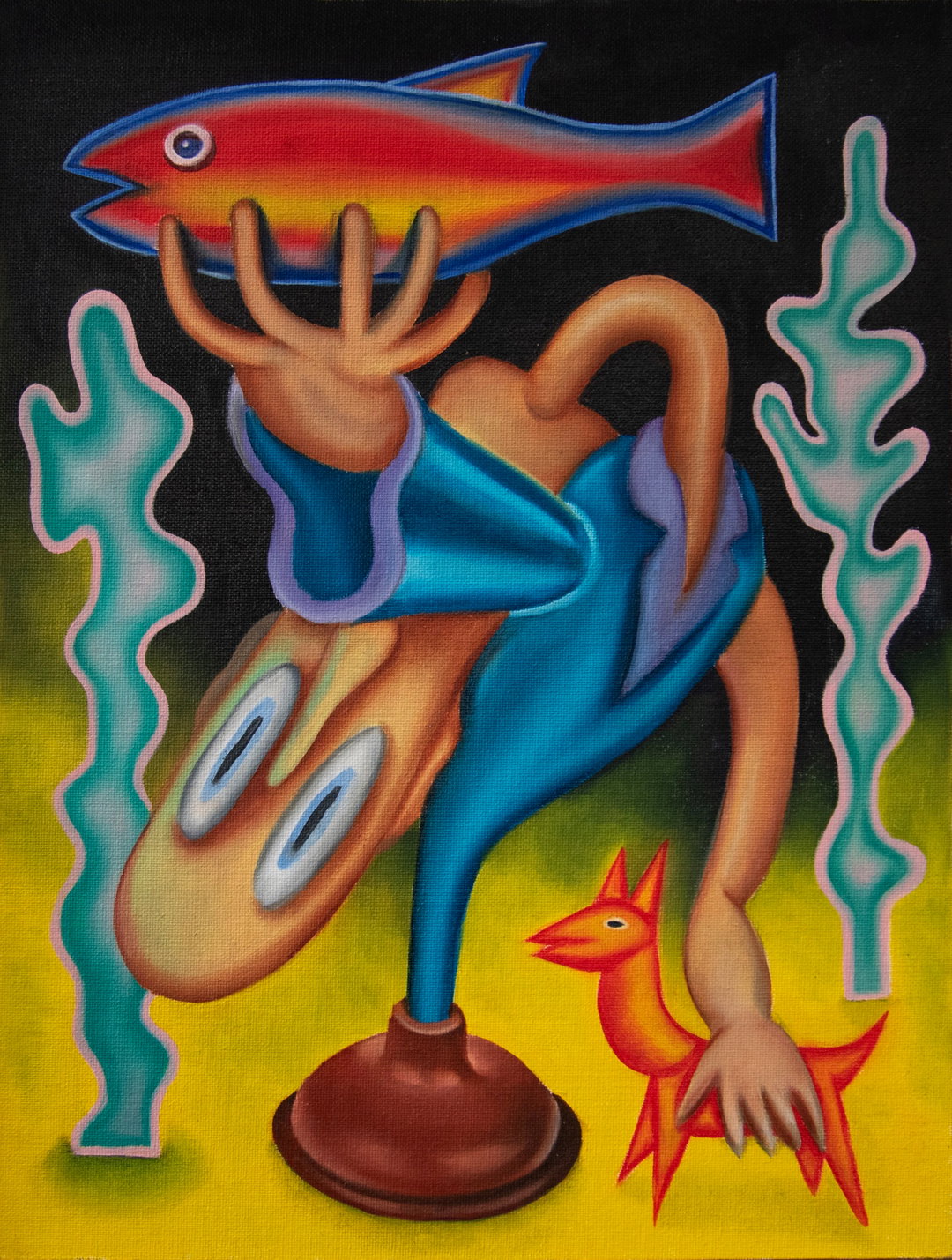
Jerkcurb: Night Fishing on a Calm Lake (Copyright © Jerkcurb, 2025)
Share Article
Further Info
About the Author
—
Olivia (she/her) is associate editor of the website, overseeing the day-to-day editorial projects as well as Nicer Tuesdays events. She joined the It’s Nice That team in 2021. ofh@itsnicethat.com
To submit your work to be featured on the site, see our Submissions Guide.