

Art and design in a time of crisis: What can we learn from the graphic history of viruses?
Dylan Mulvaney, head of design at Gretel, explores how art and design played a part in communicating vital information during the influenza, polio and HIV/AIDS epidemics.
Art and design have the power to document, inform, comfort, provoke and create hope for us in times of crisis. Below is a selection of works created in reaction to three historical viral outbreaks. They reflect the changes in art and design between the early modern, modern and postmodern periods. They helped individuals and institutions adapt to change, confront convictions and heal. Hopefully this selection will help inspire new works that address the current global health crisis and our future.
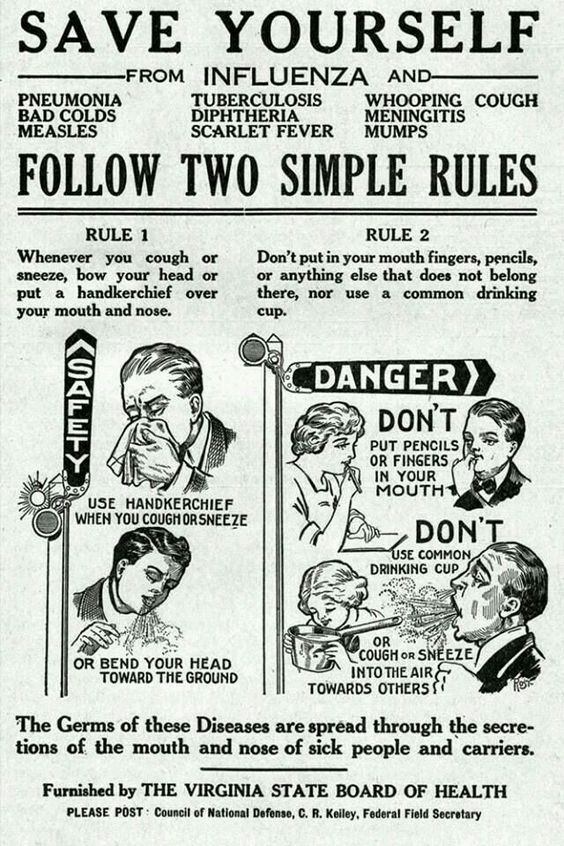
Virginia State Board of Health’s Influenza campaign, 1918
The City of Philadelphia Board of Health's Influenza campaign
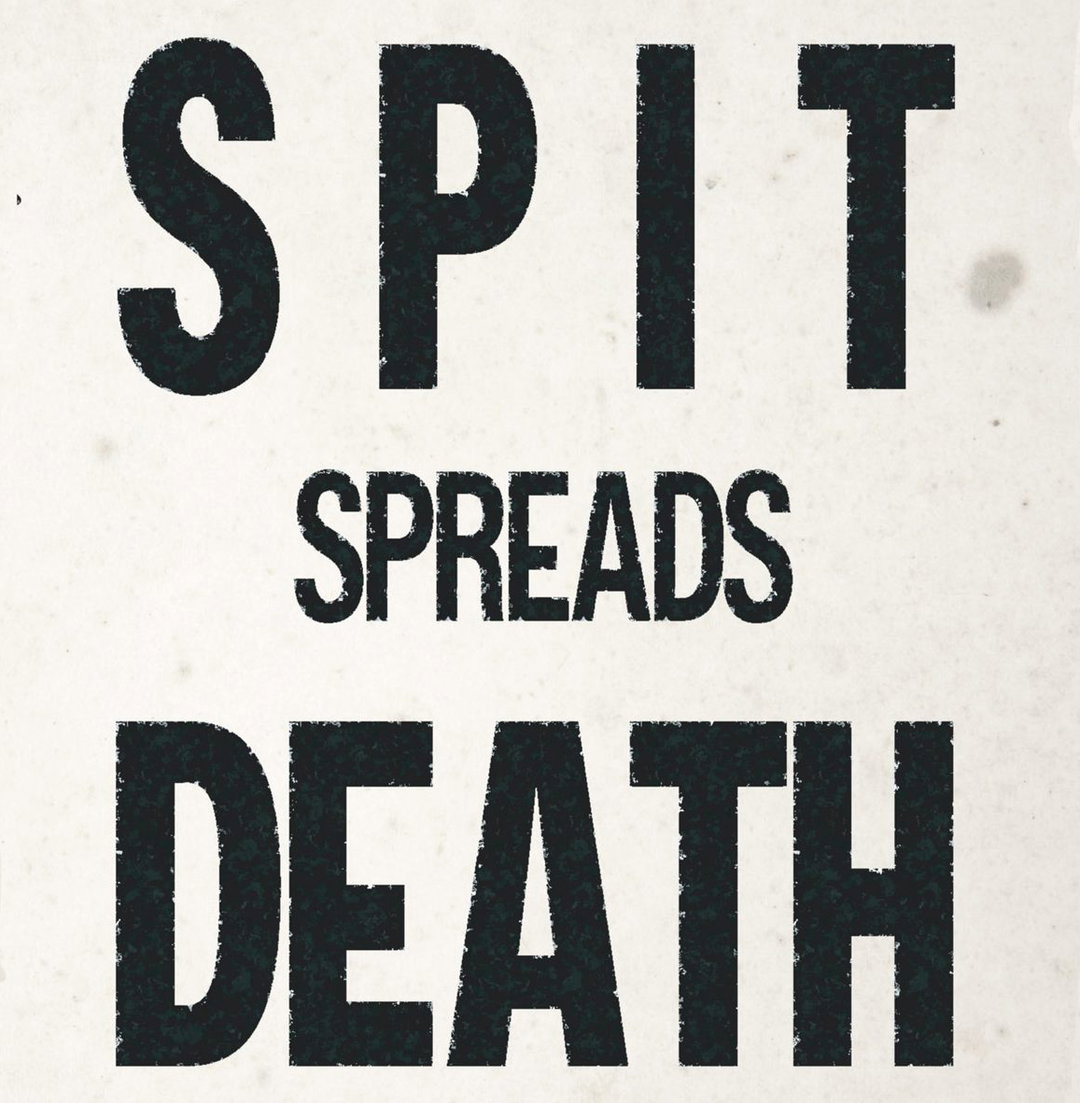
The City of Philadelphia Board of Health's Influenza campaign
1918: Influenza Virus
Graphic Design: Two Campaigns
Modernism was flourishing in the art world but design remained largely traditional. These two public health campaigns illustrate a turning point in design. The Virginia State Board of Health’s campaign was typical for the time. Its dense and arbitrary layout conveys nothing at a glance. Contrast it with The City of Philadelphia Board of Health's campaign, which went viral (no pun intended). It is clear, confrontational and urgent.
“Sans-serif fonts have no place in any artistically respectable composing-room,” – Daniel Berkeley Updike, master printer.
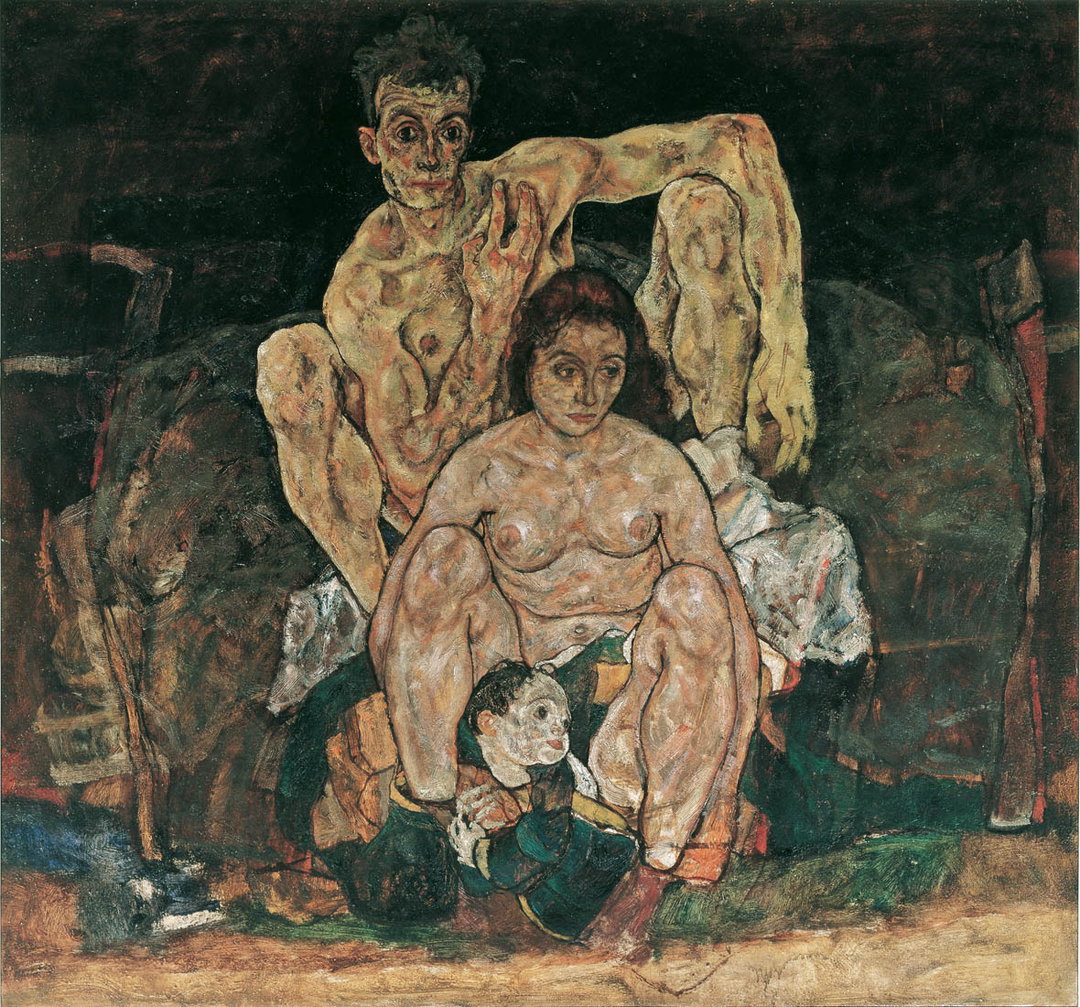
Egon Schiele: The Family
Art: The Family
In 1918, Egon Schiele started a portrait of himself, his wife Edith and the child they were expecting. Edith was infected with the flu and died on 27 October of that year. Egon died of the flu three days later and The Family was never completed.
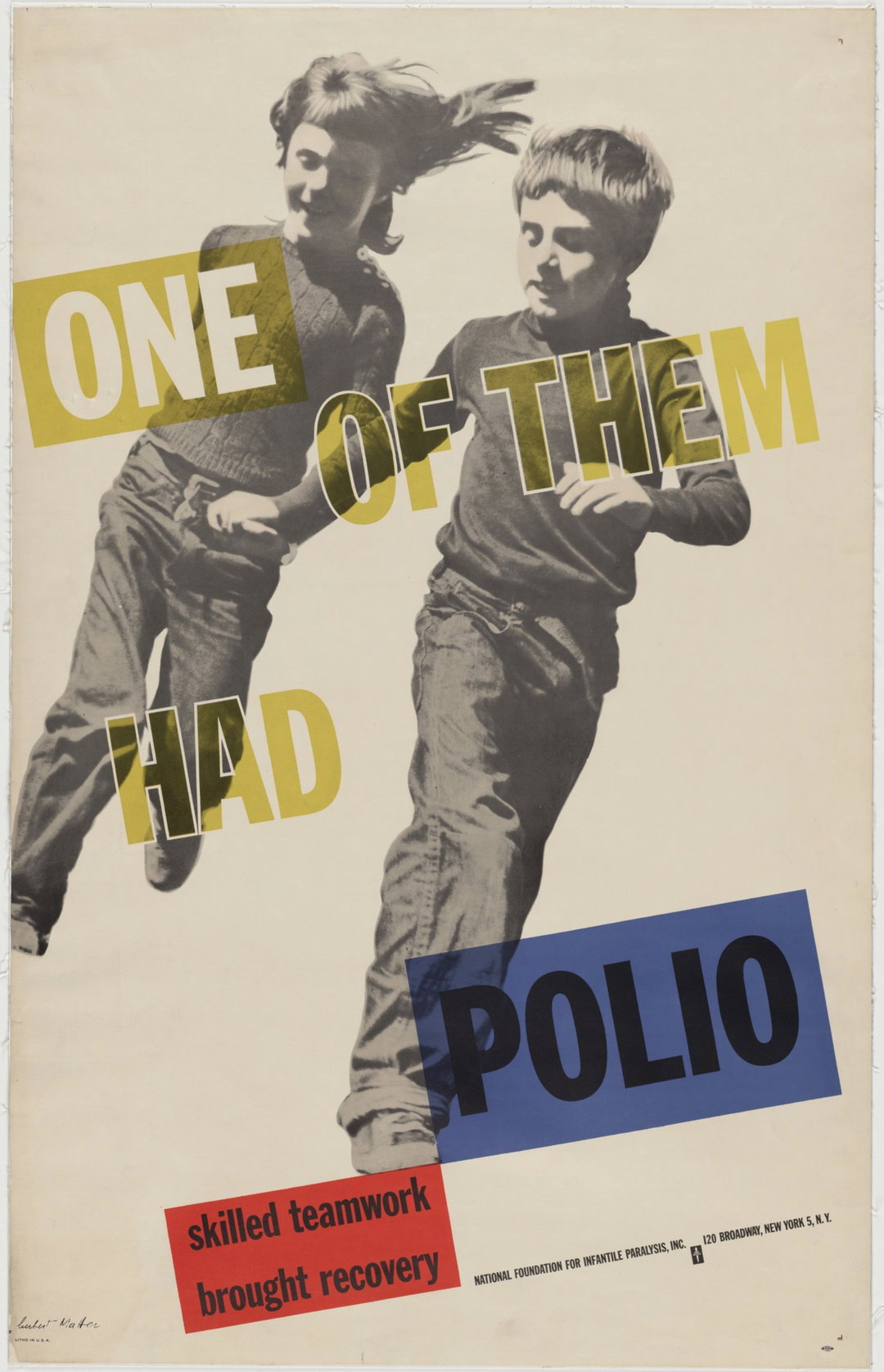
Herbert Matter: One of Them Had Polio, Skilled Teamwork Brought Recovery, 1949 (Copyright © Alexander Matter, 2020)
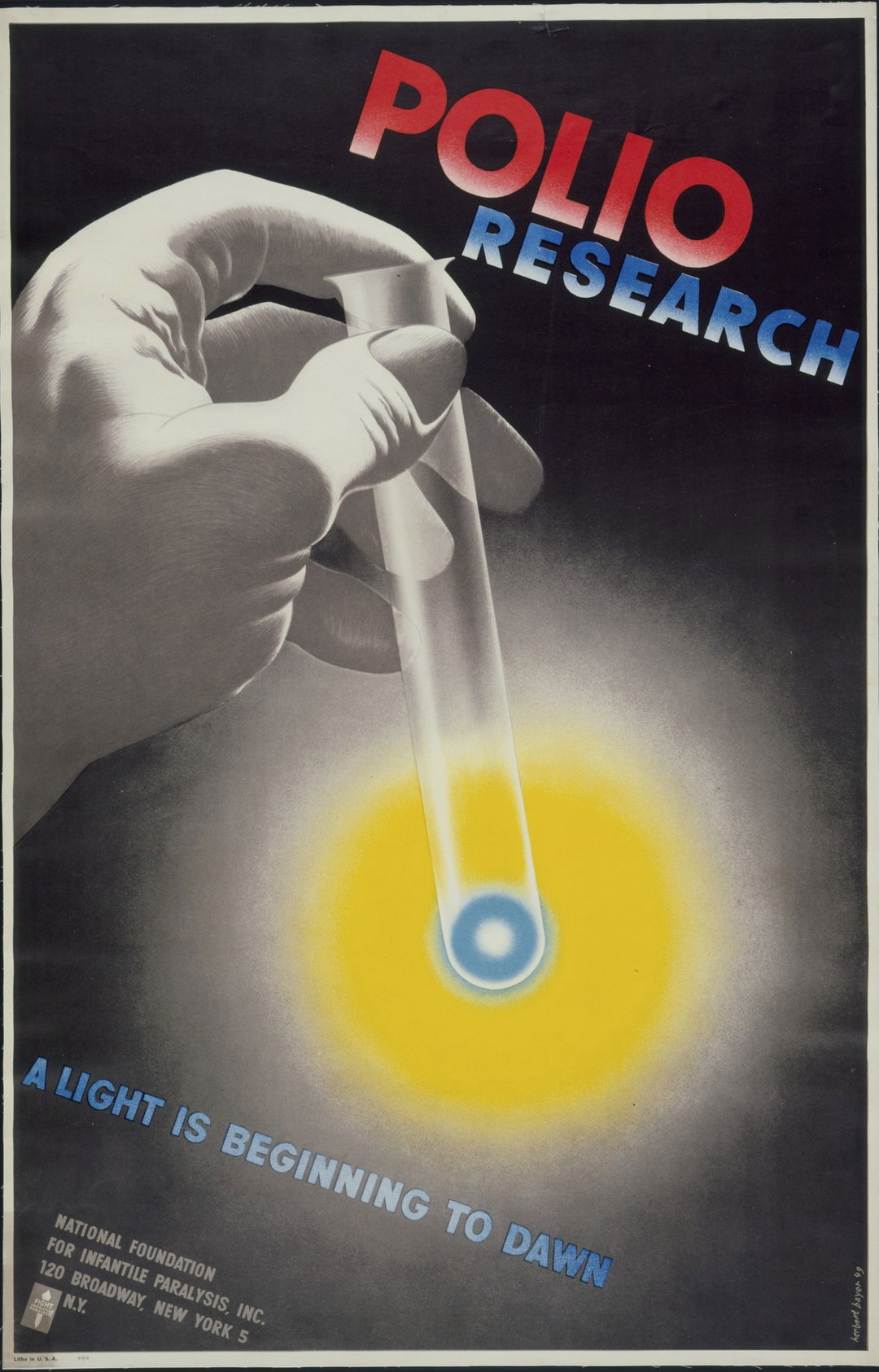
Herbert Bayer: Polio Research, 1949 (Copyright © Artists Rights Society (ARS), New York / VG Bild-Kunst, Bonn, 2020)
Herbert Bayer: Polio Research, 1949 (Copyright © Artists Rights Society (ARS), New York / VG Bild-Kunst, Bonn, 2020)
1948: Polio Virus
Graphic Design: MoMA’s Polio Poster Competition
Modernism now dominated both art and design. For the first time, an art museum decided to work with a national health group. Two modernist classics were created for the competition. The first is Herbert Matter’s One of Them Had Polio, in which the child that recovered is his own son. The second is Herbert Bayer’s Polio Research. The works traveled to other galleries and were reproduced and distributed nationally.
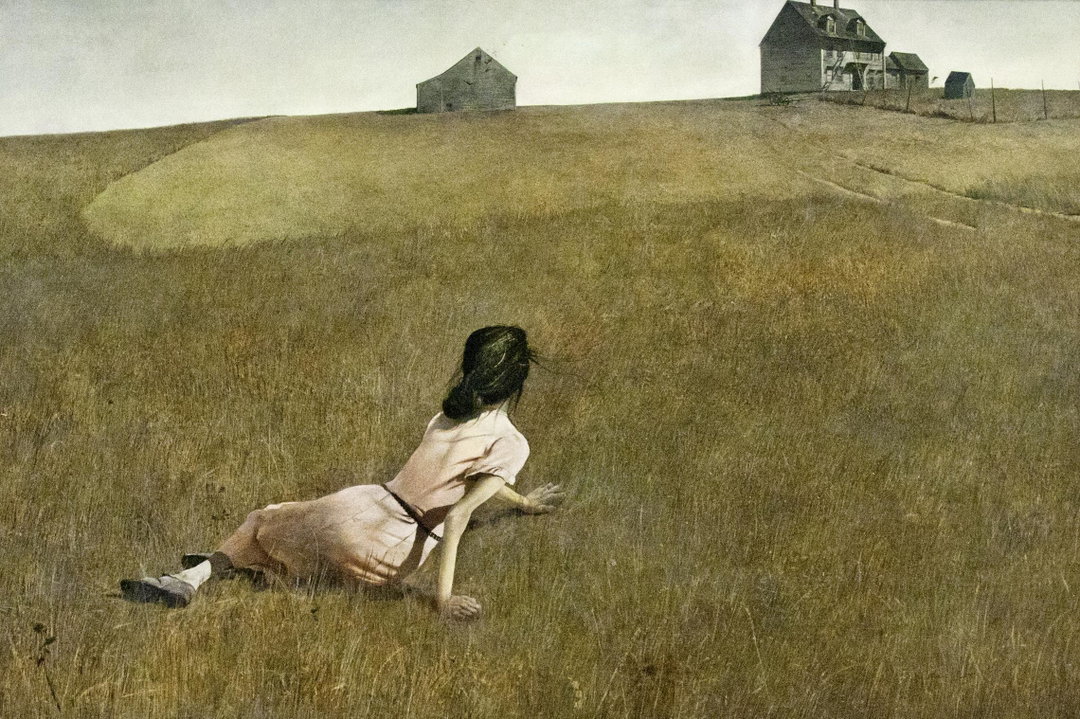
Andrew Wyeth: Christina's World (image via Creative Commons)
Art: Christina’s World
Andrew Wyeth painted this work in 1948. At a glance, the subject appears to be resting but when you look closely her torso is tense. The painting was inspired by Wyeth’s neighbour, Christina. As a young girl, she developed polio which left her unable to walk. She refused to use a wheelchair, instead using her arms to pull herself along.
“The challenge to me was to do justice to her extraordinary conquest of a life which most people would consider hopeless.” – Andrew Wyeth

Salk Architecture: The Salk Institute (Copyright © Salk Architecture, 2020)
Architecture: The Salk Institute
In 1960, five years after developing the polio vaccine, Dr. Jonas Salk selected Louis Kahn to design a research facility that would contribute to the betterment of humankind – one that was “worthy of a visit by Picasso”. Kahn’s scheme was a monumental design with open and flexible laboratories built from simple and durable materials. Since the facility’s opening, it has produced six Nobel laureates.
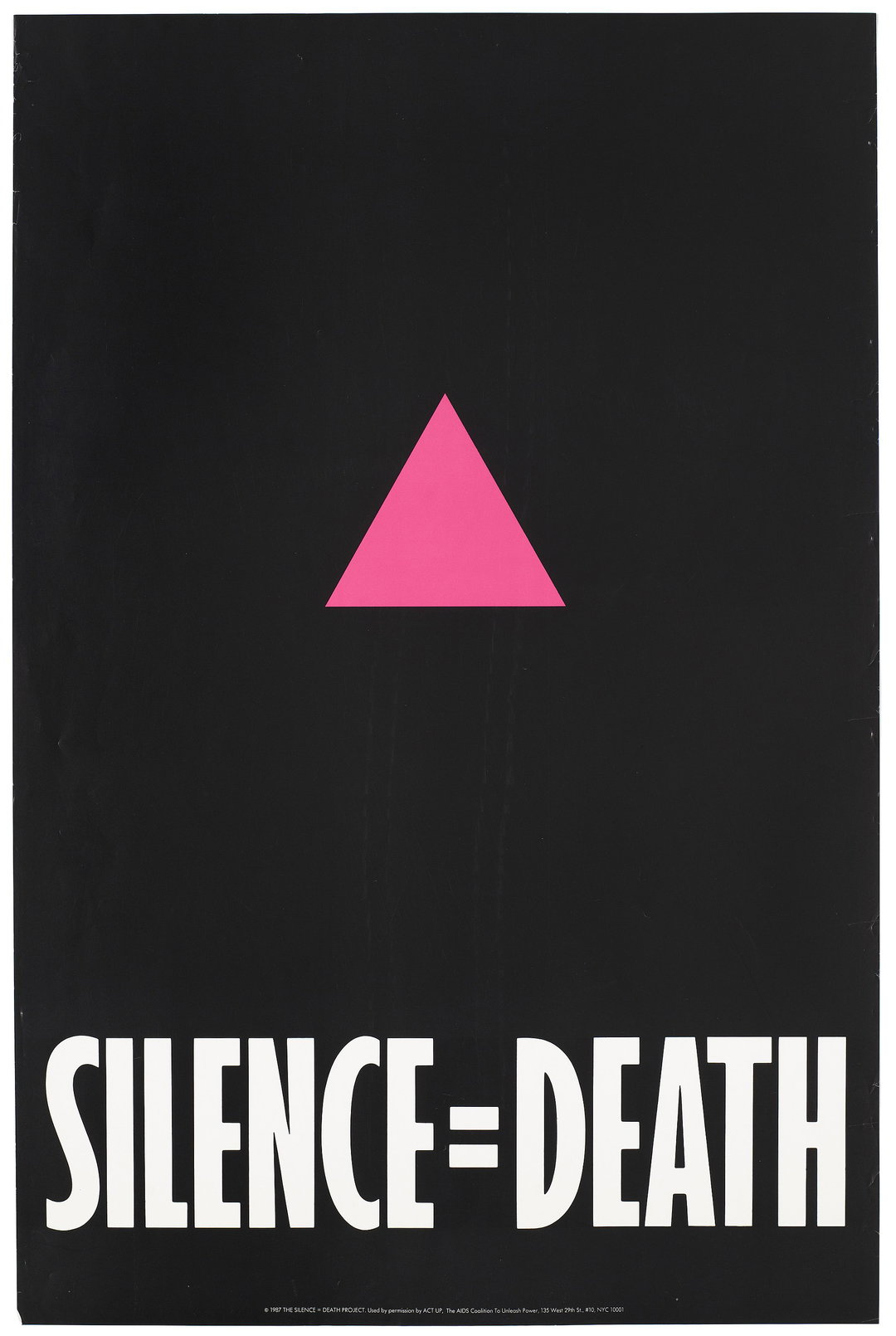
Avram Finkelstein: Silence = Death for ACT-UP, The AIDS Coalition To Unleash Power, 1987. (Image courtesy of the Wellcome Collection)
1981-Now: HIV/AIDS
Graphic Design: Silence = Death
In 1987, postmodernism and appropriation dominated both art and design. Avram Finkelstein, an art director whose boyfriend had recently died of AIDS, decided to found a support group and create a poster to address the epidemic. The group rejected photographic imagery, which could be exclusionary. They chose the pink triangle, known for its association with the Nazi persecution of LGBTQ people. They changed its colour from pale pink to vivid fuchsia and unwittingly flipped the triangle upside down.
The poster was eventually adopted by the grassroots political group ACT UP as the key visual in their campaign against the AIDS epidemic.
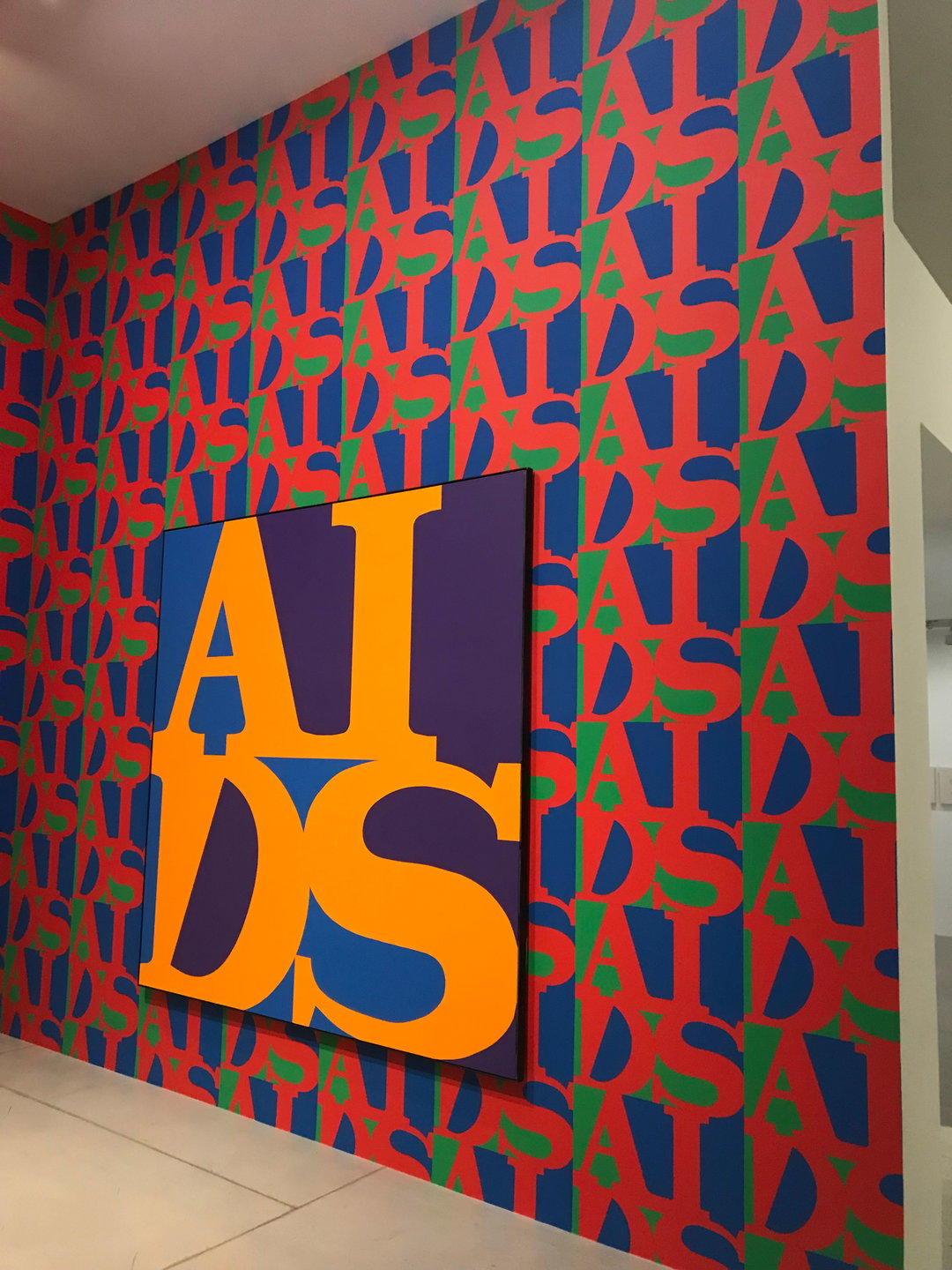
General Idea: AIDS, 1987 (image via Creative Commons)
Art: AIDS
In 1987, two members of the collective General Idea were diagnosed with AIDS. They appropriated Robert Indiana’s LOVE, writing AIDS in Clarendon Black instead. The work was reproduced on everything from stamps to billboards with the goal of normalising the word and the disease itself.

Studio ai: NYC AIDS Memorial (Copyright © Studio a+i, 2020)
Architecture: NYC AIDS Memorial
In 2016, the memorial opened on a triangular site across from the former St. Vincent’s Hospital, which started the country’s second dedicated AIDS ward in 1984. The structure, designed by studio a+i, is a series of steel triangles. Underneath it is a fountain surrounded by passages from Walt Whitman chosen and arranged by Jenny Holzer.
“This memorial should serve, in future epidemics, both as a reminder of the dangers created, when we allow fear to rule, and of the positive outcomes that result when we unite.” – Stephan Jaklitsch, architect
Hero Header
Herbert Bayer: Polio Research, 1949 (Copyright © Artists Rights Society (ARS), New York / VG Bild-Kunst, Bonn, 2020)
Share Article
Further Info
About the Author
—
Dylan is a New York-based graphic designer and head of design at studio Gretel.