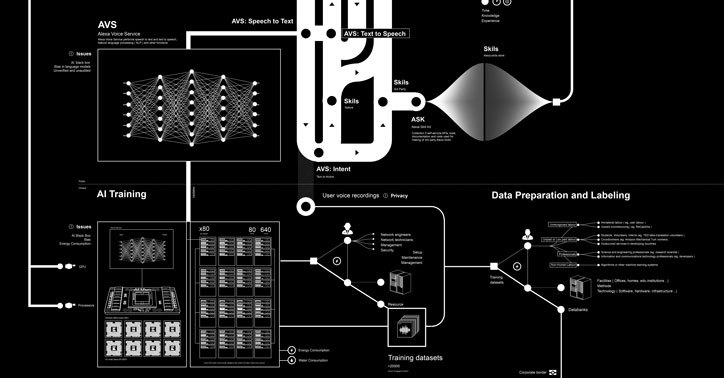
Map revealing the dark side of Amazon Echo wins Designs of the Year 2019
An infographic showing the social and environmental impact of owning an AI voice assistant device has won The Design Museum’s Beazley Designs of the Year 2019 prize.
An infographic showing the social and environmental impact of owning an AI voice assistant device has won The Design Museum’s Beazley Design of the Year 2019 prize. Pentagram’s Sascha Lobe, British product designer Hans Ramzan and fashion designer Ji Won Choi also scooped up prizes at the awards ceremony, which was held in London last night (21 November).
The winning project, Anatomy of an AI System was created by Kate Crawford and Vladan Joler, and modelled on the impact of an Amazon Echo device over its lifespan. Through months of research, the duo mapped out the environmental impact of extracting rare earth metals for the device, the cost of its human labour and analysed the data that such devices collect from users without their knowledge. Martino Gamper, 2019 Judge and designer, dubs it “a prototype for re-designing how we understand the impact of tech”.
Speaking about the decision to select Anatomy of an AI System, as the Design of the Year, Dr. Paul Thompson, vice-chancellor of the Royal College of Art and the chairman of the 2019 judges, says: “AI is such a prevailing feature of the future of technology, it seemed the perfect moment to analyse its impact, which this project does. In the future, when you purchase a piece of digital hardware it could have the ingredients listed. This project shows how this might look and makes everyone who sees it think about all the unseen impact of tech hardware. You will never look at your smart home hub the same way again.’
Gamper, adds: “The transparency here is incredible. I have not seen AI mapped in this way before. It is honesty of materials applied to technology.”
The project was crowned the overall winner, as well as topping the digital category. Pentagram’s Sascha Lobe won the graphics category for his branding for the new Seoul headquarters of beauty and cosmetics company Amorepacific in collaboration with L2M3. Pentagram worked alongside David Chipperfield Architects to create the environmental graphics and signage, featuring a new bespoke typeface and pictograms referring to the surrounding landscape.
British product designer Hans Ramzan took home the product design prize for a low-cost, self-testing device for HIV, while Ji Won Choi topped the fashion category for her collaboration with Adidas Originals, which was inspired by the exaggerated forms of traditional Korean hanbok clothing. The transport category prize was awarded to a self-driving shuttle bus developed by Muji and Finnish autonomous driving company Sensible 4, while Sameep Padora and Associates won the architecture category for its Maya Somaiya Library, which combined high-tech digital form-finding software and traditional Catalan vaulting techniques to allow the roof to become a play area. Visitors to The Design Museum also voted for their favourite, with MySleeve by Marie Van den Broeck – a silicon cover to make crutches more comfortable and easier to grip – winning the public vote.
The final lists of winners is somewhat light on environmental activism and projects with a political bent given the mood of the initial shortlist. This year a number of organisations decided to boycott the prize, most notably Extinction Rebellion. The climate activists told Creative Review that their decision was on account of the award’s sponsor, insurance company Beazley, and was a comment on the insurance industry’s failure to disclose to the public the financial risks of climate change, as property becomes uninsurable.
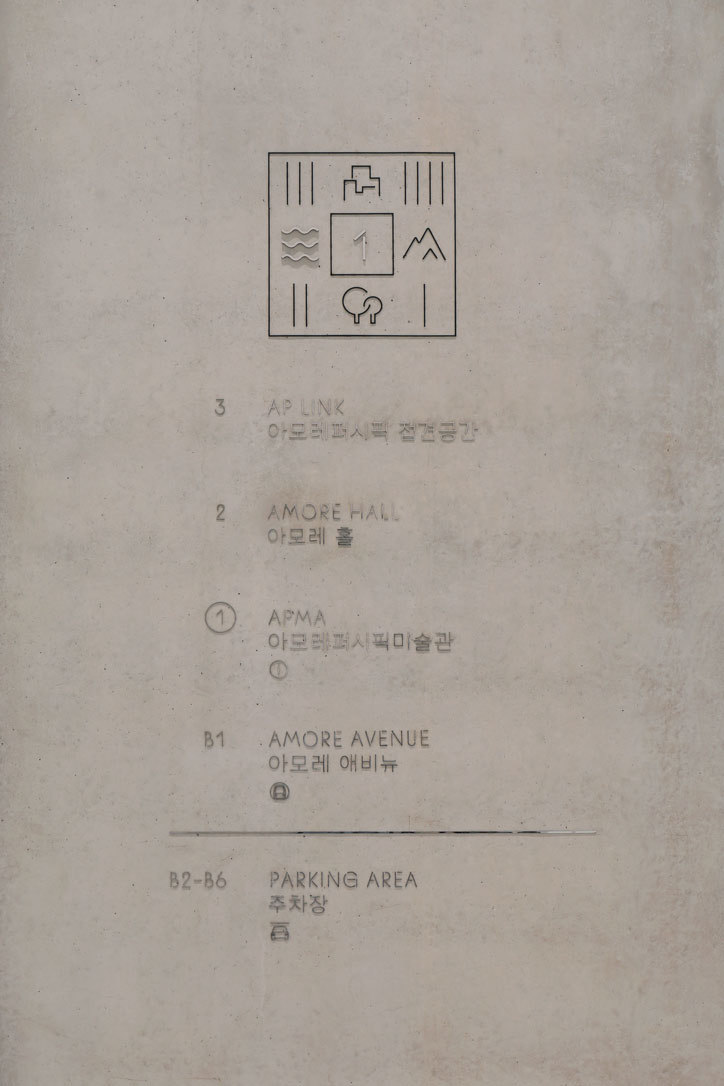
Sascha Lobe at Pentagram: Amorepacific branding
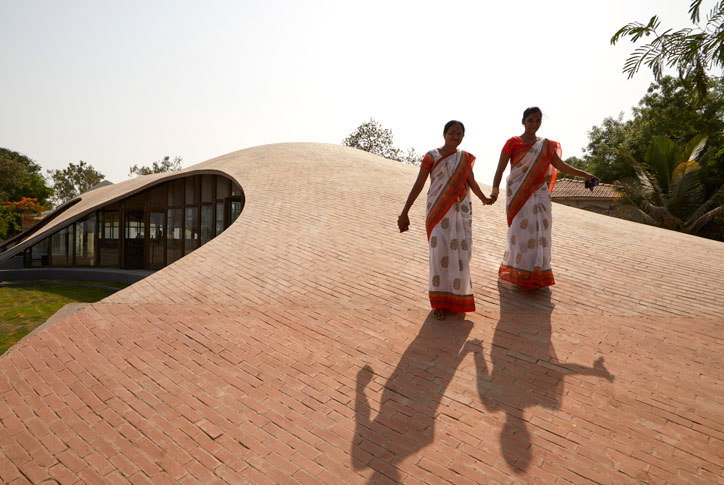
Sameep Padora and Associates: Maya Somaiya Library
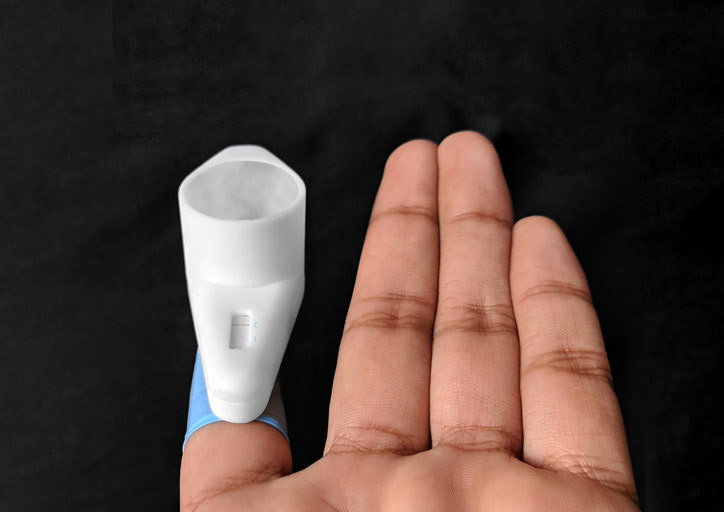
Hans Ramzan: Catch, the HIV Detector
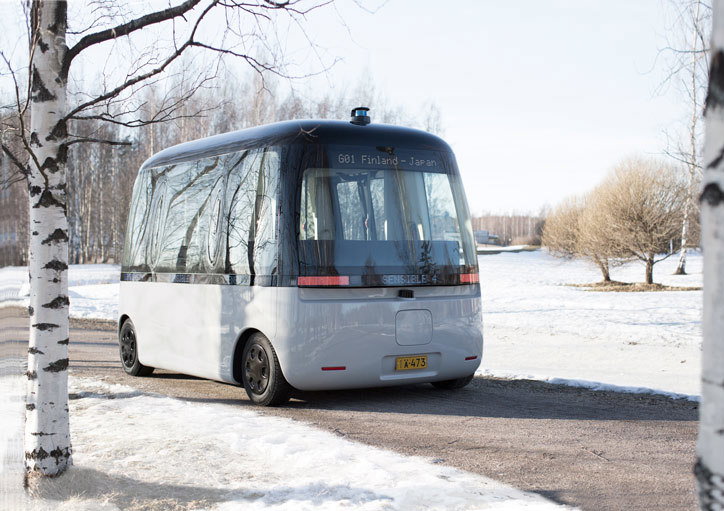
Muji and Sensible 4: GACHA Self-driving Shuttle Bus
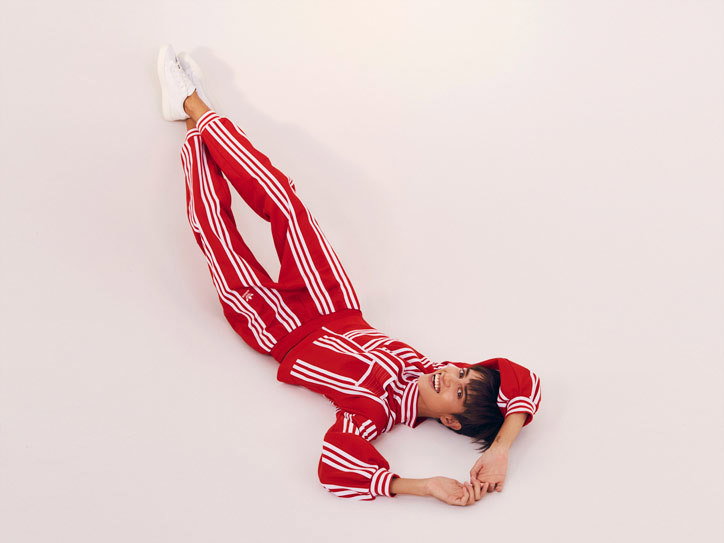
Ji Won Choi: Adidas Originals
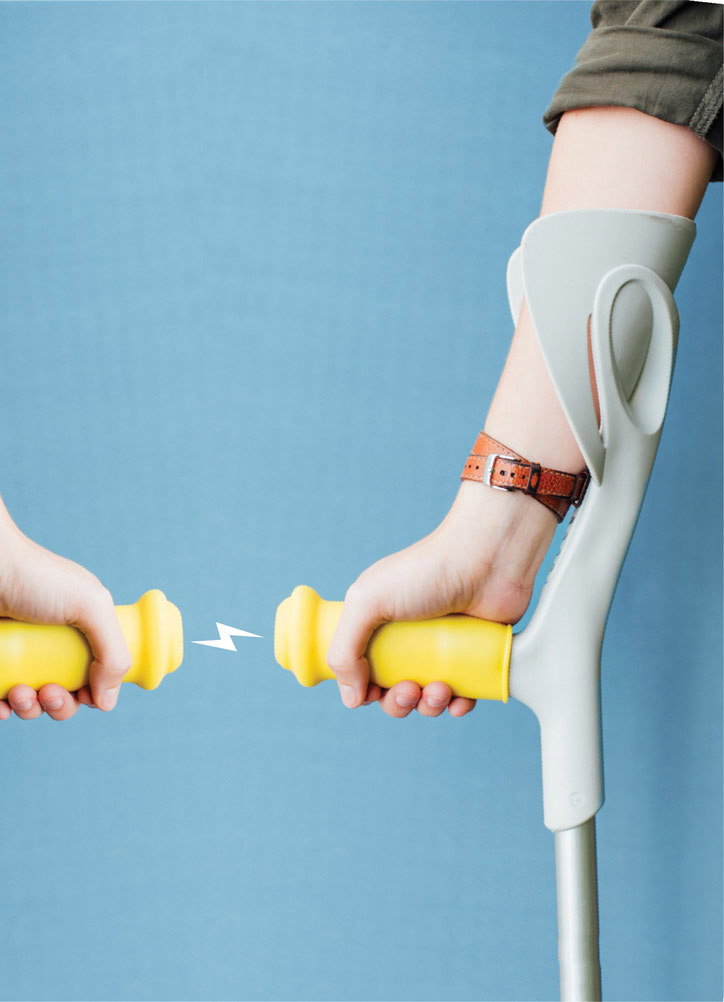
Marie Van den Broeck: MySleeve
Share Article
Further Info
About the Author
—
Laura is a London-based arts journalist who has been working for It’s Nice That on a freelance basis since 2016.