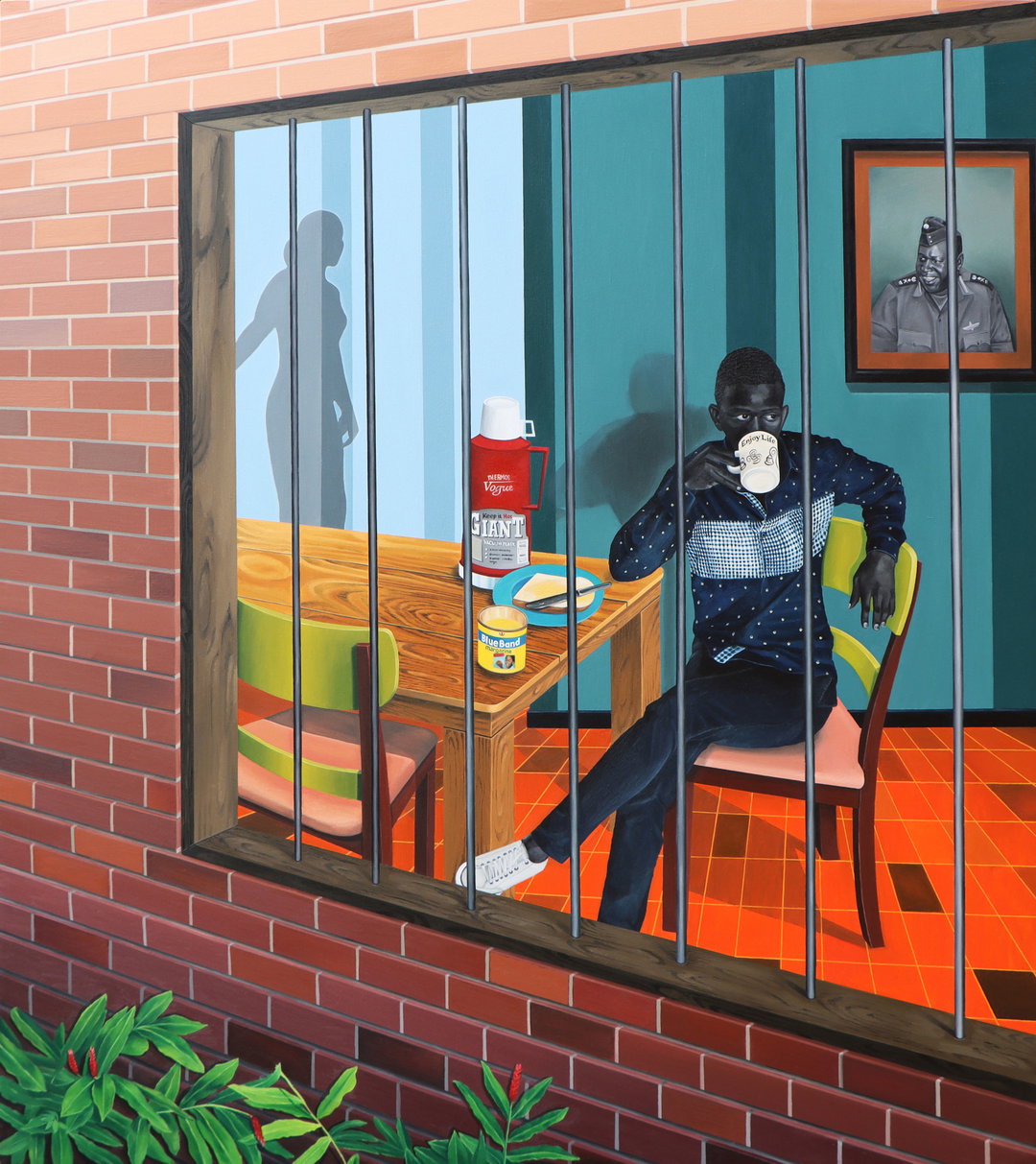
A chat with the Kampala-based artist Ian Mwesiga and the imagining of his complex painterly worlds
Ian discusses the importance of self-questioning and how this aids progression with one's work.
2020 proved to be a productive year for the Kampala-based artist Ian Mwesiga. Granted more time than usual in the studio, the artist – known for his magnificently smooth, flat painted portraits – has progressed quickly yet fluidly in the last year or so, working through a myriad of ideas on the canvas in the comfortable confines of his studio. Since graduating in Industrial Fine Art and Design from Makerere University in 2014, the painter has produced several works, imbued with a warm sense of community and complimentarily framed by geometrically stark backdrops.
Long before he distinguished this style however, he first envisioned a surrounding creative world while at church. “I was drawn to picking what I saw there from a very early age,” he tells us, perhaps explaining the discernible architectural emphasis throughout his portfolio. “I was fascinated with the process of transforming the second dimension to the third.” In this sense, Ian is interested in how people interact with the spaces they occupy and how this, in turn, informs one’s existence.
Over time, Ian honed his painterly craft. A practice that’s collided with a parallel academic career and a distinct examination of who he wants his art to speak to. When he first graduated, he underwent an intense period of experimentation which in due course, led to the figurative style tinted with realism that we can see today. He would blindfold his face and start doing portraits, entrusting the outcome to a sense of touch rather than sight. Ian remarks: “It was really about taking an insular look into oneself and asking questions: why am I doing this, why is it important and who is it important for?”
To this date, he continues to ask himself questions about his work; an essential aspect of self reflection and consequently, progression. He likens this exercise in questioning to a metamorphosis, “a phase that will lead you to eventually discover exactly what you want to do.” When it comes to the subject of his extensively detailed paintings, it is not questioning but intuition that comes to the fore. He conceives the finished image in his head before starting it. Without planning or sketching, he already knows which colours will bleed into one another, which facial expressions will take hold of the subjects and the overall atmosphere the final piece will evoke.
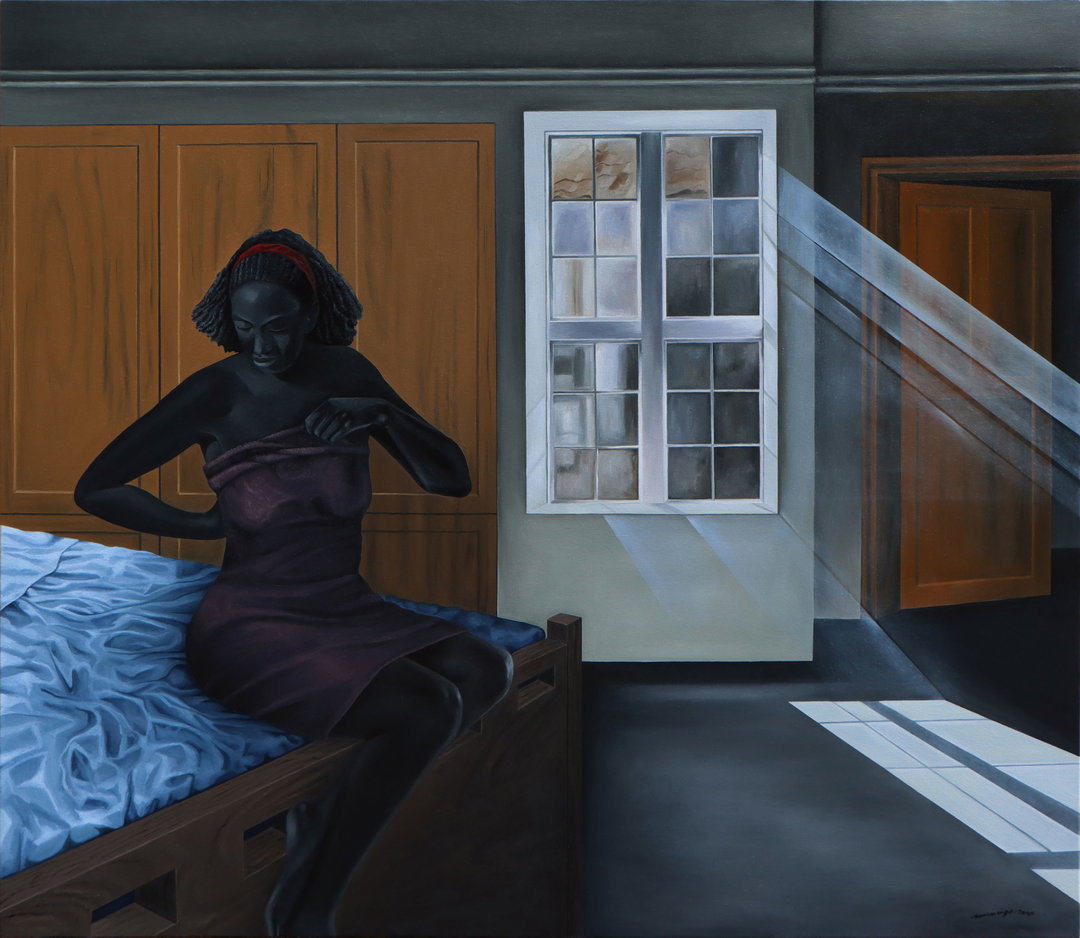
Ian Mwesiga: Bed Room, 2020, Oil on canvas, 130 x 150 cm. Courtesy of Mariane Ibrahim (Copyright © Ian Mwesiga, 2020)
Ian invites the viewer to get involved in whatever scene is taking place in the painting. Whether it’s dancing, pensive thought or just enjoying what’s in front of you, Ian designs his compositions to be relatable and immersive. Expanding on this, Ian explains: “I look into historical black and white images which places the work within a particular time. For me, these are the chords that are within the work that one needs to unlock to access the work in a holistic way.” He sees his work as a “negotiation between the future and past,” harking back to bygone eras through certain fashion choices or interiors but executing the work through an undeniably contemporary technique.
In this way, Ian’s paintings feel far from static. “I am not intending to create a still image,” he says on the matter, “I want to animate and give something life.” Through this notion, he taps into human connectedness. “I don’t want to create morbid imagery,” the artist continues, “my intention is create life in a lively manner.” Injecting imaginative thought into the personalities of his subjects and sceneries, Ian likes to use the symbol of a window as a metaphorical entry point or a point of access. The windows act as a gateway to his unique world, an invitation to see life through Ian’s perspective.
Often utilising a “moody colour palette” in reference to the masters of oil painting, Ian carefully chooses his colour palettes to compliment the dark skin of his subjects. “I can never use pure colours,” he says on this, “because I feel they bounce off me.” He doesn’t restrict himself to the use of one colour scheme. Rather, the hues radiate from his imagination, in a similar way to his compositions, and other times, it’s about “what I feel looks right.” Drawing influence from a spectrum of sprawling disciplines including poetry to music, all in all, Ian’s practice is ever in flux. A back and forth conversation between output, process and influence, Ian’s thoughtful paintings hold a vastness of stories and ideas within the four corners of the canvas. Have a scroll below to dive deeper into them.
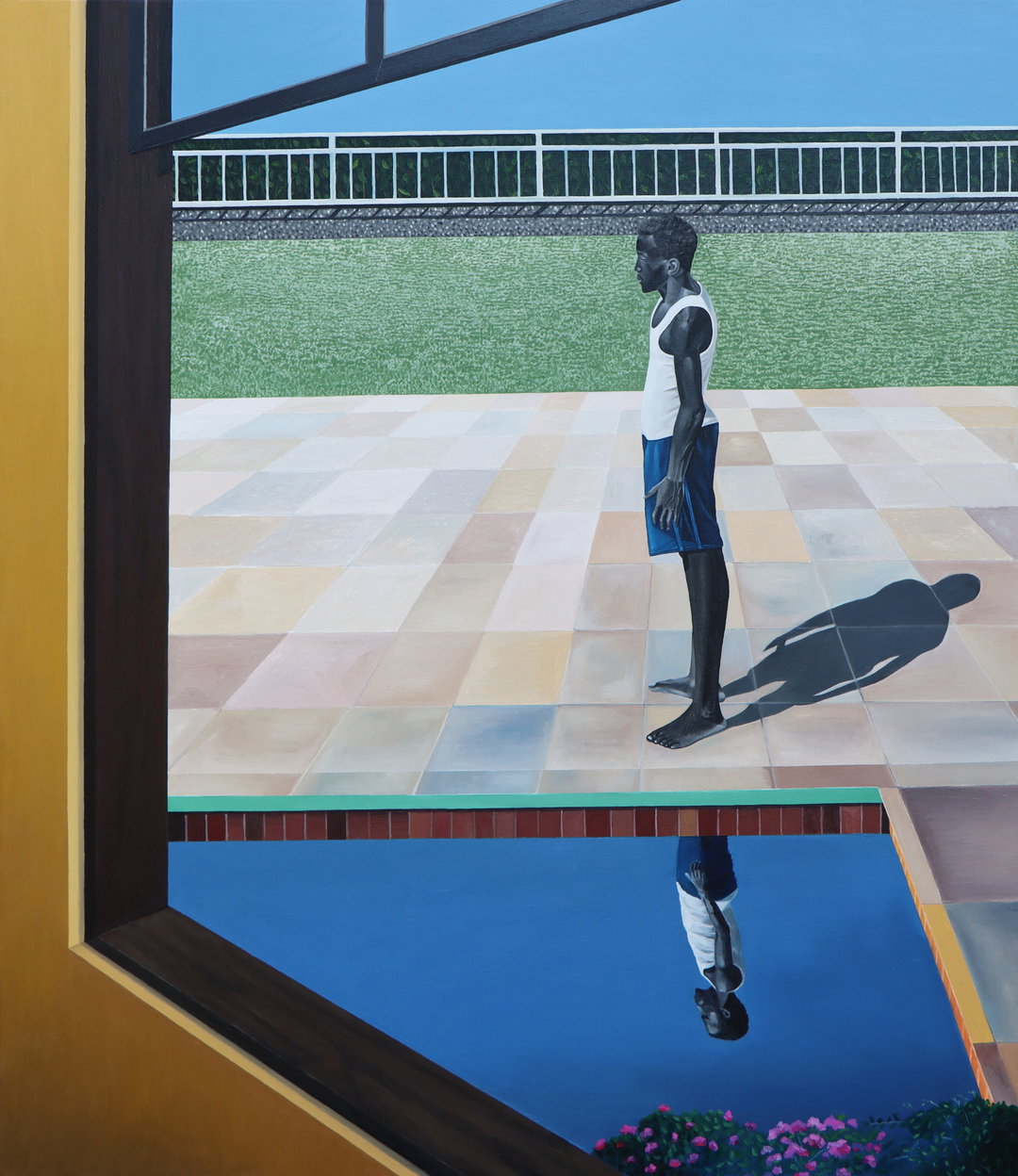
Ian Mwesiga: Man Standing by the Pool, 2020, Oil on canvas, 150 x 130 cm, Courtesy of Mariane Ibrahim (Copyright © Ian Mwesiga, 2020)
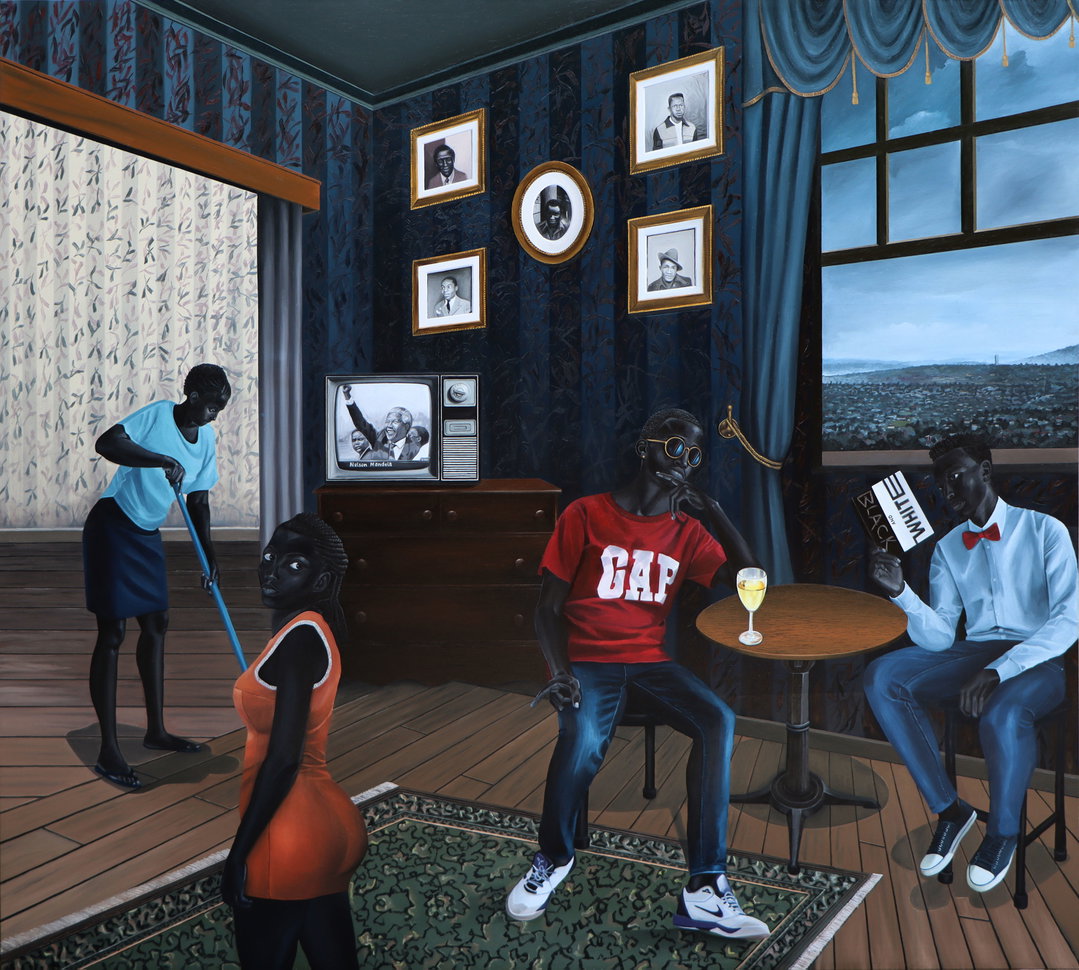
Ian Mwesiga: Bright Future, 2020, Oil on canvas, 210 x 190 cm. Courtesy of Mariane Ibrahim (Copyright © Ian Mwesiga, 2020)
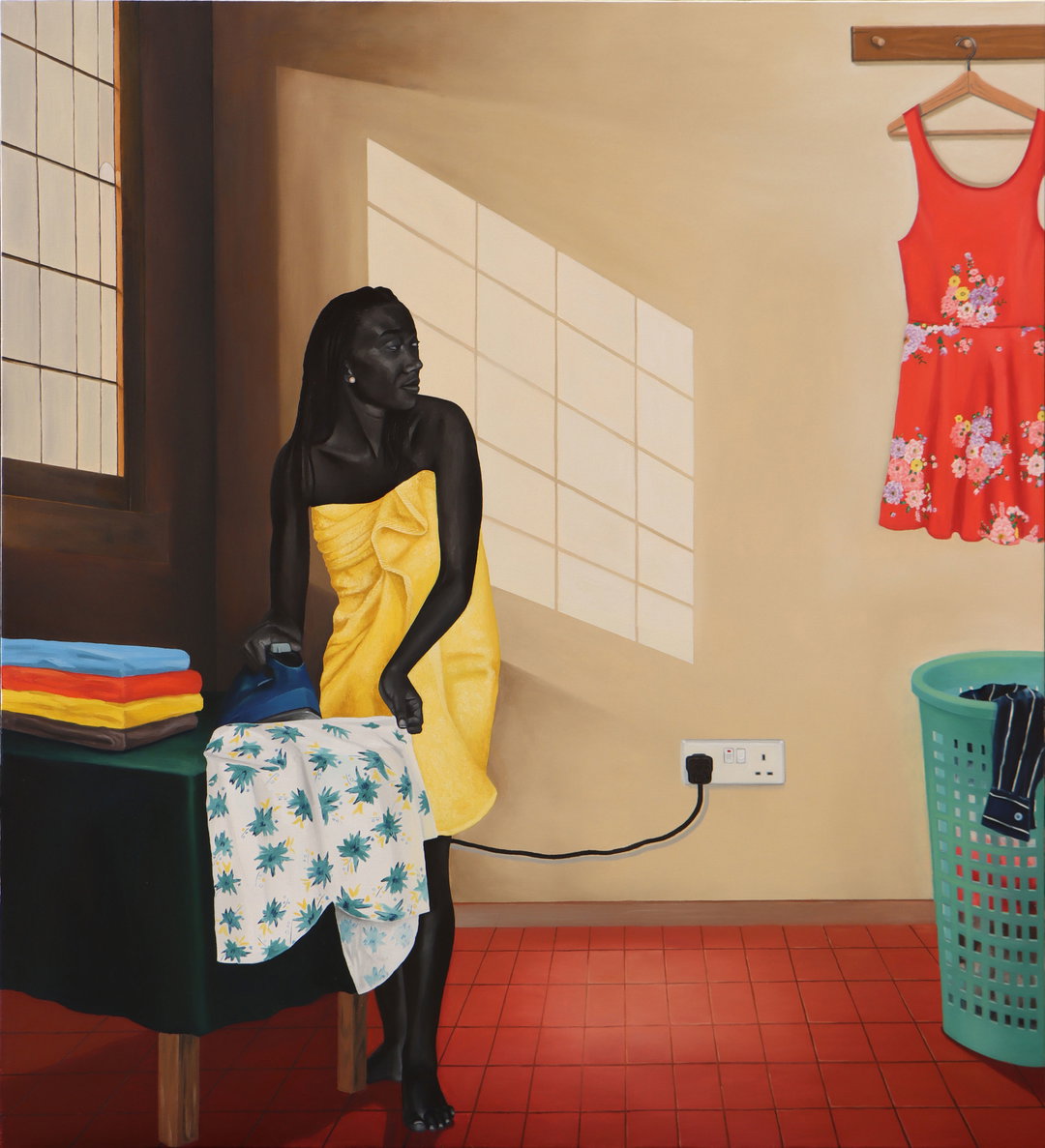
Ian Mwesiga: Lady Ironing, 2019, Oil on canvas, 160x165cm, Courtesy of Mariane Ibrahim (Copyright © Ian Mwesiga, 2020)
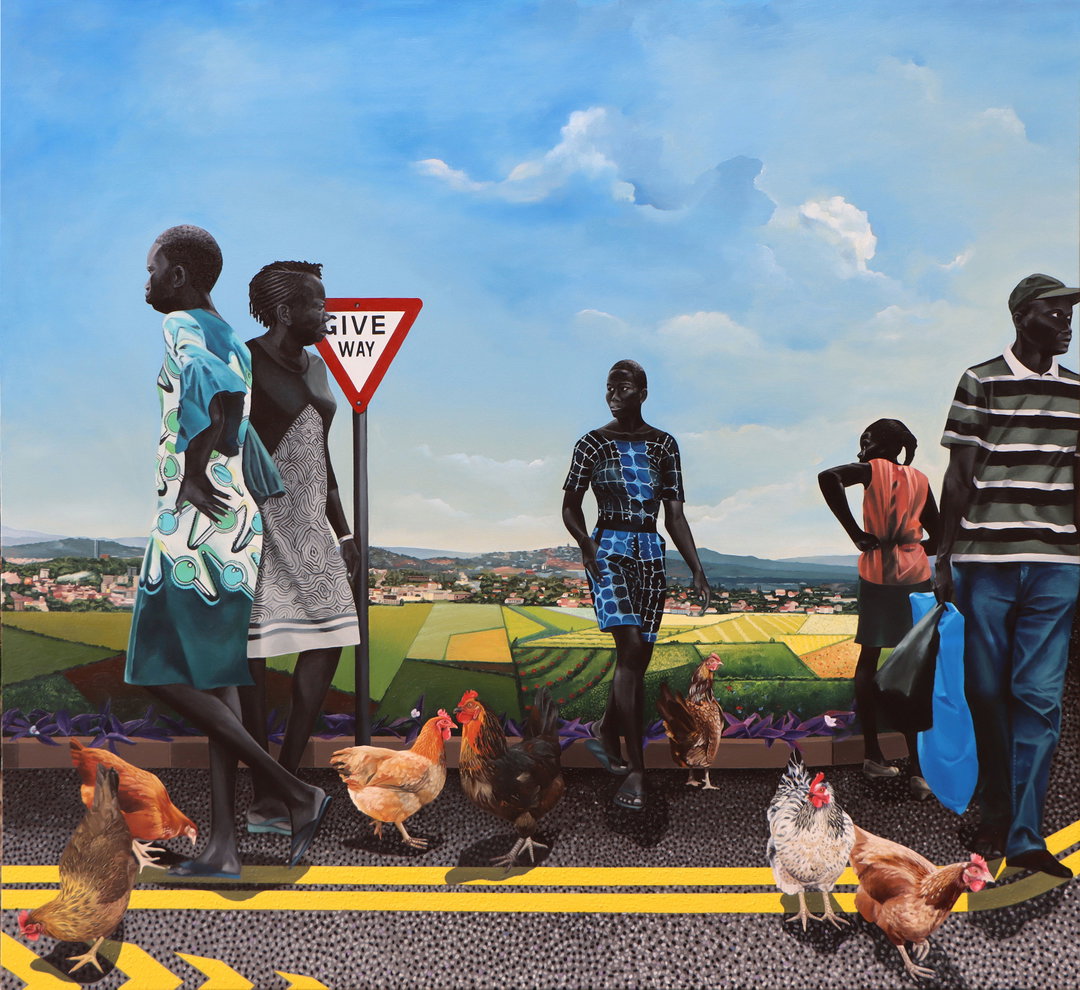
Ian Mwesiga: People and Chicken, 2019, Oil on canvas, 210x190cm, Courtesy of Mariane Ibrahim (Copyright © Ian Mwesiga, 2020)
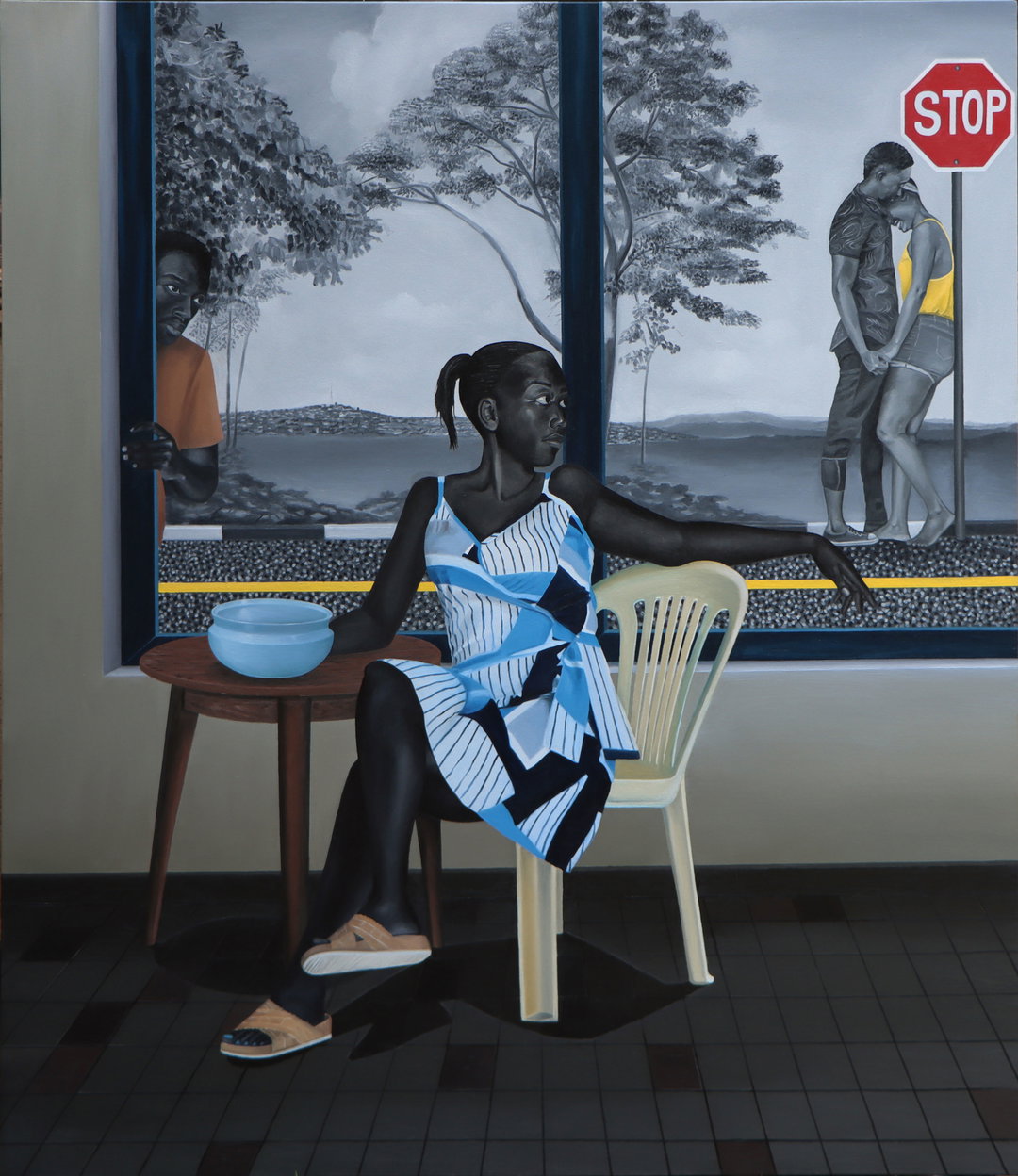
Ian Mwesiga: The Girl with the Two Lovers, 2020, Oil on canvas, 210 x 190cm. Courtesy of Mariane Ibrahim (Copyright © Ian Mwesiga, 2020)
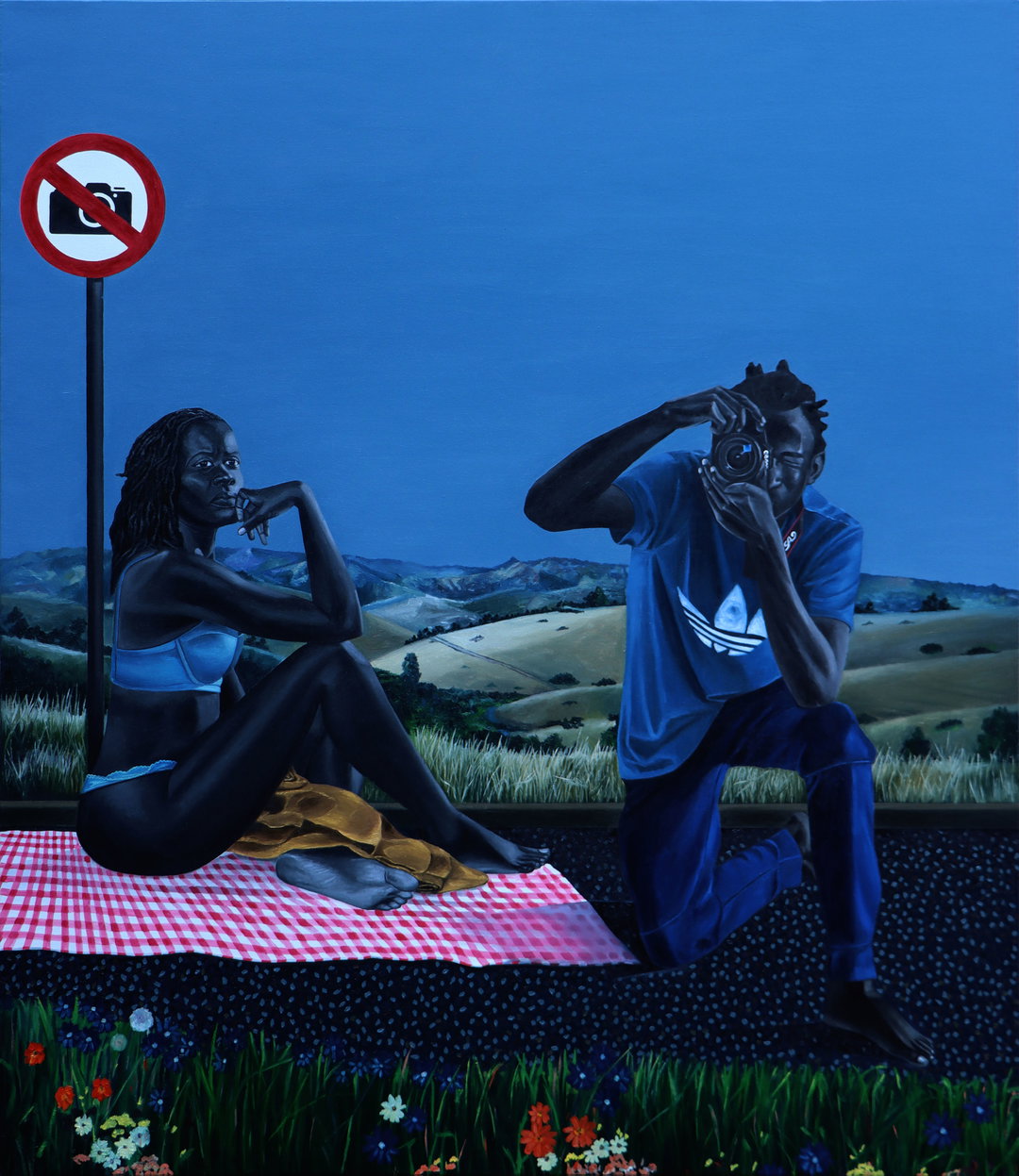
Ian Mwesiga: The Photo Free Zone, 2020, Oil on canvas, 150 x 130 cm. Courtesy of Mariane Ibrahim (Copyright © Ian Mwesiga, 2020)
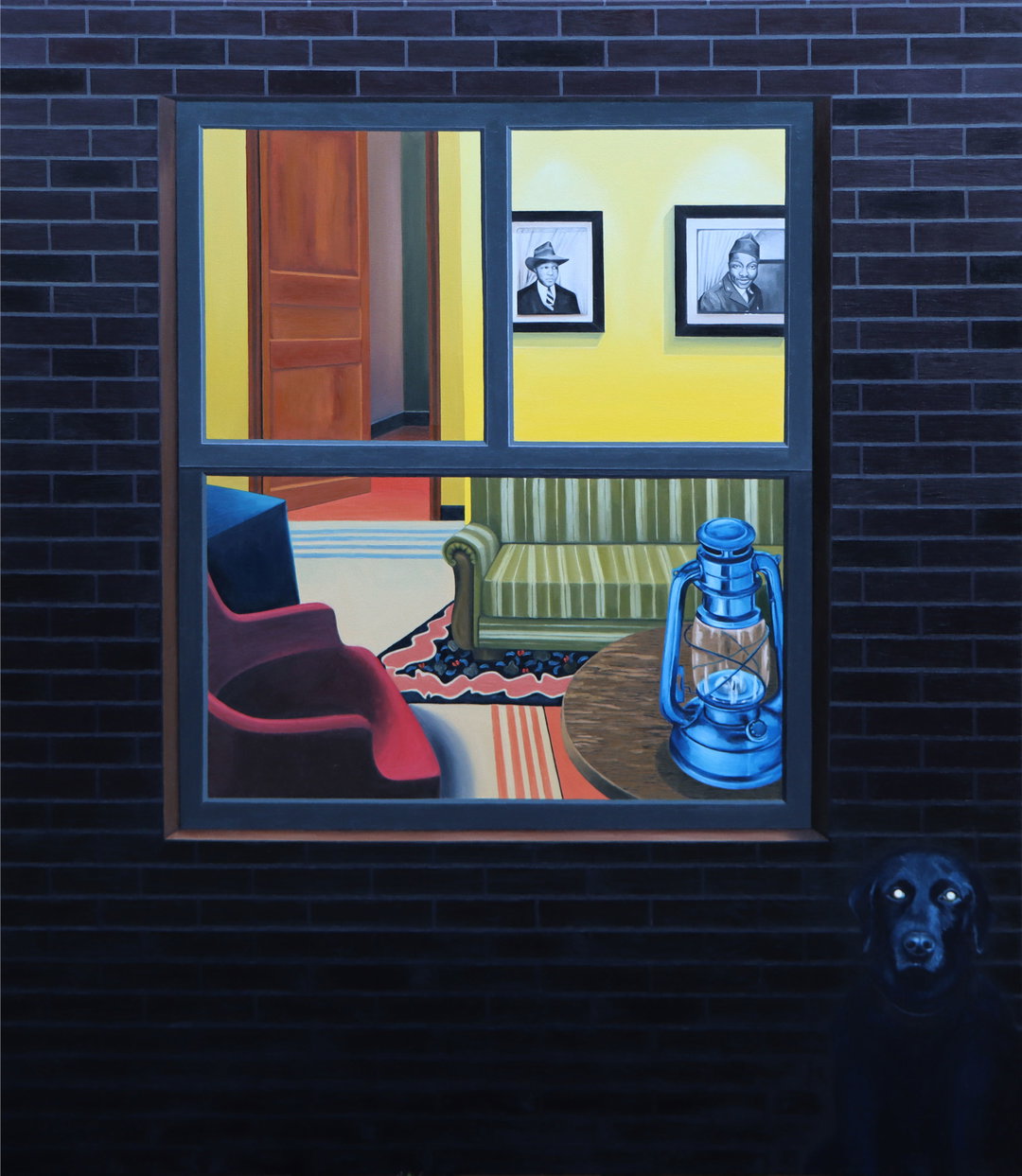
Ian Mwesiga: Window Night View with a Dog, 2020, Oil on canvas, 150 x 130 cm. Courtesy of Mariane Ibrahim (Copyright © Ian Mwesiga, 2020)
Hero Header
Ian Mwesiga: Breakfast, 2019, Oil on canvas, 170x190cm, Courtesy of Mariane Ibrahim (Copyright © Ian Mwesiga, 2020)
Share Article
Further Info
About the Author
—
Jynann joined It’s Nice That as an editorial assistant in August 2018 after graduating from The Glasgow School of Art’s Communication Design degree. In March 2019 she became a staff writer and in June 2021, she was made associate editor. She went freelance in 2022.