

Enter the Bucketverse: KFC’s finger-licking rebrand turns an icon into an entire world
Created with agency JKR, the next chapter for the chicken giant spans a new 3D logo, custom typefaces, restaurant design and serious amount of sauce.
Share
If you’ve ever queued up at a KFC, or walked past one of its branches, or just switched on your TV and seen one of its ads, you’ll know the visual language by heart – even if you’ve never consciously thought about it. Red and white stripes, a smiling Colonel in his white suit and string tie, and a bucket that somehow carries as much weight as the Golden Arches or a Coca-Cola bottle. The identity has become immediately recognisable and has barely changed in decades.
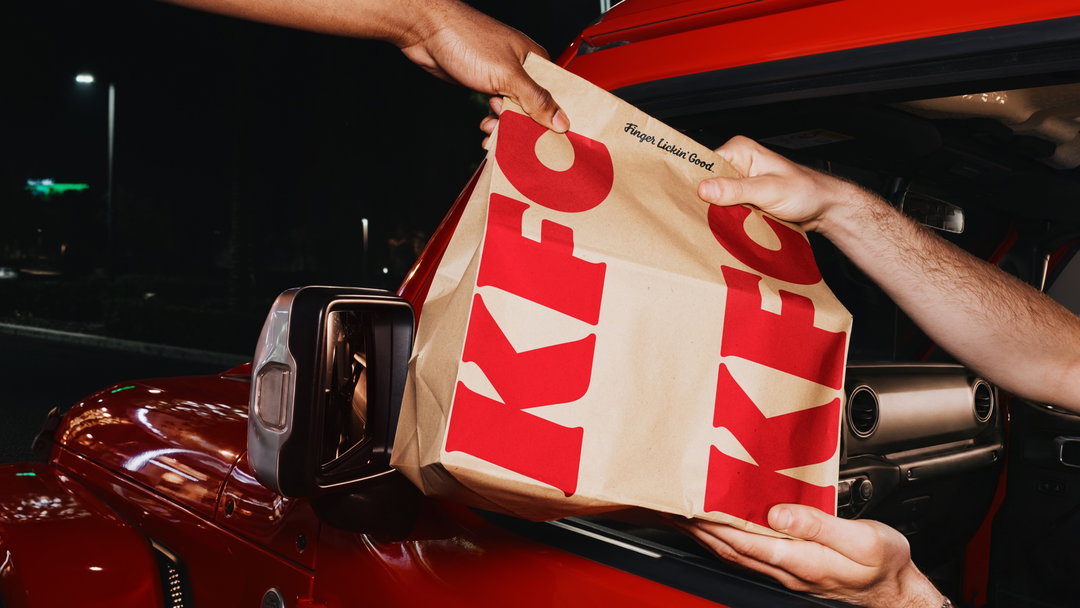
But today, KFC has released a full 360-degree rebrand developed with creative agency JKR, updating the logo, typography, restaurant interiors, packaging, app design and even the tone of the social copy. It’s rolling out first in the UK and Ireland this month, before heading to Australia and the US, eventually reaching KFC’s 34,000-plus restaurants across more than 150 countries. For scale, KFC says in the release that a new restaurant opens somewhere in the world roughly every three and a half hours.
KFC’s relationship with creative work in the UK has always punched above its weight. Remember the 2018 “FCK” apology ad? When a supply chain meltdown forced the closure of hundreds of UK branches, Mother London responded with a now-legendary print ad rearranging the KFC logo to spell out a swear word, paired with an honest apology. It was funny and human, exactly the kind of cultural commentary that’s always lived in KFC’s way of speaking, even while its visual identity stayed put. This new rebrand closes that gap. “In an increasingly crowded category, we have a clear opportunity to set the standard for modern chicken in QSR [quick service restaurants],” says Scott Mezvinsky, CEO of KFC Global. “This next chapter brings new energy and expression to what makes us iconic, while doubling down on our chicken and reimagining how fans experience KFC around the world.”
So how do you evolve one of the world’s most recognisable brands without losing what people already love? JKR’s answer was to look at what was already there – the bucket. “KFC has always believed in doing things differently, with a passion and originality that created a category and made it unmistakable,” says Sean Thomas, global executive creative director at JKR. “Our role was to help it evolve for the next chapter, in a way that only KFC could. Where to start? By building a world and experience that consumers could step into. We call it the Bucketverse.”

JKR: KFC (Copyright © JKR, 2026)
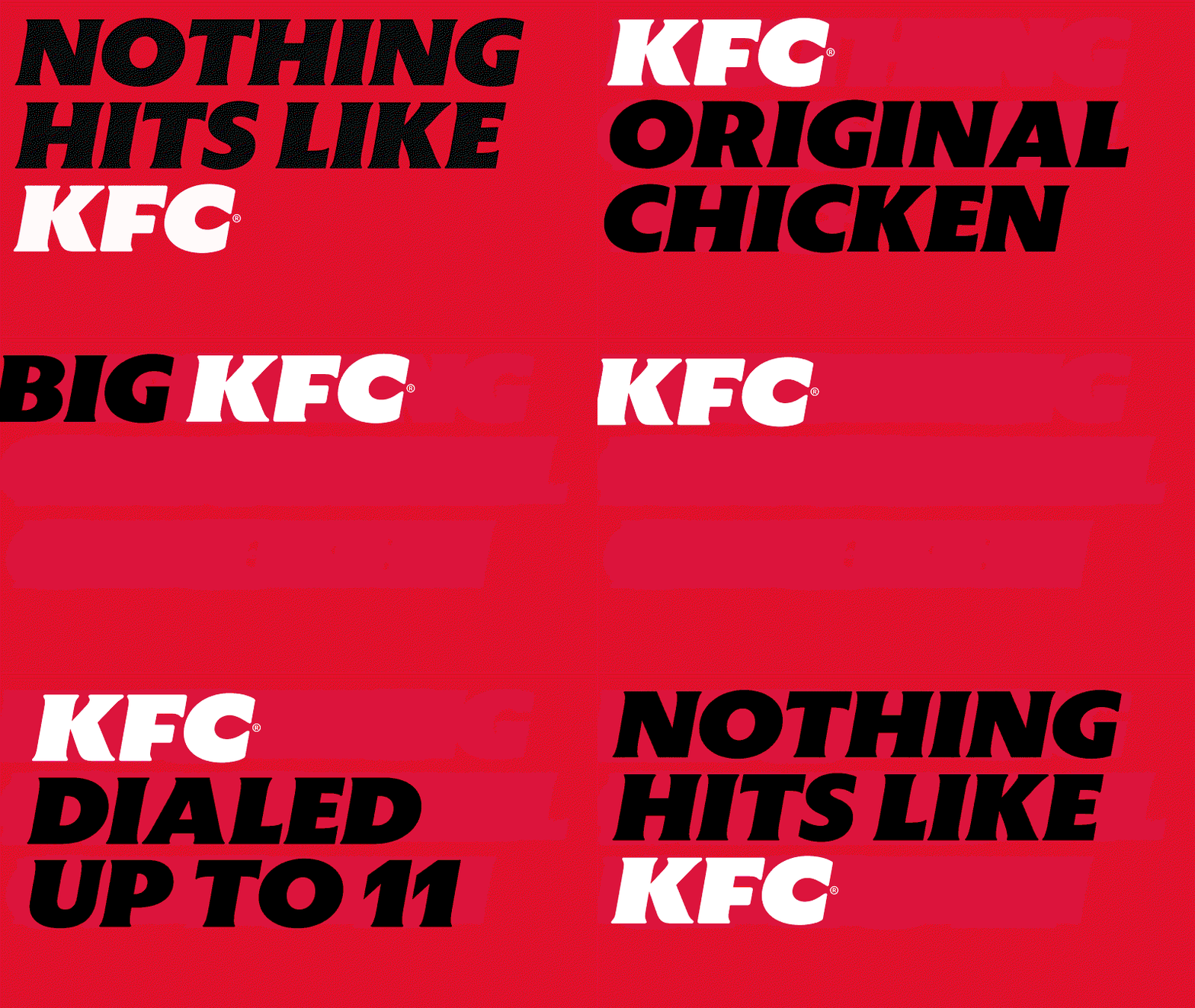
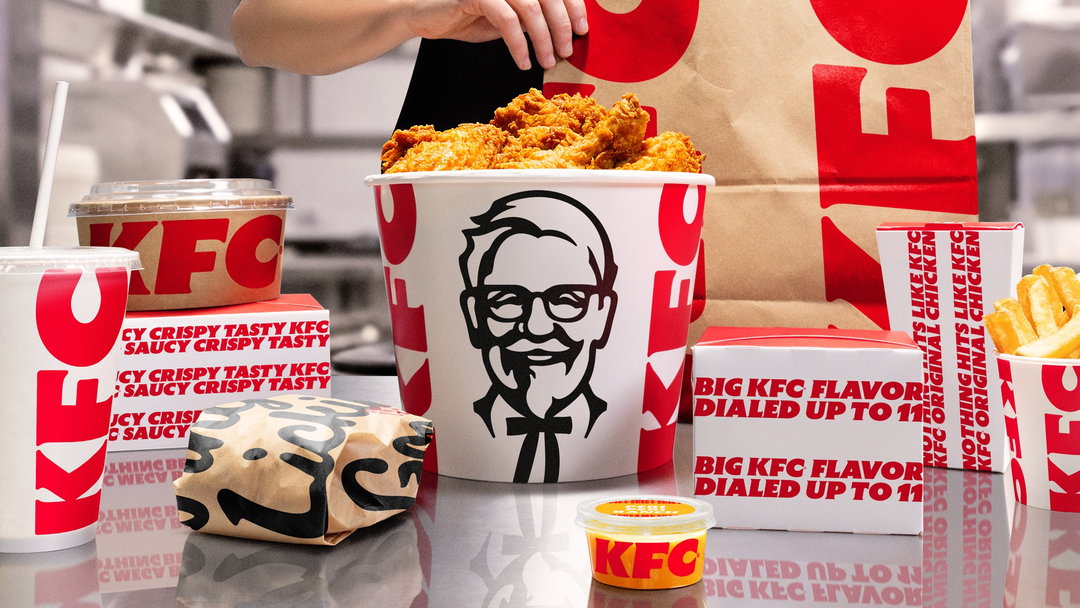
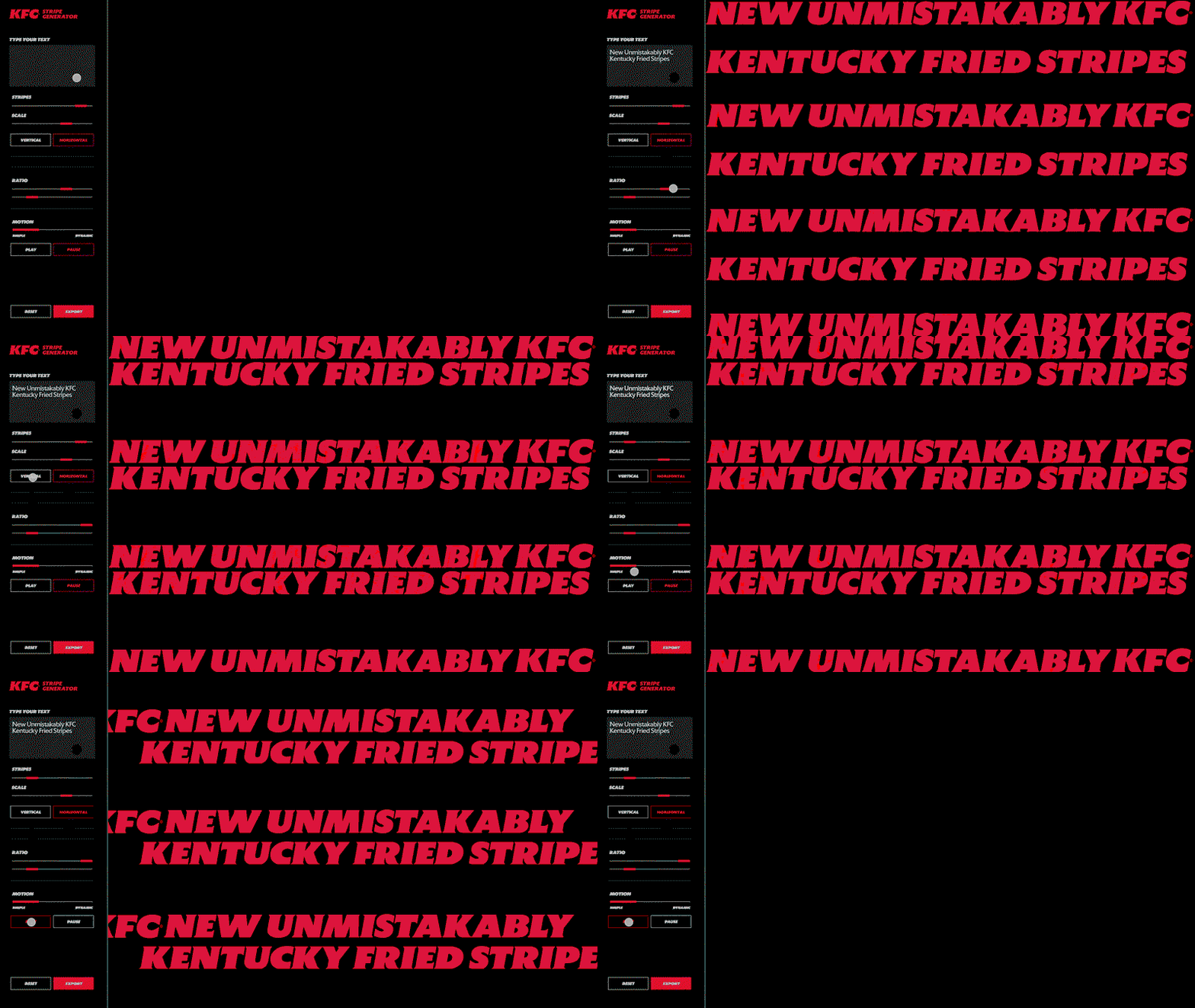
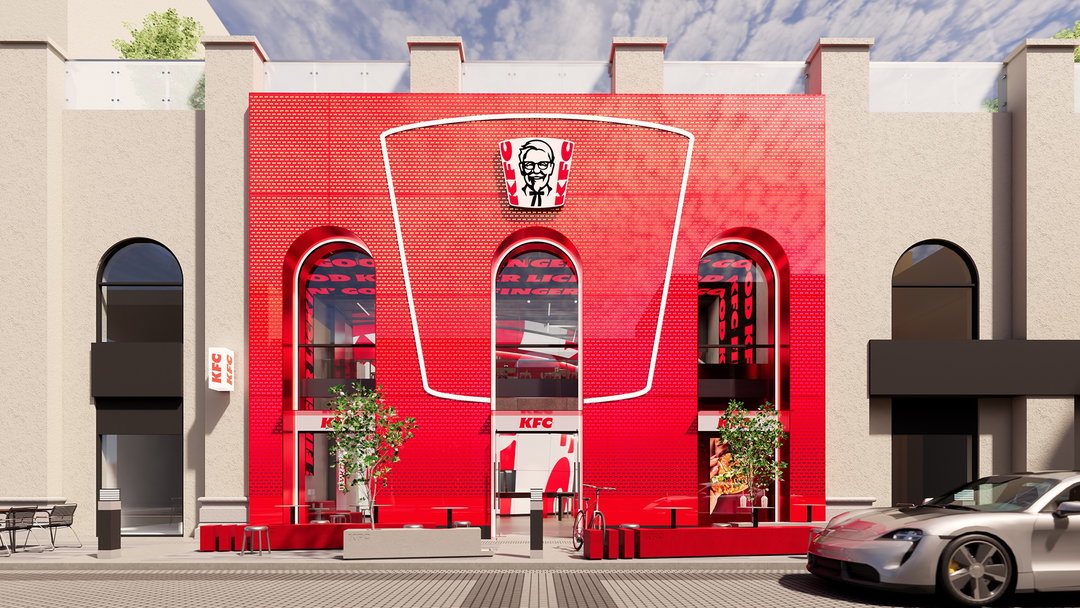
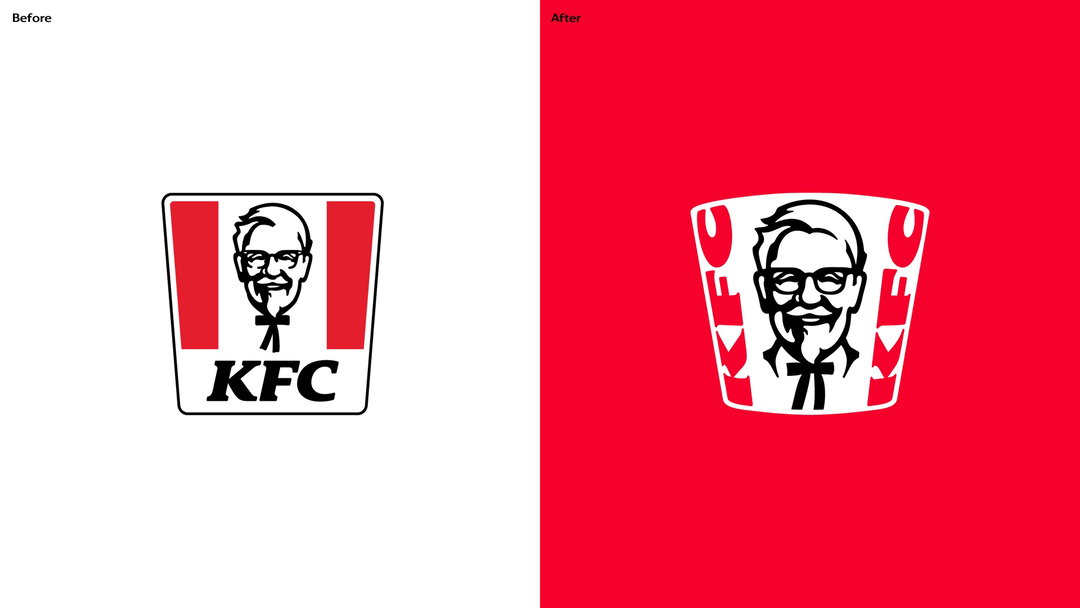
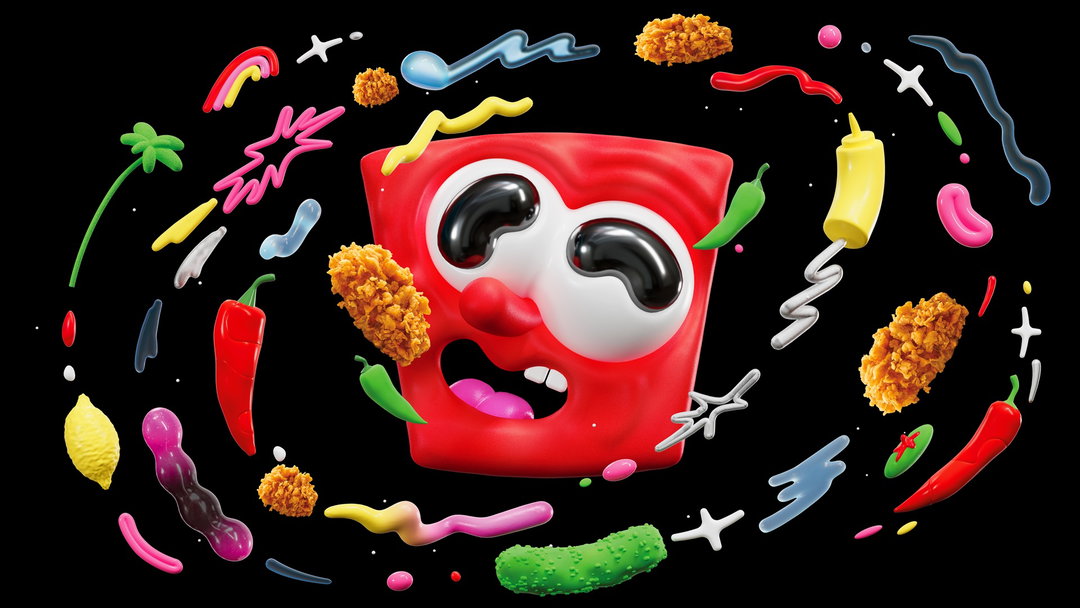
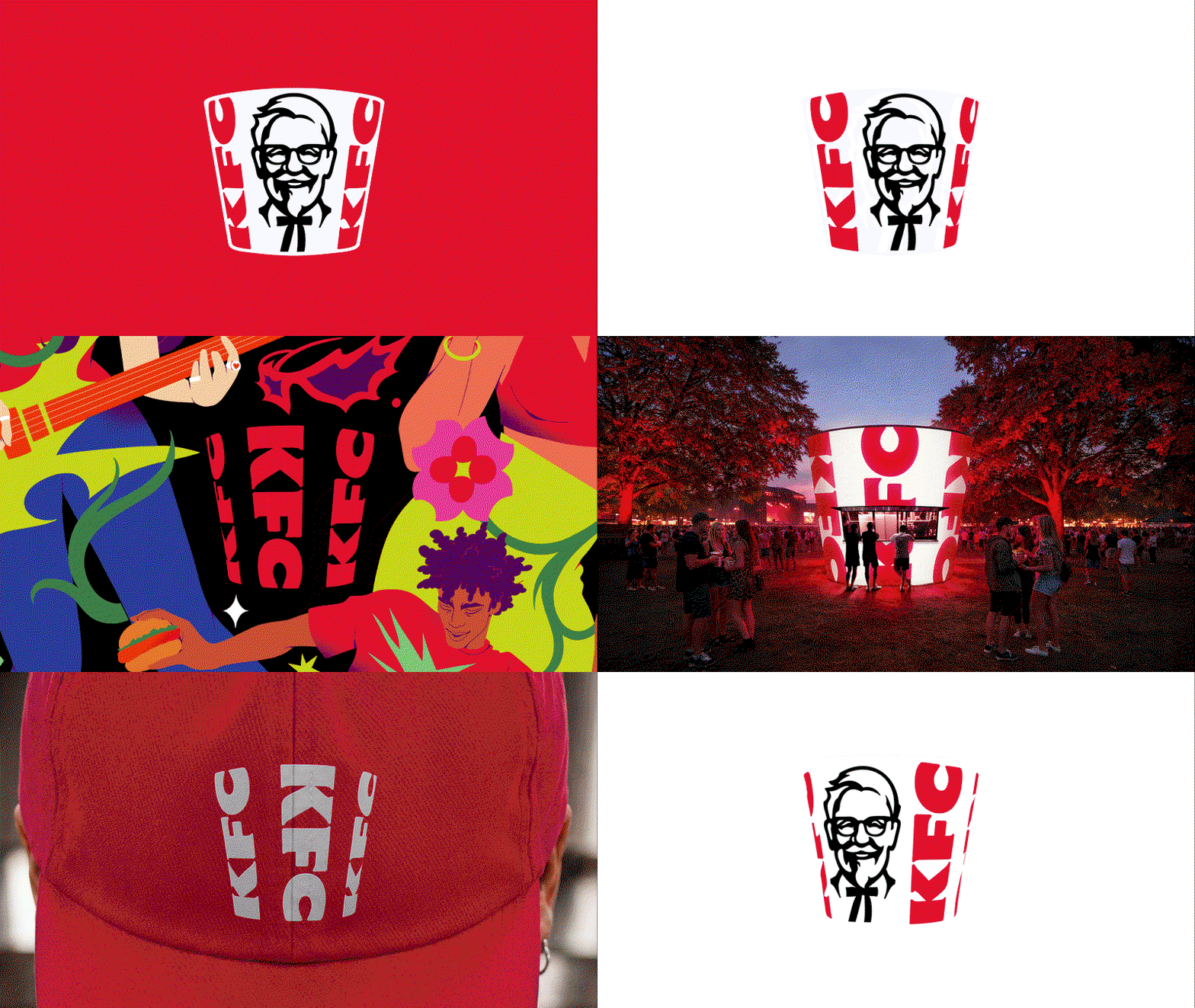
In the Bucketverse, the bucket itself has been redrawn and standardised globally, working as an extension of the logo that can hold food photography, illustration or campaign messaging. The logo itself is now three-dimensional and the Colonel has been refreshed with a warmer expression and new grounding details while staying very much like himself. There’s also a simplified and more legible lettermark, plus two custom typefaces, Kentucky Fried Serif and Kentucky Fried Sans, developed with StudioDrama. The stripes have evolved from being a punchy background pattern into a type-based asset that can carry its own messages. The red, white and black palette remains the same for some level of consistency, but it is joined by an expanded “Herbs and Spices” system, a nod to the Colonel’s original 11-herb recipe.
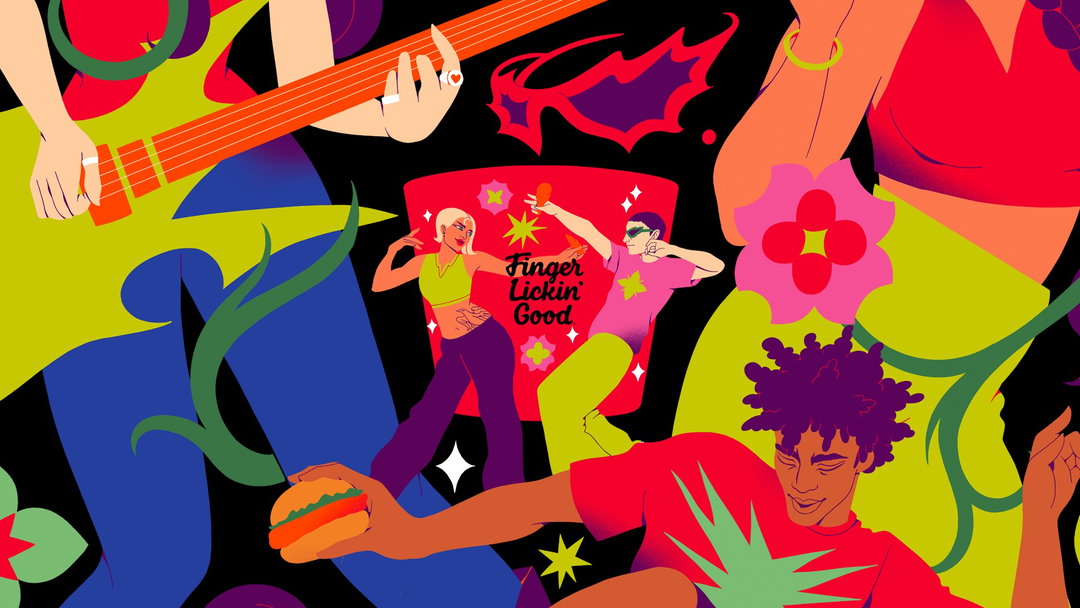
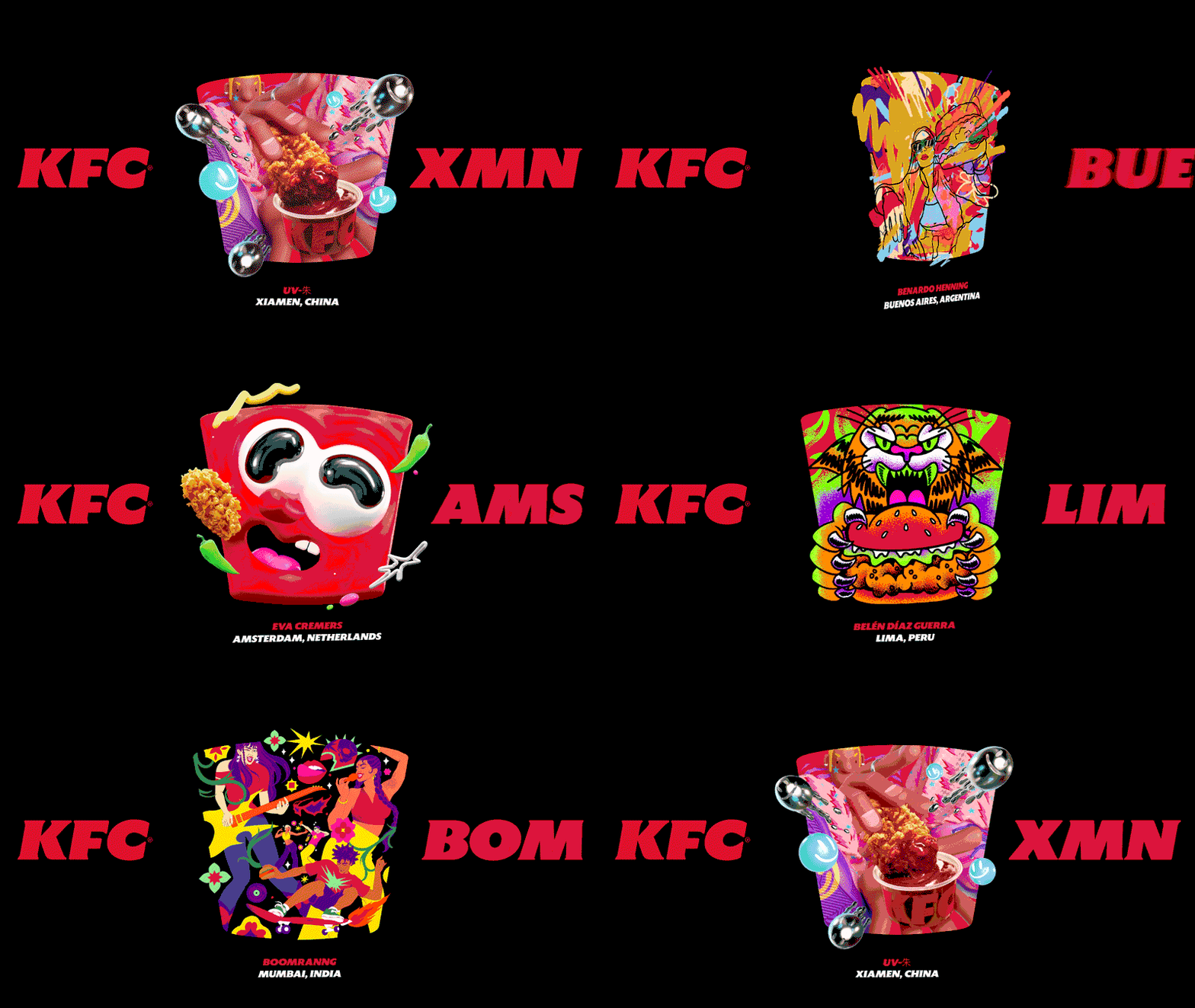
Photography is now shot through what KFC calls a “bucket lens”, in partnership with food photographer Frankie Turner and lifestyle photographer Reece James Morrison, while a new illustration system was developed with a global roster of artists including Benardo Henning in Buenos Aires, Eva Cremers in Amsterdam, UV-朱 in Xiamen, Belén Díaz Guerra in Lima and Boomranng in Mumbai. There’s also a new stamps system adding a layer of craft and a sharper tone of voice, described as “playfully, witty, magnetically candid and deliciously confident”, in the release. “Finger Lickin’ Good” has been promoted from a tagline to what KFC calls a “standard of behaviour”, created as a mark with illustrator and designer Tobias Hall.
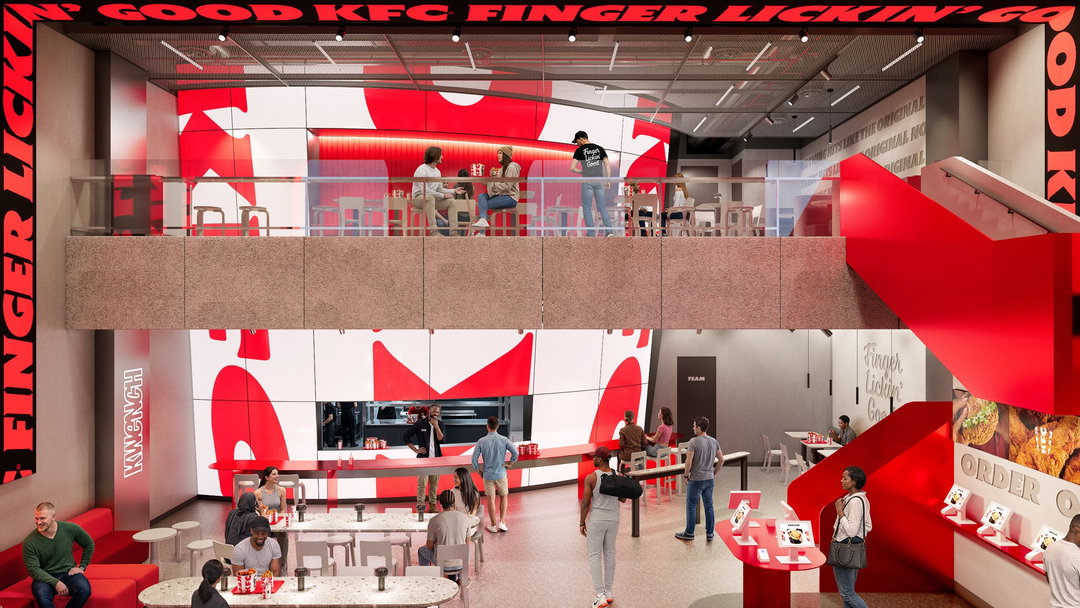
The refresh is one part of the story. There’s an updated menu too, including a boneless range built for dunking, a “sauce pantry” and a new beverage platform named Kwench, alongside a rethink of the spaces themselves. JKR coined its own term for the shift: QXR (quick experience restaurants), as opposed to the old QSR model. “Nothing hits like KFC, and that sentiment doesn’t stop at the chicken,” says Matt Michaluk, executive creative director (experience) at JKR. “It carries through every inch of the new experience from ordering on the app, stepping into a restaurant, all the way to that finger lickin’ moment and beyond. That’s why we’re pioneering a disruptive category shift with KFC, taking things from QSR to QXR. You’re going to see next-level hospitality, crave-worthy content and culture defining activations . A brand turning experience-led distinctiveness up to 11.”
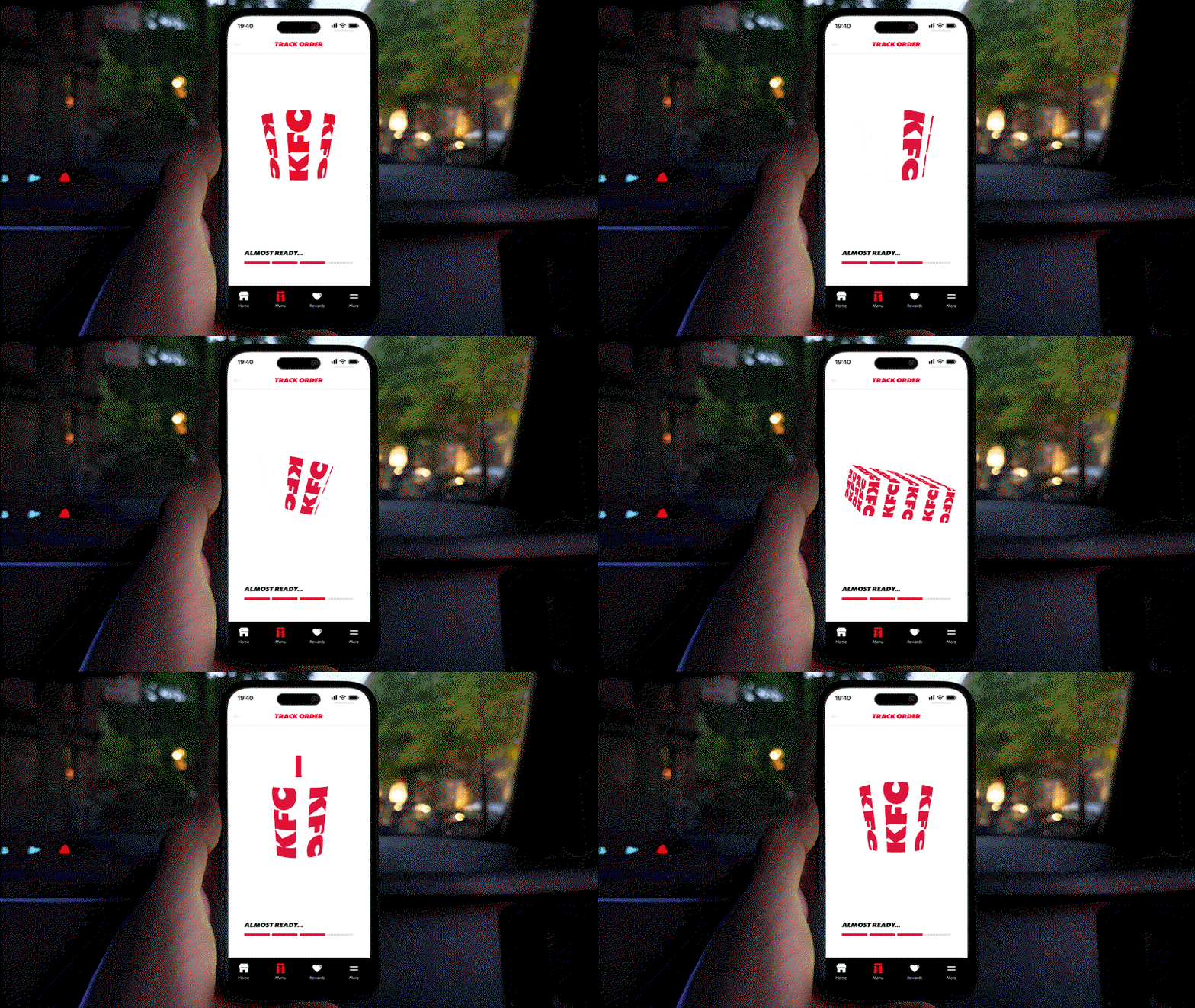
With daily life now largely lived on screens, KFC is treating its digital presence as a key player in all of this. Ordering apps, in-restaurant screens and social media are “expressive canvases”, meaning that the bucket, stripes, illustration and typefaces all need to move as well as sit still. Motion plays a structural role across the system, bringing pace and energy to everyday interactions, whether that’s an app loading screen or a digital menu board flashing up a new sauce.
When looking at the full system together, what’s striking is that JKR hasn’t ditched the Colonel, binned the red and white, or tried to make KFC look like the latest fried chicken pop-up to land in Shoreditch. Instead it’s taken the assets that already had cultural equity and given each of them a sharper, more deliberate job to do within a much bigger, more joined-up world.
GalleryJKR: KFC (Copyright © JKR, 2026)
Share Article
Further Info
About the Author
—
Ayla is a London-based freelance writer, editor and consultant specialising in art, photography, design and culture. After joining It’s Nice That in 2017 as editorial assistant, she was interim online editor in 2022/2023 and continues to work with us on a freelance basis. She has written for i-D, Dazed, AnOther, WePresent, Port, Elephant and more, and she is also the managing editor of design magazine Anima.