Launch Recite Me assistive technology
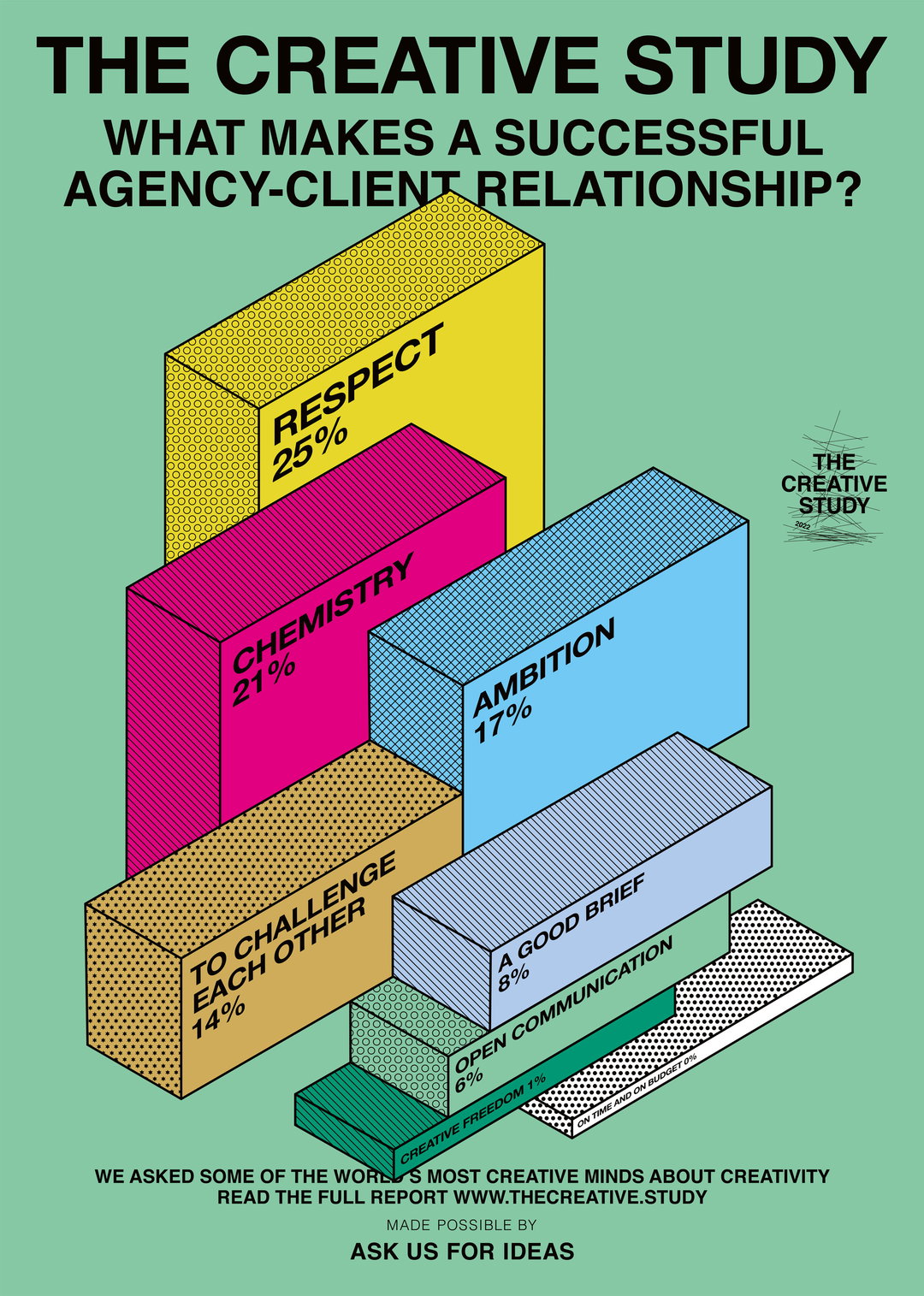
An infographic titled “The Creative Study” asks “What makes a successful agency-client relationship?”. A 3D bar chart shows the top factors: “Respect” at 25%, “Chemistry” at 21%, “Ambition” at 17%, and “To challenge each other” at 14%. Lower bars list “A good brief” at 8%, “Open communication” at 6%, and “Creative freedom” at 1%. The smallest bar, “On time and on budget”, is at 0%.

What makes a good client relationship? Respect trumps creative freedom for leading agencies

A new study from Aufi surveys over 50 studios – including Koto, DesignStudio and Manual – to find out how they measure successful creative work today.

—
Date
29 June 2022

In the creative industry, agencies are often hired for an intangible asset – their creative outlook. And as these studios deliver subjective results, it’s hard to know how they measure their success or “creativity”. Equally, how do they define a successful working culture today? A new study from creative consultancy Aufi attempts to get to the bottom of these concerns. Gathering data over six months from 50 leading studios like Accept & Proceed, Moniker and RoAndCo, Aufi investigates how studios view and define successful client-agency relationships, creative attributes, and social impact, with revealing results.

One of the most unexpected findings might be what agencies measure a successful client relationship by. While the assumed golden creative asset of “creative freedom” and “a good brief” came in at only one per cent and eight per cent respectively, connection and communication seem central to “success”. Respect (25 per cent), chemistry (21 per cent) and ambition (17 per cent) all scored highest; leaps and bounds above the score for being “on time and on budget” at zero per cent (!).

Interestingly, awards and the quantifiable return of profit (while still important for commercial clients) also seem to be on a downward trend. Asking creatives how they measure success, “positive impact” leads at 40 per cent. “Measurement needs to look at a number of angles, with positive impact being at the top and the rest feeding into it,” expands Mark Liney, group CEO at DesignStudio. Meanwhile, this squared against a resounding 0 per cent vote for “awards”, which Aufi founder Nicholas Bell points out “tells of the mindset creatives are in these days, as opposed to the culture a few years ago.”
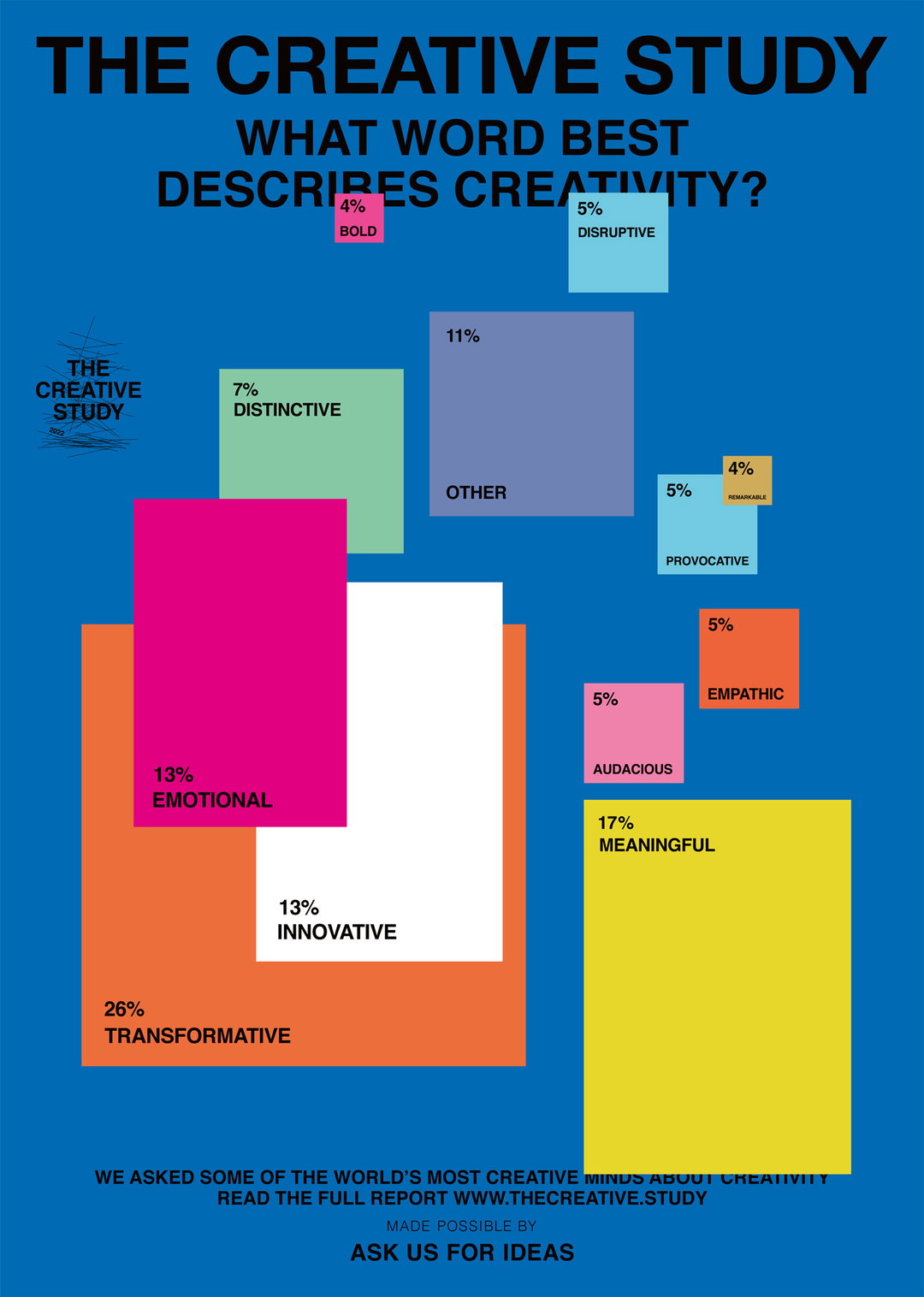
An infographic titled “The Creative Study” asks “What word best describes creativity?”. A series of coloured rectangles of varying sizes represent different responses, with the largest orange block labelled “26% Transformative”. Other prominent responses include “17% Meaningful”, “13% Emotional” and “13% Innovative”.
Above

Aufi: The Creative Study (Copyright © Aufi, 2022)

The study also reveals insights into the minimum marketing mindset many studios and agencies are taking towards DEI and representation. “Even just being in meetings, sometimes it feels like the attitude towards issues and social problems can be a little bit begrudging for people,” says Nikita Walia, founder of Blank. William Esparza, founder and CEO of Hyphenated adds: “Our industry is great at image making and slogan writing, which disguises what is really not happening.” The Aufi study concludes that while a lot of studios place DEI as crucial to creative success, “there’s still a lot of confusion over how to drive meaningful change”.

In terms of how other industries are quantifying creativity today, the study states: “big brands now see creativity as an asset”. Citing the example: “In a 2016 move that surprised many in the asset management world, BlackRock Inc. appointed as its CMO the former CMO of American media company Buzzfeed”, the study reports more creatives are joining leadership teams. Equally, companies are seeing “increased input from the creative folks to core parts of the business,” says Tom Hardy, Manifesto Studios founder.

Read more insights from the industry at Aufi’s site, where you can find the study – designed and branded by Made Thought.

GalleryAufi: The Creative Study (Copyright © Aufi, 2022)
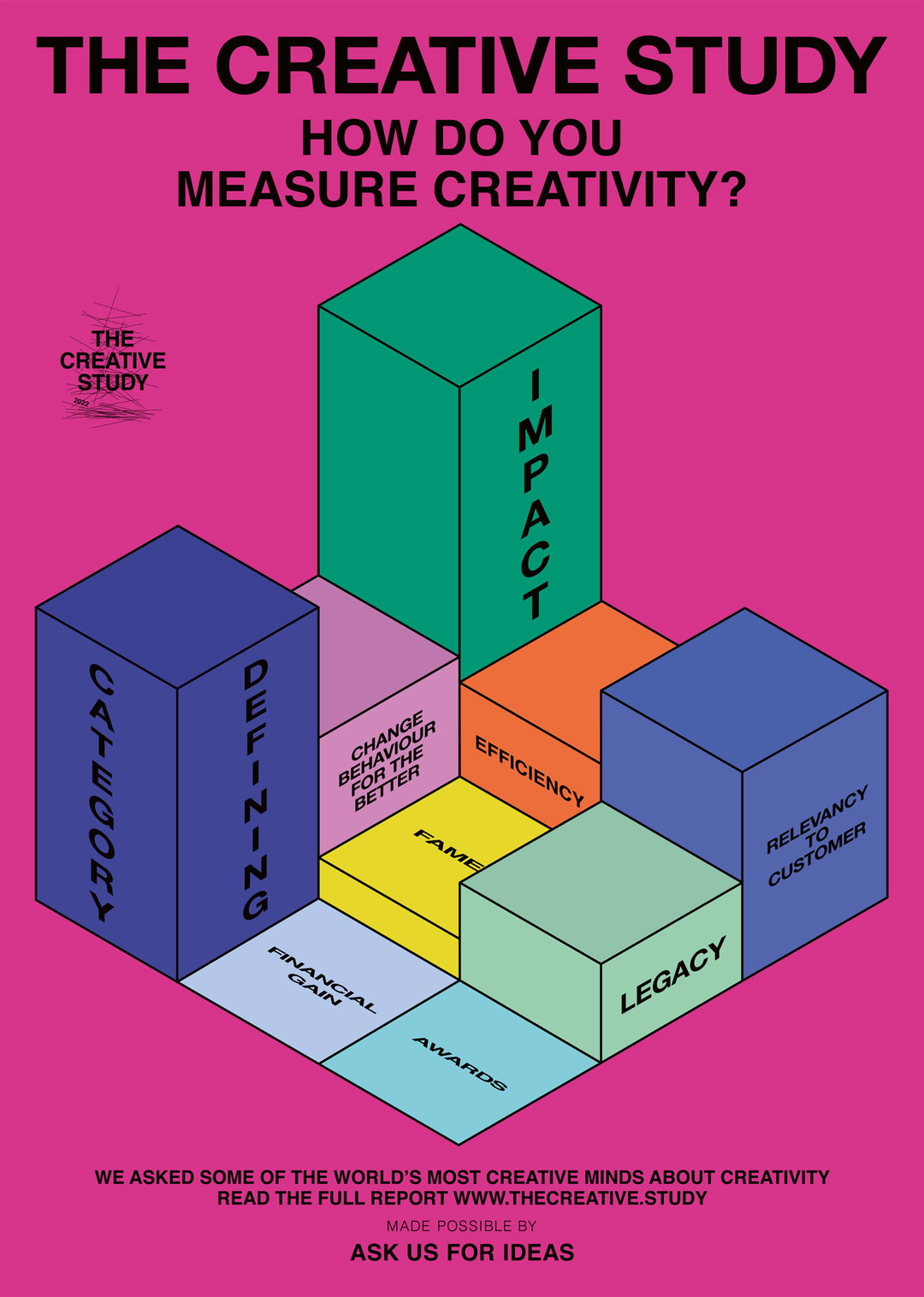
An infographic on a pink background titled “The Creative Study” asks “How do you measure creativity?”. A series of 3D blocks of varying heights are labelled with metrics including “Impact”, “Defining Category”, “Legacy” and “Efficiency”. Smaller blocks are marked with “Financial Gain”, “Awards”, “Fame” and “Relevancy to Customer”.
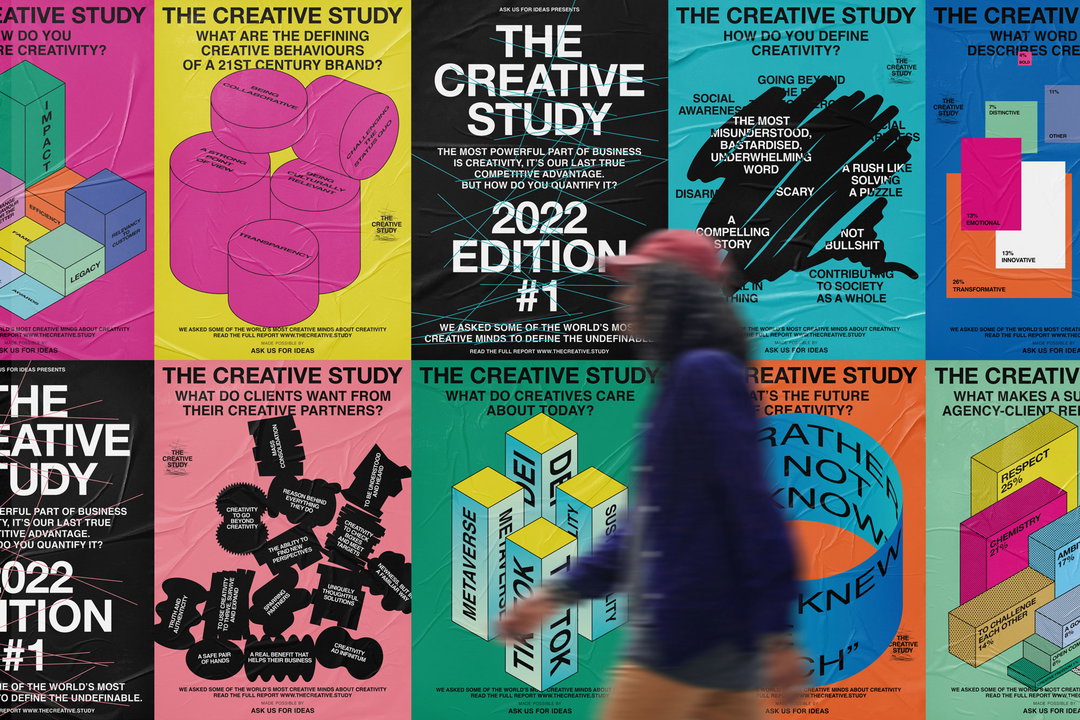
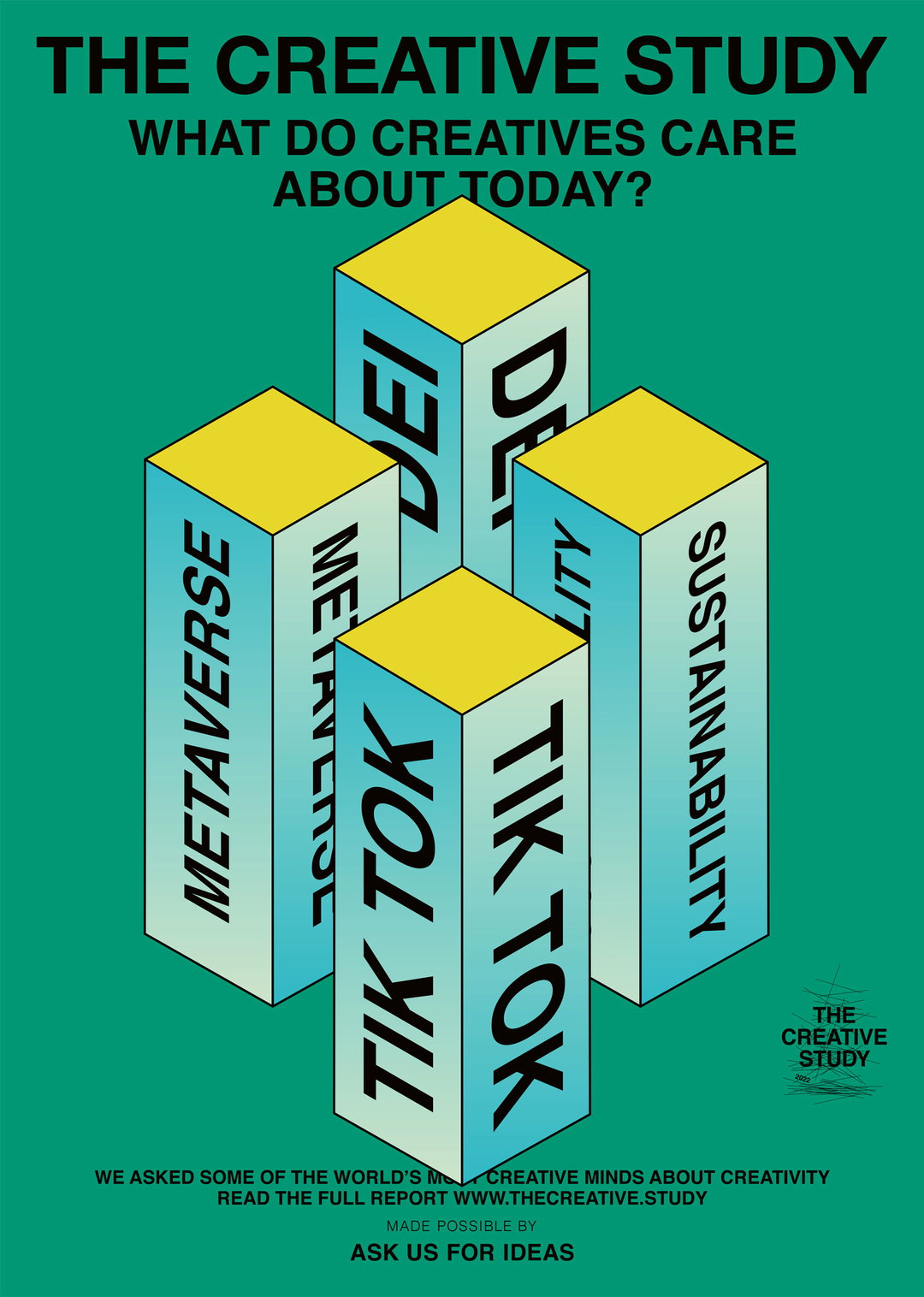
A 3D render of four yellow-topped blocks arranged on a green background. The blocks feature the words “Metaverse”, “Tik Tok”, “Sustainability” and “DEI”. Above the blocks, a headline reads “The Creative Study” followed by “What do creatives care about today?”. Text at the bottom invites readers to find the full report at www.thecreative.study.
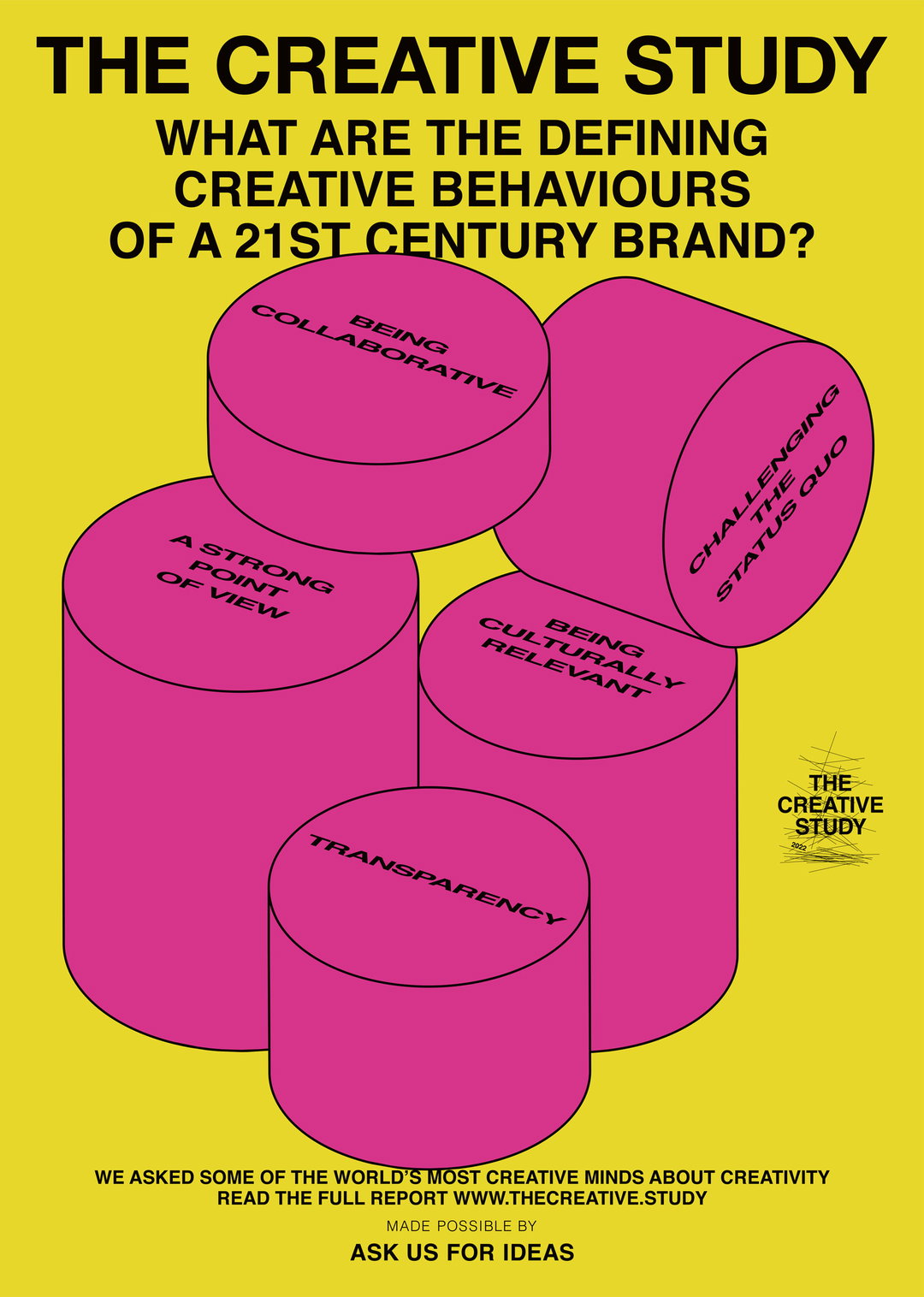
An illustration on a yellow background features five pink cylinders of varying heights. Each cylinder is labelled with a creative behaviour, including “Transparency”, “Being collaborative” and “Challenging the status quo”. The top of the image reads “The Creative Study” followed by the question “What are the defining creative behaviours of a 21st century brand?”. Text at the bottom directs readers to a website for the full report.
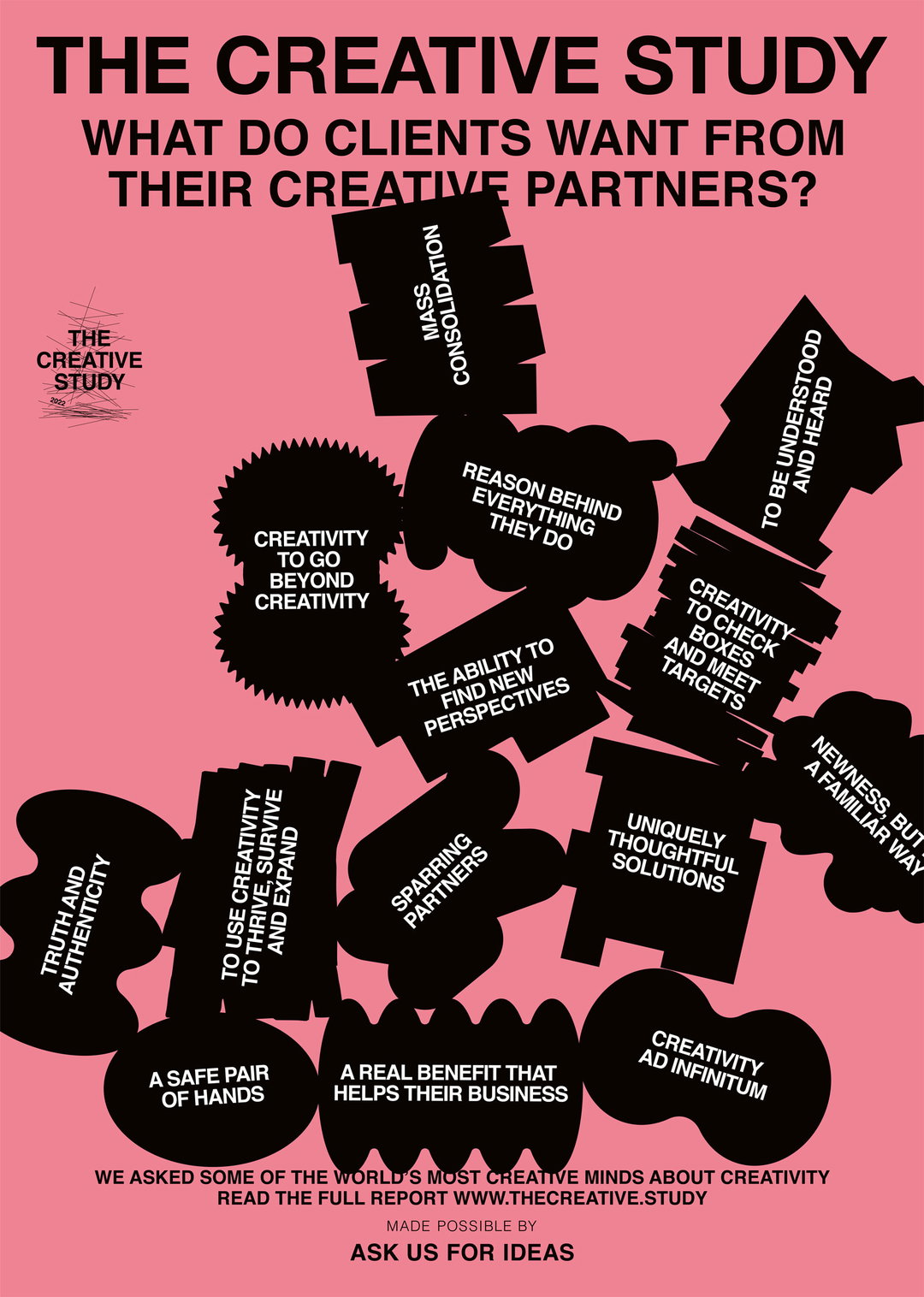
A typographic poster on a pink background titled “The Creative Study”. Below the headline “What do clients want from their creative partners?”, various black organic shapes contain phrases such as “Creativity to go beyond creativity” and “Uniquely thoughtful solutions”.
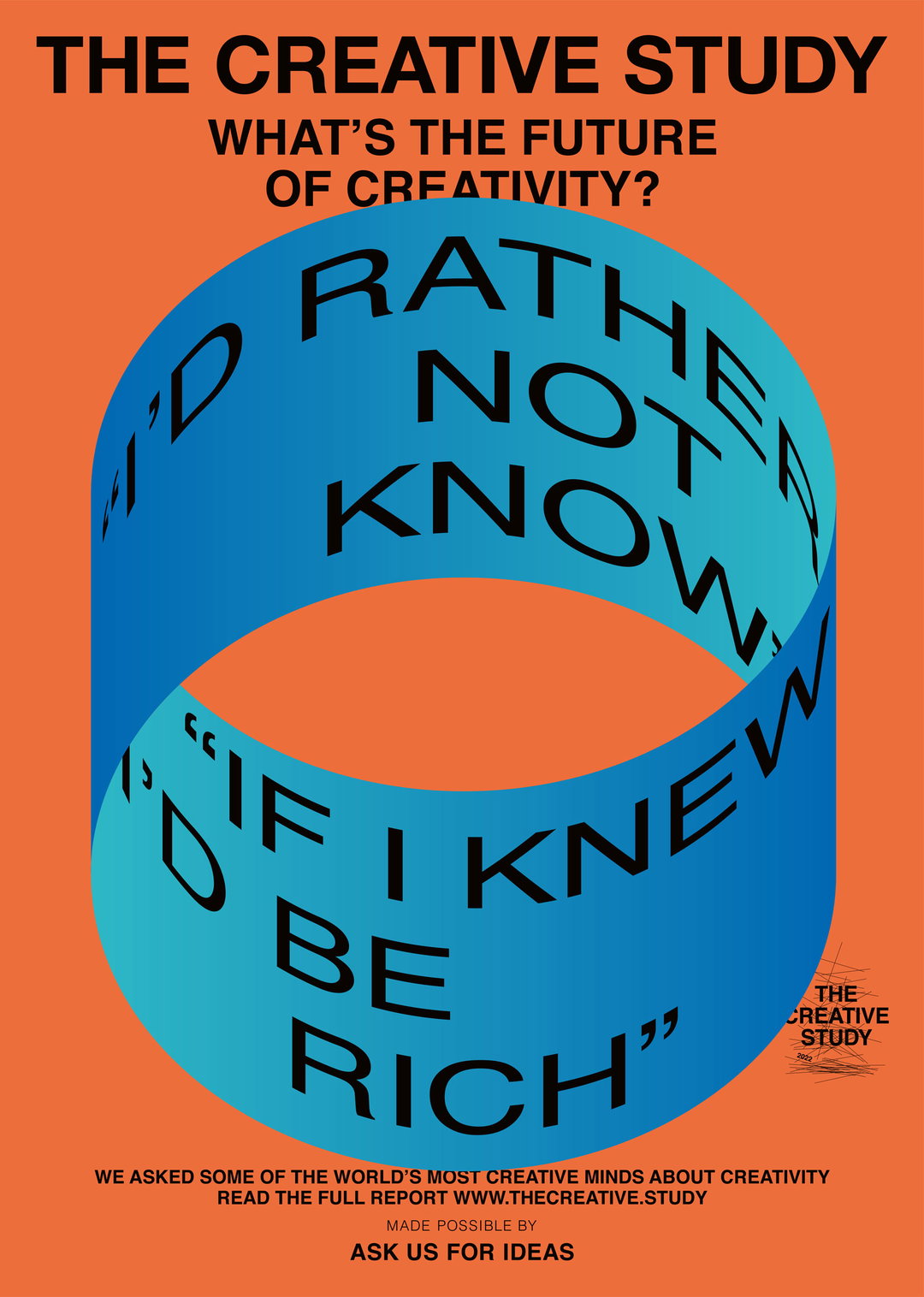
A bold typographic poster on an orange background reads “The Creative Study” and “What’s the future of creativity?”. A blue 3D ribbon curls across the centre, featuring the quote “I’d rather not know, if I knew I’d be rich”.
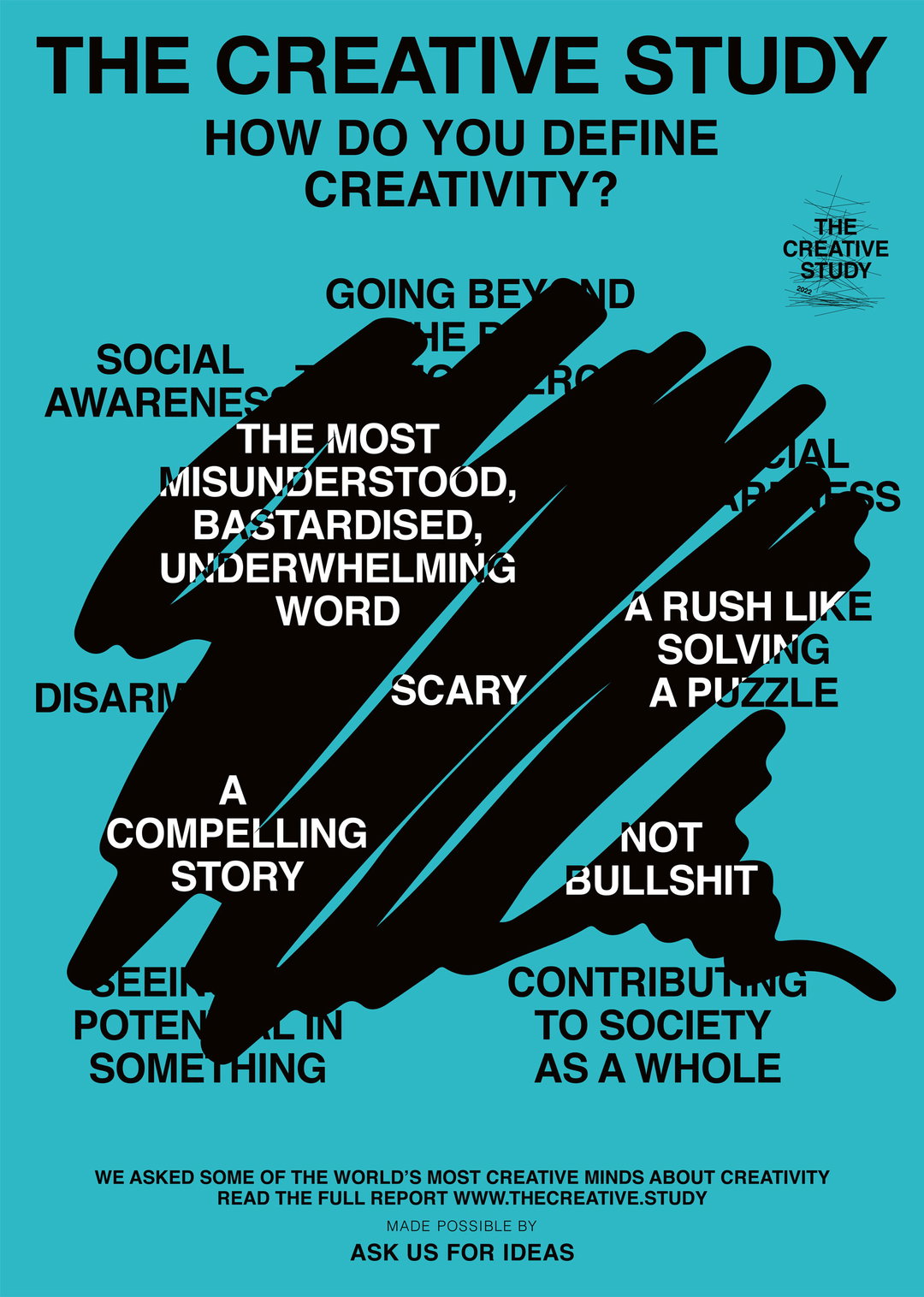
A typographic poster on a teal background reads “The Creative Study” and asks “How do you define creativity?”. Various answers are scattered across the page, including “A compelling story” and “A rush like solving a puzzle”. A large, black ink stroke is scribbled over the centre, with the words “The most misunderstood, bastardised, underwhelming word” written inside it.
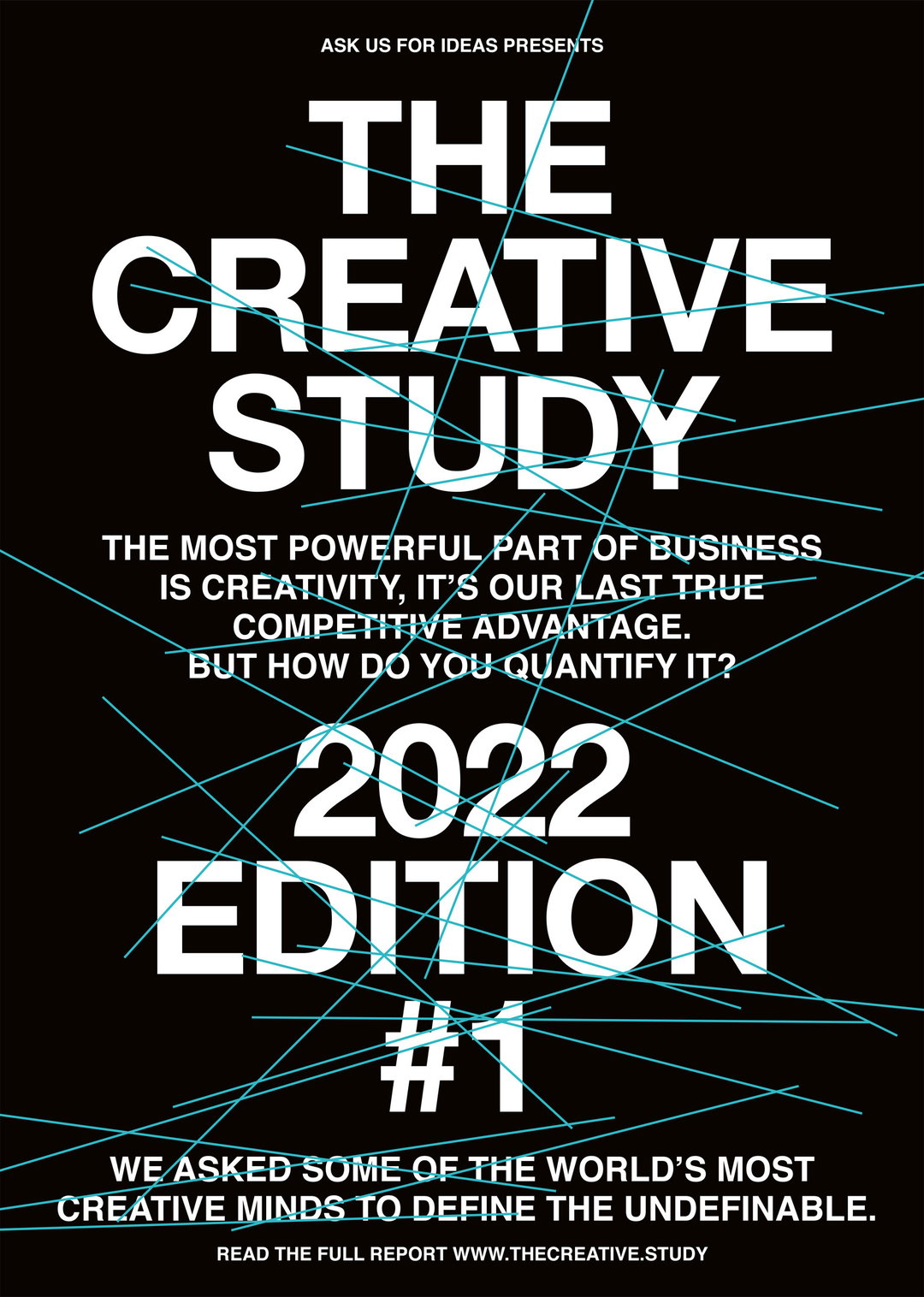
A typographic poster on a black background reads “The Creative Study” and “2022 Edition #1”. Thin blue lines criss-cross the white text like a web. The poster includes a central paragraph stating that creativity is the most powerful part of business. A final line reads, “We asked some of the world’s most creative minds to define the undefinable.”
A grid of bold, colourful posters for “The Creative Study 2022 Edition #1”. A blurred figure in a blue top walks across the frame, partially obscuring the text.

Hero Header

Aufi: The Creative Study (Copyright © Aufi, 2022)
Share Article

About the Author

Liz Gorny

—

Liz (she/they) is the senior editor at Insights, a research-driven department within It’s Nice That. They previously ran the news section of the website. Get in contact with them for potential Insights collaborations or to discuss Insights’ public-facing reports.
It's Nice That Newsletters

Fancy a bit of It's Nice That in your inbox? Sign up to our newsletters and we'll keep you in the loop with everything good going on in the creative world.