


Why minimalist aesthetics (smuggled in as the language of progress) are stifling truly Arab design
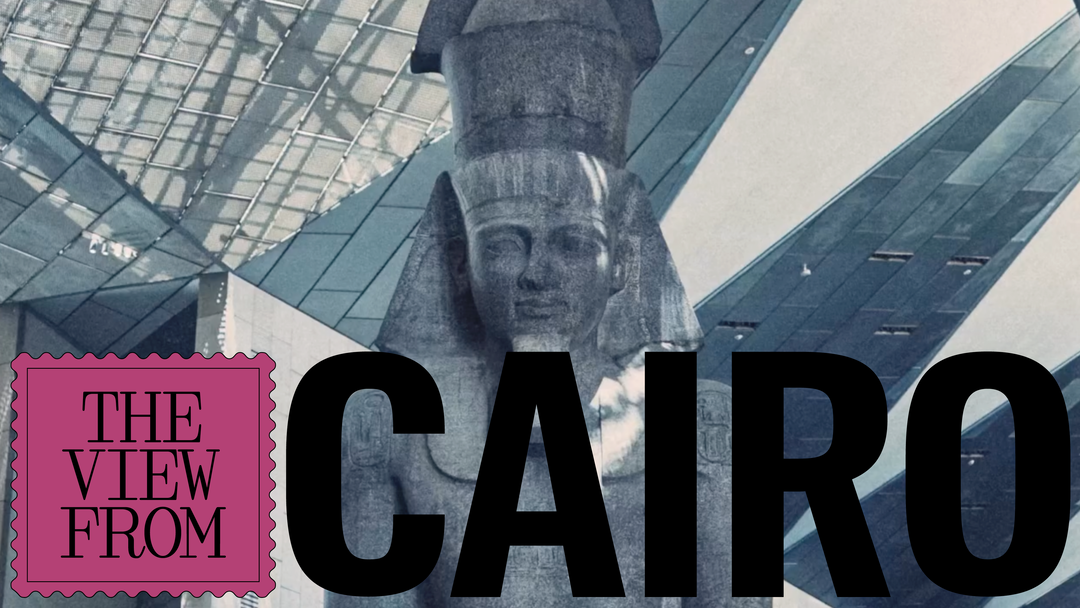
Our Cairo correspondent looks at how the absence of design criticism in the Arab world has weakened the field’s ability to assess itself, and uses the branding of the Grand Egyptian Museum to ask who really gets to define ‘good design’ in the region.
Share
There is this unspoken rule in the Arab world that design criticism is professionally risky. As a result, criticism survives mostly in fragments: Facebook posts, lengthy Instagram stories, or other short-form expressions of discontent. Sometimes these can be incisive, sometimes unfair, but almost always ephemeral.
This fragmentation is not accidental. It is the result of a regional design culture that has learned to make critique professionally unaffordable without banning it outright. Opportunity, commissions, visibility, and proximity are quietly withdrawn until critique feels less like a contribution to the field and more like professional self-sabotage. In that climate, self-censorship has been internalised as professional prudence.
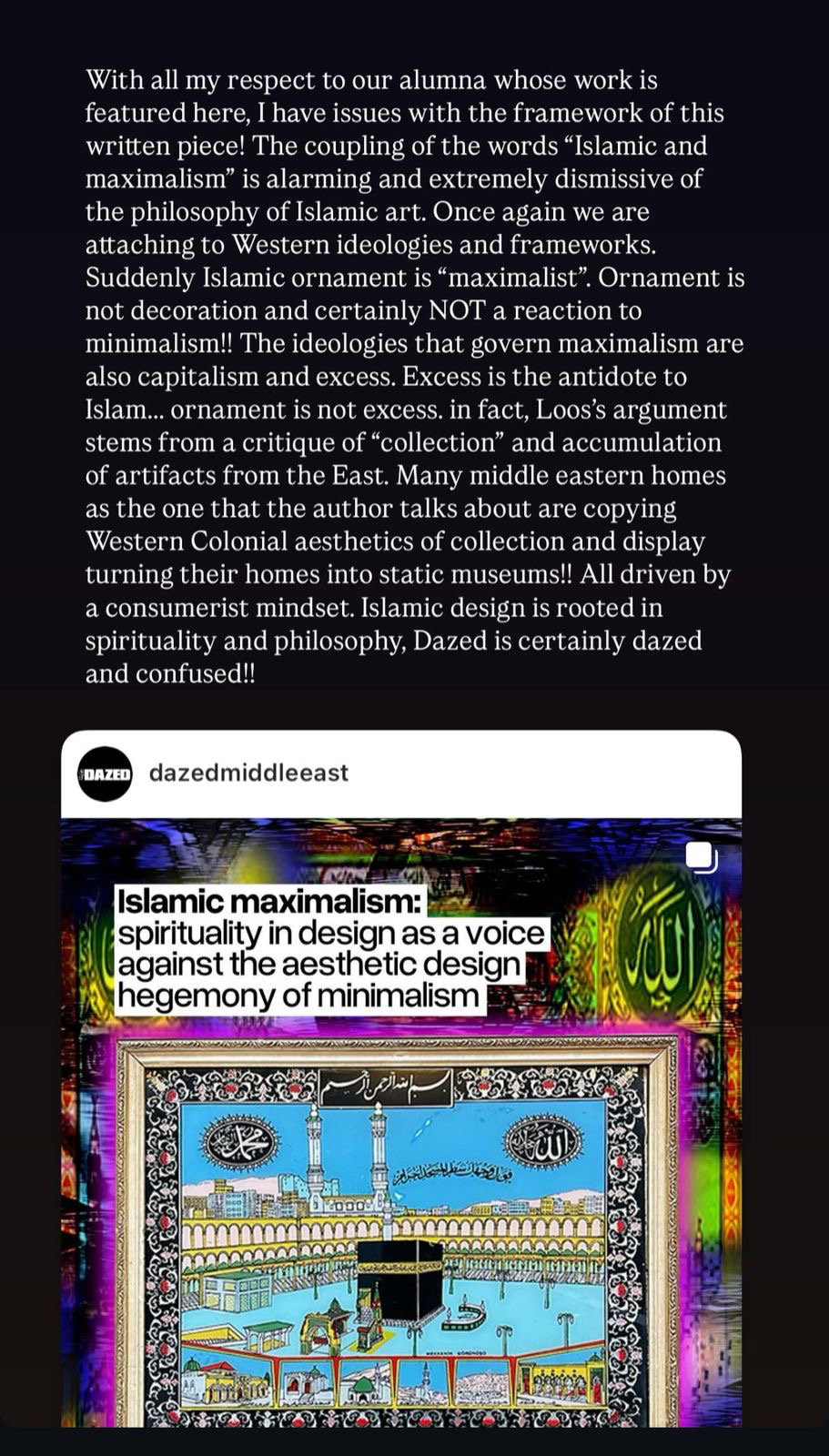
Instagram story by Basma Hamdy, Qatar
Instagram story by Mohammed Sharaf, Kuwait
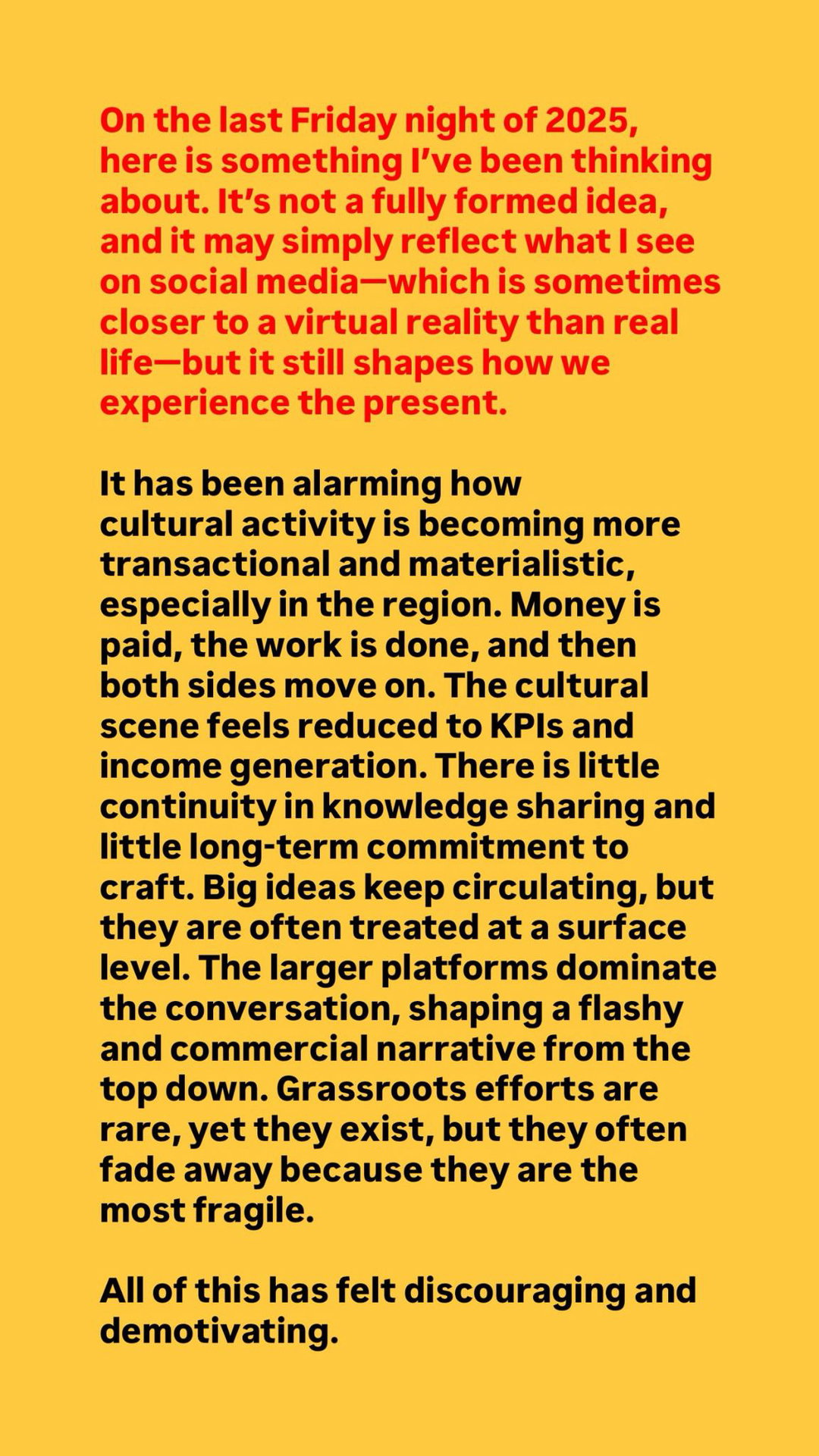
Instagram story by Mohammed Sharaf, Kuwait
This climate deprives the field of the foundational tools it needs to mature into a profession. As Alice Twemlow notes, design criticism aims to “identify, sort, categorise, and assign values to things”. Without these acts of distinction, a field struggles to develop the criteria through which its output can be meaningfully assessed and advanced. For Arab design, criticism is especially crucial because it allows “decolonisation” to move from theory to practice by engaging deeply with the work shaping the region’s visual culture.
Outsourcing cultural authority
What shapes Egypt’s visual culture more than the Grand Egyptian Museum (Gem), one of the most important projects in Egypt’s recent history? I do want to talk about its branding – but first the project needs to be situated within a recurring and indeed unexamined regional phenomenon.
This phenomenon is the outsourcing of cultural authority for symbolically significant design projects to international agencies, which in turn bring in “Arab” designers down the chain as collaborators.
While local officials often justify these commissions through the language of international standards, many practitioners view them as evidence of a more troubling deep-seated xenocentrism – a structural bias that pursues external, (often Western) validation and mistakes it for inherent excellence.
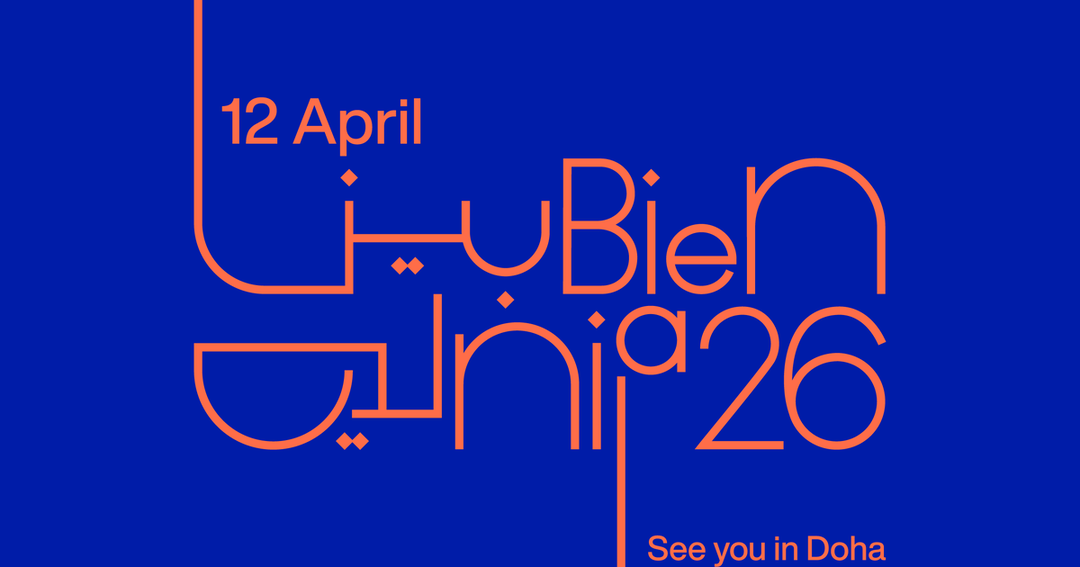
Pentagram London: Doha Design Biennale 2026 branding, 2026
Beyond the erosion of local cultural authority, these projects also act as channels through which a globalised aesthetic is smuggled in as universally modern. In a region still haunted by the spectre of modernity, these projects are often approved because they know how to ‘perform’ modernity for local officials, with Western minimalism framed as the exclusive marker of sophistication.
That is why the implications of this phenomenon are not merely aesthetic; they are profoundly political, stripping the region of the power to define its own culture while simultaneously facilitating a form of Western epistemic hegemony.
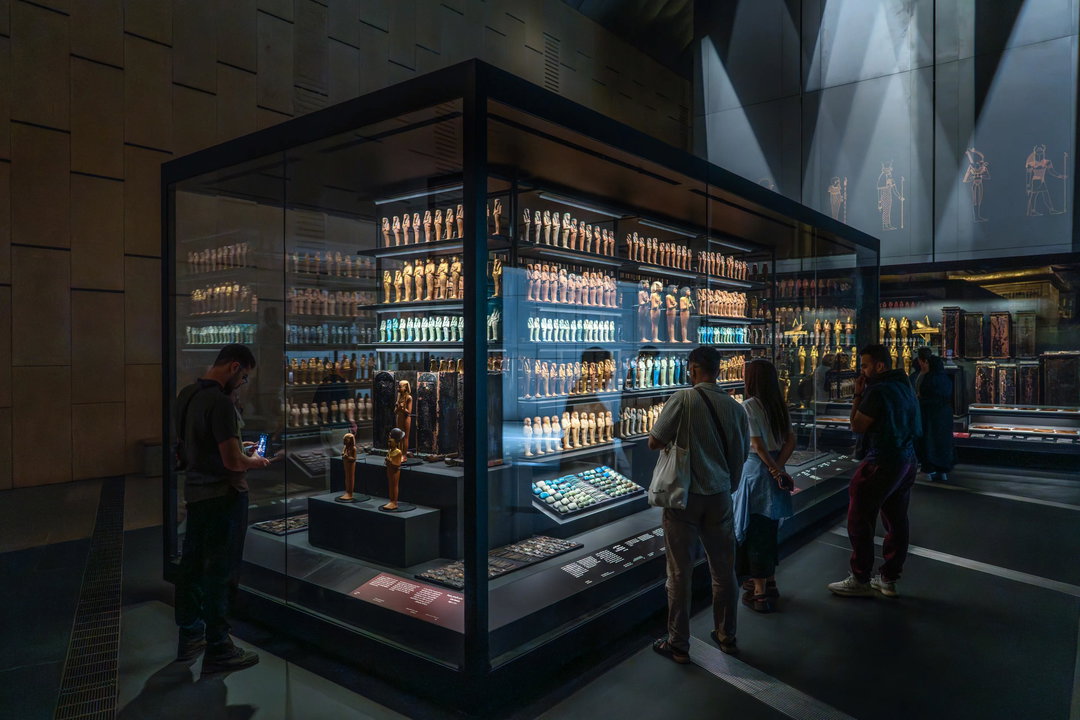
The Grand Egyptian Museum. Photo courtesy of Atelier Brückner
We need to talk about the Gem!
The branding of the Gem went through a similar dynamic. The German studio Atelier Brückner was commissioned to lead the museum’s branding and exhibition design. Brückner, in turn, subcontracted Studio Atrissi, a Dutch-based design studio led by renowned Lebanese designer Tarek Atrissi to create the visual identity.
Given the Gem’s exceptional symbolic value to Egyptians, and its status as the world’s largest museum dedicated to a single civilisation, expectations for its branding were understandably high. When its identity was unveiled in 2018, it triggered a social and cultural backlash because many felt that the identity, for reasons worth examining, fell short of expectations.
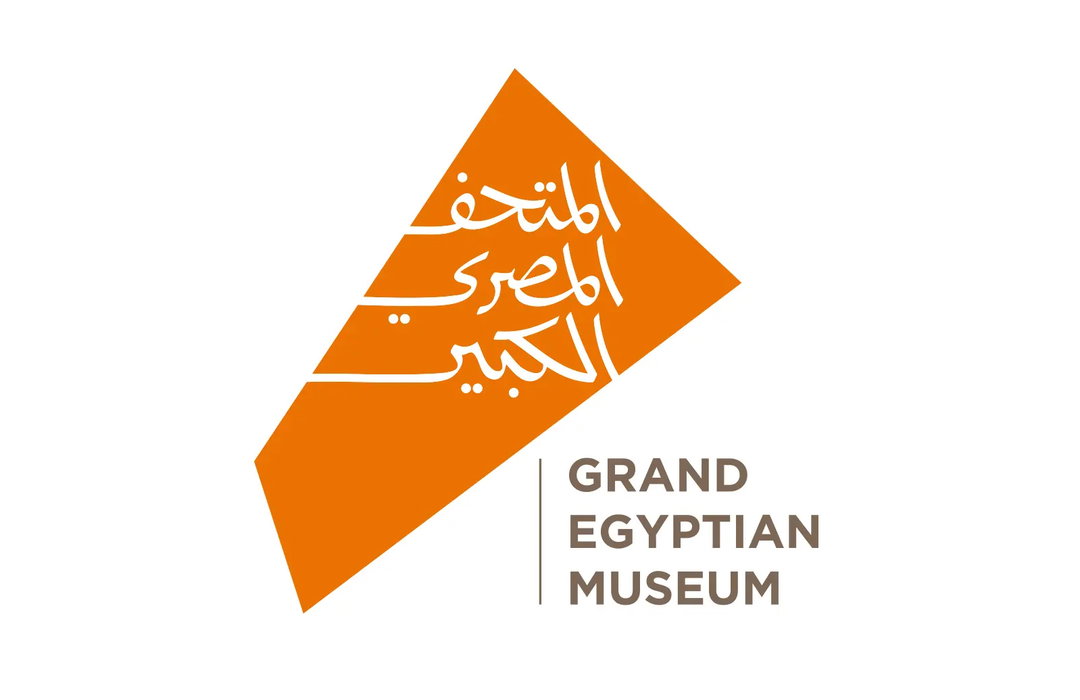
Studio Atrissi: current logo of the Gem
The Gem identity needs to be read on two registers: the visual design itself and the rhetorical apparatus deployed to defend it from critique. While both deserve scrutiny, this piece is less concerned with a formal critique because for me, the more consequential question is not only how the identity looks, but how it was defended.
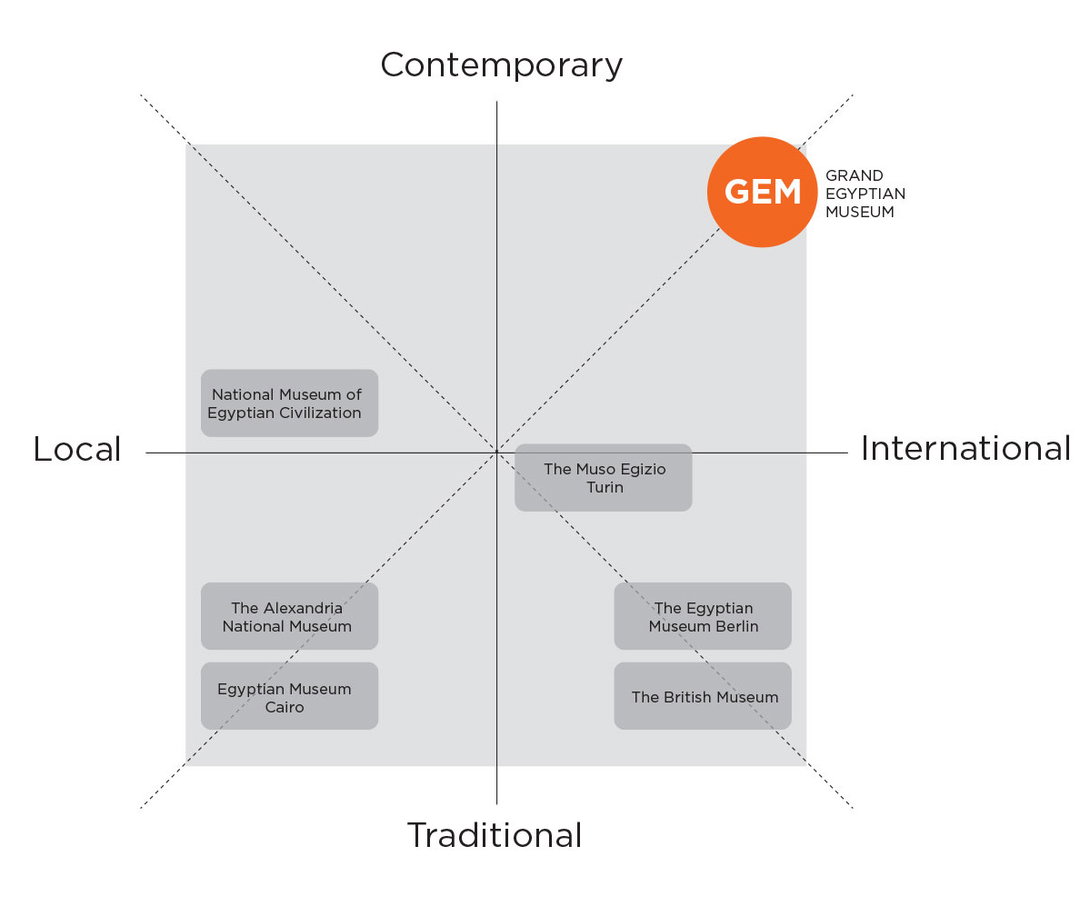
A diagram by Studio Atrissi positioning the Gem identity as highly contemporary and international, 2018
The theatre of process
Studio Atrissi published a response intended to address the controversy as it unfolded. To me, this response reads as a regional echo of the intellectual haze that emerged around design thinking: a methodology where process and rhetoric substitutes for the quality of the outcome.
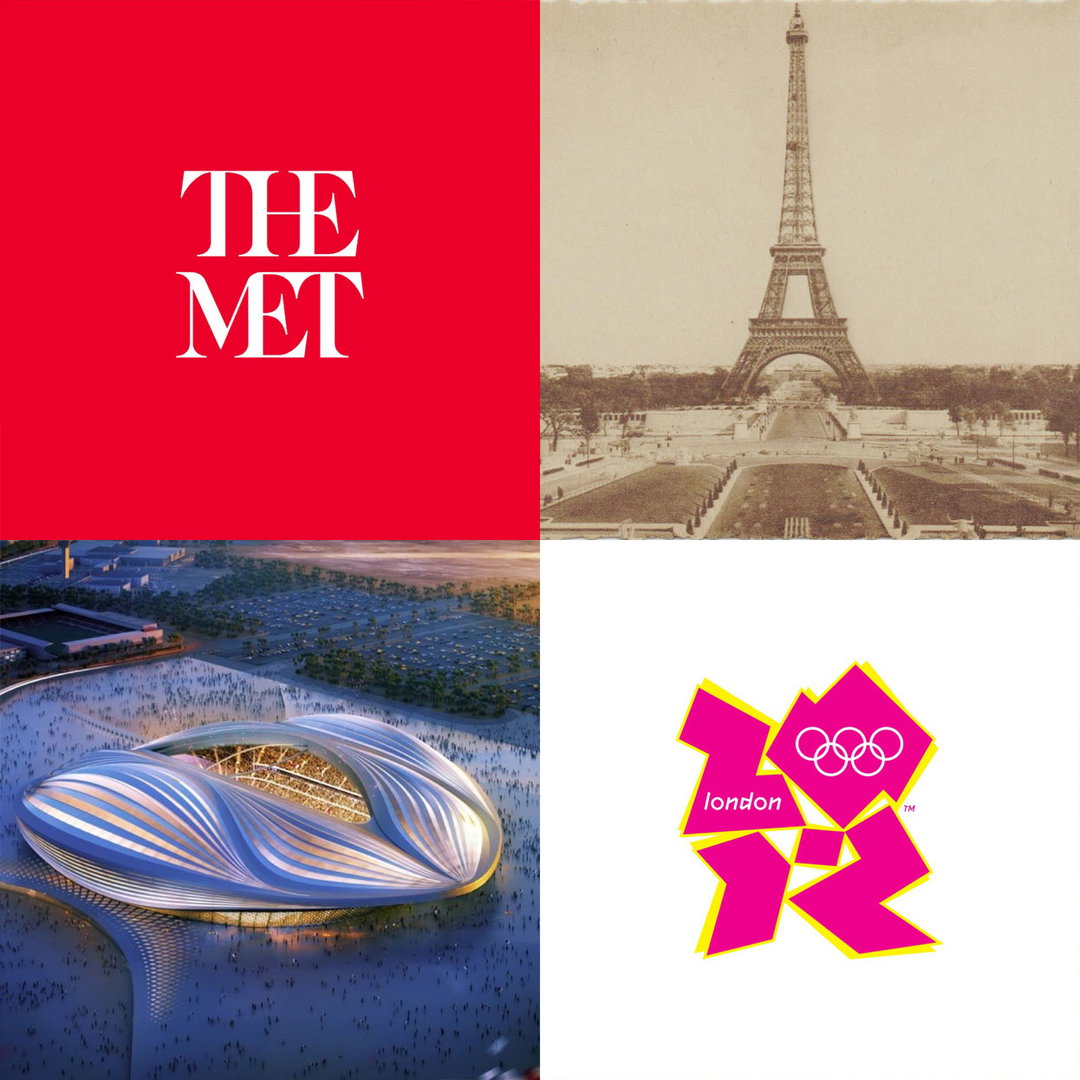
The Met logo; Eiffel Tower; Al Janoub Stadium; London 2012 Olympics logo
First, the text draws a parallel to iconic design controversies, positioning the Gem identity within a global lineage of “brilliant but misunderstood” projects, such as the Eiffel Tower and the London Olympics logo. It casts the designer against the public, implying a long historical precedent for the public’s failure to recognise good design. This exposes the defensive posture some designers adopt when their work is under scrutiny. More critically, it is an argument fundamentally at odds with the design field itself, one that dismisses the very people design, by its very definition, is supposed to address.
Once this frame is established, the text proceeds to stack procedural authority with near-liturgical insistence: a 344-page document containing the brief, a committee of twenty experts, six months of work, six fully developed routes. The problem with this stacking is that none of it is an argument for good design, and certainly none guarantees quality. Heavy briefs can still yield thin concepts. Large committees can still converge on mediocrity. Process does not guarantee depth.
Another argument worth examining is how the text treats the brief. According to the text, the Gem brief prohibited the use of hieroglyphs, pyramids, and other Pharaonic symbols, dismissing them as “second level visual associations” that have become overused tourism cliches. Atrissi’s text does not interrogate these assumptions. In fact, it presents them as “determinations” to be accepted rather than questioned. However, practicing designers understand that briefs are not immutable documents; they are negotiated. Questioning their assumptions is often the most important intervention a designer can make and treating them as unquestionable authority obscures a critical dimension of design practice.
The text concludes with a warning that any change to the identity would “hurt the design industry” by undermining consistency and legitimising critiques from “non-designers”. This framing constructs a false binary: one either stands with this identity or betrays the profession. This too is not an argument for design.
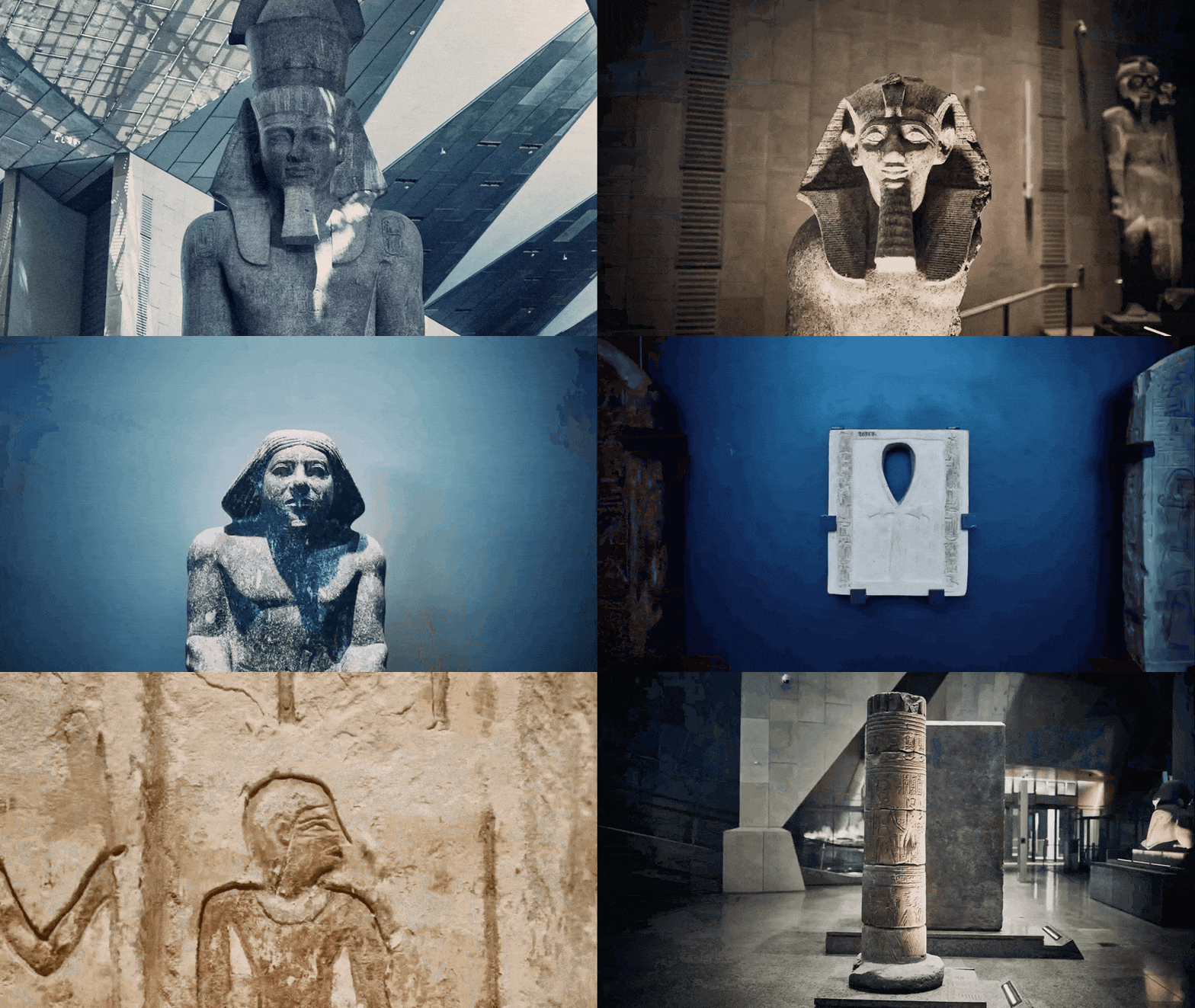
goodpeople, Cairo: Advert for the Gem
The Gem beyond the design process
What lies beyond the controversy is not simply a question of process. The intensity of the public and professional reaction, even if it was under-theorised, as Atrissi rightly notes, was not only about the quality of the design. Instead, it was an expression of deeper anxiety around cultural authority, and the extent to which cultural specificity is displaced by the global legibility of Western modernism at this scale.
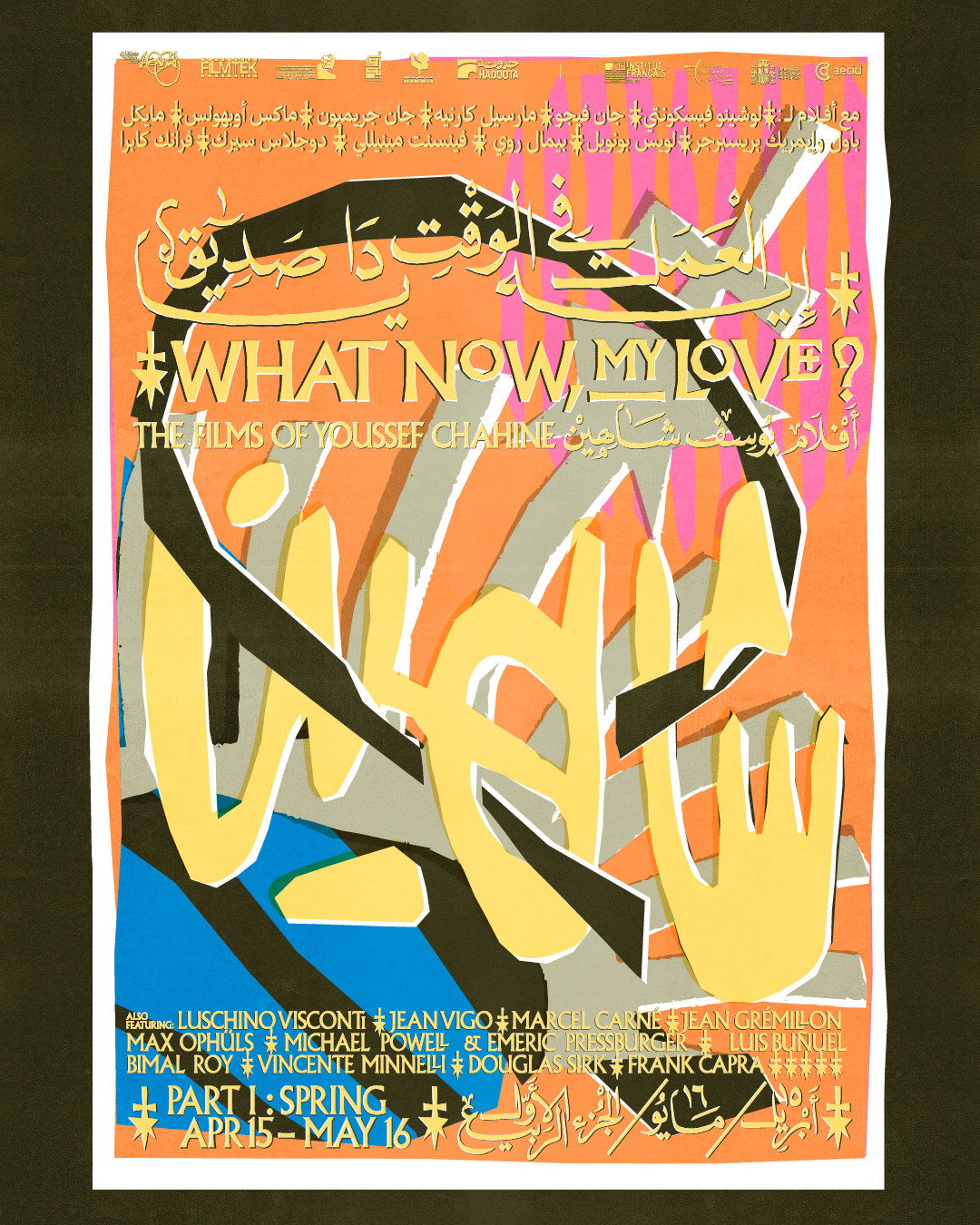
Mina Maurice: poster design (Copyright © Mina Maurice, Cairo, 2026)
Mina Maurice: poster design (Copyright © Mina Maurice, Cairo, 2026)
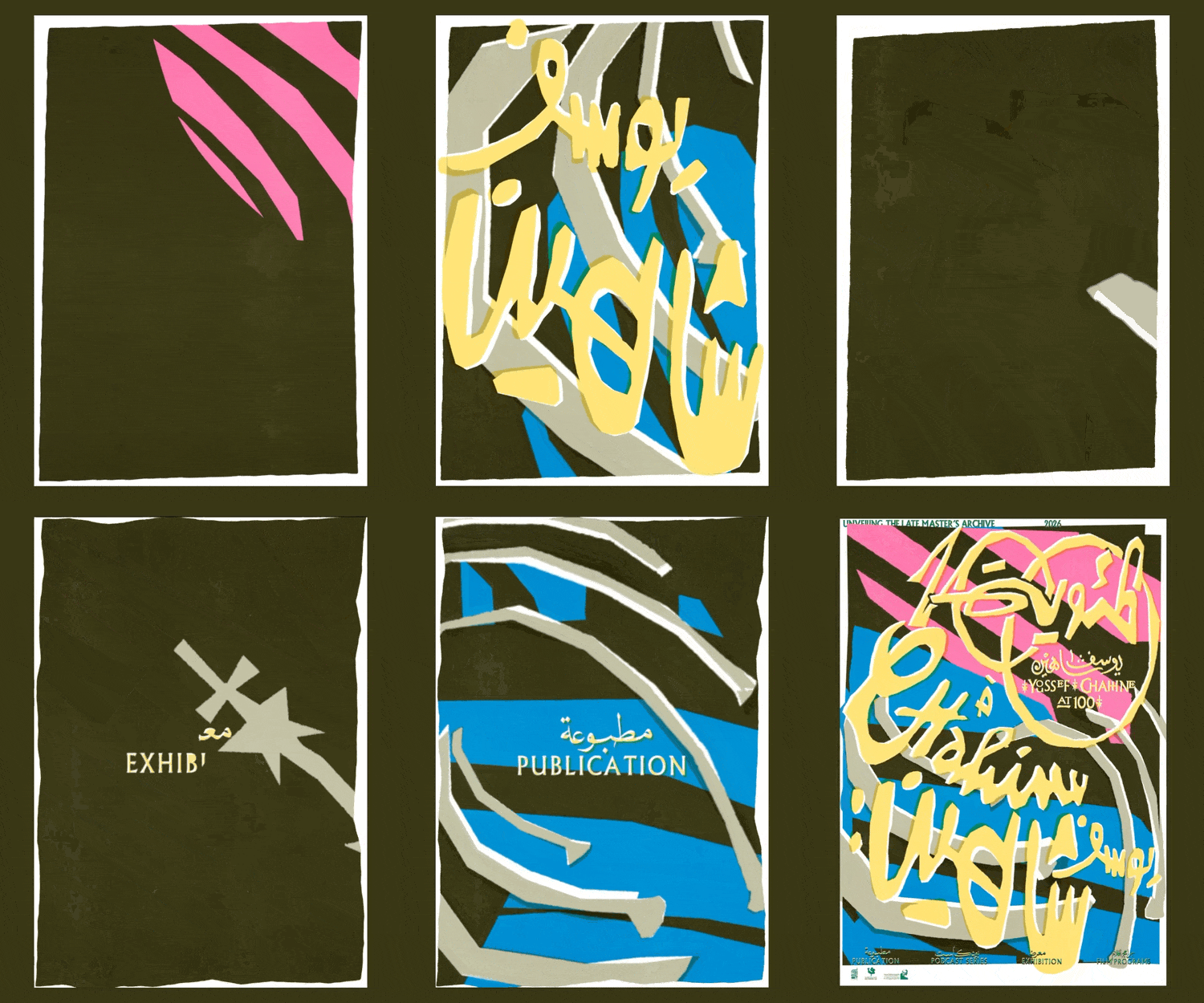
Mina Maurice: poster design (Copyright © Mina Maurice, Cairo, 2026)
A fading orthodoxy that is still being exported to the region as the language of progress. Ironically by Arab diasporic designers operating within international agencies, even as the Global North itself is slowly moving away from this minimalist universalism it once exported as sophistication and pivoting instead toward heritage, complexity, specificity, diversity, and cultural depth. On the other hand, another force is emerging in the region, one that is actively grappling with questions of authenticity, cultural sovereignty, and specificity, and its work is simultaneously challenging the dominance of Western modernist frameworks while defining a new criteria for Arab design.
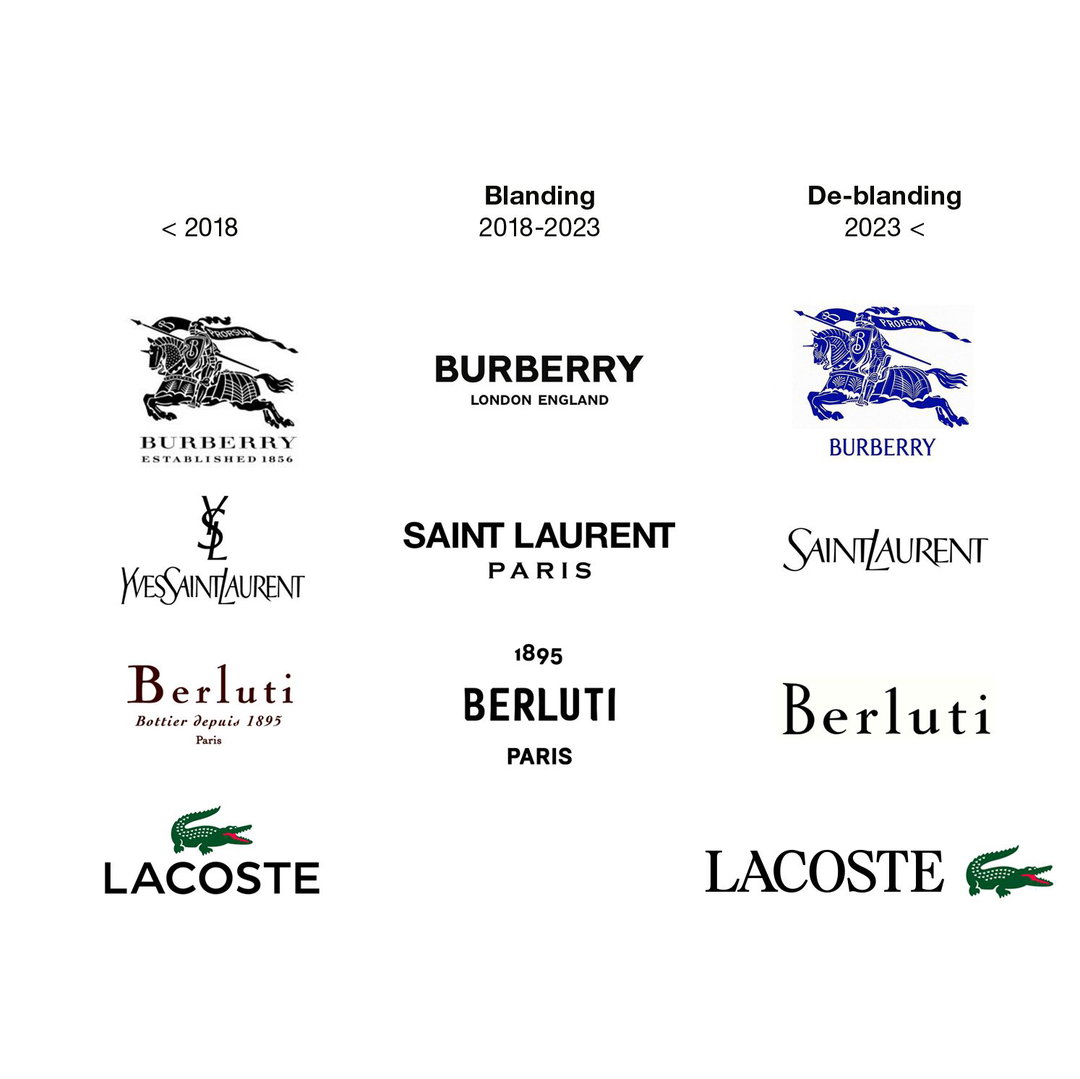
Authentic, Blanding, and De-blanding. Image courtesy of Erik Hedlund, 2026
This is precisely why we need a culture of criticism in the Arab world. Without it, the field remains dependent on theories and practices emerging elsewhere and avoids urgent questions such as: Who has the authority to define “good design” in the region? Through which institutions, schools, agencies, awards, and patrons is that authority reproduced? Why is Western modernist legibility still treated as the neutral language of sophistication? What role do Arab designers, including those in the diaspora, play when mediating between international agencies and local cultural representation? Most urgently, what would it mean for the region, and each specific culture within it to develop its own critical criteria rather than inheriting them? These are the conversations we must have.
Closer Look
Moe shares some tips for Cairo and beyond.
- You have to, at least once in your lifetime, visit the Grand Egyptian Museum, it’s truly magnificent.
- Check out some student work from the AUC Graphic Design senior show.
- A new creative space is forming across the Mediterranean, connecting its eastern and western shores. Check out the remarkable work Safena 7 is doing.
Share Article
Further Info
About the Author
—
Mahmoud Elhossieny is a Cairo-based designer, writer, and researcher. He is the founder of the Arabic Design Archive and Design Repository. His work utilises design and writing to decolonise, contextualise, and facilitate access to Arab design. He is It’s Nice That’s Cairo correspondent.