


The trinket takeover: unpicking the microtrends of consumer culture in Seoul
편집숍 select shops and viral pop-ups are taking over the Korean capital, especially in Seongsu. Our Seoul correspondent looks at the current obsession with trinkets and what it says about the city’s design trends and “feel-conomy”.
Share
These days, any Instagram post or reel or selfie from Seoul is incomplete without a snap from Seongsu-dong. It is the current hot spot of the city. One of the many reasons for the hype is that Seongsu has become the centre of an accelerating and bizarre trend in retail: viral pop-up stores. Recently, on 1 May, the Pokémon Mega Festa, celebrating the game’s 30th anniversary, made headlines. At the event, a limited edition card was being given away for free. Fans came to the neighbourhood to grab this rare item and by noon an estimated 40,000 people crowded into the alleys of Seongsu. Extreme crowding led to the event’s cancellation and police intervention.
Such overcrowding is not new to the neighbourhood. Steeping off the subway you can find a live crowd density map display at each exit. Daily, there are extravagant pop-ups, markets and events happening alongside the new headquarters of companies like fashion retailer Musina and luxury eyewear brand Gentle Monster. On a recent spring walk, I began to wonder what had brought such hype to the neighbourhood. The extreme social attention on the area may also have connections to other economic trends that I’ve noticed in contemporary Korean design.
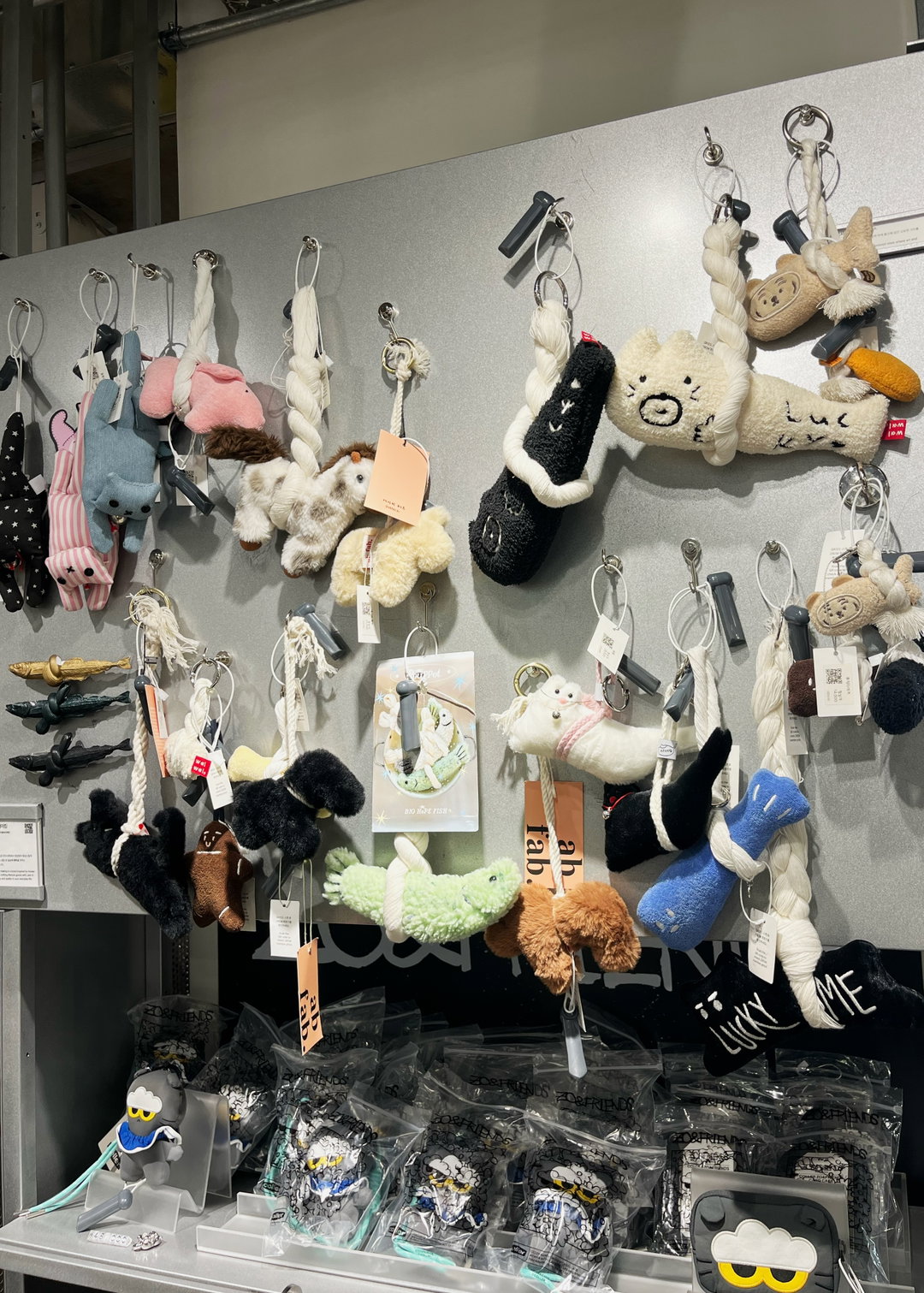
Korea still has a problematic youth unemployment rate that affects many young Korean designers. The skyrocketing real estate market has influenced innovation in housing models, but still is a deep concern for young Koreans beginning their professional lives. Amid those larger trends, I also see a new pattern of craft consumption – the adorable keyring ornament. Hopping on the green line towards Seongsu, I could not find a single handbag or backpack without some sort of dangling cute, furry character.
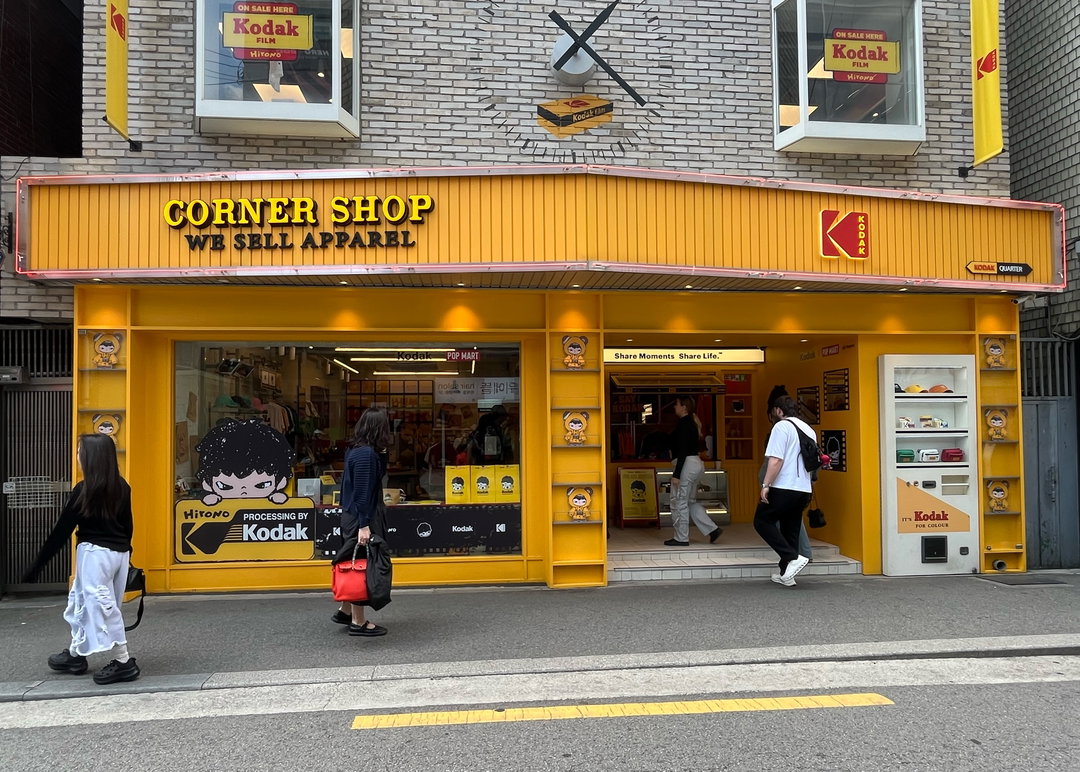
Seongsu-dong is filled with pop-up stores like this recent Kodak apparel shop. This recent edition was selling a collaboration Hirono product. Photo: James H. Chae.
The Korean press has commented on the rise in luxury spending and their interpretations might explain the keyring trend. The term 필코노미 “feel-conomy” refers to purchases motivated by emotion and short term pleasure, which has become acute among the Gen Z generation. Many brands and companies are trying to make sense of such behaviour and potentially exploit it. This type of buying may have gained attention in luxury markets, but now it’s trickled down to lower priced products like keyrings. The rise of this segment of design craft aligns with such analysis when considering that some of the products sell for up to £20 for a single plush character. Now this is not a huge sum, but when I look around the subway and see someone with four or five keyrings, a simple backpack and all its adornments suddenly appears to have cost upwards of £200!
From a designer’s point-of-view, I find the increase in character IP and craft intriguing. There are also connections to a pervasive sense of doom about economic depression brought on by the aforementioned real estate and unemployment factors. In the face of these social and economic trends, young designers and independent shop owners have been responding.
In search of an answer, I spoke to designer Lee Chaerin, who started an accessories brand called Killiman in 2023. When asked about how her brand approaches the current design market, she states: “I don’t believe today’s consumers are simply looking for the cheapest options. While they are willing to pay a premium for products that truly resonate with them, the abundance of ultra-low-cost alternatives like Temu and Shein means brands must offer something those platforms cannot: distinctive identity and curated taste.” Her last point about taste resonated with me and motivated me to reorient my walk to a particular shop in Seongsu-dong.
“From a designer’s point-of-view, I find the increase in character IP and craft intriguing.”
James Chae
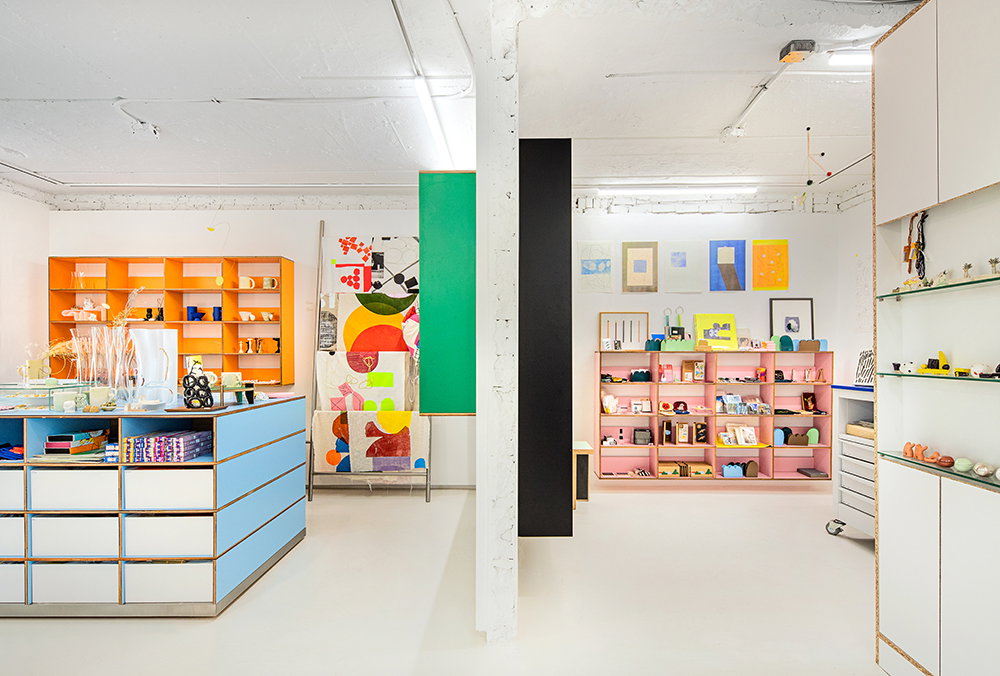
The design and craft store Kiosk Kiosk relocated to Seongsu and continues to sell well curated goods. They also offer design and craft workshops. Photo: Kiosk Kiosk.
Kiosk Kiosk moved to Seongsu around six years ago as the neighbourhood was gentrifying. The store specialises in curating design products ranging from stationery to home goods. The owner Min Jina’s taste strikes a careful balance between craft and design with a focus on sharing the intentions of creators. That has been one of the reasons that brought me back to the store. With gentrification comes rent increases and other forces that test independence. Yet, the store has remained steady, while the neighbourhood has radically transformed around it.
“Thanks to the many tourists who visit, Kiosk Kiosk finds the momentum to stay in business while selling niche market products,” Min tells me. “We are always delighted to welcome visitors from Seoul who are seeking a local and unique experience.” Min’s gratitude is an example of the store’s curatorial attitude that values the humans behind the products. “For us, selling and buying connects creators, who express themselves through their products, with buyers. People seek stories and values worth sharing,” Min states. Of course, Min’s careful curation is complemented by her taste. The word ‘taste’ is key in understanding the type of store that Kiosk Kiosk is, which in Korea is referred to as a 편집숍, or ‘select shop’. Whenever a neighbourhood in Seoul starts to get some hype, it’s the select shops and restaurants that set the tone of its gentrification. So, I set off from Seongsu westward towards Hannam through 금호동 Geumho-dong.
“People seek stories and values worth sharing.”
Min Jina, Kiosk Kiosk
GalleryNew Medium’s now closed store in Seoul. It operated from 2020 to 2024. New Medium has since moved its operations to Daegu. Photo: New Medium.
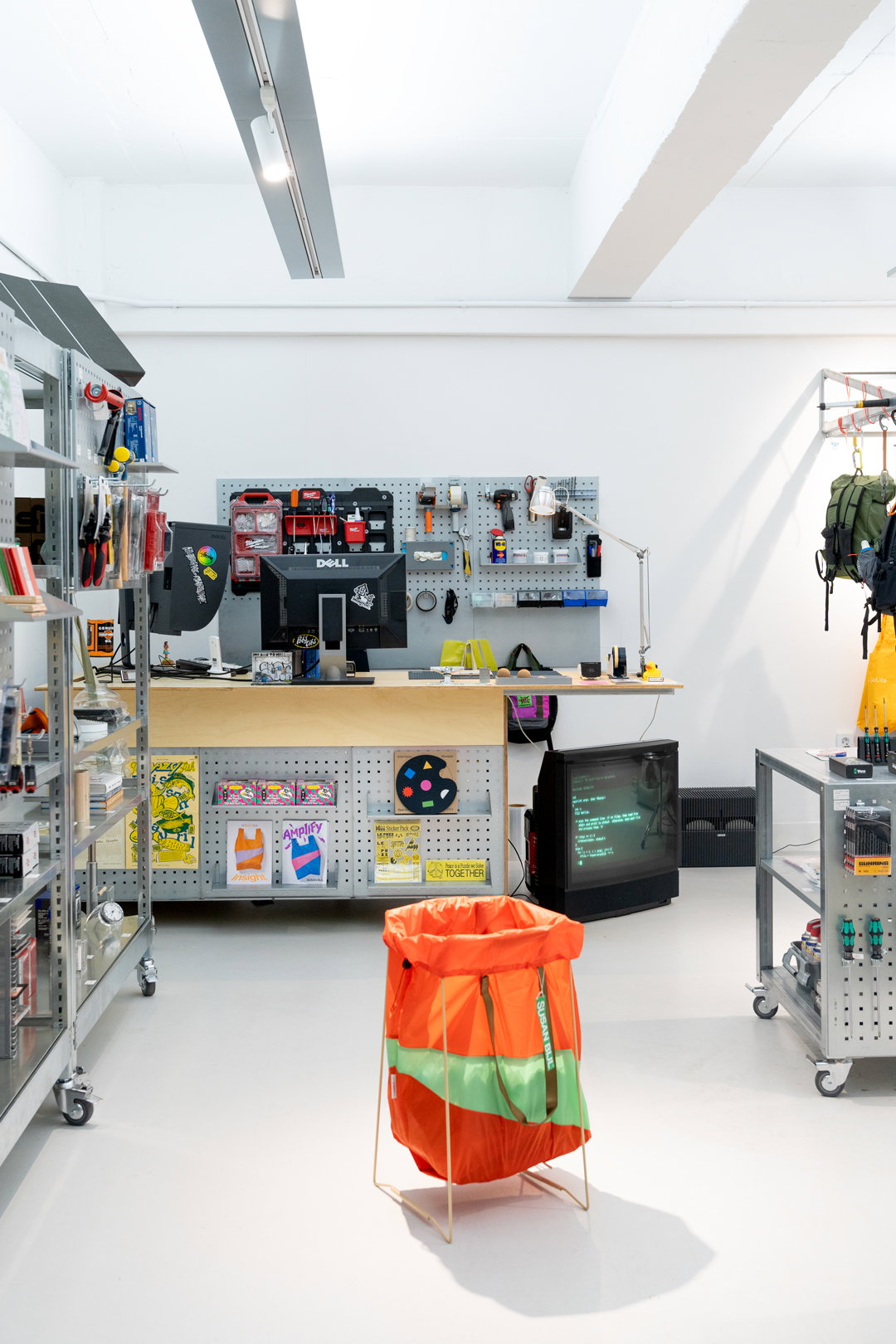
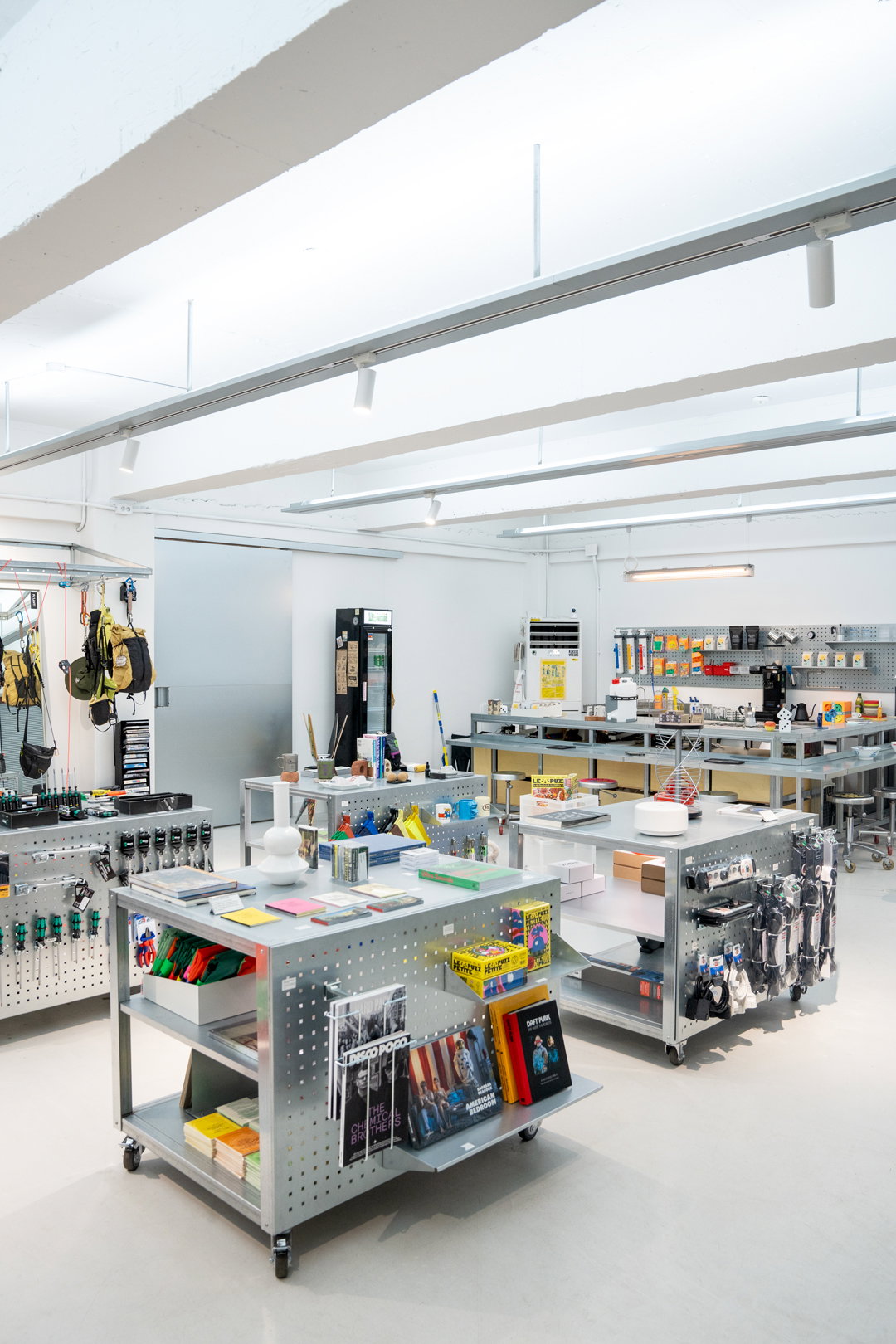
“To me, the term ‘편집숍 select shop’ has a distinctly Korean meaning that encompasses a wide range of formats, from boutiques to specialty stores,” explains New Medium’s Marley Kim. “I’ve always been impressed by the way independent curated shops in Seoul help each neighbourhood develop its own unique character.”
What began as a furniture importer, New Medium has shifted to defining a singular vision on contemporary life. In an interview, owner 김익성 Marley Kim explained how his background in film production influenced his perspective on the idea of a store. “The products and selection within the shop are my clips, and the collection itself is a sequence. It’s my way of editing reality into a physical form,” he says.
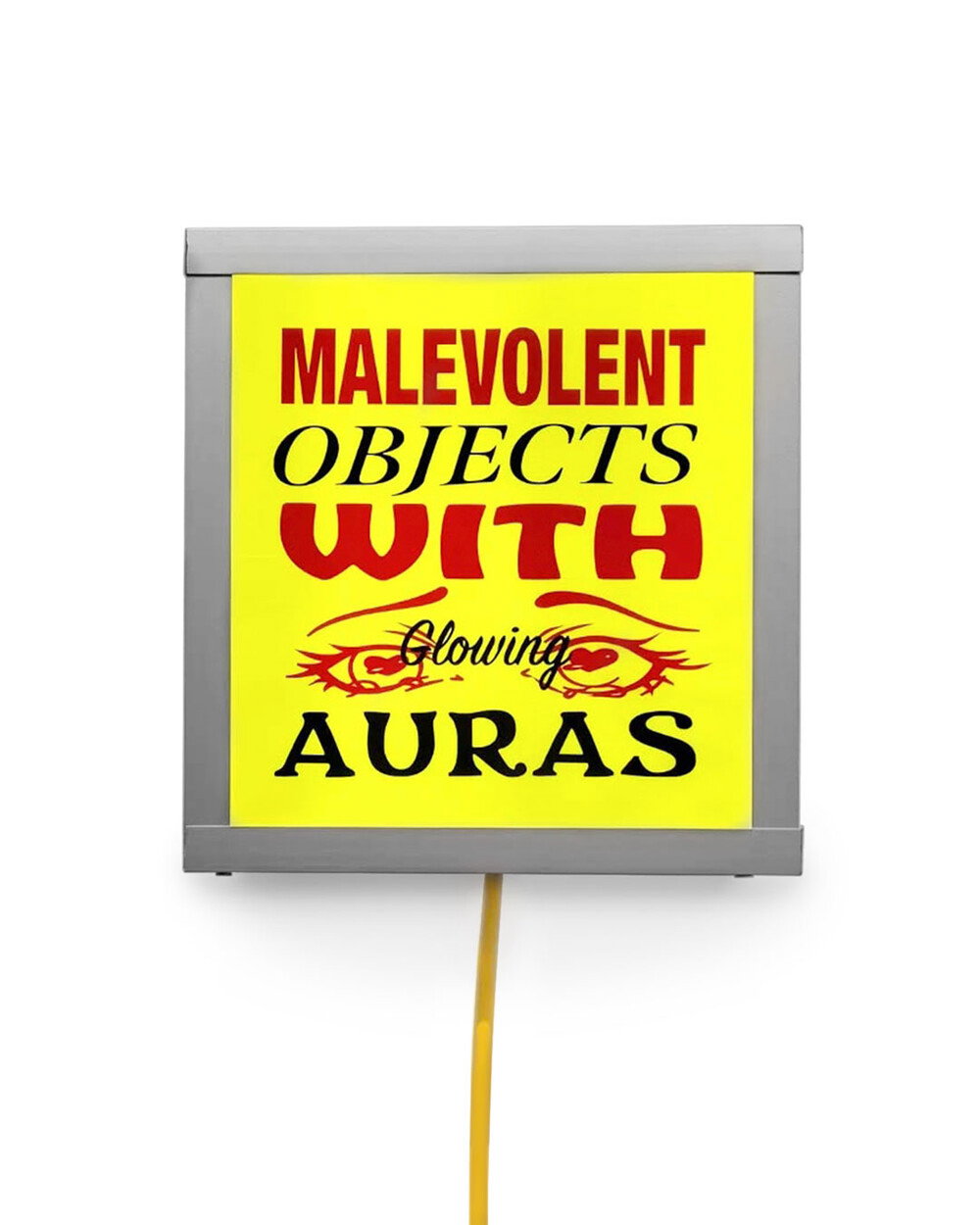
New Medium stocked the Malevolent Objects with Glowing Auras wall lamp by Can Can Press. One of many limited products that’s carefully selected by owner Marley Kim. Photo: New Medium.
The New Medium website is both an e-commerce platform and an archive of products that evades a straightforward definition. It has carried a limited edition wall sign lamp from Mexican Riso collective Can Can Press, alongside Artemide desk lamps. Surfing the website is a real pleasure, like moving through a personal collection, a contemporary lifestyle wunderkammer. Sadly, I discovered on my walk through hilly Geum-ho dong from Seongsu that the store is closed down.
Asked about this decision to shut down the store, Marley’s answer was much more nuanced than I had expected. He shares: “I seriously considered relocating to Seongsu-dong. But during that process, for the first time, I actually felt stifled by Seoul – the city where I was born and have lived my whole life. Since Korea’s best offerings are concentrated in such a small area, closing the store became a decision to open the next one in a different city. It’s been about a year and a half since we moved our office to Daegu to make that attempt.” Marley’s decision to relocate to Daegu is reflective of the difficult realities of Seoul.
After sadly accepting that they won’t have any more physical presence in Seoul, I started to make my way back to Seongsu. I began to wonder: could producing and selling keyrings, an object with low production costs and potentially high returns, be the best path forward for young designers?
GalleryA selection of keychains and products by brands stocked by 29cm. A description of the selections accompany the product tags that introduce each product maker. Photo: James H. Chae.
“Is Seongsu an indication of a coming economic doomsday where all consumption is driven only by short-term emotional release?”
James Chae
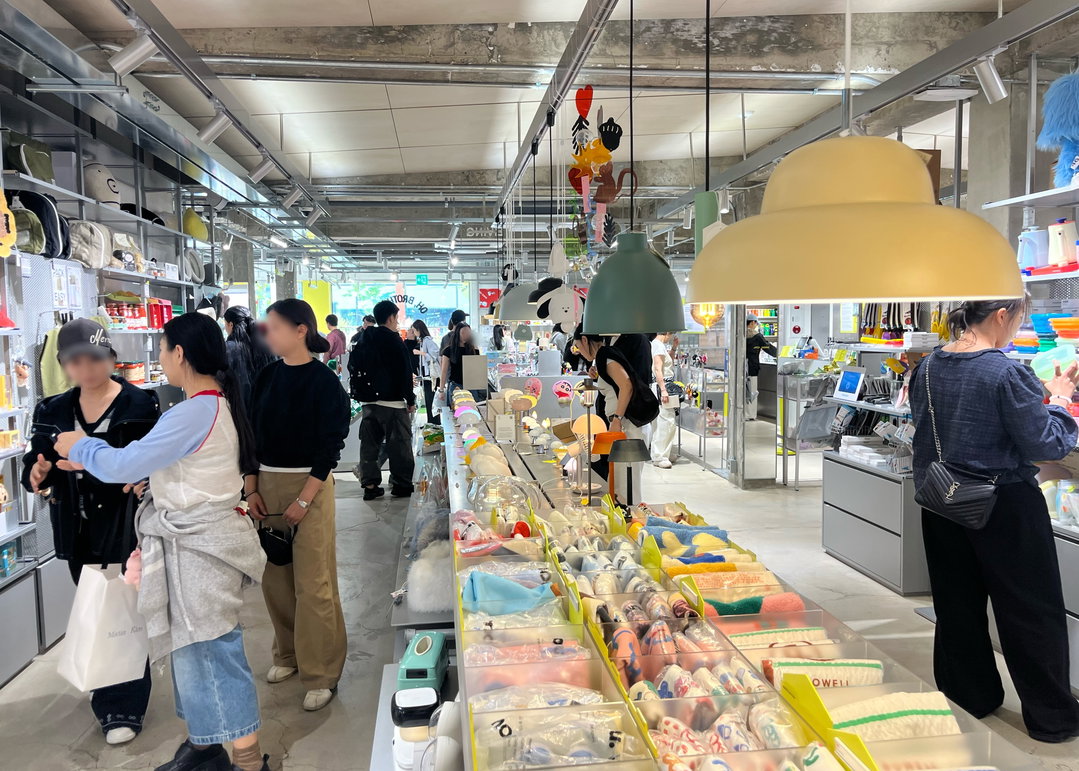
The Pokémon pop-up is a recent extreme example, but many brands have used the neighbourhood’s spaces for outlandish product releases and events. These brands include Gentle Monster, the online game Player Unknown Battle Grounds (PUBG) skate park, apartment concept model houses by House Xi, makeup brand Innisfree’s ice cream shop. How did Seongsu evolve from select shops to pop-ups in such an extreme way? Today, the neighbourhood concentrates every single marketing “drop” from all levels of brands from major food manufacturers, to boutique streetwear. In many ways, Seongsu, today, is the mecca of the keyring.
What does this all signify? Is Seongsu an indication of a coming economic doomsday where all consumption is driven only by short-term emotional release?
On my walk back to Seongsu station to head home, I dropped by the 29cm home goods store. The store is a peculiar manifestation of online and in-person commerce. Looking around the home goods store, I felt both the intensity of Seongsu’s commercial hype and the consideration of a select shop. The store manages to convey the stories of each creator and brand within a small space. I was relieved that even at scale there are opportunities to express curated taste. It’s my hope that Seongsu evolves in a sustainable way.
Closer Look (Seoul)
James shares some extra tips if you’re visiting Seongsu and the nearby area in Seoul.
- A short distance from Seongsu is the bookstore and cafe Index. The store carries a range of Korean books on design and culture.
- Another example of editorial and retail merging is the lifestyle magazine Kinfolk’s Seongsu space.
- If you’re going to visit Seongsu, I highly recommend spending some time in 서울숲 Seoul Forest. It’s a nice respite from the crowded lines.
Share Article
Further Info
About the Author
—
James Chae is a Korean-American designer and educator based in Korea passionate about K-pop, design and music culture. He publishes Pudding Label, co-hosts Graphic Support Group Podcast, and directs Pudding Projects. He is It’s Nice That’s Seoul correspondent.