


Old matchboxes are igniting new ideas for these Indian creatives
Inspired by the visual language, cultural history, and format of matchboxes, three contemporary Indian projects are reimagining this object in strikingly different ways.
Share
Share
While researching this column, I came across The Matchbook Book on It’s Nice That, a project that documents the visual legacy of matchbox labels in the UK - one of many such initiatives around the world. Matchboxes have long reflected the design language, social narratives, and visual culture of their time, inspiring dedicated collections.
While collectors continue to preserve the history, a new generation of designers and artists is reinterpreting the object in unexpected ways. This column looks at three such projects from India, where the matchbox has long played a powerful cultural role, often acting as a mirror to the country’s evolution. Bound by the humble object, each project takes a very different and ambitious direction.
“Social commentary was always in the matchbox’s DNA.”
Sonal Nagwani
Copyright © Maachis
Copyright © Maachis
Copyright © Maachis
Maachis
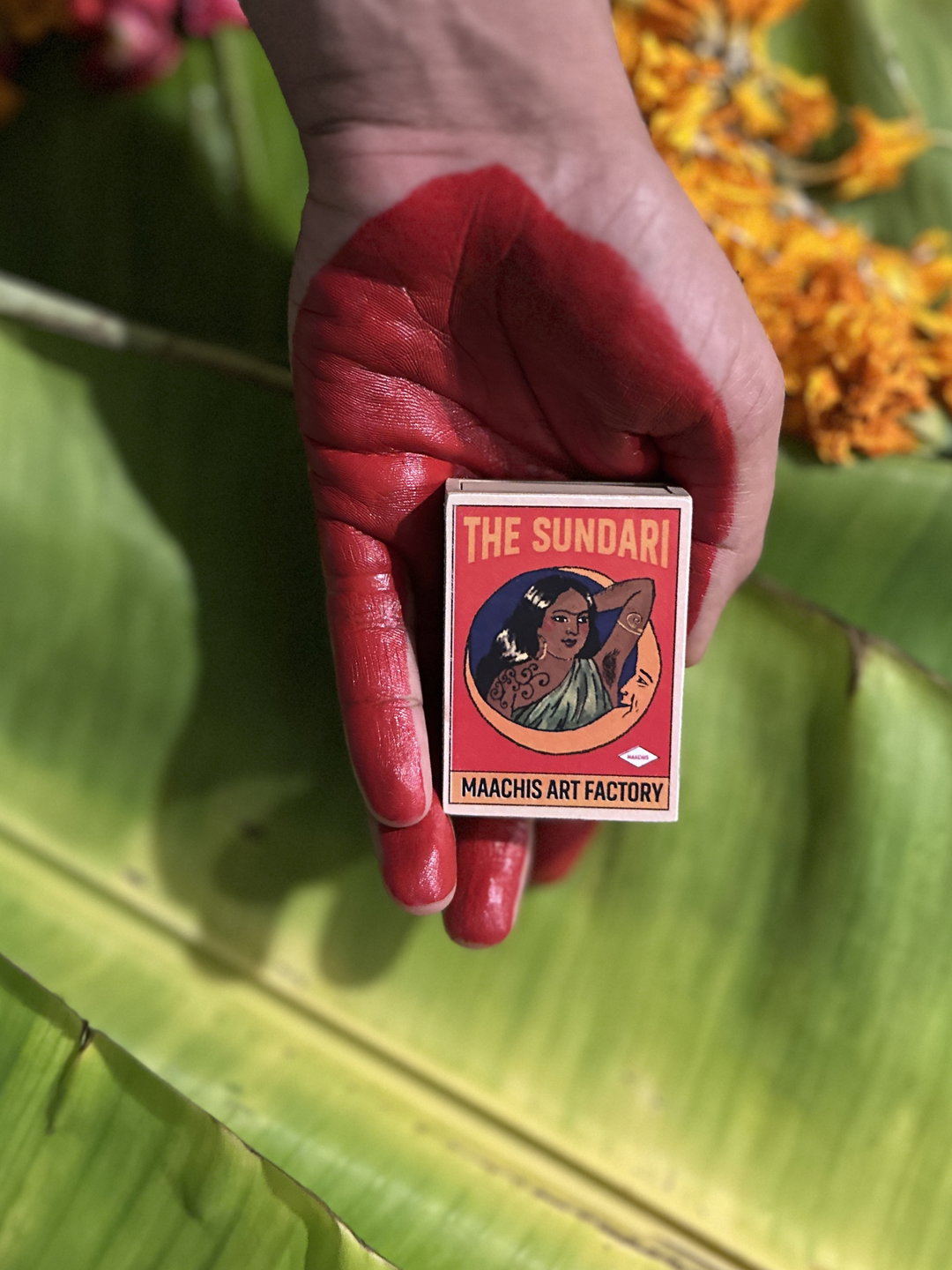
Designer Sonal Nagwani, who started Maachis with Kevin Thomas and is now running it on her own, used to build miniature furniture out of matchboxes while growing up. “That tactile, almost obsessive relationship with the object never really left me,” she says.
Years later, she found phillumenist Gautam Hemmady’s matchbox archive through the Tasveer Ghar project on Google Arts & Culture. “The collection has thousands of labels documenting India through its visual grammar. The matchbox is the most democratic gallery that has ever existed, and the archives show just how wide their reach was and how consciously those anonymous designers used it to advertise, document, comment, and represent ideas that didn’t have other public platforms,” says Sonal. Along with Hemmady’s work, Farid Bawa’s work on the revival of Indian truck art also inspired the Maachis team.
Soon after these encounters, Sonal made it her mission to reimagine the matchbox for today’s world, and this led to the birth of Maachis, a contemporary design project that creates collectible objects. The idea, she says, is not to impose a contemporary message onto a heritage form but to find the thread already embedded in it and take it forward. “Social commentary was always in the matchbox’s DNA, and Hemmady’s collection showed us how early and boldly that started. We are just continuing that tradition.”
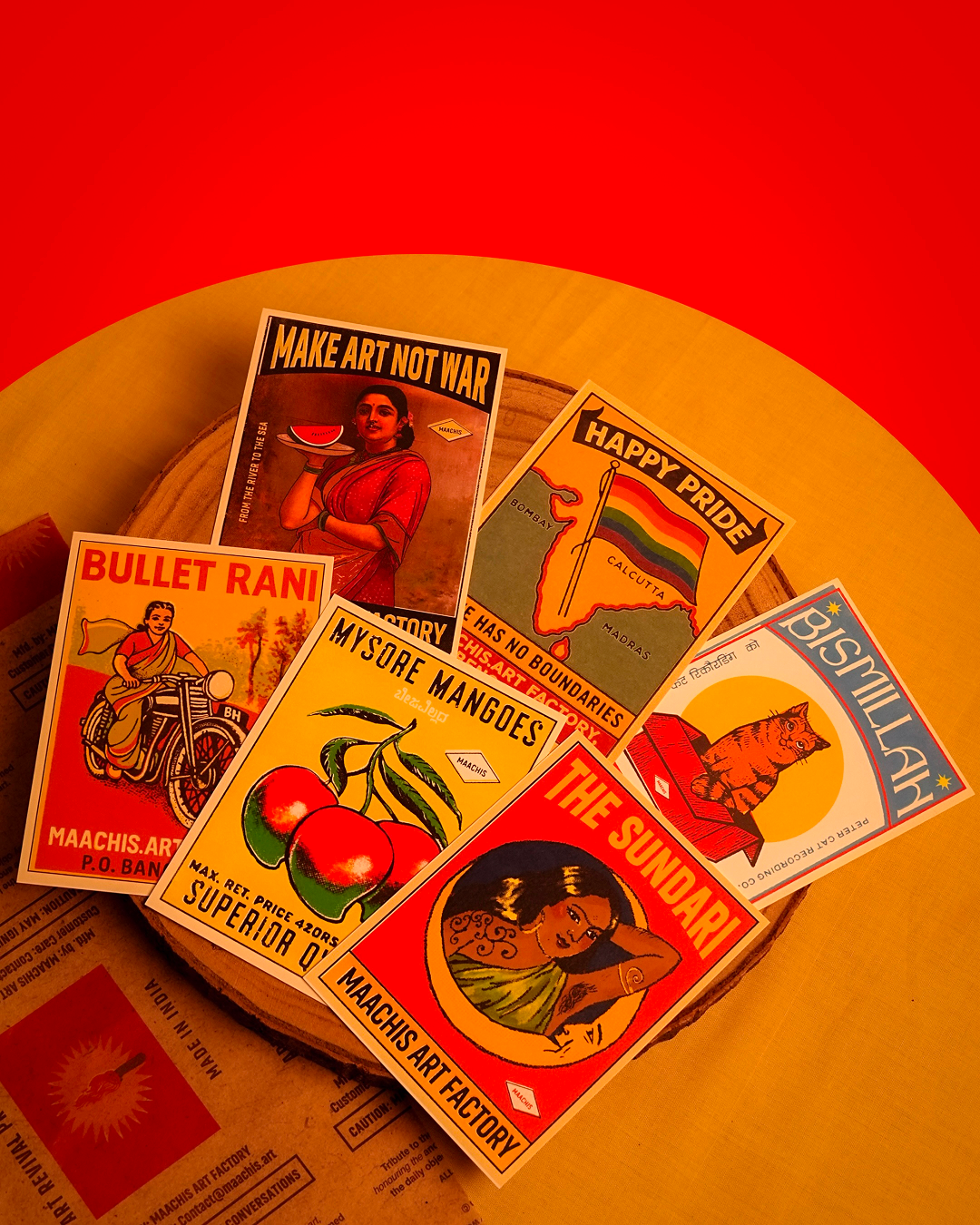
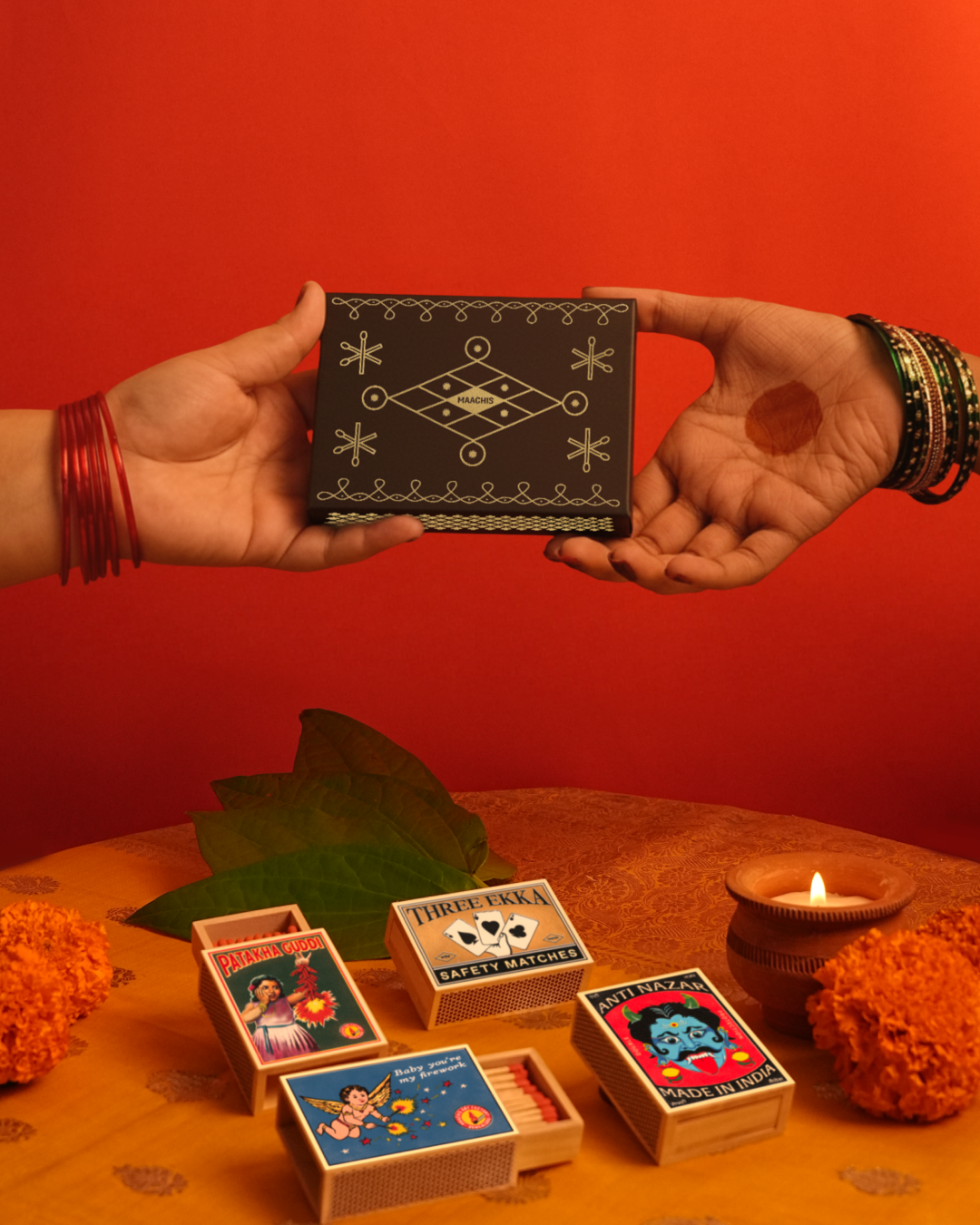
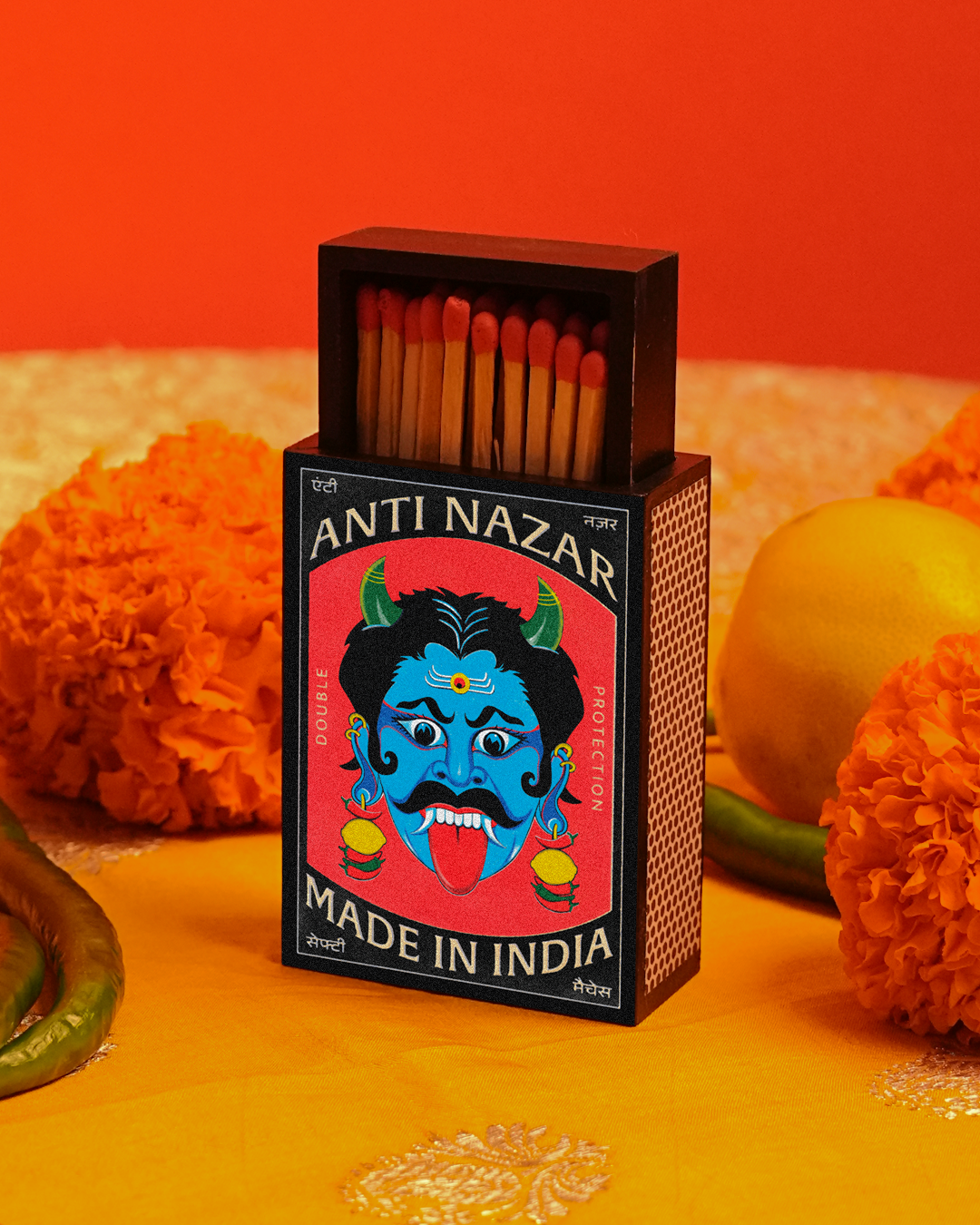
She cites one of the early boxes, ‘Swatantra’, as an example. The word means freedom, which was reinterpreted through the lens of queer rights. The Maachis team continued exploring it with their work: body positivity with ‘Sundari’, anti-evil-eye humour with ‘Anti Nazar’, and female autonomy with ‘Bullet Rani’, among others.
The object itself evolved, too. Maachis’ collectible matchboxes are crafted from wood, with magnets at both ends. Sonal designs many of the boxes herself, but also collaborates with other artists on a royalty basis. She is currently working with collaborators on a series exploring the subcultures and histories specific to various cities across India. “On formats, there is a lot more coming, including lifestyle and home products,” she adds.
Looking ahead, Sonal wants Maachis to be known for maximalism. She says: “The matchbox is inherently maximalist in the most unexpected way. It’s tiny but carries so much: pattern, colour, story, history, commentary. I want to push that further in terms of style and scale. We did a Maachis installation for a restaurant in Hyderabad, and that experience showed how far this visual language can stretch. That’s the direction I want to keep moving in: spaces, objects, and collaborations with artists and brands who share the same love for bold, layered, story-rich design.”
Copyright © Maachis
Copyright © Maachis
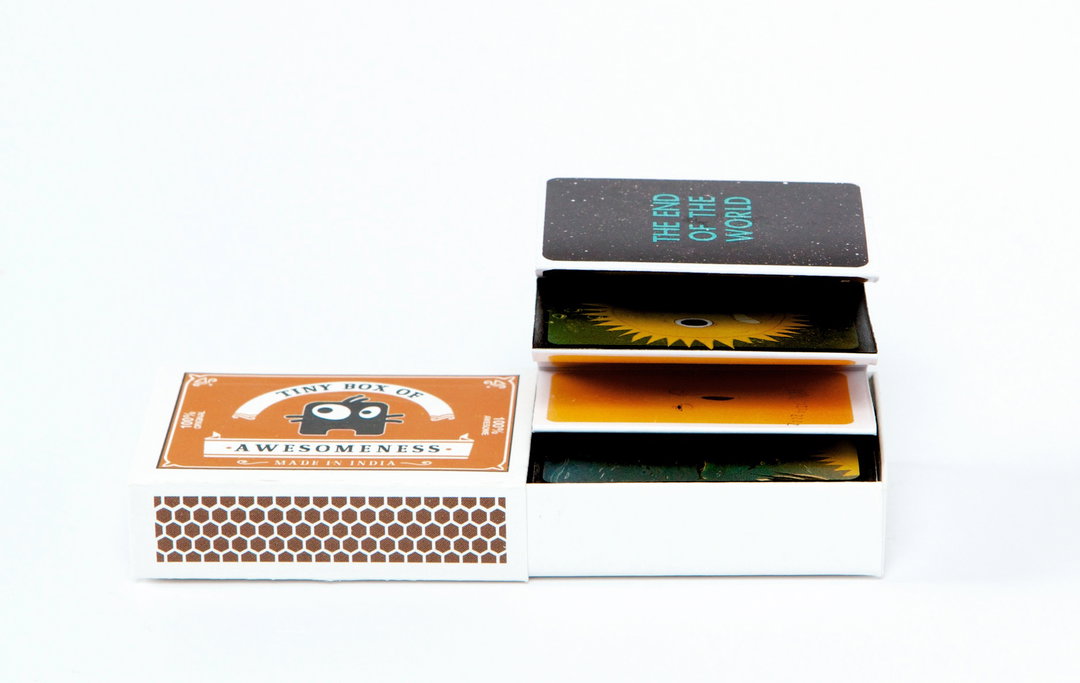
Studio Kokaachi: Matchbox Comix (Copyright © Studio Kokaachi)
“Matchbox works as a kind of gateway [to comics]... It’s small, playful, and has a strong giftability factor.”
Tina Thomas
Matchbox Comix
Studio Kokaachi is known for its long-running Mixtape series, a range of short black-and-white comic stories from creators across India. During the launch of Mixtape Volume 2 in 2013 at a coffee shop in Kochi, the studio wanted to do a special illustrated takeaway for the attendees. “And I had this idea: what if we created three-panel stories based on words given by the audience during the event, illustrated them quickly, and packed each story into a matchbox as a takeaway?” recalls Tina Thomas, who runs the storytelling and publishing house with her husband, Pratheek Thomas.
The initial plan didn’t materialise, but the idea of the format stayed, and eventually evolved into Matchbox Comix. Each set features six boxes, each housing a tiny comic that unfolds into a delightful accordion-style strip telling a complete story.
For this project, Kokaachi worked with a mix of long-time collaborators and new voices. The brief to its collaborators for this series has been simple: the story should bring a smile to an eight-year-old and an 88-year-old, but it shouldn’t be a children’s story, and it shouldn’t be preachy or moral-driven. “The biggest challenge has always been finding the right story. The tone needs to be quirky, weird, even slightly absurd. And striking that balance has been surprisingly tough. This is why the work for the new series is taking so much time.”
One of the most rewarding aspects of creating Matchbox Comix has been how the format breaks barriers, says Tina. “Comics, despite being a very accessible medium, are often misunderstood as too childish, intellectual, or only for illustrators. Matchbox works as a kind of gateway and gently pulls you into the medium. It’s small, playful, and has a strong giftability factor.”
For Volume 3, the studio hopes to evolve the packaging while staying true to the identity of the series. It’s also keen to collaborate with an entirely new set of creators. The inner matchboxes of the first series have already been redesigned. “Earlier, they were quite minimal, just labelled as ‘a tiny box of awesomeness’. Now, as in Volume 2, each packaging reflects the story it contains. For the upcoming version, we’re also thinking of giving it a more vintage look, closer to old Indian matchboxes.”
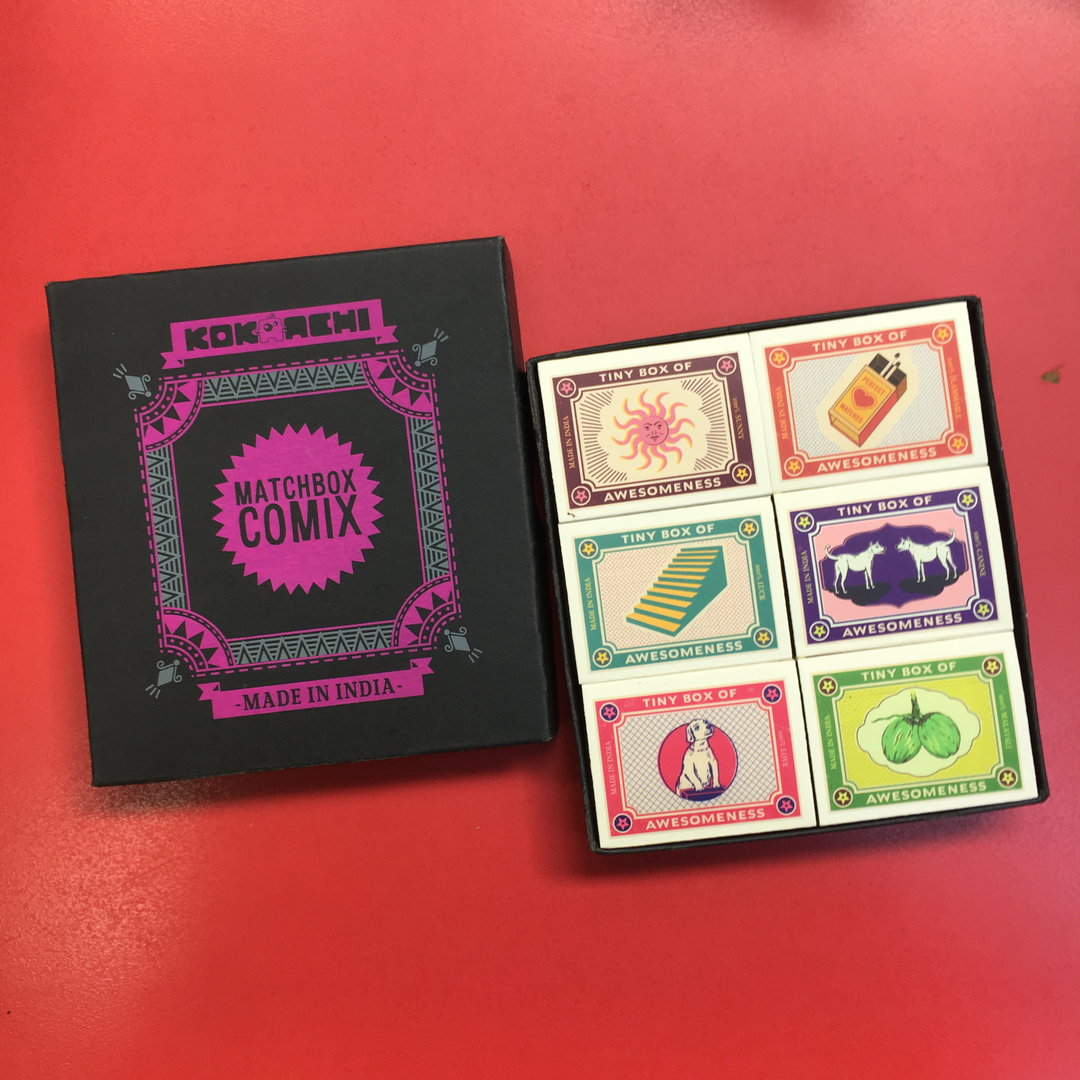
Studio Kokaachi: Matchbox Comix (Copyright © Studio Kokaachi)
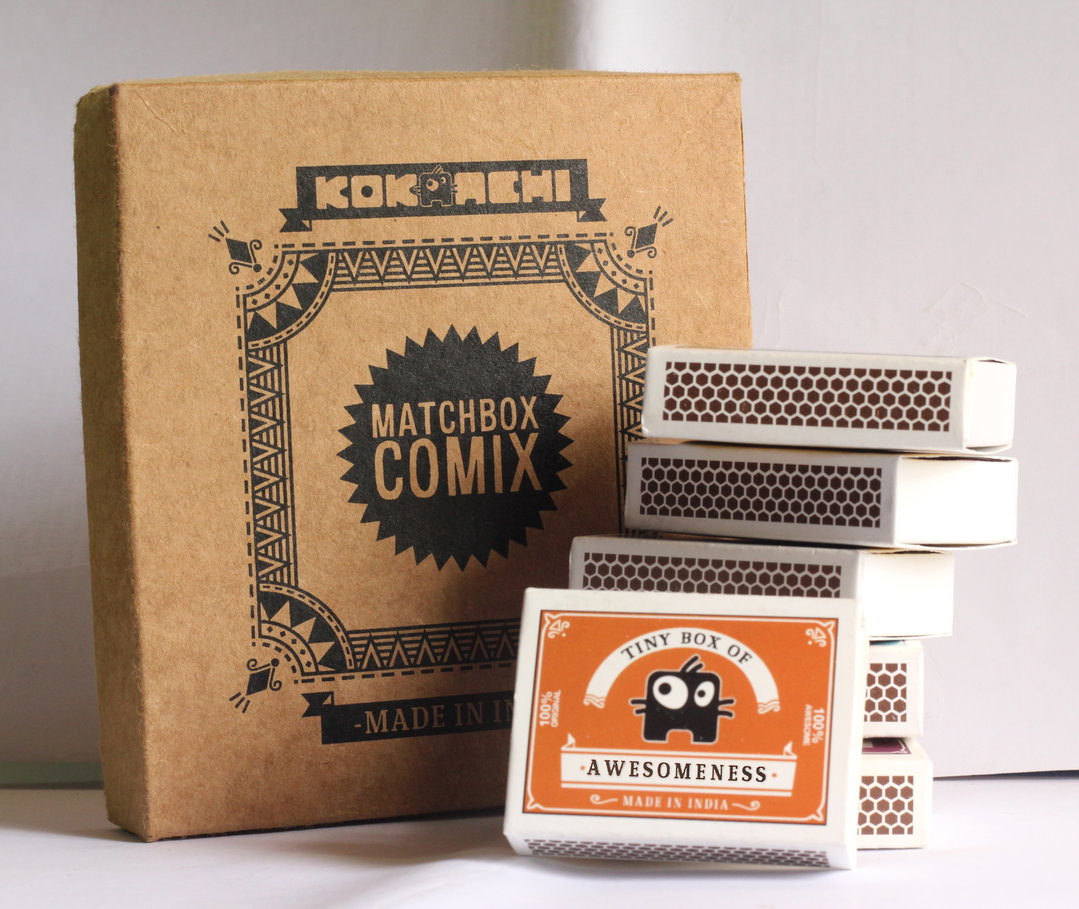
Studio Kokaachi: Matchbox Comix (Copyright © Studio Kokaachi)
Harshit Agrawal: Matchbox Momentos (Copyright © Harshit Agrawal)
Harshit Agrawal: Matchbox Momentos (Copyright © Harshit Agrawal)
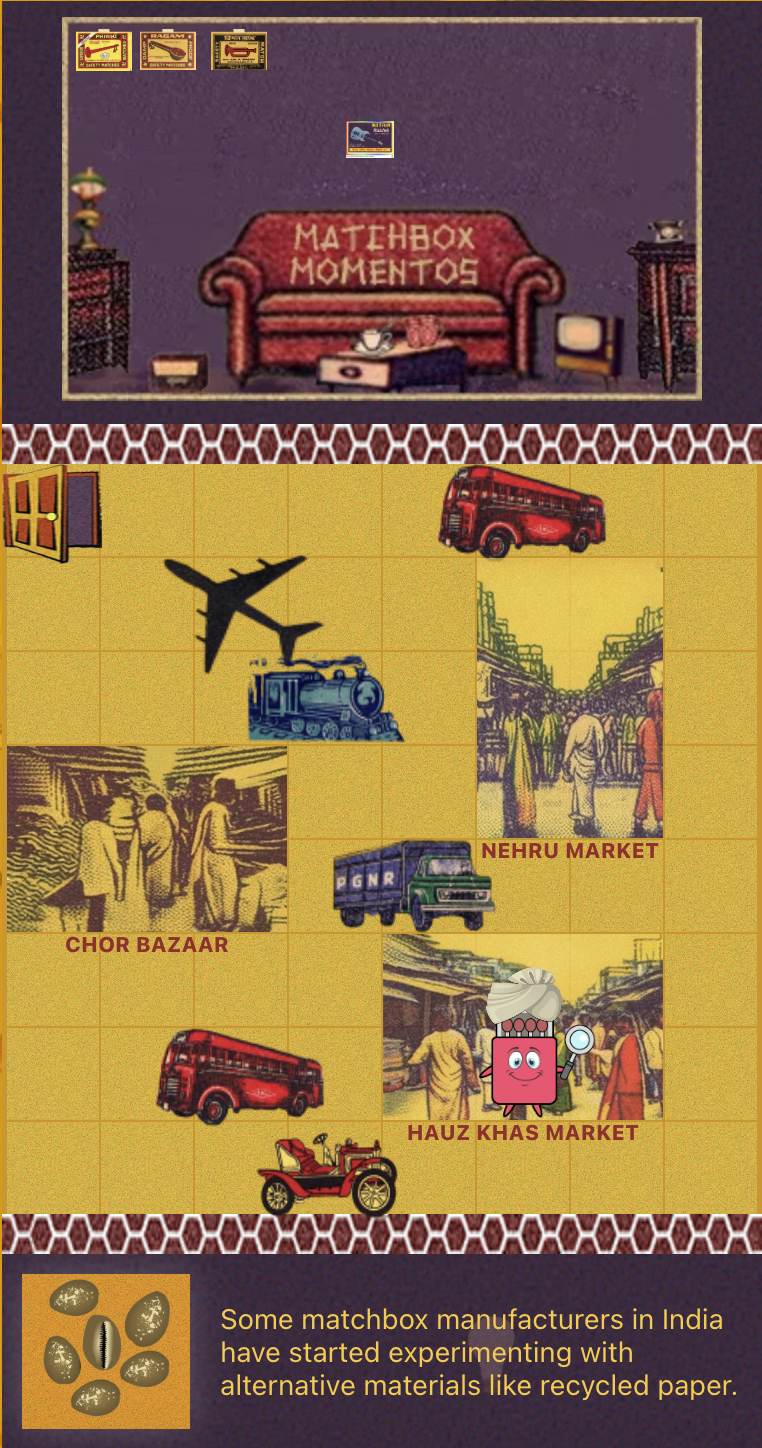
Harshit Agrawal: Matchbox Momentos (Copyright © Harshit Agrawal)
Harshit Agrawal: Matchbox Momentos (Copyright © Harshit Agrawal)
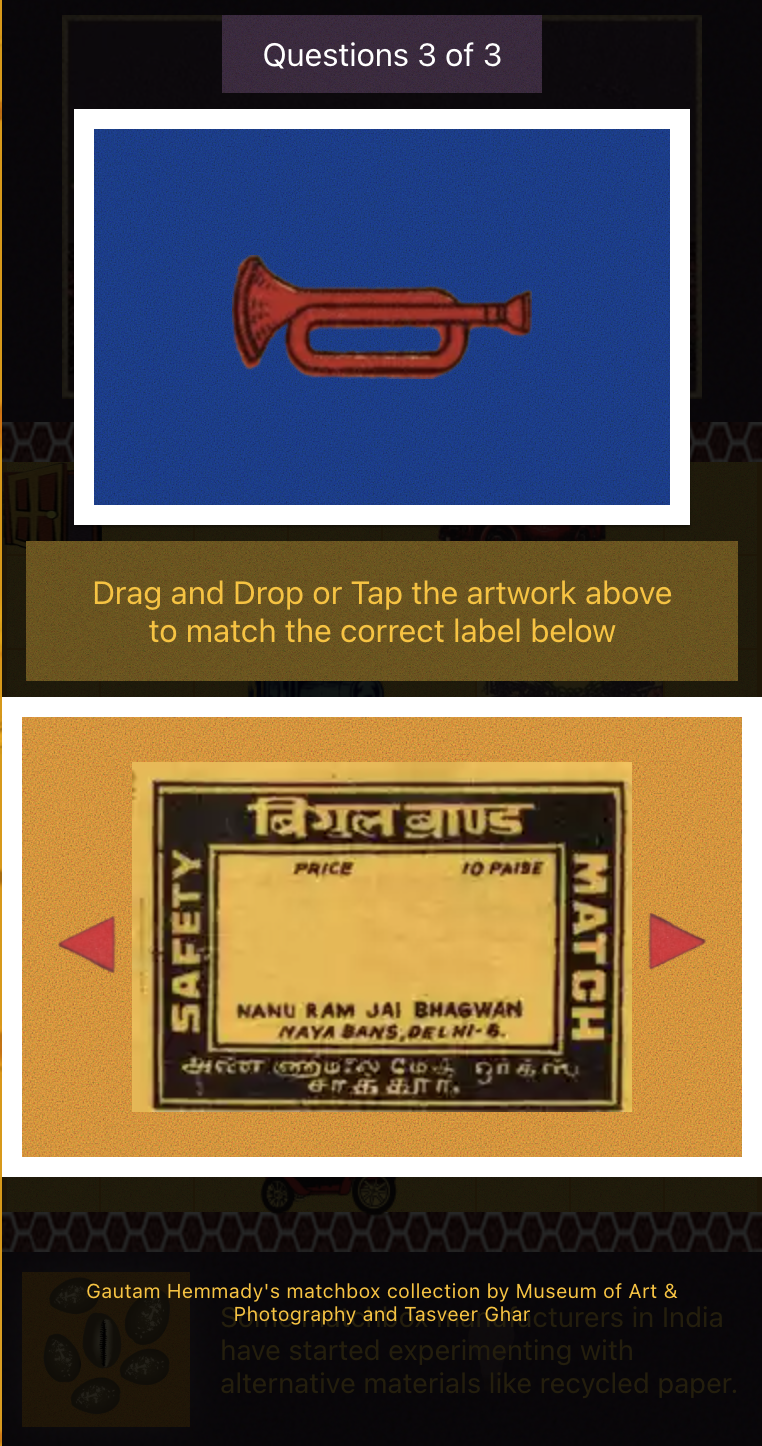
Harshit Agrawal: Matchbox Momentos (Copyright © Harshit Agrawal)
Matchbox Momentos
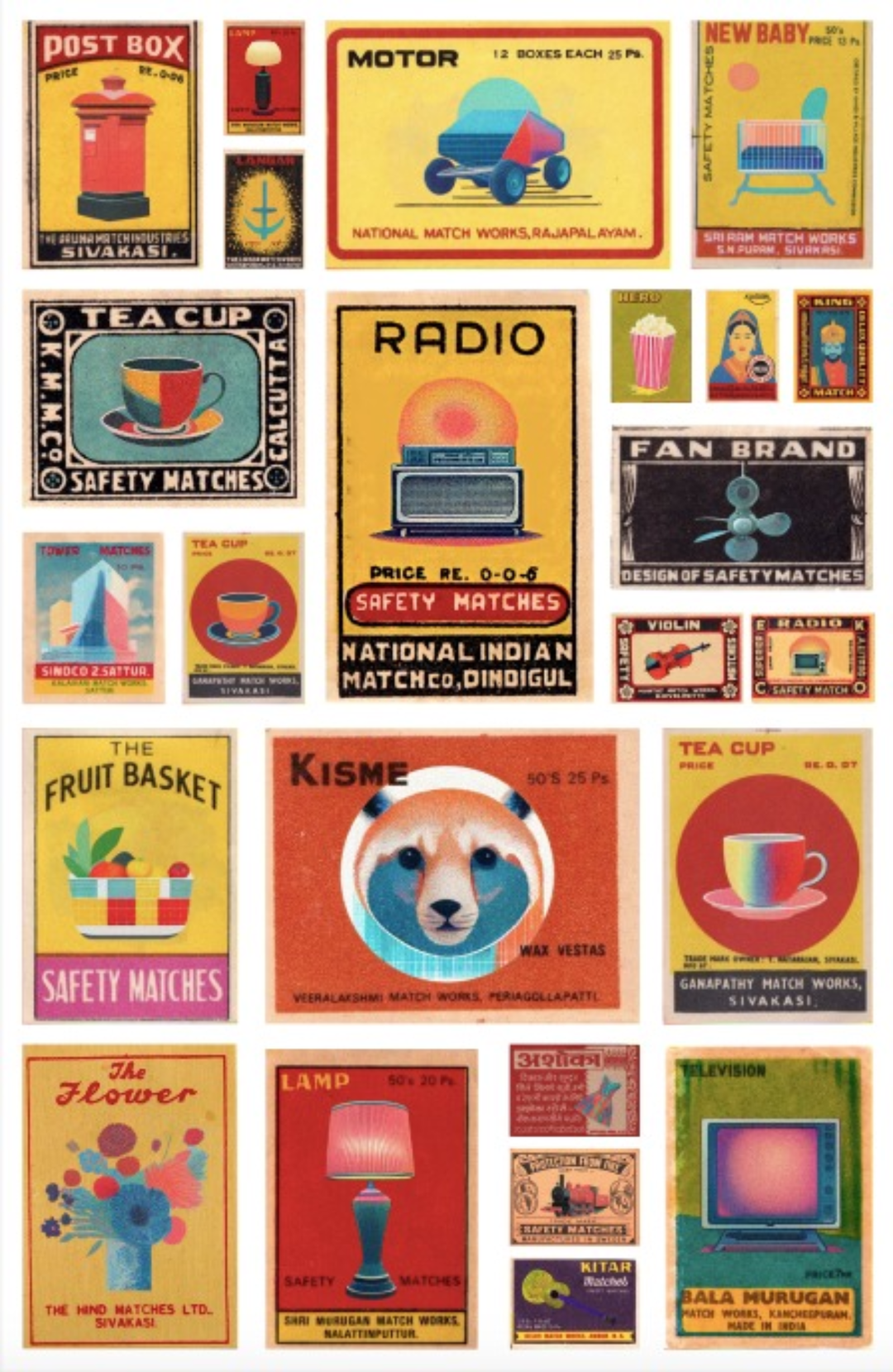
Matchbox Momentos is an interactive game by artist Harshit Agrawal where one can build their own matchbox art collection in collaboration with Google Arts & Culture, Museum of Art & Photography, and Tasveer Ghar. The project was born from two influences: Harshit’s grandfather’s extensive stamp collection and his later discovery of Gautam Hemmady’s phillumenist records.
“I’ve always been drawn to how small, everyday objects can hold cultural memory. Matchboxes, in particular, offer a surprisingly rich visual record of Indian pop culture and social change over the decades. In my own art practice, I work extensively with visual data, often using machine learning technologies to examine and reinterpret archives. So the idea was to bring these two together.”
While exploring Hemmady’s collection from a visual data perspective, the sheer variety of imagery, typography, themes, and iconography made it a rich repository for Harshit’s research. “The idea was to build an experience where audiences can journey through the archive. The act of collecting itself felt central to the story, so we wanted the experience to reflect that sense of discovery and accumulation.”
Structurally, the experiment was organised into 19 thematic categories, and within those categories, certain themes were especially powerful, says Agrawal. Labels associated with the freedom movement offered a lens into the social and political climate of their time. Bollywood matchboxes reflected the rise of cinema culture. Imported labels from countries like Sweden and Japan often featured technology imagery such as telephones, engines, and industrial tools, showing how global influences entered local markets. Around the time of the Green Revolution, there was a noticeable rise in farming-related imagery. You’d see a clear positioning of the farmer as central to the nation’s progress and ecosystem. Taken together, the archive became a documentation of India’s shifting priorities and milestones across decades.
“While earlier labels had etched or halftone printing textures, later Bollywood-themed ones showed smoother, digitally printed finishes. So it also became a subtle timeline of India’s printing evolution,” Harshit adds. The project also uncovers narratives of informal copyright battles and local competition. Popular labels were frequently imitated – a successful ‘Guitar’ brand might be countered by a rival ‘Kitar’ label, using just enough visual tweak to sidestep direct replication.
“Matchboxes, in particular, offer a surprisingly rich visual record of Indian pop culture and social change over the decades.”
Harshit Agrawal
One important aspect of this exploration was the “imperfections” of vintage matchboxes, which became integral to the aesthetic. Much of this historical production was centred in Sivakasi, utilising printing techniques that, although modern for their time, created a distinct texture. Harshit notes that the slight colour misalignments, grainy textures, and halftone patterns were “the language of the medium”. When it came to incorporating AI into the project, the challenge was to preserve this aesthetic integrity. Working with internal Google models like StyleDrop, he had to navigate the inherent Western bias of generative datasets, which often struggle to capture the specific stylistic nuances of Indian print culture from the mid-20th century.
To ensure the AI-generated artwork felt authentic, Harshit and his team retained the original frames and generated only the central imagery. This necessitated a deep dive into the material conditions of the past, understanding the limited colour palettes and the specific compositional logic of the era. In some cases, it was intentionally signalled that certain matchboxes were AI-generated and contemporary reinterpretations. In others, the goal was seamless blending: making them feel as though they could plausibly belong to that era.
“The more context you can bring in about why and how something was originally produced, what constraints shaped it, the more truthful and layered the contemporary adaptation becomes. And that balance between authenticity and reinterpretation was a constant negotiation during the project,” he says.
Harshit also sees his interactive game as a bridge for a younger generation of designers for whom the matchboxes are almost obsolete. “Even when they do come across them now, they’re usually plain, single-brand designs without the richness of earlier eras. This kind of project can open up conversations about typography, colour, print processes, and storytelling of a different time. It also raises interesting questions about how AI and digital tools today might reinterpret or reintroduce some of those aesthetics in contemporary practice,” he says.
Harshit Agrawal: Matchbox Momentos (Copyright © Harshit Agrawal)
Closer Look
Payal shares some other matchbox-inspired Indian projects to check out and a documentary on a notable matchbox collection, alongside a digital archive of Tasveer Ghar’s work and a fascinating exhibition happening in Mumbai.
- Explore: Tasveer Ghar’s digital projects on South Asian visual culture.
- Visit: The Ticket, Tika, Chaap: The Art of the Trademark in the Indo-British Textile Trade exhibition at Dr. Bhau Daji Lad Museum in Mumbai. It explores the visual language of the British and Indian mill-made cloth labels in the 19th and early-20th centuries in India.
- Watch: A short documentary on Gautam Hemmady’s matchbox collection.
- Check out: A few more cool matchbox-inspired Indian projects fromBardava, Anagram Architects, and Studio Chitrakoothu.
Share Article
About the Author
—
Payal Khandelwal is a Mumbai-based independent journalist and content writer with 18 years of work experience. She mainly writes about visual arts and culture, but has written on a variety of other topics too including marriage detectives in India, a cemetery in Rome, Indian military dogs, and LinkedIn content for a bank. She is It’s Nice That’s Mumbai correspondent.